
Lanzhou's landscapes lie beyond the city, one to two hours out: spruce and old halls of Xinglong Mountain in the southeast, the gorges and a chieftain's mansion of Tulugou in the northwest, and upriver to the southwest the placid reservoir of Liujia Gorge and the Bingling Temple grottoes. Give each direction its own day and return to the city nightly for noodles and night markets.
This route suits drivers or willing carpoolers; public transport covers it but doubles the hours. The rhythm builds in slack: one direction per day, turning back around four in the afternoon, so wilderness and city life both get their due.
Itinerary at a glance
| Day 1 · 09:00 | Xinglong Mountain: Cloud Dragon Bridge and the East Peak Forest |
| Day 1 · 13:30 | The West Peak and the Genghis Khan Exhibit |
| Day 1 · 19:30 | Santai Pavilion on Lan Mountain: Two Ribbons of Light |
| Day 2 · 09:00 | Tulugou: The Gorge Trail between Sheer Walls |
| Day 2 · 13:00 | Tulugou's Back Mountain: Meadows and Yaks |
| Day 2 · 16:00 | The Lu Chief's Office: A Little Forbidden City of the Northwest |
| Day 3 · 09:00 | Liujia Gorge: The Dam and the Reservoir between Cliffs |
| Day 3 · 11:30 | Bingling Temple Grottoes: A Dating Lesson in Stone |
| Day 3 · 14:30 | Cave 169: China's Earliest Dated Grotto Inscription |
| Day 3 · 16:30 | Taiji Island Wetland and the Road Home |
The route, stop by stop
Xinglong Mountain: Cloud Dragon Bridge and the East Peak Forest
Xinglong Mountain, an hour out of town in Yuzhong County, is a celebrated peak of eastern Gansu. The Cloud Dragon Bridge spans the gorge to link the east and west summits, a covered wooden bridge over a ravine tens of meters deep, pine wind and water sound rising together. The east peak climbs gently through deep woods, spruce so tall you crane your neck.
Take the east peak in the morning: the canopy blocks the light so completely that even summer climbs stay cool. Rest pavilions punctuate the trail, and the air carries pine resin, a different world from the dry city.
The West Peak and the Genghis Khan Exhibit
The west peak, Qiyun, climbs a bit steeper with better views. Partway up sits a piece of modern history: during the wartime relocation, Genghis Khan's sarcophagus was sheltered here, and the mountain now keeps a Genghis Khan relics hall, binding a steppe emperor to these Gansu woods.
Afternoon light slants through the spruce gaps, prime shooting hours. If the legs give out, walk only the lower west flank and the Great Buddha Hall, then ride the park shuttle down.
Santai Pavilion on Lan Mountain: Two Ribbons of Light
Back in town, the evening belongs to Lan Mountain. Take the winding road or the cableway up to Santai Pavilion on Gaolan's summit, where all of Lanzhou spreads below: the river threading the city, lamplight laid in two glowing bands along the banks to the edge of sight. After the river by day, these bands are the city's true base color.
The summit wind at night drops several degrees below town, so bring a layer. Descend in time for late-night beef noodles or skewers to close day one.
Tulugou: The Gorge Trail between Sheer Walls
Day two heads northwest. Tulugou, near Liancheng in Yongdeng County about two hours by car, is a gorge carved jointly by glacier and stream. The front-mountain trail follows the creek upstream between facing rock walls, with sights named Skylight Eye and Hidden Dragon Cave surfacing one by one from the woods.
Cold air pours through the gorge even at noon, long sleeves sufficing. The path stays gentle; two slow hours reach the depths of Great Tulugou, where the stream narrows, the trees swell, human voices vanish and only birdsong remains.
Tulugou's Back Mountain: Meadows and Yaks
The back mountain is Tulugou's summit act: the trail ends and opens onto alpine meadow rolling to the ridgelines of the Qilian foothills, yaks scattered across the slopes. At nearly 2,800 meters, slow your pace and linger over the photos.
Herder tents and a small shop on the meadow serve instant noodles and hot milk tea. Descend the same way in the afternoon, out of the gorge by three, right on time for Liancheng town.
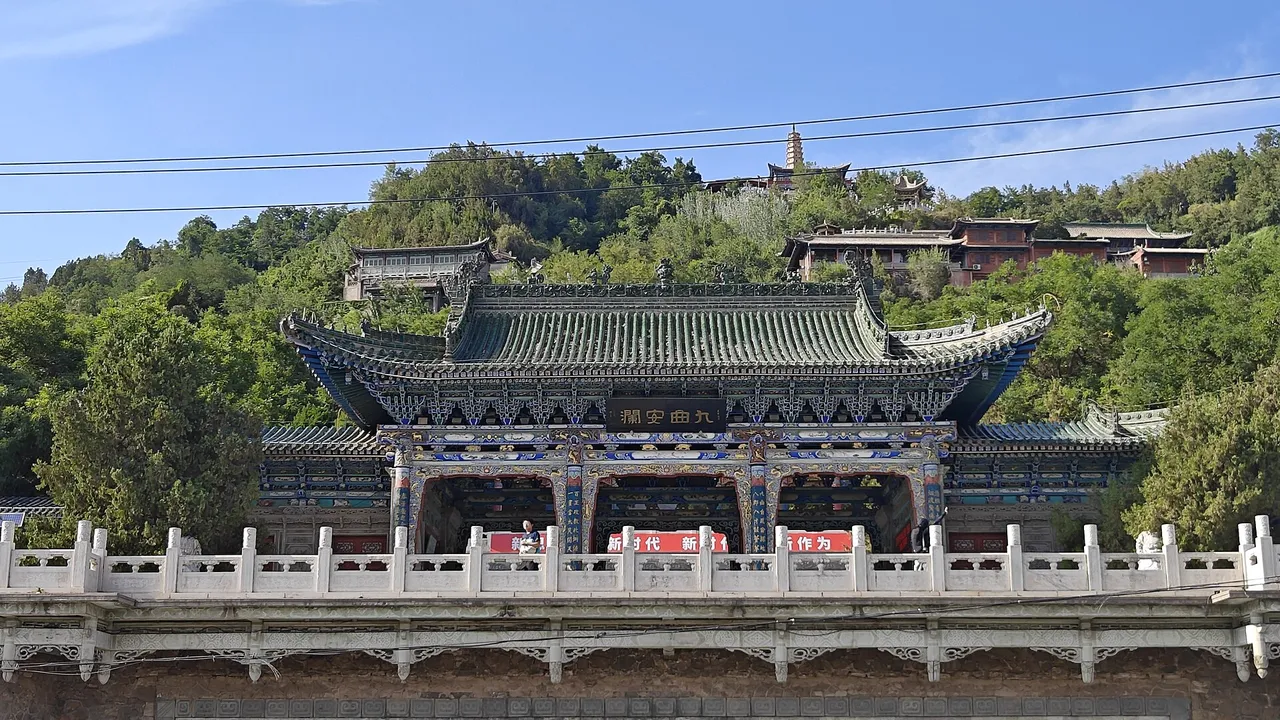
The Lu Chief's Office: A Little Forbidden City of the Northwest
Called the little Forbidden City of the northwest, the Lu Chief's Office was the Ming-Qing seat and residence of the Lu chieftain family, an axial complex complete with government halls, sleeping quarters and ancestral temple, the best-preserved chieftain architecture in China's northwest and a nationally protected site.
Crowds are thin and the courtyards quiet enough to hear the wind. Read the buildings for layout and paintwork: lintel carvings and eave polychrome still legible after centuries. One hour suffices before the drive back to Lanzhou.
Liujia Gorge: The Dam and the Reservoir between Cliffs
Day three turns southwest, two hours to Liujia Gorge in Yongjing. Here the dam turns the Yellow River into a placid lake between cliffs, impossibly blue-green for this river. Board at the dam dock: big boats ride slow and steady, speedboats quick and bumpy, and where the canyon narrows, barely one hull fits between the walls.
About an hour of sailing reaches the Bingling Temple dock, with river-carved stone forests and red cliffs as unexpected bonuses along the way. Queasy stomachs take the big boat, photographers the speedboat; both run to schedule, with tickets bought at the dock in season.
Bingling Temple Grottoes: A Dating Lesson in Stone
Bingling Temple is a World Heritage site, its caves cut into a cliff face over 160 meters tall, in use from the Western Qin through the Qing. At the gully mouth sits the Tang Maitreya, twenty-seven meters tall, gazing down at the water, the ensemble's emblem.
The open caves line the walkway: Western Qin apsaras, Northern Wei figures slender and serene, Tang statues full and fleshy, each with its era's face. A dating course in Chinese sculpture, carved straight into the cliff.
Cave 169: China's Earliest Dated Grotto Inscription
Bingling's highlight is Cave 169, home to an ink inscription dated to the Western Qin Jianhong era, the earliest dated inscription in any Chinese grotto, with sculptures and murals older than the early phases of the Mogao Caves. Special caves require a costly separate ticket, a guide, and a limited daily quota.
If you skip it, Cave 172 and others can be applied for individually. Either way, look back at the cliff from the dock before leaving, and fit the whole carved wall into one frame.
Taiji Island Wetland and the Road Home
On the way back, stop at Taiji Island near Yongjing town, where the river bends into the shape of the taiji symbol, egrets rising from reed beds and boardwalks reaching into the wetland. After the grottoes, this is the river's gentle side, the right gear-down for the trip's close.
The drive back to Lanzhou takes about two hours by evening. Save dinner for Zhengning Road night market: after three days of mountains and water, a bowl of milk-and-egg jiuzao lands the trip back in the everyday world.
| Getting around |
|
| Budget | Three days by chartered car runs about RMB 1500-2500 pp, cheaper split by two, covering tickets, boat fares and meals; all-public transport drops near RMB 900 but doubles the hours. |
| Best time | May to October is prime, with mountain areas coolest in July and August; the Bingling boats run April to October, and low winter water disrupts the route. |
FAQs
Can I do this route without driving?
Yes, with trade-offs. Buses run from Lanzhou to Yuzhong, Yongdeng and Yongjing, but frequencies are sparse and in-park transfers are hard, so in practice you lean on same-day carpooling. The calmer option is booking a one- or two-day charter or outdoor tour in Lanzhou, outsourcing both driver and schedule.
How do tickets work for Bingling Temple and its special caves?
Buy boat tickets at the Liujia dock and grotto tickets at the site entrance; special caves sell separately with daily caps and must be pre-booked through official channels in season. Big boats and speedboats return on different schedules, so lock your return time at purchase.
If one day must go, which direction survives?
Keep Liujia Gorge and Bingling Temple. Grottoes plus a lake between cliffs exist nowhere else in the province, and the transport-to-experience ratio is best. Xinglong suits hikers, Tulugou and the chieftain's office suit quiet and architecture lovers, and all can anchor their own future trip.
What about altitude and sun protection?
Tulugou's back section nears 3,000 meters: move slowly, drink often, and altitude-sensitive travelers should carry portable oxygen. Northwest ultraviolet is fierce; hat, sunglasses and sunscreen are non-negotiable. Mountain day-night swings often top ten degrees, so keep a jacket at hand all day.