
This route gives each carrier of Gansu heritage its own day: the Han frontier written on bamboo slips, a Western Qin Buddhist kingdom carved into cliffs, and Ming-Qing houses built on loess slopes. The order runs from paper to stone to brick, and the river looks different after you finish.
Transport is the only thing needing advance planning: buses and the metro cover the city museums, the Bingling day must be built around boat schedules, and the Qingcheng-Hekou day suits a charter. All three nights return to Lanzhou, so luggage stays put.
Itinerary at a glance
| Day 1 · 09:00 | Gansu Provincial Museum: The Silk Road in Its Main Halls |
| Day 1 · 13:00 | Gansu Bamboo Slips Museum: Reading Private Mail Two Millennia Old |
| Day 1 · 16:00 | Lanzhou Museum: Local History under the White Robe Pagoda |
| Day 2 · 08:30 | Liujia Dam: Boating into the Yellow River Canyon |
| Day 2 · 11:00 | Bingling Temple: The Gully-Mouth Buddha and Open Caves |
| Day 2 · 14:00 | Cave 169: The Earliest Dated Inscription |
| Day 3 · 09:30 | Qingcheng Old Town: Academy and City God Temple |
| Day 3 · 13:00 | The Luo Compound and Gao Ancestral Hall: A Tobacco Merchant's Day |
| Day 3 · 16:30 | Hekou Old Town: Sunset at the Zhuanglang River Mouth |
The route, stop by stop
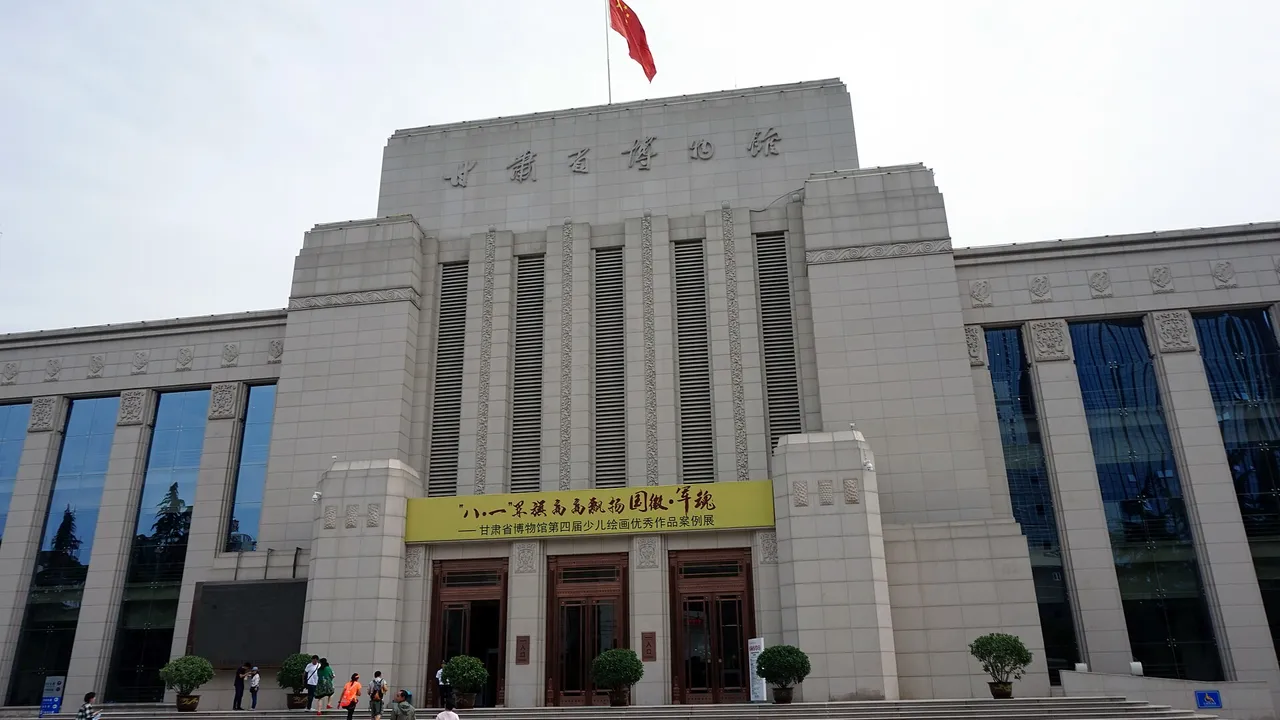
Gansu Provincial Museum: The Silk Road in Its Main Halls
Heritage begins with the official record. The Silk Road civilization gallery is the museum's spine, running from Majiayao pottery through Han-Tang camel figurines to Silk Road coinage, a corridor chronology told object by object. The Bronze Galloping Horse resides year-round in the Buddhist art hall upstairs, its Eastern Han airborne pose at the center of the room.
Mornings are thin on crowds: walk the main gallery first, then climb for the horse, moving against tour flow to save half the time. Grotto fans should preview the Bingling and Mogao replicas here, so day two's originals land with context.
Gansu Bamboo Slips Museum: Reading Private Mail Two Millennia Old
The afternoon goes to bamboo. Over twenty thousand slips from the Xuanquanzhi site anchor the museum: postal systems, soldier rosters, envoy traffic, all written on narrow wood. The smart display pairs original and transcription side by side, so even non-readers of clerical script follow every story.
Do not miss the signature pieces: the guosuo border passes, and the Yuan-Zi Fang letter, a Han soldier's private note home asking for shoes and money, its small favors and debts feeling unchanged today.
Lanzhou Museum: Local History under the White Robe Pagoda
Day one closes at the city museum. In the White Robe Temple courtyard on Qingyang Road, the Ming pagoda and Bodhisattva Hall lead architecturally, their brick corbels and wind chimes intact. The local-history display runs Lanzhou from pre-Qin to the Republic, complementing the provincial museum's province-wide lens.
No need to rush: an hour covers the permanent show, and the rest belongs to the pagoda courtyard. On the way back to the hotel, dinner near Nanguan Shizi clusters noodle shops and night-market snacks conveniently.
Liujia Dam: Boating into the Yellow River Canyon
Day two belongs to Yongjing. About two hours from Lanzhou, aim for the morning boat departures; big vessels and speedboats both leave the dam dock. The canyon narrows as you go, red cliffs mirrored in blue-green water, hard to reconcile with the world's most sediment-heavy river.
Boat decks run cooler than shore, so carry a windproof layer. Take a window seat on the side: most of the stone-forest and cliff scenery slides past the port side.
Bingling Temple: The Gully-Mouth Buddha and Open Caves
The Bingling caves cut into a cliff over 160 meters high, in use from the Western Qin through Northern Wei, Sui-Tang and on to the Qing, a World Heritage site. The twenty-seven-meter Tang Maitreya at the gully mouth is both first sight and emblem.
Open caves line the walkway: Western Qin apsaras, lean Northern Wei figures, full-faced Tang Buddhas, with stone carving, clay sculpture and murals sharing one cliff. Do not chase quantity; studying the mid-route Northern Wei and Northern Zhou caves closely beats rushing the whole line.
Cave 169: The Earliest Dated Inscription
Those with reservations give the afternoon to Cave 169. Its ink inscription dated to the first Jianhong year of the Western Qin is the earliest dated inscription in Chinese grottoes, and its style predates the surviving early caves of Mogao, a mandatory stop for anyone tracing Chinese Buddhist art's origins.
The guide walks image by image through the layered overlays, and an hour in one cave feels short. Without a 169 booking, apply for Cave 172 or other lower-tier special caves, friendlier in both price and quota.
Qingcheng Old Town: Academy and City God Temple
Day three runs north, about two hours to Qingcheng old town in Yuzhong. This Yellow River tobacco-trading port grew rich in Ming-Qing times; the Qingcheng Academy is its scholarly heart, having produced several jinshi degree holders, while the City God Temple's opera stage and offering hall survive intact, their wood carving rewarding a close look.
The town spreads along the river, its lanes wider than southern water towns, loess walls under grey tile with the heft of the northwest. Thin morning crowds make this the golden hour for photos.
The Luo Compound and Gao Ancestral Hall: A Tobacco Merchant's Day
The Luo family compound is Qingcheng's best-preserved merchant mansion: three courtyards deep, with counting room, water-tobacco workshop and embroidery tower all intact, a full set of tobacco-making tools on display. The Gao ancestral hall preserves plaques, memorial tablets and ritual protocols in neat order.
Forty minutes each suffices, with a few minutes on foot between. The rewards sit in details: lintel wood carving, screen-wall brickwork, roof-ridge beasts, all archives of wealth and taste.
Hekou Old Town: Sunset at the Zhuanglang River Mouth
Stop at Hekou old town on the way back, where the Zhuanglang River joins the Yellow River and the town grew on its ferry crossing, Ming-Qing lanes still holding old firms and post stations with firm names legible above the gates. Its painted lantern craft is provincial intangible heritage, the decorated panels lined up in the display hall.
Give the day's last half hour to the riverbank: two rivers keep distinct colors at the crossing, and at sunset the far hills turn to silhouette, the quietest picture of the itinerary. The drive back to Lanzhou takes about an hour.
| Getting around |
|
| Budget | Tickets and boat fares total about RMB 300-500 pp; with charter and meals the three days run RMB 1200-2000, plus RMB 200-400 for special caves. |
| Best time | April to October is best, while the Bingling boats run; in winter the boats stop and the land detour forces a re-plan. |
FAQs
Can I reach Bingling Temple by land without the boat?
Yes, at a cost. The land route loops over mountain roads to the site's land entrance, adding over an hour each way and missing the red cliffs above the water, which are half the experience. Land works with slack time, but first-timers should go by boat both ways.
What is the most convenient lodging plan for the three nights?
Spend all three nights in Lanzhou, ideally around Xiguan Shizi to Dongfanghong Square along the metro line, convenient for food and night markets. Skip overnighting in Yongjing or Yuzhong, unless a missed boat strands you in Yongjing.
Is this route manageable for seniors?
Intensity clusters at two points: the Bingling walkway steps and Qingcheng's stone lanes. Mitigate by keeping to the flat gully-mouth Buddha section at Bingling and gauging special caves carefully; the academy and compound offer seating, and everything else is boat and car.
What is the easiest way to arrange guiding across three days?
Audio guides cover the provincial and slips museums, and the city museum's labels are thorough; Bingling's special caves require official guiding, with tour services in the open zone too. For the old towns, hire local guides, since tobacco history and courtyard layouts hide their logic from unguided eyes.