
Five days form the complete unit for knowing Lanzhou: two days downtown mastering the river line and three museums, two days out of town, one for grottoes and one for old towns, and a final day in the mountains, ending with Xinglong's spruce and Lan Mountain's night view. The arc runs from river to mountain, tight early and loose late.
The skeleton rests on one base: five nights in the city without moving, with two out-of-town days returning nightly. Freed hours all go to eating, beef noodles, hand-grabbed mutton, night markets, since Lanzhou's flavors deserve every gap in the schedule.
Itinerary at a glance
| Day 1 · 09:00 | Zhongshan Bridge in Morning Light |
| Day 1 · 11:00 | The Yellow River Mother and a Sheepskin Raft |
| Day 1 · 19:00 | Zhengning Road Night Market: An Opening Appetizer |
| Day 2 · 09:00 | Gansu Provincial Museum: The Bronze Horse and Silk Road History |
| Day 2 · 13:30 | Waterwheel Park and a Riverside Afternoon |
| Day 2 · 16:30 | Baita Hill and the River Cableway |
| Day 3 · 08:30 | Liujia Gorge Boats and Bingling Temple |
| Day 4 · 10:00 | Qingcheng Old Town: Mansions of a Tobacco Port |
| Day 4 · 14:30 | The Shichuan Pear Orchard and Its Bridge |
| Day 5 · 09:30 | Xinglong Mountain: Cloud Dragon Bridge and Forest |
| Day 5 · 17:30 | Santai Pavilion: Closing the Five Days |
The route, stop by stop
Zhongshan Bridge in Morning Light
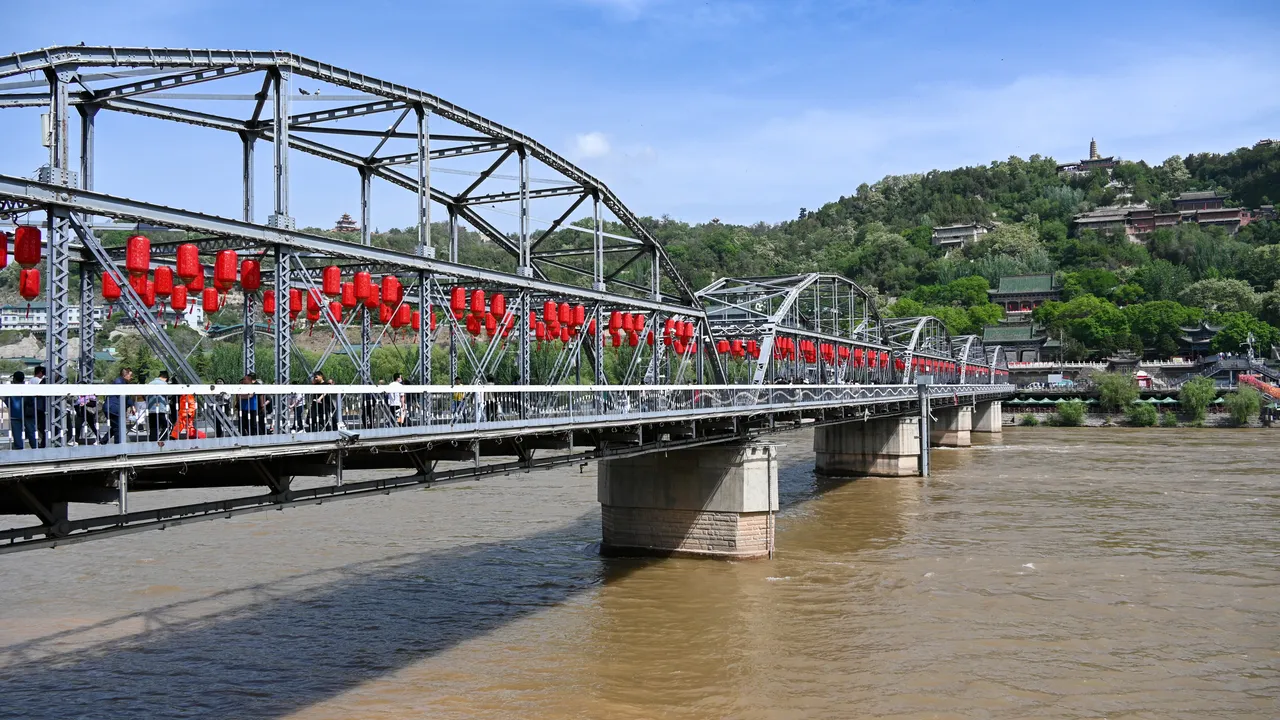
Five days open at the river's first bridge. At dawn Zhongshan Bridge holds only morning exercisers; north stands Baita Hill, south the waking old town. Cross into the Jinchengguan culture block, then loop back along the south bank.
The morning's task is orientation: the river threads the city west to east, and the main sights all hang on the south bank. Fix this axis and every route in the next four days assembles itself.
The Yellow River Mother and a Sheepskin Raft
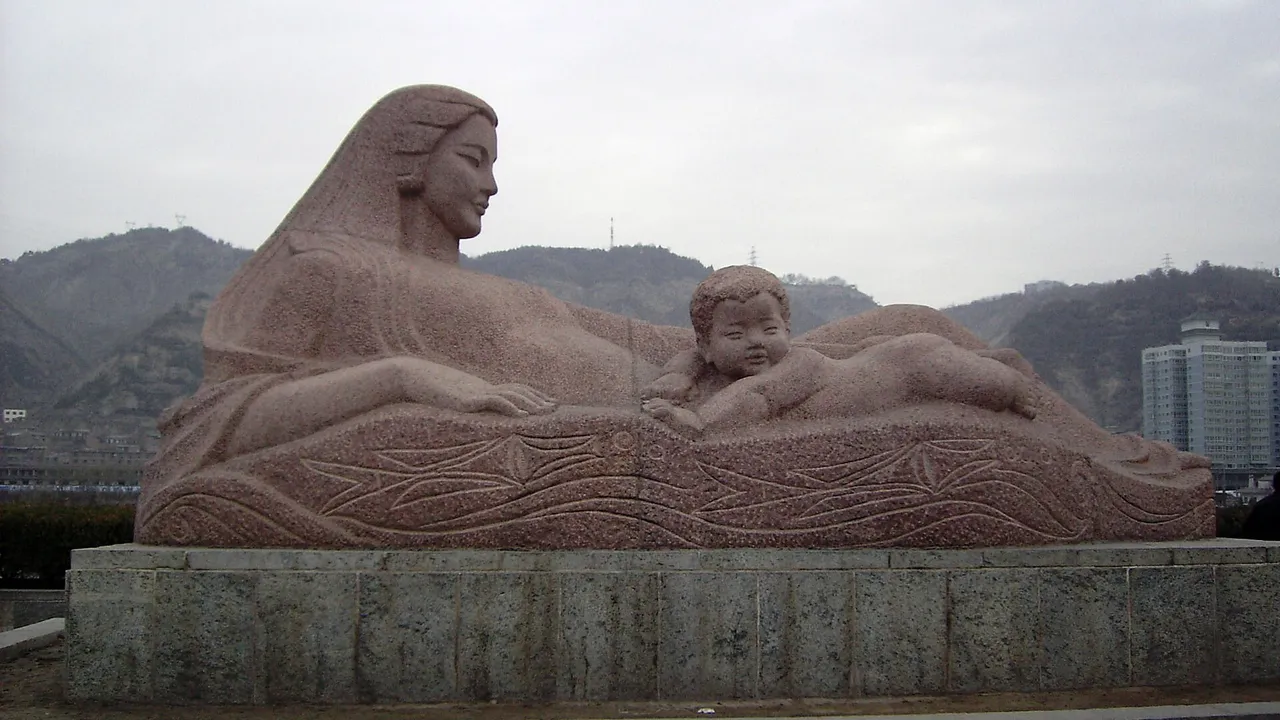
Walk two kilometers west along the bank to the Yellow River Mother, willow shade and river wind included. Rafts and speedboats dock by the sculpture's jetty from May to October; a dozen sheepskins lashed beneath a timber frame, poled downstream by a boatman, the river's oldest ferry craft.
Lunch back at Dazhong Lane: grey-bean soup, stir-fried noodle sheets and niangpi in one sitting. Spend the afternoon napping at the hotel to bank energy for the night.
Zhengning Road Night Market: An Opening Appetizer
The first night skips sights for Zhengning Road. The signature is milk-and-egg jiuzao, boiling milk poured over egg with fermented rice, raisins and peanuts, dairy and gentle booze in layers; skewers, trotters and grey-bean soup line the street.
Treat the market as an appetizer course, one taste of each, banking three-tenths of appetite for four more days of beef noodles and mutton.
Gansu Provincial Museum: The Bronze Horse and Silk Road History
Day two opens at the provincial museum. The Silk Road gallery runs from painted pottery to camel figurines, a corridor chronology; the Bronze Galloping Horse waits upstairs in the Buddhist art hall, its Eastern Han airborne pose worth a full circle.
Use two hours well: one for the main gallery spine, half for pottery, half for the horse and Buddhist art. Stamp your ticket at the cultural shop before leaving, and the horse comes home with you.
Waterwheel Park and a Riverside Afternoon
After lunch the pace should slow, and Waterwheel Park fits exactly. Wooden wheels over ten meters tall turn with the current, and with the water mill and flumes they form a complete ancient irrigation system; the free grounds reward a one-hour riverside loop.
If energy remains, continue east along the greenbelt or settle at a teahouse stand for sanpaotai. A Lanzhou afternoon owes you an hour of riverside idleness.
Baita Hill and the River Cableway
Climb Baita Hill at dusk, forty minutes of steps to a view of the river splitting the city, or ride the cableway from the bridge's north end, gliding over the water in minutes to land on the mountainside.
After summit sunset, walk down to the lit night bridge, the day's standard closing line. Dine nearby and sleep early: leaving town starts tomorrow.
Liujia Gorge Boats and Bingling Temple
Day three is the trip's centerpiece. Charter two hours to the Liujia dam, then boat across the cliff-walled reservoir as blue-green water alternates with red rock. The Bingling caves cut into a cliff over 160 meters high, the twenty-seven-meter Tang Maitreya at the gully mouth gazing down at the water.
Open caves line the walkway, Western Qin apsaras and Northern Wei figures each with their era's face; booked travelers see Cave 169's Western Qin inscription, others study the mid-route caves closely. Boats return mid-to-late afternoon, landing you back in Lanzhou by evening.
Qingcheng Old Town: Mansions of a Tobacco Port
Day four runs north to Qingcheng. The City God Temple and the academy set the plan, the Luo compound keeps its tobacco workshop tools in place, and the Gao ancestral hall arranges its plaques with strict propriety; two hours cover the core courtyards.
Lunch on Qingcheng long noodles under minced-meat broth, then walk the riverside lane to the crossing and watch raftsmen patching sheepskins.
The Shichuan Pear Orchard and Its Bridge
Drive an hour-plus from Qingcheng to Shichuan, where ten thousand mu of ancient pear trees still bear fruit on three-hundred-year trunks too thick for one person's arms. Wander the understory paths freely, and buy fresh soft pears in autumn.
Exit over the suspension bridge, pausing mid-span for the valley panorama: orchard, village and river bend in one frame. The evening return lands in Lanzhou right at dinner hour.
Xinglong Mountain: Cloud Dragon Bridge and Forest
The last day climbs. Xinglong Mountain sits an hour out in Yuzhong; the Cloud Dragon Bridge spans a deep ravine to link the two summits, and the east peak's forest trail runs gently under towering spruce. The loop takes about four hours, or a half-loop at your own pace.
The mountain stays cool, long sleeves enough at noon. Rest pavilions punctuate the trail, and the resin-scented air is the finest deep breath of the whole five days.
Santai Pavilion: Closing the Five Days
Back in town, ascend Lan Mountain, where Santai Pavilion lays out everything the five days touched: the bridge, the bank roads, the lit banks of the river to the edge of sight. Replaying the trip from the summit is the best bridge back to ordinary time.
Descend for one last bowl of beef noodles before tomorrow's departure. The five-day order, river, museums, grottoes, towns, mountain, closes Lanzhou's geography and history into one loop.
| Getting around |
|
| Budget | About RMB 1800-3000 pp across five days: two charter days lead the costs, tickets and boat fares total near RMB 400, and meals flex freely. |
| Best time | May to October is the overall best window; late April adds pear blossom and July-August mountain cool, while winter boat stoppages force a day-three rework. |
FAQs
If five days shrink to three, what goes first?
Cut mountains, keep the river: preserve the two downtown days plus the Bingling day, folding Xinglong and Lan Mountain into evening slots. Qingcheng and Shichuan can share a rushed half day, but you lose the town's morning calm and the orchard's leisure, a price to weigh.
What budget should five days expect?
At a middle standard, RMB 2000-3000 per person: lodging 200-400 nightly, two charter days split among passengers, about 400 in tickets and boats, and a hundred a day eats very well. All-public transport squeezes under 1500 at the cost of hours.
How many mornings demand early rising?
Strictly one: day three must chase the Liujia boats, leaving before eight. Every other day tolerates nine o'clock departures, and days one and five can start whenever you wake, since Lanzhou's rhythm runs generous.
Which single meal among five days cannot be missed?
The first pot of beef noodles on day one's morning. It sets the trip's taste baseline, and every later niangpi, mutton and night-market dish gets measured against it. For one proper meal instead, choose hand-grabbed mutton with sanpaotai, the city's highest hospitality.