
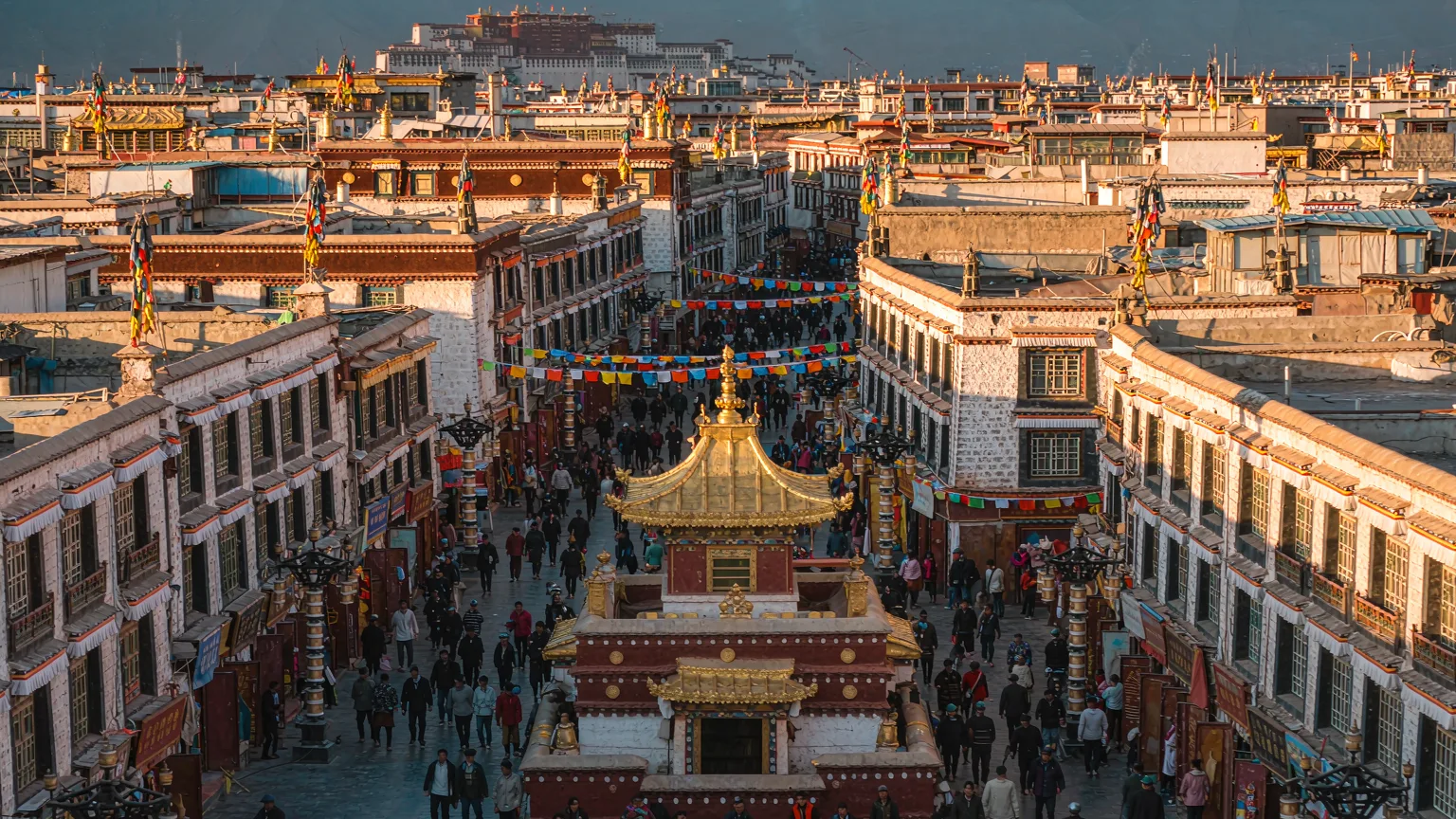
The Barkhor is not one street but a circulating system centered on the Jokhang: the inner Barkhor circuit, the middle Zikhor and the outer Lingkhor, with pilgrims measuring their devotion in laps. This day moves inside that system: dawn laps with the pilgrims, late morning sunk into a sweet tea house, afternoon in the back lanes among old courtyards and thangka studios, one more circuit at dusk to close it out.
It is the cheapest kind of day here: a pot of sweet tea costs a few yuan, a noodle bowl the same, and how long you sit determines the bill, not the menu. The streets are free and craft sessions run RMB 30-100. Flat walking totals about four kilometers with a tea house for recovery at every turn, which makes this the friendliest itinerary for anyone still adjusting to altitude. The only requirement is slowness; the whole point of this route is Lhasa's own tempo.
Itinerary at a glance
| 07:30 | The Dawn Kora: Walking with the Pilgrims |
| 09:00 | Guangming Sweet Tea House: Lhasa's Living Room |
| 10:30 | Back Lanes of the Barkhor: Courtyards, Chapels and Street Life |
| 12:30 | Lane-Side Lunch: Tibetan Home Cooking Done Properly |
| 14:00 | Thangka Studios and Craft Workshops: Watching a Slow Art |
| 16:00 | One More Circuit and Chongsang Market: From the Sacred Ring to the Market Ring |
The route, stop by stop
The Dawn Kora: Walking with the Pilgrims
At half past seven the Barkhor belongs to the pilgrims. Before the visitors arrive, low light cuts through the lane mouths, and the street runs on its original order: elders spinning hand-held prayer wheels, pilgrims rising and prostrating every three steps, residents carrying butter to feed the temple lamps. Join the clockwise flow softly, yield to those prostrating, the basic etiquette of the circuit.
Dawn light suits the street scenes and whitewashed walls, but the camera always yields to people: ask before portraits, and never interrupt a prostration mid-flow. One lap takes about forty minutes; take the second slower, noticing the auspicious paintings over doorways and mani stones carved into wall corners. The rhythm of the kora is contagious; by lap two you will likely have slowed to match it.
Guangming Sweet Tea House: Lhasa's Living Room
Guangming is the most storied sweet tea house in Lhasa, its long tables and benches packed with locals, thermoses and glasses the shared language. Sit down, pour your own, and learn the default protocol: leave small change under the glass and the refill comes unasked. A pot of tea plus a bowl of noodles costs a few yuan and buys you a whole morning in the city's living room.
Tea houses are the best observation posts in Lhasa: elders back from the kora, parents after school runs, small traders trading news. There is no need to leave quickly; drinking tea is the agenda of this route. Learn the house rules: lively is fine, loud is not, meet curiosity from neighboring tables with a smile, and anyone wanting to talk will open the conversation themselves.
Back Lanes of the Barkhor: Courtyards, Chapels and Street Life
Behind the Barkhor, the side lanes pack in tighter than the main ring: small chapels and old courtyards hide along the secondary kora lines, some gates ajar on drying laundry and potted plants climbing the walls. There is little commerce here, and that is precisely why it feels more like Lhasa: chess elders, sprinting children, the sound of butter being churned from behind windows.
What to watch for: the whitewash and painted bands on the walls, carved stones by the gates, dried-meat shops, and doorframes older than most cities. Navigate by the Jokhang's golden roof; whenever lost, look up and walk toward it. The lanes move slower, and every side passage eventually reconnects to the main ring, so there is no such thing as truly lost.
Lane-Side Lunch: Tibetan Home Cooking Done Properly
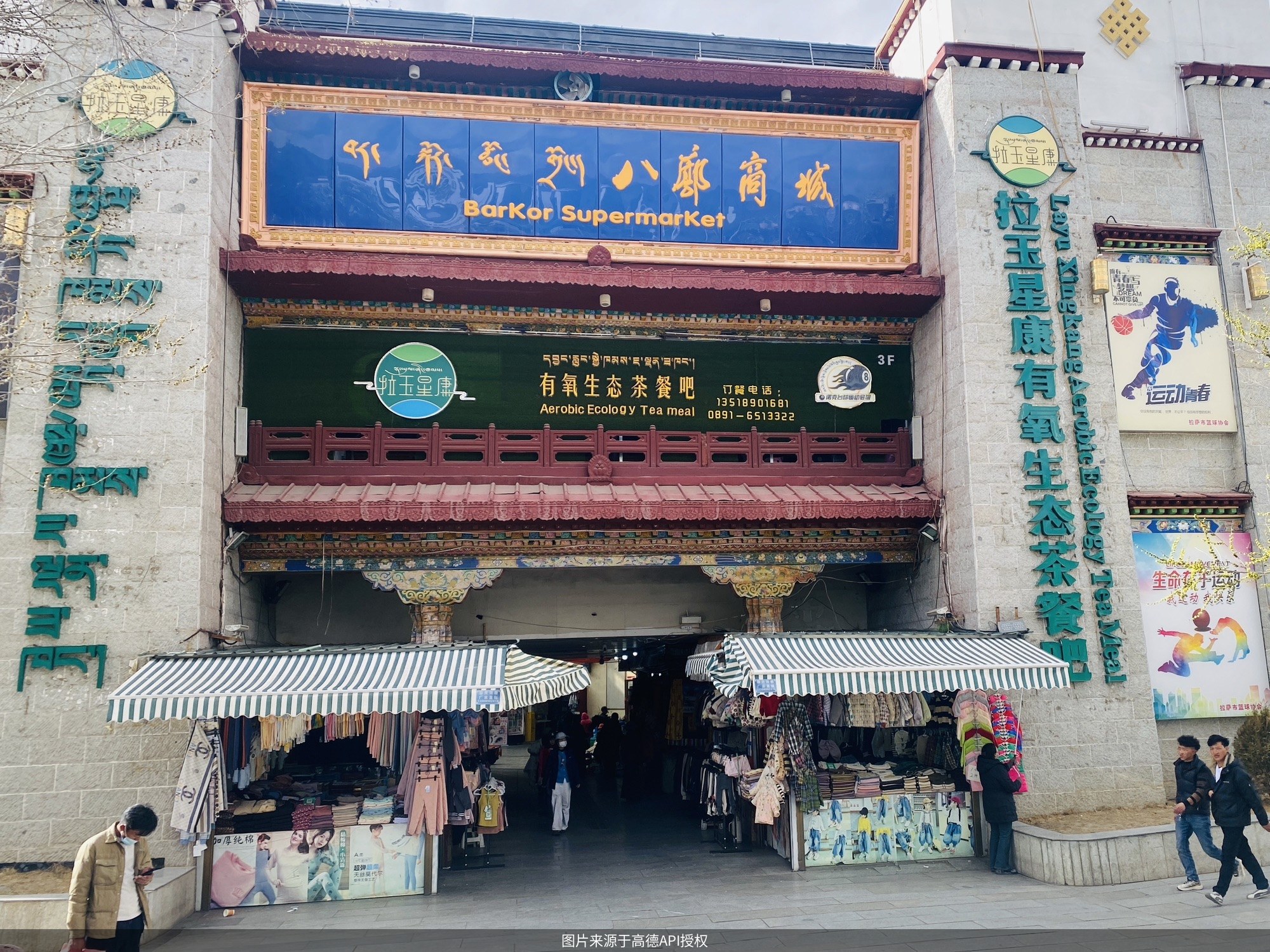
Lunch at a local Tibetan restaurant on the lane edges, skipping the tourist-facing storefronts on the main ring. A sound opening order: Tibetan steamed buns or beef pancakes, a pot of yak soup, barley flatbread and sweet tea, a very good meal for two or three at around a hundred yuan. The real goal is calibrating your stomach at altitude, so hold the heaviest butter and raw items for later.
Afterward, honor the plateau rhythm with an hour back at your room. The afternoon lanes and studios ask little physically, but everything feels different after rest. If the morning brought any unease, stretch the nap to two and shift the schedule; Lhasa's afternoon is in no hurry.
Thangka Studios and Craft Workshops: Watching a Slow Art
The afternoon belongs to craft: thangka studios and apprentice workshops cluster around the Barkhor, painters layering mineral pigments onto stretched canvas, a traditional piece taking months. Most studios welcome quiet visitors, and some offer short talks or hands-on sessions, brush holds and gold-line work, for RMB 30-100. The point of the visit is the process, not the purchase.
Beyond thangka, the lanes hold small workshops for copper, incense and woodwork. The incense makers show handmade steps and the layered smell of natural ingredients; the copper shops' hammering is the lane's background score. Hold off on buying; understand the craft and the prices today, and shop with judgment tomorrow.
One More Circuit and Chongsang Market: From the Sacred Ring to the Market Ring
Walk the circuit once more at dusk, and it will read differently than at dawn: you know which door hides a chapel, which corner catches the best light, at what hour each stretch thins out. Juniper smoke over slanted light makes this the day's richest hour on the Barkhor.
Finish at Chongsang market, Lhasa's busiest traditional bazaar, where dried fruit, butter, rugs and household goods pile up amid a roar of local shopping that feels worlds away from the main ring. Half an hour suffices; buy a pack of yak jerky or dried cheese to taste. Then home early after dinner: the route is gentle, but a full day at altitude is still a full day, and sleep wins.
| Getting around |
|
| Budget | Tea pots and noodle bowls cost a few yuan each, so a full day of eating runs RMB 30-50; the streets are free, craft sessions RMB 30-100 |
| Best time | Works year-round, best in the morning for light and life; the kora and tea sipping are low-intensity, ideal even on a rough altitude day |
FAQs
I do not know the kora. Is walking along disrespectful?
Not at all. Stay clockwise, yield to prostrating pilgrims, keep quiet; the circuit is open to all walkers, and silent companionship is a perfectly respectful way to take part.
Is a tea house workable without Tibetan?
Very workable. Point at noodles and sweet tea, and coins under the glass are the universal language; most houses post Chinese prices and staff know the visitor routine cold.
Is this route friendly to people with altitude symptoms?
About four flat kilometers with a tea house at every turn, among the gentlest plans in Lhasa. Still, let the body rule: trim to two or three stops if needed, and an afternoon spent sitting in a tea house counts as completing the route.
I know nothing about thangka. Are studios still worth entering?
Yes. You are watching process and patience, not decoding iconography; most studios welcome quiet visitors, and half an hour of watching pigment and gold lines beats browsing ten shops.