
This day strings together three kinds of cultural space in Lhasa: Norbulingka, the Dalai Lamas' summer palace, where gardens, halls and murals record the gentlest side of religious and political life; the Tibet Museum, whose free galleries lay out the region's history in one coherent pass; and Sera's debate courtyard, a living tradition where monks spar over doctrine with claps, drawn-out challenges and ripostes, theatrical in form and rigorous in content.
Costs stay modest: Norbulingka about RMB 60, Sera about 50, the Tibet Museum free with reservation and closed Mondays. The whole plan hangs on one anchor: debates start around three and run one to two hours, so Norbulingka in the morning, the museum at midday, and the Sera courtyard promptly at three. Total driving is about forty minutes, all by taxi, with minimal walking; this suits day two or three, once the altitude has settled.
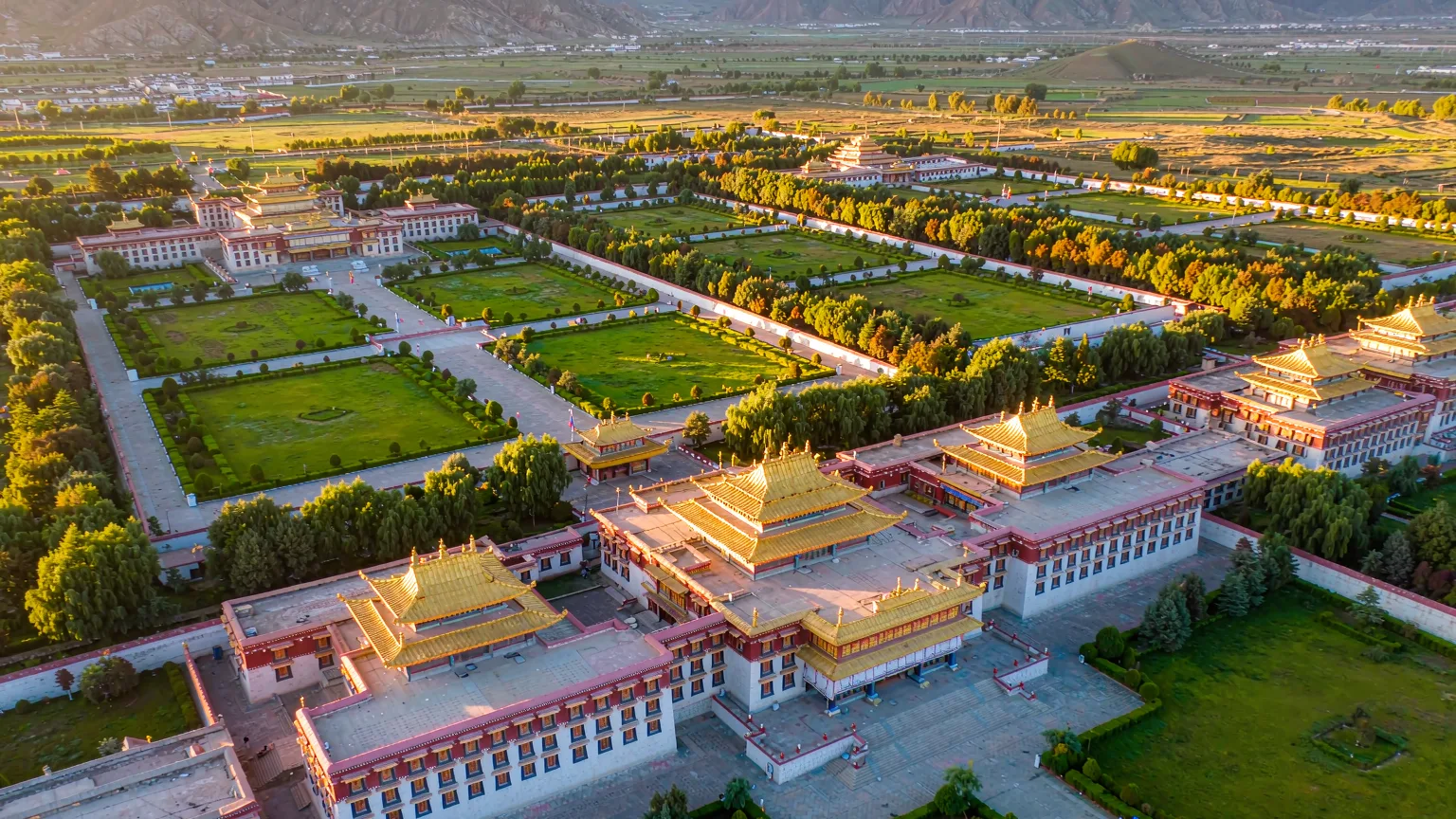
Itinerary at a glance
| 09:00 | Norbulingka: The Summer Palace of Jewels |
| 11:30 | Lunch and the Hop to the Museum |
| 13:00 | The Tibet Museum: Tibet in Three Hours |
| 15:00 | Sera's Debating Courtyard: Doctrine Settled by Clapping Hands |
| 17:00 | Sera's Hillside and the Ride Back: Looking Down the Lhasa Valley |
The route, stop by stop
Norbulingka: The Summer Palace of Jewels
Norbulingka means jewel garden: founded in the eighteenth century as the Dalai Lamas' summer residence and seat of summer governance, it spreads across some 360,000 square meters, the largest and most refined garden in Tibet. Palaces interleave with trees, lake pavilions and murals, and the New Palace's painted narrative of Tibetan history, in unfolding panels, rewards the longest look in the park.
Entry is about RMB 60; at nine the grounds are quiet and slanted light plays on white walls and gold roofs. The garden is vast, so anchor on the New Palace and the lake pavilion and allow ninety unhurried minutes. During the Shoton Festival the park erupts with opera and the great thangka unveiling, but on ordinary days it reads as a museum of gardens: each era's expansion is a slice of history you can walk through.
Lunch and the Hop to the Museum
Norbulingka and the Tibet Museum stand across one street, a ten-minute walk, so lunch stays local. The area skews toward Sichuan-style kitchens and Tibetan noodle shops, a good meal for two or three at fifty to eighty yuan. Keep the usual rules: mild food, seventy percent full, warm water, saving your energy for the debate courtyard.
The museum is free but needs reservation through official channels, entry with your ID, closed Mondays. One pm is the sweet spot: the galleries take two to three hours, and stepping out before three lands you exactly at Sera for the debates, the whole day clicking into sequence.
The Tibet Museum: Tibet in Three Hours
The Tibet Museum is the highest-efficiency entry point to understanding this plateau: from prehistory and the Tubo era through governance under the Yuan, Ming and Qing into contemporary life, the galleries run on a timeline of artifacts and documents, with thangkas, scriptures, ritual objects and daily implements all systematically displayed and captioned. Any temple you visit afterward will read completely differently with this background.
Entry is free with reservation and merits a solid two to three hours. Short on time, prioritize the prehistoric and Tubo galleries plus the thangka display; drawn to Buddhist art, budget extra for the scripture and ritual-object cases. Where flash-free photography is allowed, follow on-site signs. Then taxi straight to Sera, about twenty minutes.
Sera's Debating Courtyard: Doctrine Settled by Clapping Hands
Sera is one of Lhasa's three great monasteries, entry about RMB 50, but its unrepeatable spectacle is the debating: from about three in the afternoon (never Sundays), monks pair up under the courtyard trees, the questioner standing, clapping, drawing out the challenge in long syllables, the answerer seated and parrying, all of it sharpening the rigor of Buddhist argument. The scene looks fierce; it is, in fact, a teaching system centuries old.
How to watch: stand at the edge, stay quiet, never interrupt or block the debaters for a photo; long lenses yes, flash no. You need no shared language, since gesture and expression carry the content. Debates run one to two hours, and after twenty minutes you will start hearing the difference between challenge and reply. Spend forty minutes first on the main assembly hall, and be at the courtyard by ten to three for an edge position.
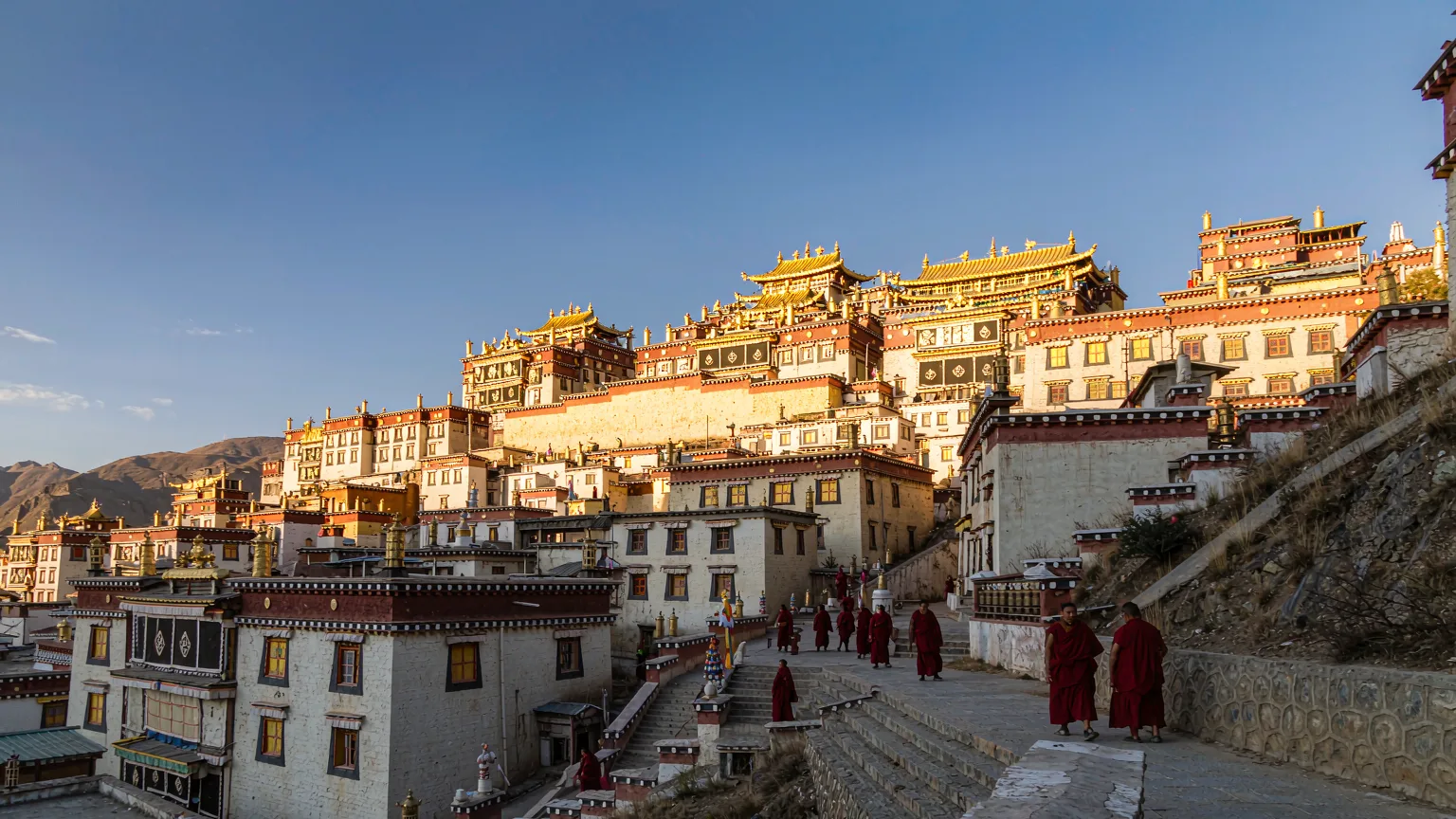
Sera's Hillside and the Ride Back: Looking Down the Lhasa Valley
After the debates disperse, with legs and daylight to spare, walk a short stretch of the kora path behind the monastery; from the slope you can take in Sera's golden roofs and the run of the Lhasa river valley at once, in the long soft light of evening. Go up only a little and turn back; the oxygen ledger at altitude always favors the conservative choice.
Taxi back to town in twenty minutes, dinner on a Tibetan stone-pot stew or Sichuan kitchen, and the day lands at RMB 150-250 with tickets, rides and meals. At night, assemble what you saw: Norbulingka's murals, the museum's timeline, the clapping in the debate courtyard. Fit together, they form the skeleton of Lhasa as a cultural city.
| Getting around |
|
| Budget | Norbulingka about RMB 60, Sera about 50, the Tibet Museum free (reserved); the day with transport and meals runs RMB 150-250 |
| Best time | Debates run Mon-Sat from about 3 pm, never Sundays; Norbulingka shines in summer; avoid Mondays when the museum closes |
FAQs
Is the debating guaranteed, and when might I miss it?
The regular run is Monday to Saturday from about 3 pm, none on Sundays; festival periods, exams or prayers can cancel or shift it. Confirm the day's status with your hotel or the monastery; rain does not stop it, as the venue moves indoors.
Do Norbulingka and the Potala overlap?
Not at all: the Potala is the winter seat, the hub of politics and religion, while Norbulingka is the summer side of gardens and daily life. Seeing both completes the picture, and Norbulingka first makes the Potala land better.
Does the Tibet Museum need a reservation, or can I walk in?
Free, but reserve ahead through official channels and enter with your ID; closed Mondays. Peak season and holidays leave few walk-up slots, so book early; off-season on-site registration sometimes works but is never guaranteed.
Are there taboos around watching the debates?
Stay quiet, never stand in front of a debater, no flash, no imitating the claps; photos fine within the bounds of not disturbing. The fierce gestures are scholarly form, not conflict, and a smile of acknowledgment to the monks is always welcome.