
Lhasa sits at about 3,650 meters, and the first rule of day one is low intensity: walk slowly, stop often, drink constantly. This classic line keeps everything within the old city and the Potala's orbit, roughly five kilometers in total: the Jokhang in the morning, the Barkhor circuit at noon, Zongjiao Lukang park and the palace's northern reflection in the afternoon, then Chakpori viewpoint and Potala Square toward evening, closing with the floodlit palace after dark.
Costs are light: the Jokhang is about RMB 85 and nearly everything else is free. The Potala itself requires real-name booking one to seven days ahead on official channels, about RMB 200 in season and 100 off-season, with visits capped around an hour and no photography inside; give the palace climb its own day when your body feels best, kept apart from this itinerary. Never sprint between sights at altitude; everything will still be there tomorrow.
Itinerary at a glance
| 09:00 | Jokhang Temple: The Heart of Lhasa |
| 11:00 | Barkhor Street: One Circuit Around the Jokhang |
| 12:30 | Lunch: An Introduction to Tibetan Noodles and Sweet Tea |
| 14:30 | Zongjiao Lukang Park: The Potala from Behind |
| 16:30 | Chakpori Viewpoint and Potala Square: The Banknote Shot |
| 19:30 | Potala Square by Night: The Floodlit Finale |
The route, stop by stop
Jokhang Temple: The Heart of Lhasa
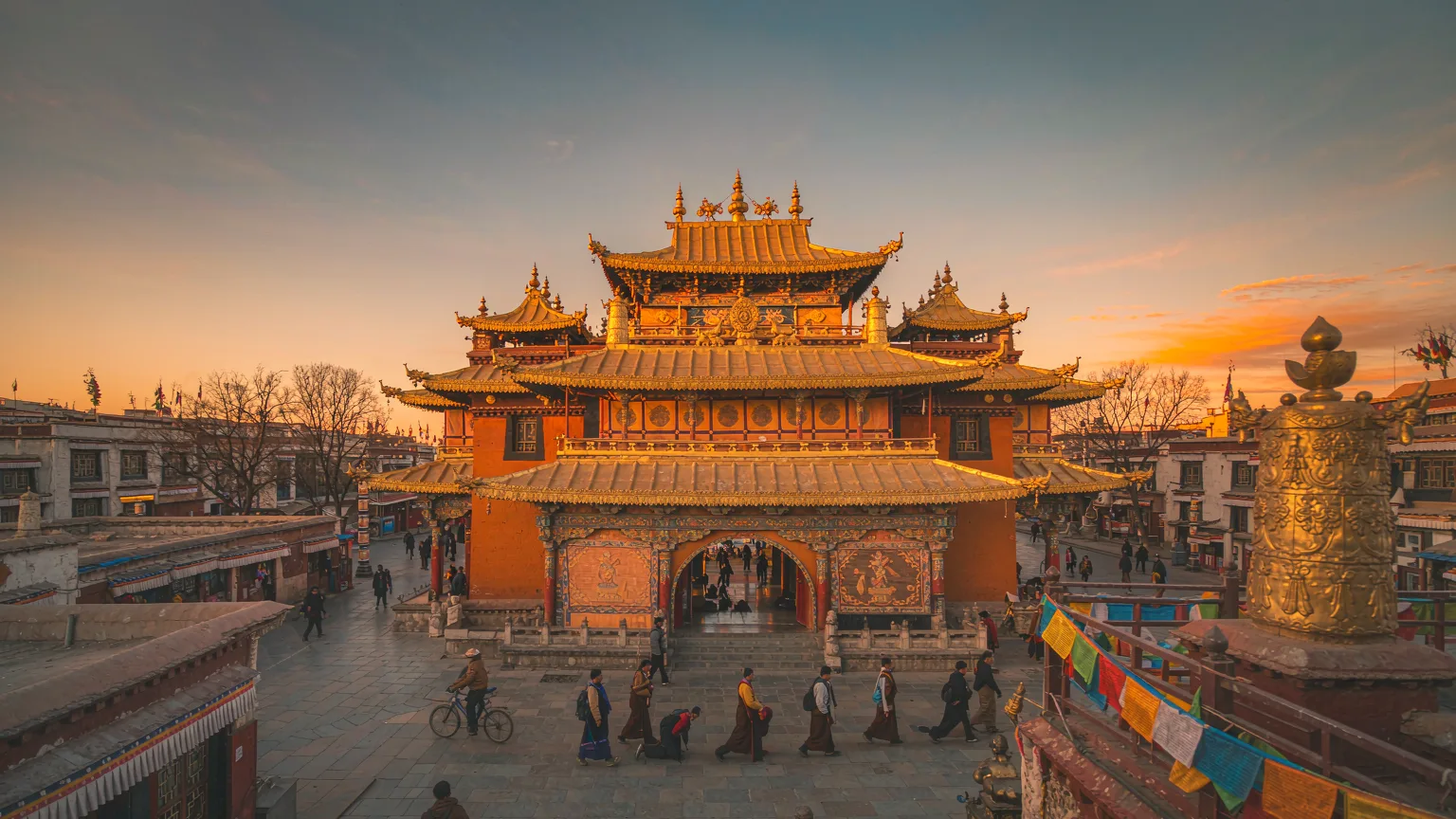
Founded in the seventh century, the Jokhang is the holiest temple in Tibetan Buddhism, housing the Jowo statue, a life-sized image of the Buddha at age twelve that has drawn prostrating pilgrims for well over a millennium. Entry is about RMB 85; arrive around nine, when the main halls run dim and thick with butter-lamp smoke. Follow the crowd clockwise, look up at the gilding and murals, and give the inner chapels and the first-floor gallery your attention.
After the halls, climb to the golden roof platform: the gilded wheel flanked by deer blazes in the sun, and from here you can frame the Potala's Red Hill and the Barkhor's flowing pilgrims in one view. The flagstones at the gate have been polished mirror-smooth by generations of full-body prostrations; pause outside first to watch them, and only then go in, understanding what this temple weighs. On your first day at altitude, take every staircase one slow step at a time.
Barkhor Street: One Circuit Around the Jokhang
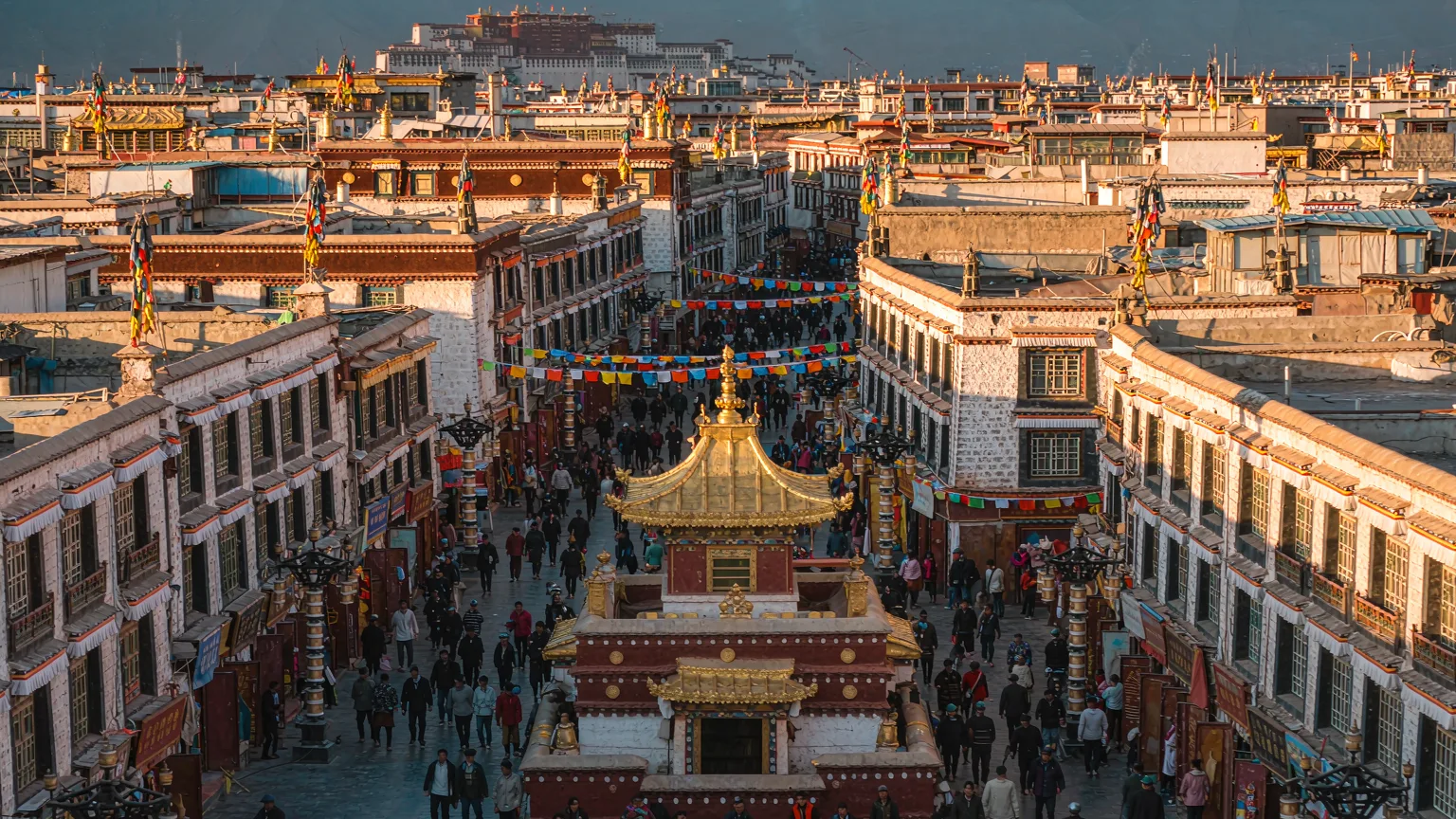
The Jokhang opens directly onto the Barkhor, the pilgrim circuit around the temple and Lhasa's oldest market street. One clockwise lap runs about a kilometer, past whitewashed Tibetan houses with black-trimmed windows, prayer wheels lining the route, their copper worn bright by countless palms. The right way to walk it is unhurried, matching the rhythm of the pilgrims.
Watch the street's three layers: the flow of pilgrims, the juniper smoke rising from burners, and the old lintels tucked between shops. Stalls sell everything from butter and barley to turquoise and thangkas; on day one, only look and learn the market before any buying. Finish a lap by sitting down to a pot of sweet tea. At 3,650 meters, every activity deserves a breathing gap.
Lunch: An Introduction to Tibetan Noodles and Sweet Tea
Keep lunch simple and nearby: Tibetan noodles are the friendliest first meal, a bowl of alkaline wheat noodles in clear yak-bone broth with a few slices of yak, a few yuan a bowl, paired with a pot of sweet tea. The tea, brewed from black tea, milk and sugar, tastes close to a milk tea, the social fuel of Lhasa, and sits gently on any newly arrived stomach.
High-altitude dining rules for the first two days: eat light and familiar, stop at seventy percent full, and keep sipping warm water. The heavier items, butter tea and dried yak, can wait until your body settles. Noodle shops pack the streets around the Barkhor; follow the locals into whichever one they favor. Then take a one-hour nap back at your hotel, the single most sustainable habit of any plateau itinerary.
Zongjiao Lukang Park: The Potala from Behind
The easy afternoon choice is Zongjiao Lukang, the free park behind the Potala, originally the palace's water garden. Its lake faces the palace's northern wall, front-lit in the morning and side-lit later, and when the surface stills, the red and white facade doubles itself in the reflection while locals circle the lake, play chess and dance in lines, a fine window into everyday Lhasa.
The park is compact, forty minutes for a slow lap with benches throughout, so sit whenever you tire. Feeling strong, extend half a lap along the Dragon King Pool side; feeling flat, simply watch the palace waver in the water. It doubles as the best rehearsal for tomorrow's visit: from behind, you can finally see how the palace grows out of the hill itself.
Chakpori Viewpoint and Potala Square: The Banknote Shot
Toward evening, head up Chakpori viewpoint at the square's southwest corner, a few minutes on foot; its angle matches the Potala printed on the back of the fifty-yuan note, the most famous frame in Lhasa, front-lit at dawn and warm-toned at dusk. The sunrise queue is the busy one, so late afternoon stays pleasantly loose.
Descend into Potala Square, free entry through security, facing the palace's southern wall with the white monument and fountains flanking it. Walk it slowly, looking up at the palace riding the hill, and feel its sheer mass over the city. Today is exterior only: the interior visit needs real-name booking one to seven days ahead, about RMB 200 in season and 100 off-season, capped around an hour with no photos inside, so give it its own day at your physical best.
Potala Square by Night: The Floodlit Finale
After dark the palace lights come on, the red and white walls reading even more sculptural than by day, and when the fountains run, the mist makes the floodlit facade glow. The best window runs from half an hour to an hour after nightfall; frame the palace over the square's reflecting pool or the fountains, and let day one on the plateau settle right here.
After the lights, head back early. The first night's homework never changes: slow showers, no alcohol, early bed. A mild throb and shallow sleep are standard, and most people feel noticeably better by morning. Walking slowly and seeing less on day one is exactly how Lhasa should be opened: the altitude repays patience over the days that follow.
| Getting around |
|
| Budget | Jokhang about RMB 85, Barkhor and the square free, meals RMB 30-60 pp; the Potala is about 200 in season, 100 off-season, booked separately |
| Best time | May-Oct is prime; sun protection and hydration matter all year; keep your first two days at altitude deliberately light |
FAQs
How do I book Potala Palace tickets, and can I buy same-day?
Book one to seven days ahead on official channels with your real name, about RMB 200 in season and 100 off-season; in peak months book the moment you land. Same-day tickets are rare, and scalped tickets risk outright denial at the gate.
Is a full first day too much at altitude?
The route is deliberately low-intensity: about five flat kilometers, benches everywhere, plus a nap built in. With a real throb or racing heart, cut everything after two pm and keep only the Jokhang and Barkhor.
Are both the Jokhang and the Potala essential, and which first?
Both, but they differ: the Jokhang is living devotion, the Potala is architecture and political history. If only one can come first, the Jokhang on day one is the safer call; the palace climb is physically demanding, so save it for your strongest day.
Any dining cautions for my first days in Lhasa?
For the first two days: light food, seventy percent full, warm water, with noodles and sweet tea the safest picks. Try butter tea and dried yak once settled, and keep alcohol minimal, since altitude amplifies its effects.