
Read Nanchang another way: skip the museums and follow the Gan River. The old town's pedestrian streets and heritage block supply the street life, Honggutan's skyline and great wheel the modern face, and one river sews the two Nanchangs together. Three days: one old town, one new, one for the creative park and food streets scattered between.
The whole line runs metro plus walking, the easiest itinerary in the city. The pace deliberately breathes: shopping mornings, transfer afternoons, riverfront evenings waiting for the lamps, late-night food to close. Urban travel is not checklist work; it is matching the city's tempo.
Itinerary at a glance
| 第1天 09:00 | Bayi Square |
| 第1天 11:00 | Zhongshan and Shengli Pedestrian Streets |
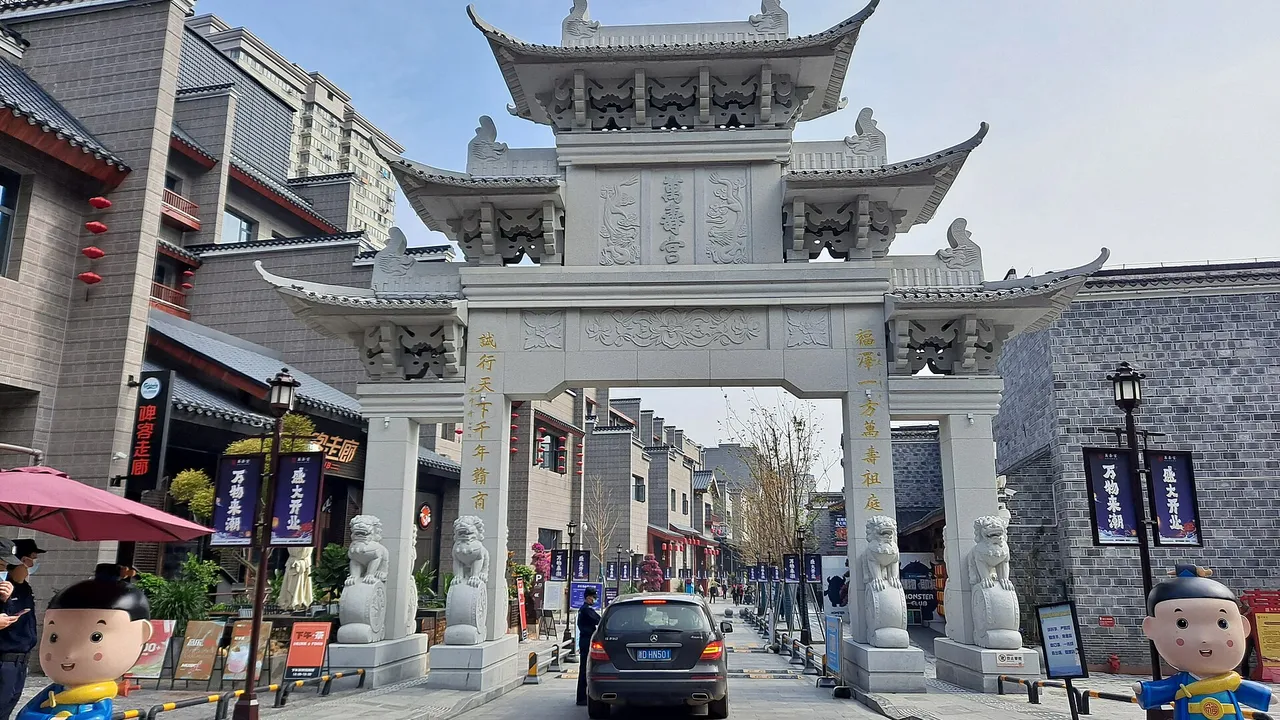
| 第1天 14:30 | Wanshou Palace Historical and Cultural Block |
| 第1天 19:00 | Tengwang Pavilion by Night and the River Light Show |
| 第2天 09:30 | Qiushui Square |
| 第2天 14:00 | The Nanchang Star Ferris Wheel |
| 第2天 16:30 | Ganjiang Riverside Park |
| 第3天 09:30 | The 699 Cultural and Creative Park |
| 第3天 15:00 | Shengjin Pagoda and the Food Street |
The route, stop by stop
Bayi Square
Begin at the city's origin point. The memorial tower stands on the square's axis, reliefs telling the 1927 shot, morning regulars exercising and pigeon-feeding children around it, with forenoon light giving the tower its best full-frame shot.
Soviet-era buildings line Bayi Avenue; heading east into Zhongshan Road, the old town's commercial rhythm opens up. Day one books nothing paid, saving the budget for the night.
Zhongshan and Shengli Pedestrian Streets
The two pedestrian streets are the old town's commercial arteries, chains interleaved with local veterans, small-goods shops good for a rummage, and Shengli's arcade stretch at its most atmospheric once evening lamps light. Browse more than buy.
Lunch happens in the back lanes off the streets, where veteran noodle and clay-pot shops run thirty percent under the main drag; mealtime crowds turn fast, queues rarely past fifteen minutes.
Wanshou Palace Historical and Cultural Block
Slip into the Wanshou Palace lanes after lunch, where afternoon light slants down the narrow alleys and paints the brick, teahouse opera requests and shop chatter braiding into the liveliest cross-section of the old town.
Take the side lanes off the main street, watch repairers, tailors and old barbershops still open. When tired, a teahouse and one jasmine tea can carry you to lamplight, timed perfectly for the evening pavilion.
Tengwang Pavilion by Night and the River Light Show
Day one's night starts at Tengwang Pavilion, which after dark looks closer to the painted tower of imagination than by day; when the garden night show runs, lights and stage turn the whole structure into theater. Even skipping the garden pays: the riverside path below the walls is free.
Around eight the both-banks light show begins, towers on either shore shifting with the score, the pavilion the fixed foreground. Find a quieter stretch of embankment, watch the full sequence, then move on.
Qiushui Square
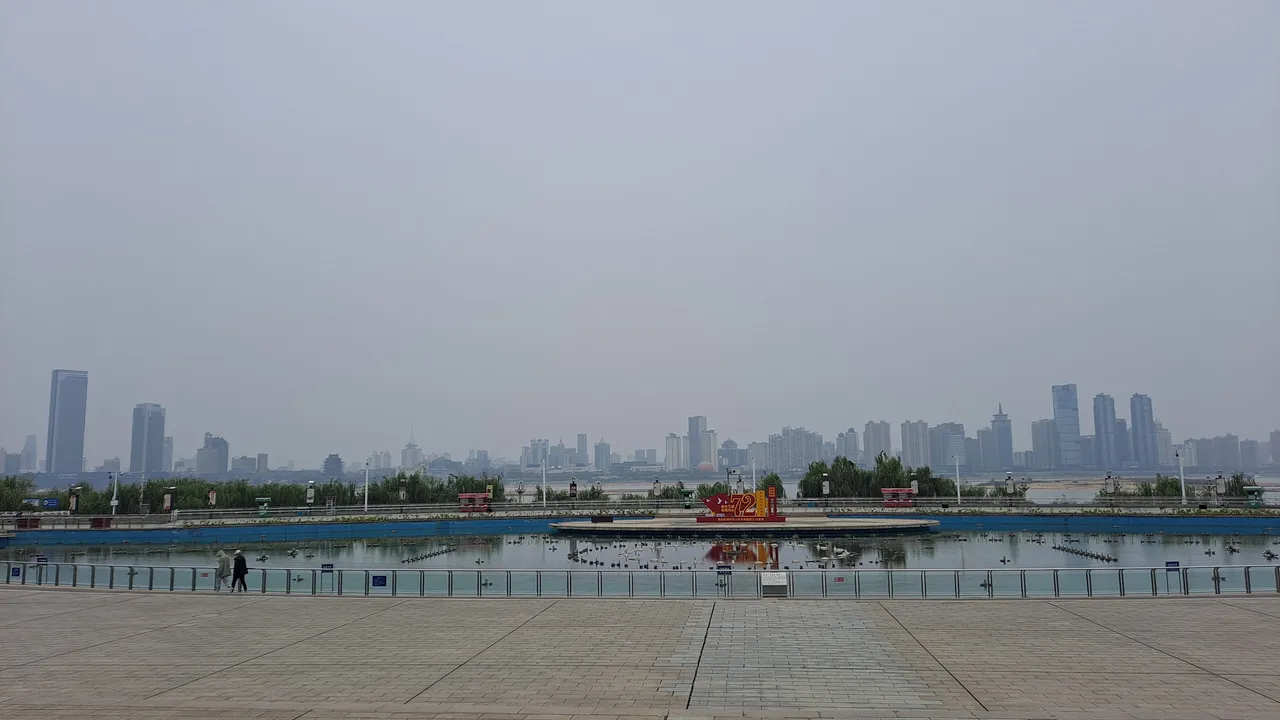
Day two crosses the river. Qiushui Square faces the pavilion head-on, the best seat for the both-banks view: quiet in the morning, the fountain plaza wide open, Honggutan's towers lining the far bank as a skyline. By day it belongs to kite flyers.
The name quotes the famous line about autumn waters meeting the sky, answering the pavilion across the water. Read the geography by day, return for the fountain by night; one place, two hours of it, is the game of this route.
The Nanchang Star Ferris Wheel
Ride the Nanchang Star in the afternoon. Once the world's tallest, it turns a full circle in about half an hour, the cabin overlooking both banks and the skyline, with the Meiling ridgeline visible on clear days. Boarding before dusk banks sunset and lamplight in one ride.
Queues peak for night sessions while afternoon cabins run loose, couples often getting a cabin to themselves. Vertigo sufferers should start facing away from the river and turn toward the view once settled.
Ganjiang Riverside Park
Off the wheel, walk the riverside park, the green ribbon stringing Qiushui Square to the great wheel with paths, lawns and viewing decks in sequence, locals jogging, dog-walking, shooting wedding portraits, the river wind rinsing the day's heat away.
The park's sculptures nod to city history, free review as you go. Reach the viewing stretch opposite the pavilion, wait for the far bank to light, then walk back to the metro the way you came.
The 699 Cultural and Creative Park
Day three opens at 699, a former textile mill reborn as a creative park: red-brick workshops, period slogans and new-media installations sharing frames, endlessly photogenic, with markets and exhibitions on weekends. Weekdays run hushed, cafes and buyer shops rewarding slow laps.
The sense of history is real, not set dressing: roof trusses, old machines and wall slogans preserved from their decade. Beyond photos, an hour in the bookshop built from a workshop is the loosest hour of the trip.
Shengjin Pagoda and the Food Street
Close at Shengjin Pagoda, whose day face and night face each earn their hour. The food street's dinner is the three days' full stop: mixed noodles, clay-pot soup, grilled fish down the row. Afterward the pagoda square lights up and a market trinket rounds the urban line off.
Evening flights and trains connect easily, the pagoda sitting within half an hour of every hub. Three days without a single booked museum: Nanchang's everyday life was the sight all along.
| Getting around |
|
| Budget | Mostly free stops; pavilion and wheel total about RMB 120, with meals running RMB 100-150 a day. |
| Best time | Year-round; light shows and fountains peak Friday and Saturday nights, and the wheel wants clear weather. |
FAQs
Is the metro enough for all three days?
Yes. The old town's square, streets and Wanshou Palace plus the new town's square, wheel and riverside park all sit on the rail lines, ten minutes' walk from stations at most. Only 699 needs a bus or shuttle leg after the metro; the whole plan never hails a cab, the cheapest route in the city.
How many tickets does this line actually need?
Barely any. Streets, squares, parks and the creative park are free; only the pavilion climb and the wheel reliably charge, around RMB 120 together. The pavilion's night show bills separately, but skipping it for the wall-side lights and river views works just as well and funds two midnight snacks.
How do I compress this to two days?
Fold day three's creative park and pagoda into day one's evening and shift the pavilion night and light show to night two. Protect the one-day-old-town, one-day-new-town skeleton; if shopping weighs heavy, trade half of Zhongshan Road for the Honggutan malls, and if food rules, give the pagoda street and night lane a meal each.
What should I watch for on the riverfront at night?
Three things: dispersals pack dense, so fix a meeting point before the show; watch children closely on waterside decks and near railings; summer and autumn mosquitoes want repellent. After the last metro, taxis queue long, so idle half an hour in the mall rather than freezing at the riverbank.