
Three days line up two millennia. Day one belongs to 1927: the memorial and the sites scattered through lanes make the uprising's decisions and marches legible. Day two goes underground: the provincial museum's Haihun gold and the site museum's excavation story form one of the era's heaviest Han finds. Day three belongs to the ancients: temple, lake islet, pagoda and Tengwang Pavilion, the old town's whole skeleton.
The single difficulty is distance: the Haihun site lies forty-five kilometers out, needing a car or shuttle line for a half-day round trip. The other two days run metro plus walking. Put the long day second, warmed up by the old town and eased out by day three, and the energy curve stays smooth.
Itinerary at a glance
| 第1天 08:30 | August 1 Uprising Memorial: Where the Story Starts |
| 第1天 10:30 | Zhu De's Residence and He Long's Headquarters |
| 第1天 14:00 | Bayi Square and the Memorial Tower |
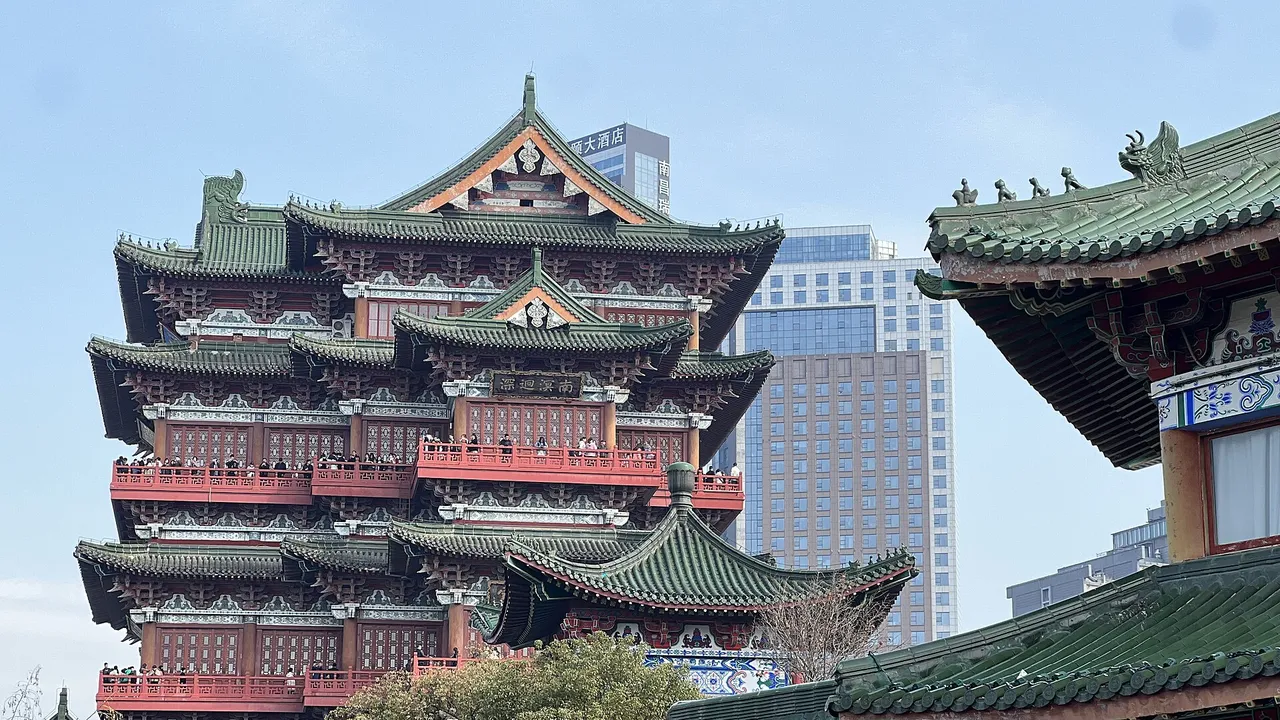
| 第1天 16:30 | Tengwang Pavilion: Day One's Full Stop |
| 第2天 09:00 | Jiangxi Provincial Museum: A Morning of Gold and Bronze |
| 第2天 13:30 | Haihun Marquis Site Museum: The Dig Itself |
| 第2天 18:00 | Wanshou Palace Block: Dinner under the Lamps |
| 第3天 09:00 | Youmin Temple: Incense and Ancient Camphors |
| 第3天 11:00 | Baihuazhou and Xinghua Tower: Lake Water and Old Stories |
| 第3天 14:30 | Shengjin Pagoda: Where the Three Days Land |
The route, stop by stop
August 1 Uprising Memorial: Where the Story Starts
Open the three days at the memorial. Enter at opening when the galleries echo only footsteps: the restored headquarters and the uprising artifacts are lesson one. Two floors advance chronologically, laying out the decisions and marches before and after with total clarity.
Give it ninety minutes; the audio guide outclasses the panels. The exit post office stamps a commemorative mark, a paper starting point for the trip, handy for cross-checking the afternoon's sites against the timeline.
Zhu De's Residence and He Long's Headquarters
Walk west from the memorial to Zhu De's residence at Huayuanjiao, a key pre-dawn stronghold kept plain and in place, then continue along Zhongshan Road to He Long's headquarters on Zigu Road, its command room walls still scarred by the night's bullets.
An hour covers both, the quietest stretch of the heritage line. The buildings outshine the displays: courtyards, stairwells and campaign maps sit where they were, and standing inside explains that night better than ten panels.
Bayi Square and the Memorial Tower
Afternoon light suits Bayi Square. The tower's reliefs and inscriptions mark the city's origin point, while Soviet-style buildings along Bayi Avenue sketch the 1950s urban blueprint. This hour gives the tower its best full-frame photos.
Stroll the perimeter and read the local day: chess, kites, wedding portraits. A heritage line is not only about museums; the square is a case study in how a city commemorates itself, worth its own attention.
Tengwang Pavilion: Day One's Full Stop
Close day one at Tengwang Pavilion. At dusk the river gilds below and Wang Bo's lines land in the real world; the floor-by-floor murals tell the tower's rise and fall, and the top holds the city's best sunset frame.
Recite the full preface for a free climb, slots limited daily, so rehearse the long lines ahead. After descending, walk the riverside path until both banks light up, then head back to the old town for dinner.
Jiangxi Provincial Museum: A Morning of Gold and Bronze
Day two's morning belongs to the provincial museum. Horse-hoof and unicorn-nose gold from the Haihun marquis tomb rank in rows, with bamboo slips and chime bells restoring a Han noble's ritual life; the Dayangzhou tiger bronzes, unlike central-plain styles, prove Jiangxi's own bronze age.
Galleries run thematically: main line first, ceramics and natural history after, three hours in all. The museum and the afternoon's site mirror each other, objects in the morning, the ground itself in the afternoon.
Haihun Marquis Site Museum: The Dig Itself
Day two's centerpiece lies in Xinjian District. Among the ten-thousand-piece hoard, the gold and bamboo slips startle most, script still legible after two millennia; the museum exhibits the dig itself, from tomb structure to object extraction, archaeology made visible.
The site sits about forty-five kilometers out, a tidy half day. Shuttles link the main hall and the excavation core; tour museum first, site second, and stop in Honggutan for dinner on the way back.
Wanshou Palace Block: Dinner under the Lamps
Back in town by evening, hand your feet to Wanshou Palace. The lanes wear their best hour once lanterns rise and warm light washes the brick; dinner happens in the block, mixed noodles, clay-pot soup and artemisia with cured pork, all served hot.
After the meal, walk off the food along Zhongshan Road, past the old post office and arcades in the dark. A day that opens with archaeology and closes with street life keeps its own balance.
Youmin Temple: Incense and Ancient Camphors
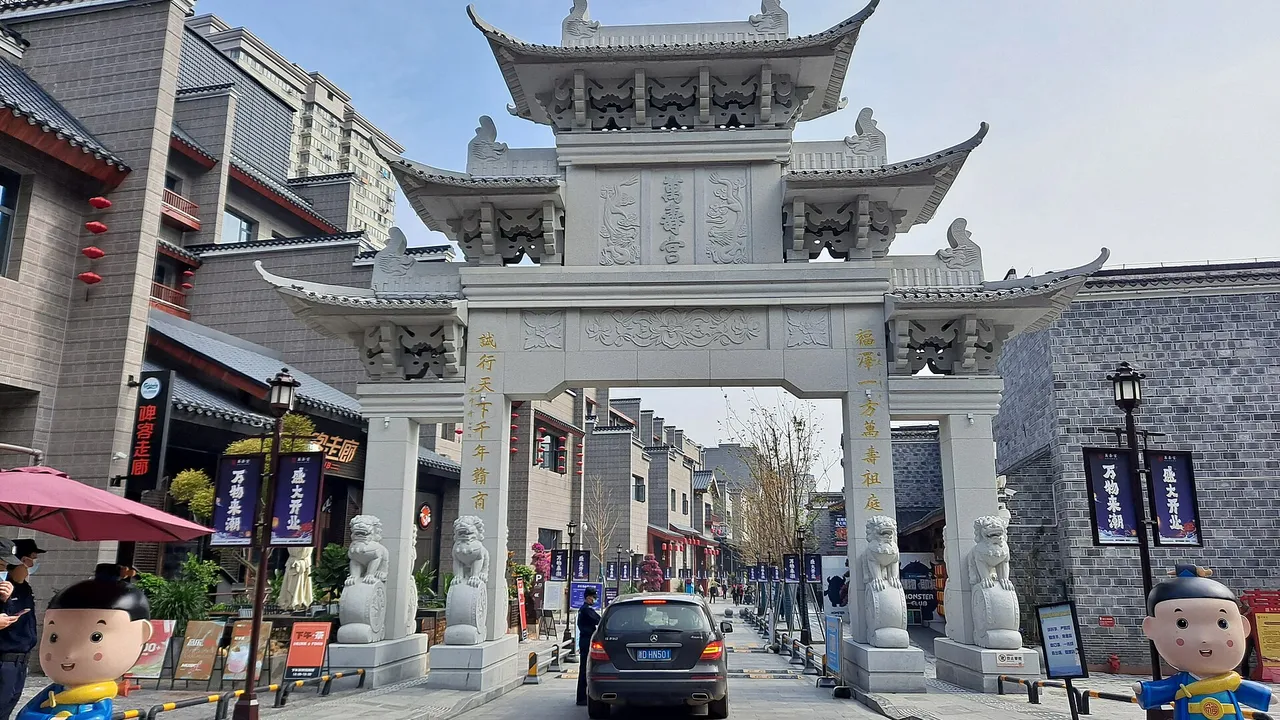
Ease into day three at Youmin Temple, a thousand-year sanctuary tucked among apartment blocks, heavily incensed, its ancient camphors and bronze Buddha straight out of old photographs. Dress modestly and keep voices low inside.
If morning chanting is on, stand outside the hall and listen a while, the best opening there is. The temple runs small, forty minutes suffices, leaving the hour next door for Baihuazhou.
Baihuazhou and Xinghua Tower: Lake Water and Old Stories
End the morning at East Lake. Baihuazhou's stone bridges and the waterline pavilion of Xinghua Tower frame the old town's most photogenic corner, the Ming-era tale of Consort Lou lending the tower its patina. Benches line the lake, and tea-opera amateurs sometimes raise a tune.
Take this stop slowest, forty minutes to an hour. A heritage line's close needs no grand narrative; lake water, old trees and a fragment of song are plenty.
Shengjin Pagoda: Where the Three Days Land
Give the last afternoon to Shengjin Pagoda, the city's anchoring tower, seven stories and eight faces, its yard calm while the food street serves an afternoon round of clay-pot soup and sugar cakes, a warm landing for the three days.
Once lit at dusk the tower's shadow crosses the square, and evening departures reach any transport hub within half an hour. No early sprints rushed, no dusk wasted: that is how a heritage line should close.
| Getting around |
|
| Budget | Entries total roughly RMB 250-350 pp (pavilion RMB 70, Haihun about RMB 60, most else free), plus city transport and meals. |
| Best time | Year-round; both museums close Mondays, and the Haihun site rewards avoiding holiday peaks. |
FAQs
How do I handle the longest leg of the three days?
The Haihun site runs about forty-five kilometers out with slow bus links. Two fixes: the tourism shuttle, sparse and worth checking same-day operation, or a four-way shared car at a few hundred yuan a day with optional stopovers. Make day two the car day; metro-plus-walking days either side keep the rhythm kind.
Which museums book ahead and which sell on site?
The memorial and provincial museum are free but book by real name, both dark on Mondays; the Haihun site and pavilion sell on site, online smarter in peak; the satellite sites and temple take walk-up registration or donation tickets. Split the two booked museums across two mornings and nothing collides.
If three days will not fit, what gets cut?
Protect the three irreplaceables: the uprising memorial, Tengwang Pavilion and Haihun. The satellite sites and Baihuazhou are garnish, mergeable or cuttable when tight; skip a dedicated trip to Shengjin Pagoda unless it rides a meal. Always cut the stops that were merely convenient.
Any photo etiquette on a heritage line?
Flash is banned in most galleries, and bamboo-slip and paper-textile rooms often bar photos entirely, so follow posted signs. Some timber floors in the satellite sites stay off-limits; keep to the route. Ask before photographing staff and worshippers, and inside temple halls never shoot, outside the old trees and censers are fair game.