
Nanchang's weekends extend past the city. The Meiling hills west of town hold bamboo seas and shaded ravines that shut out the summer heat; the Anyi villages northwest preserve whole clusters of Ming and Qing Jiangxi houses, three villages in one visit; and in winter the Poyang wetlands receive hundreds of thousands of migrants, white cranes carpeting the flats. Three days, one each for mountain, village and lake, is the city at its most relaxed.
Transport runs on cars and coaches, paced as one day a mountain, one day a village, one day a lake. Season picks the play: Meiling for summer cool, Nanjishan for winter birds, both fine in spring and autumn. Mountain and wetland run cold, so a jacket never leaves the bag.
Itinerary at a glance
| 第1天 08:30 | Meiling: Shizifeng (Lion Peak) |
| 第1天 13:30 | Hongya Danjing |
| 第1天 16:00 | Xiyao Lake and the Meiling Summit |
| 第2天 09:00 | Anyi Ancient Villages: Luotuo Village |
| 第2天 11:00 | Anyi Ancient Villages: Shuinan Village |
| 第2天 14:30 | Anyi Ancient Villages: Jingtai Village |
| 第3天 08:30 | Xiangshan Forest Park |
| 第3天 13:00 | Nanjishan Wetland |
| 第3天 18:00 | Aixi Lake Wetland Park |
The route, stop by stop
Meiling: Shizifeng (Lion Peak)
Meiling, anciently the Western Hills, earns the nickname little Lushan, and Lion Peak is its most photogenic summit: a cliff jutting like a lion's head, the city and the Gan River unrolling from the top platform. Stone steps and a cool bamboo stretch make even midsummer comfortable.
The climb takes about an hour; shorter legs can turn back at the mid-level deck with views already earned. Mornings often send fog surging from the ravines, stranding the peak as an island, Meiling's signature scene.
Hongya Danjing
After descending, reach Hongya Danjing, the legendary ground of the music deity Hongya, source of its title as the lineage home of music. The ravine runs shallow, the ancient well and cliff inscriptions the sights, and the whole path closes in an hour, a gentle buffer after the climb.
The stream runs icy, children splash the shallows in summer, and the ravine air feels scrubbed clean. On weekdays the whole valley empties out, the quietest stretch in Meiling.
Xiyao Lake and the Meiling Summit
Drive up to Xiyao Lake by late afternoon, beside Luohanling, the Meiling summit at over eight hundred meters, the roof of Nanchang. The lake lies mirror-still with mountain reflections, and farmhouse dinners spill into the courtyards, artemisia with cured pork and free-range chicken soup the defaults.
The summit runs about five degrees below the city, a chill that deepens after sunset. Rather than a night drive down, the guesthouses around Xiyao make the natural overnight, with sea-of-clouds views right from the window at dawn.
Anyi Ancient Villages: Luotuo Village
Day two enters Anyi. The millennium-old cluster spans Luotuo, Shuinan and Jingtai, with Luotuo the gateway: the Shidafudi mansion's carved gate survives intact, skylights dropping beams onto century-old flagstones, and the grey brick and dark tile of Jiangxi architecture stretch in whole streets, not single survivors.
Residents still fill the lanes, chili and cured meats drying at the windows. Hire a village guide; the carved motifs and lintel inscriptions only open up with the stories, a few dozen yuan handsomely repaid.
Anyi Ancient Villages: Shuinan Village
Shuinan adjoins Luotuo and leads with folk craft: shadow-puppet, papercut and brewing workshops scattered through the village with masters demonstrating on weekends. The village is small, half an hour around, but every old house opens its doors for slow looking.
The hands-on sessions suit families, a papercut here, a puppet there, a few dozen yuan buying a quiet afternoon. Narrow flagstone lanes turn slick in rain, so take them slowly.
Anyi Ancient Villages: Jingtai Village
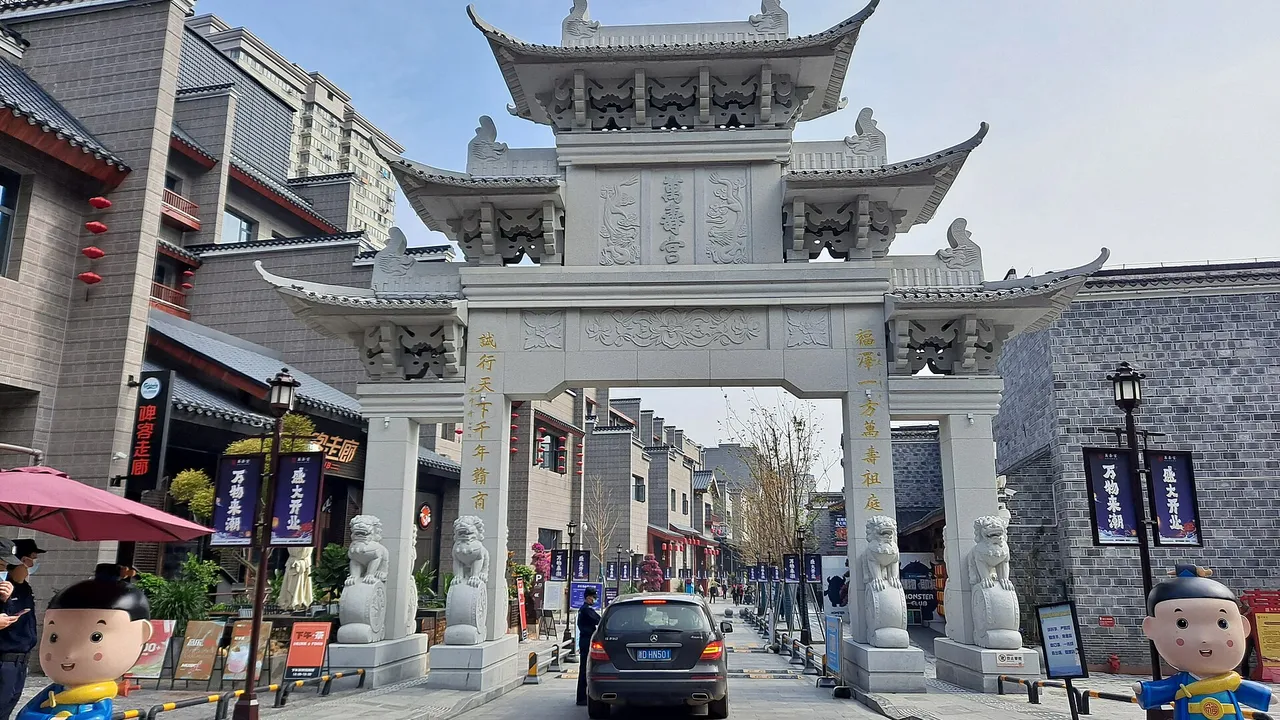
Jingtai is the eldest of the three, its village history reaching the Tang. The Liu ancestral hall's beams and Xilu mansion's gate tower hold the architectural treasures, and afternoon raking light gives the woodcarving its deepest relief. The thousand-year camphor at the village end could stand a person inside its hollow.
Jingtai draws the fewest visitors, so lanes often carry only your own footsteps. Given time, sit at the gate tea stall for a cup of Grain Rain tea and let an elder tell the village's story, livelier than any signboard.
Xiangshan Forest Park
Day three turns toward Poyang. At Xiangshan Forest Park the egrets star: each April to July, tens of thousands of great and pond herons nest through the woods, white dots stitching the canopy, trunks whitened by droppings into the famous egret-forest snowscape.
The trails stay wild, the birding tower the best vantage, binoculars a bonus. Flocks flow hardest at dawn and dusk while midday sits quiet in nests, so plan the visit around the ends of the day.
Nanjishan Wetland
Nanjishan sits deep in Poyang: grass flats in the dry season, open water in the wet, both scenery in their own right. Each November to March, hundreds of thousands of migrants winter here, white cranes, swans and geese carpeting the shores, one of Asia's great wintering grounds.
No pro gear required: goose skeins visible to the naked eye stun enough, and farmhouses rent binoculars. The boardwalk wind is fierce, so hold hats and scarves close, and finless porpoises sometimes surface in the channels.
Aixi Lake Wetland Park
Give the evening back in town to Aixi Lake. This eastern wetland opens free with a roughly ten-kilometer lakeside loop, dawn redwoods and reeds turning to silhouette at sunset, cyclists and strollers in steady procession, the most everyday of Nanchang dusks.
Three days of mountain, village and lake settle here into one still sheet of water. If legs remain, grab a shared bike for a half loop and replay the Poyang birds, the Meiling fog and the village brickwork in your head.
| Getting around |
|
| Budget | Entries total about RMB 120-180 pp (village combo about RMB 40, Meiling and wetland per posted rates), plus RMB 150-300 pp for shared car hire. |
| Best time | Climb Meiling in summer for the cool, watch Nanjishan in winter for the birds; egrets fill Xiangshan April-July, and spring and autumn suit everything. |
FAQs
Can this route work without driving?
Yes, if you accept transfers. Meiling works by suburban bus plus scenic shuttle; Anyi needs a coach to the county town then a rural line; Nanjishan is the one hard bone, shuttle-run in birding season, shared cars otherwise. Putting the farthest stop last and solving it once beats daily bus sprints.
How do Meiling's tickets work?
Meiling sells per site, Lion Peak, Hongya Danjing and others each ticketed at a few dozen yuan per posted rates. Visiting one hill means single tickets are cheapest; for several, ask the visitor center about day combos. Anyi uses one combo ticket valid across all three villages.
How should winter and summer pick the route?
Summer belongs to Meiling, twenty-five-ish degrees on top against thirty-five below, cool being the whole point; winter belongs to Nanjishan, whose migrants stay only November to March. Spring and autumn suit both, with village harvest-drying and springtime egrets each worth a look. Cut half by season rather than forcing it all.
What should a mountain-and-wetland day carry?
A windproof jacket is the floor, since summit and flats run cold; repellent, sunscreen and ample water are the mountain trio; bring binoculars and muted clothes for birds. Never cross wetland railings, and on wet stone steps slow down rather than rush: on a countryside line, safety outranks checklists.