
Putuoshan's walking wealth hides behind the pilgrim spine: the island's southwest holds a whole quiet shore of old wharves, reef beaches and boulder paths, chaining into one full day. The loop starts at Duangu wharf by the Putuoshan pier, passes the reef shore of Nan Tianmen, crosses the Panshi Rock of West Heaven, and lands on the sands of Baibu.
Unlike the worship line, this one reads the island itself: two-century-old wharf steps, wind-rounded rock ridges, the sun's full drop into the sea. About eight kilometers on gentle grades, with buses able to take over any leg, and generous freedom in pacing.

Itinerary at a glance
| 08:30 | Duangu Wharf: The Landing of Two Centuries Ago |
| 09:30 | Nan Tianmen: Reefs and Old Inscriptions |
| 11:00 | West Heaven Scenic Zone: The Panshi Rock and Meifu Hermitage |
| 15:00 | Baibu Sands: Handing the Day to the Sea |
The route, stop by stop
Duangu Wharf: The Landing of Two Centuries Ago
Duangu lies beside today's passenger pier, the old Qing landing whose stone steps run into the sea. Legend tells of sisters-in-law come to worship, one left aboard as the tide rose to soak her shoes, until Guanyin, disguised as an old woman, brought a cloth to bridge the water, whence the holy trace of Duangu.
Today it reads as a quiet sea-viewing platform, old steps and mooring posts still in place. At dawn fishing boats and freighters cross the Lotus Sea; ten minutes on the old wharf shows the island that Putuoshan was before it was a shrine.
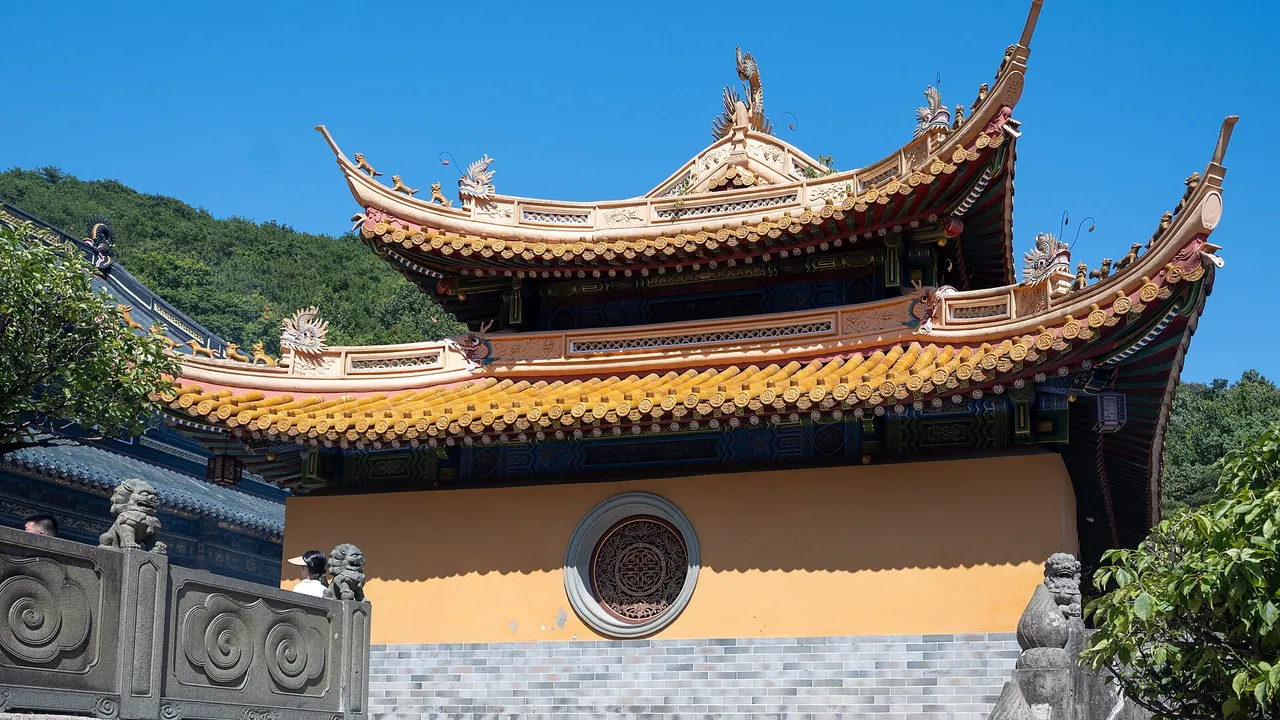
Nan Tianmen: Reefs and Old Inscriptions
Follow the shore south from Duangu to Nan Tianmen, granite boulders thrust into the sea, two facing each other like a gate, hence the name Heaven's South Door. The rocks carry generations of inscriptions, the most famous reading Grand View of Sea and Mountains; at high tide waves thread the stone gate, and at low tide tidal pools remain among the reefs.
This stretch carries the route's densest photography: reefs, a lighthouse and an old stone bridge in one frame. Mind the tide tables in the reef zone and withdraw to the walkway before the water returns.
West Heaven Scenic Zone: The Panshi Rock and Meifu Hermitage
Turn west uphill from Nan Tianmen into West Heaven. The Panshi Rock is the island's most famous oddity: two stones stacked, the upper one enormous yet seated on a razor-thin contact, seeming to fall at a push yet unmoved for a millennium, with the carved line Sunset over Panshi marking the classic photo point.
The path also passes the Two Turtles Listening to the Dharma rocks and Meifu Hermitage, tied to the alchemy legends of Mei Fu. Shade runs thick on this leg, the coolest of the route, trading the morning's salt air for mountain forest as you climb.
Baibu Sands: Handing the Day to the Sea
The descent lands on Baibu Sands, the beach closest to the temple cluster. Fine sand, reefs and the silhouette of Lojia island share the frame; in summer a swimming beach, in other seasons a quiet walking shore. The Shishi pavilion stands at the sand's edge, its pillars inscribed with earlier visitors' verdicts on this sea.
Dusk is the correct hour here: the sun drops from the horizon while Lojia turns black. Sit on the sand and zero out the day's steps; this walking line offers no arguments, only the business of handing you back to the sea.
| Getting around |
|
| Budget | West Heaven is included in the island entry with no extra fee, buses five to ten yuan per ride, meals RMB 60-100; roughly RMB 100-200 for the day, excluding the RMB 160 entry. |
| Best time | Walkable all year, though October-April winds bite, so layer against them; Baibu Sands peaks at sunset and low tide. |
FAQs
Does this walking line involve much climbing?
The only real climb is the West Heaven stretch up to the Panshi Rock, about a hundred meters of gain, everything else gentle. Average legs can reverse the order: bus first toward Puji and Baibu Sands, walking back so the climb falls in your strongest morning hours. Buses can skip any leg, so never force through.
How do I use the island buses most efficiently for this day?
Honestly this line needs only one or two rides: walking from the pier, with West Heaven as the pivot. Bus lines 1 and 2 run the main road at five to ten yuan, and the hail-and-ride shuttles run densest between the main pier and Puji. Keeping the day's bus spend under twenty yuan is easy.
When is Baibu Sands at its best?
Arrive an hour before sunset for three views at once: raking light on the sand, reef pools glinting after the ebb, and the sun's full entry into the sea. Check that day's tide table, since exposed reefs at low tide shoot best. Summer sunsets run late, so mind the last sailing and never trade the return for one more minute of light.
What safety points matter on a walking day?
Three things: the tide comes first, keeping an escape route in mind on reefs and sands, with the day's tide table saved on your phone; island sun outburns the city, so carry hat, sunscreen and water; some seafront steps lack rails, so check the screen before stepping back for a shot and never walk backward.