
Guanyin faith at Putuoshan has two ends: the legends and old temples of a millennium ago, and the grand contemporary cultural building of today. This line halves them: morning across the water to Zhujiajian for the Guanyin Dharma Realm, a modern precinct whose centerpiece sanctum rises past ninety meters; afternoon back on the island to read Puji's steles and architecture, evening closing on the tide at the Brahma-Sound Cave.
The culture line lives on details: the spatial order inside the sanctum, the text on Puji's imperial steles, the geology of the cave's cliffs and its tie to the hermitage. Slow down, an hour or more at each point, and the yield beats three rushed hotspots.
Itinerary at a glance
| 09:00 | The Guanyin Dharma Realm: Contemporary Building for Guanyin |
| 13:00 | Puji Temple: Imperial Steles, Stone Bridges and Architectural Order |
| 15:30 | The Brahma-Sound Cave: Tide between the Cliffs |
| 17:30 | The Guanyin Who Refused to Leave: Dusk at the Origin |
The route, stop by stop
The Guanyin Dharma Realm: Contemporary Building for Guanyin
The Guanyin Dharma Realm sits at the foot of Baishan on Zhujiajian, facing Putuoshan across the water, a grand Guanyin cultural precinct of recent years. Its core, the Guanyin Sanctum, takes the canopy held by Guanyin as its prototype, rising past ninety meters, the dome and colonnades tightening layer by layer; everyone hushes on entering.
Inside, the exhibition system traces Guanyin devotion from India to China, texts and images running parallel. Budget two hours minimum; the halls run all-weather, the best substitute for rain and gales.
Puji Temple: Imperial Steles, Stone Bridges and Architectural Order
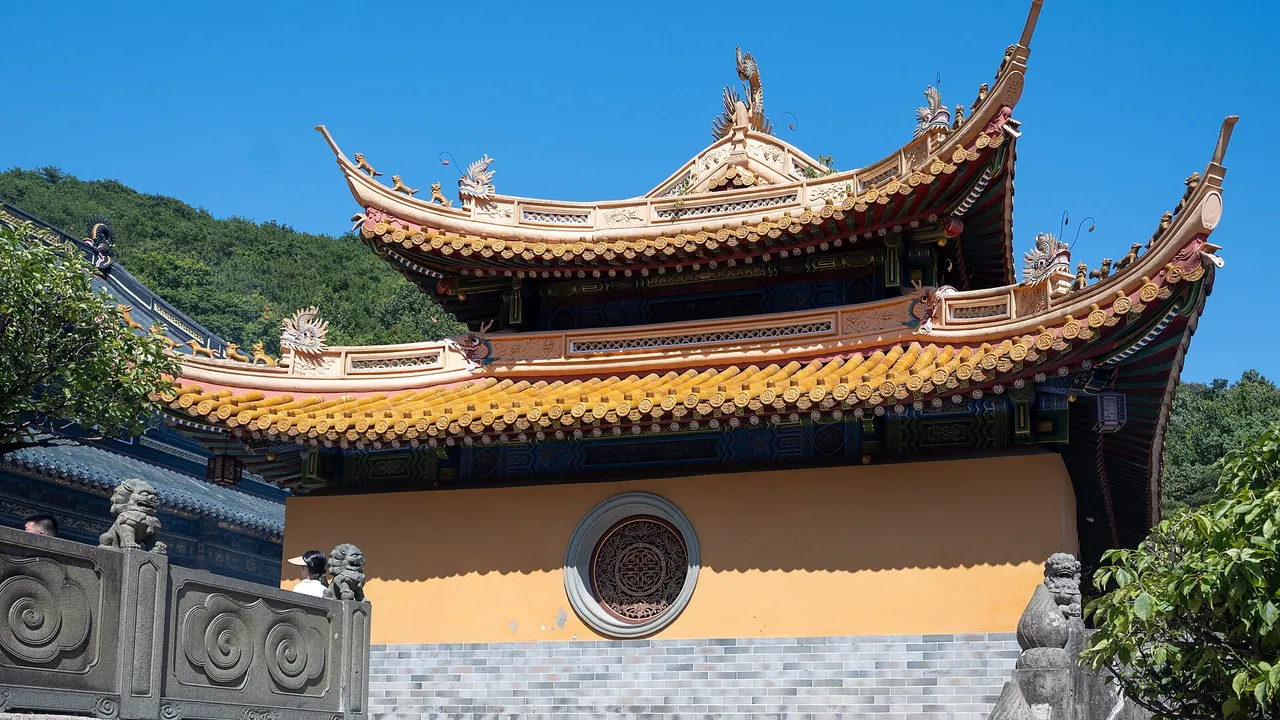
Return to the island in the afternoon to read Puji slowly. The first monastery of Putuoshan shows its worth in order: halls rising step by step along the axis, with the Sea-Print Pond, stele pavilion and Yongshou Bridge as the overture. Imperial steles of the Kangxi and Yongzheng years stand in the pavilion, their texts recording repeated dealings between throne and dharma here.
Note how the main hall departs from the standard Great Hall formula: Putuoshan enthrones Guanyin, so the principal hall is the Round Compassion Hall, an architectural language unique to the Guanyin bodhimanda. Circle the hall, study the columns and eave painting; one slow hour beats three check-ins.
The Brahma-Sound Cave: Tide between the Cliffs
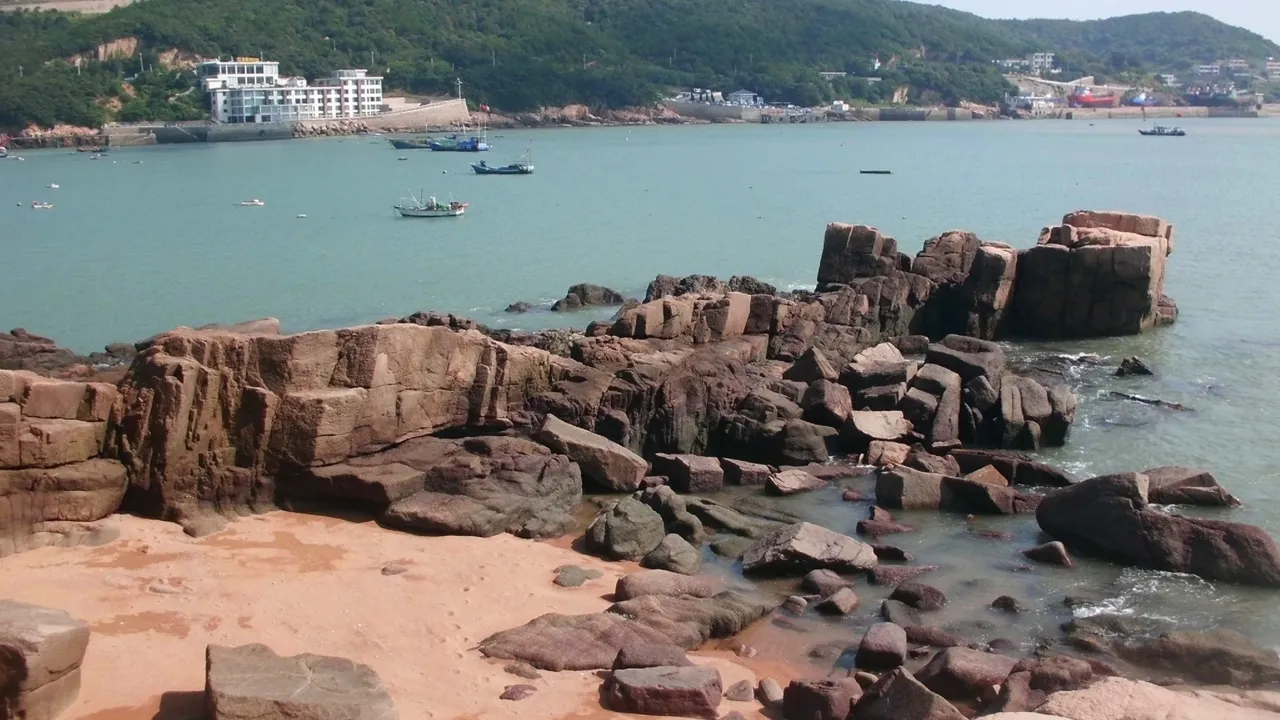
Reach the island's east end by late afternoon for the Brahma-Sound Cave. Two sheer cliffs pinch a deep channel where seawater churns and booms in a low, chanting drone, hence the name. The Brahma-Sound Hermitage nests in the cliff face, monks keeping their offices inside the surf, the finest soundscape on the island.
Stone steps descend the cliff to the viewing terrace, ten-odd minutes down. The roar peaks at high tide, so check the day's table beforehand; evening light slants into the channel mouth from the sea, letting shooting and listening share the hour.
The Guanyin Who Refused to Leave: Dusk at the Origin
The culture day closes at its origin: the Guanyin Who Refused to Leave and the Chaoyin Cave beside it. The Tang tale of Egaku's becalmed ship retells itself in evening light as the sea turns from gold to gray-blue, the little hall and the sea cliff composing the day's quietest frame.
From the cliff edge, consider the line's symmetry: the morning sanctum is the present age saluting Guanyin in concrete and steel, while this courtyard is the thousand-year-old point where fishermen gave their homes to an image. The weight of Guanyin faith lives between those two spans.
| Getting around |
|
| Budget | Island entry RMB 160, Guanyin Dharma Realm about RMB 90, temple coupons five to ten yuan; around RMB 300-400 pp with meals and transfers. |
| Best time | Year-round, the Dharma Realm being indoors and weatherproof; the cave thunders hardest at high tide, so check the day's tide table first. |
FAQs
Is the Guanyin Dharma Realm worth a special trip?
For lovers of architecture and exhibition, absolutely: the sanctum's spatial design and display quality rank in the national first tier. Devout pilgrims may skip it in favor of island temples. In rain or gales that halt sailings it is the best substitute for outdoor plans, costing almost nothing as a detour.
What is the simplest way to buy all the tickets?
Buy the RMB 160 island entry real-name via official online channels for QR gate entry; the Dharma Realm ticket sells separately through its own channels or on site. The cave charges nothing extra, and Puji's five-yuan coupon pays on site. In season, buy ferry and entry together to shrink on-site queues.
When is the best time for the Brahma-Sound Cave?
The hour around high tide carries the fullest roar, so match your visit to the day's tide table; the thinnest crowds come at dawn and after four in the afternoon. Gales double the echo and the terrace wind alike, so brace before listening. At low ebb the water shrinks and the sound flags; if the timing misses, go elsewhere and circle back.
How do I choose between the culture line and the worship line?
Follow interest and legs: for the full arc of Guanyin faith, the culture line runs deeper; for completing vows, the incense spine of three temples plus the South Sea Guanyin is irreplaceable. One day fits one line only; with two, worship mornings, culture afternoons. Families with seniors should favor the worship line's halls, shorter walks and more seating.