
Putuoshan is a mountain in the sea, and this line returns the sea to the center of the story: three days kept against the shore and the water. Day one opens at the South Sea Guanyin and Zizhulin with afternoon at Chaoyin Cave; day two crosses the coasts of Qianbu and the Brahma-Sound Cave, then sails for Lojia; day three moves to Zhujiajian, closing on Daqingshan's headlands and Wushitang's pebbles.
A coast itinerary obeys two masters: where the sun rises and sets, and when the tide turns. Schedule at least two sunrise or sunset viewings across the three days, save the tide table to your phone, buy tickets online ahead, and hand the rest to the weather.
Itinerary at a glance
| Day 1 · 08:00 | The South Sea Guanyin: Where the Coast Line Begins |
| Day 1 · 09:30 | Zizhulin and the Guanyin Who Refused to Leave |
| Day 1 · 11:00 | Chaoyin Cave: The Sound Show of the Flood Tide |
| Day 1 · 15:00 | Baibu Sands: The Sea in the Afternoon |
| Day 2 · 07:30 | Qianbu Sands: Sunrise and Shell-Picking |
| Day 2 · 10:00 | The Brahma-Sound Cave: The Coast's East End |
| Day 2 · 13:00 | Lojia Island: An Afternoon across the Water |
| Day 3 · 09:00 | Wushitang: The Black Pebble Shore |
| Day 3 · 12:00 | Daqingshan: The Headland Finale |
The route, stop by stop
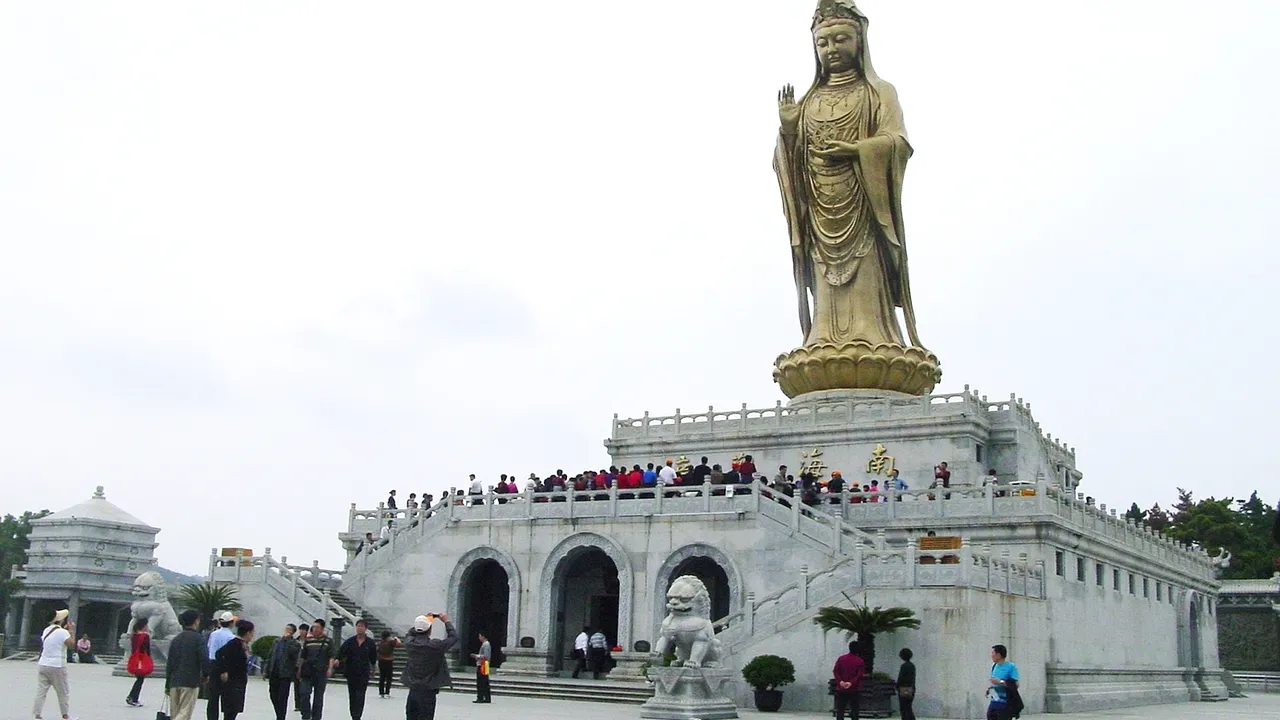
The South Sea Guanyin: Where the Coast Line Begins
The first dawn of three coast days belongs to the South Sea Guanyin. The 33-meter figure faces the Lotus Sea, morning light bouncing off the water, bronze contours fading in and out of thin mist. Circle clockwise, each angle meeting a different sea.
From the plaza's elevation, the whole southern coast unfolds, today's route laid out inside it: Zizhulin, Chaoyin Cave, Baibu Sands, all within walking reach. Day one splits worship and shore evenly, in no hurry.
Zizhulin and the Guanyin Who Refused to Leave
Walk a quarter hour to Zizhulin. The Guanyin Who Refused to Leave marks the origin of Guanyin faith here, the Tang tale of Egaku's becalmed ship set on this shore. The small hall faces the Lotus Sea, sea cliffs outside its walls, the tide arriving before any bell.
From here the coast line gains its narrative: this very sea once held a ship still, and moved a monk to leave an image on the island. The weight of the story depends on how you look at the water.
Chaoyin Cave: The Sound Show of the Flood Tide
North along the cliffs from Zizhulin lies Chaoyin Cave. The boom of surf entering the chamber shifts with the tide, fullest around the flood, the sound the ancients heard as Guanyin preaching. A stone bridge and pavilion sit above, where you lean over white spray bursting from the mouth.
Give the cave twenty minutes for one full rise and fall. With the Brahma-Sound Cave at the east end, these are the island's two great soundscapes, one deep, one clear, and the three coast days will meet the tide's voice twice.
Baibu Sands: The Sea in the Afternoon
Reach Baibu Sands in the afternoon, the beach nearest the temple cluster. The shore sits quiet, sand panning gold in slant light, waves ironing layer after layer of wet pattern. The Shishi pavilion stands at the edge, made for resting and watching.
The day's last task is nothing at all: half an hour of sun on the sand. The luxury of a coast itinerary is permission to waste, and an idle afternoon is the most valuable time in three days.
Qianbu Sands: Sunrise and Shell-Picking
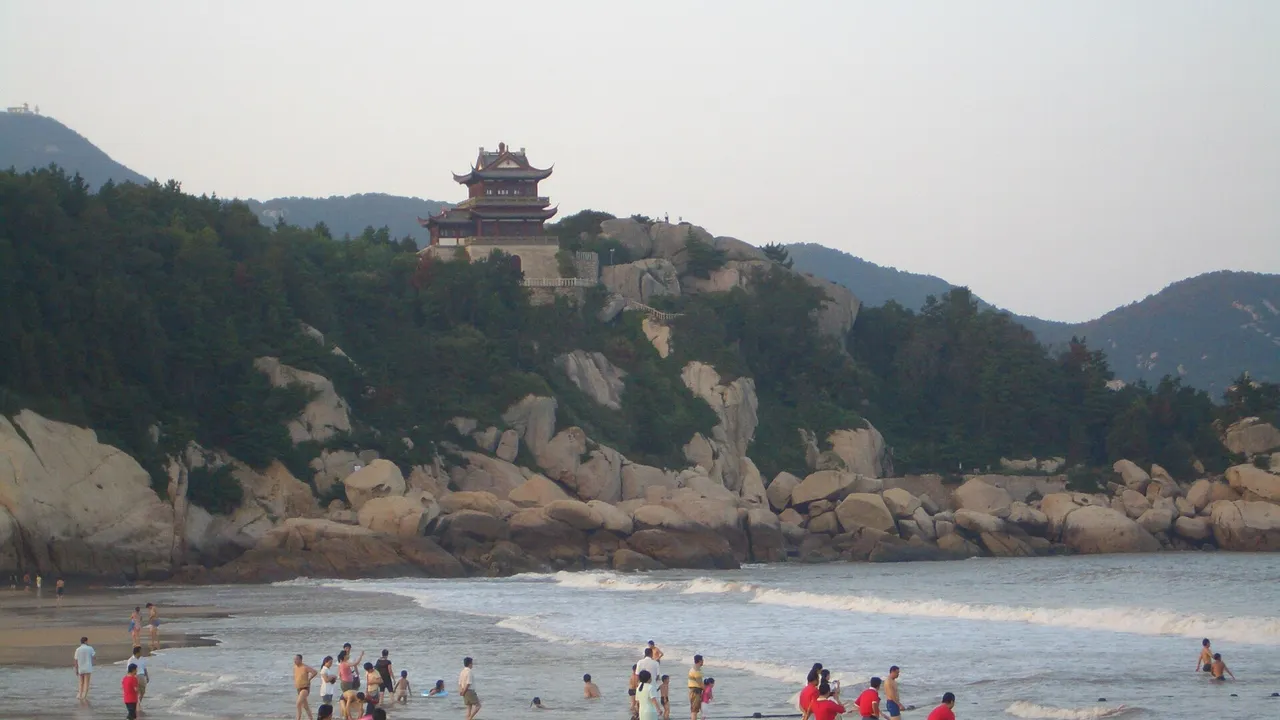
Day two's sunrise is scheduled at Qianbu. The east-facing water runs unobstructed, the sun rising straight off the waterline while shells and weed line the ebb-sanded shore. At dawn these sands hold only runners, monks returning from morning offices, and you.
After sunrise, walk the shore north to the reef zone, low-tide pools hiding crabs and anemones. This coastal stretch runs about forty minutes, the quietest path of the three days.
The Brahma-Sound Cave: The Coast's East End
Late morning reaches the Brahma-Sound Cave, answering yesterday's Chaoyin across the island. Seawater revolves in the channel between two cliffs, chanting like sutra at the flood. The viewing terrace hangs from the cliff face, riskier and closer than Chaoyin, spray striking your face when swells surge below.
The Brahma-Sound Hermitage nests beside the cave; from its window, sea and cave mouth share one frame. Morning light flatters, the best shooting hour, and from here you wait for the Lojia boat.
Lojia Island: An Afternoon across the Water
Sail from the Putuoshan pier after lunch, half an hour to Lojia. Looking back from the water, Putuoshan flattens into a rank of blue hills; from the island, the crossing sea glitters. The island lies like a reclining Buddha, head and chest drawn clear, honored as where Guanyin practiced to attainment.
Temples string along the ridge for a three-hour loop. Here the coast line's logic peaks: setting Putuoshan back into its place as an island, a crossing only the sea itself can complete.
Wushitang: The Black Pebble Shore
Day three crosses to Zhujiajian, starting at Wushitang. The kilometer-long black pebble beach arcs into the bay, stones knocking into a muffled drum roll as waves move through. Fishing boats moor along it, black shore against blue water in fierce contrast.
Sit high behind the beach for ten minutes of stones and surf, more restful than any playlist. Taking pebbles is forbidden, a rule that has kept this shore whole for decades.
Daqingshan: The Headland Finale
Afternoon enters Daqingshan National Park, saving the coast days' high point for last. The ring road climbs the headland, and the Qingshan deck gathers golden sands, reef shores, fishing ports and open sea into one gaze, summing every shore element of the three days.
Descend before dusk for the ferry or coach from the Wugongzhi wharf. Give the coast line's close its due: as the sun sinks into the sea, look back down the route, seven shore sections of three days joining into one complete line in the dusk.
| Getting around |
|
| Budget | Island entry RMB 160, Lojia boat around RMB 70, Daqingshan ticketed separately; roughly RMB 500-800 pp over three days with meals and transfers. |
| Best time | May-June and September-October keep the sea calm with the best sunrise-sunset odds; in typhoon season, July-September, check suspension notices before every crossing. |
FAQs
How do I choose between coast days and pilgrimage days?
Follow the trip's purpose: coming for Guanyin, the pilgrimage spine of three temples plus Lojia is irreplaceable; coming for the island, the coast line wins on both density and ease. The two share only the South Sea Guanyin and Lojia, so take what you came for. Average legs suit the coast better, its climbs scattered away from Foding.
How do I pick sunrise and sunset positions?
Sunrise wants an east-facing shore: Qianbu first, Baibu second; sunset wants open west or south water, the Guanyin plaza and dusk-lit Baibu each with its flavor. The sun's bearing shifts seasonally, north in summer and south in winter, so confirm position and time in a weather app beforehand.
Is this route feasible in typhoon season?
July-September demands mental preparation: crossings suspend by wind grade, and beaches and reef zones close under warnings. Build slack by placing the two crossings, Lojia and Zhujiajian, mid-itinerary rather than at the ends, easier to rebook when weather interrupts. Start watching maritime suspension notices three days out.
What gear does coast walking need?
Grippy shoes come first, reefs and pebble flats being the harshest on soles; hat, sunscreen and water to sea standard, since island ultraviolet outruns the feel of it. Save tide tables, offline maps and keep a power bank. Pack light foldable rainwear, for coastal showers arrive without appointment.