
Seven days is the complete reading of Putuoshan: three days alternating temples and coast through the island's south and east, day four over Foding, day five for the eastern grottoes, day six across to Lojia and the Dharma Realm, day seven closing on Zhujiajian's headlands and Shenjiamen's fishing port. Three crossings in seven days put the island back into its geography of archipelago and fishing grounds.
Against the five-day version, the extra two days buy true slack: one or two main targets daily, all afternoons blank. Pilgrimage, hiking, tide-listening and idleness each find their place in seven days, the rhythm an island deserves.
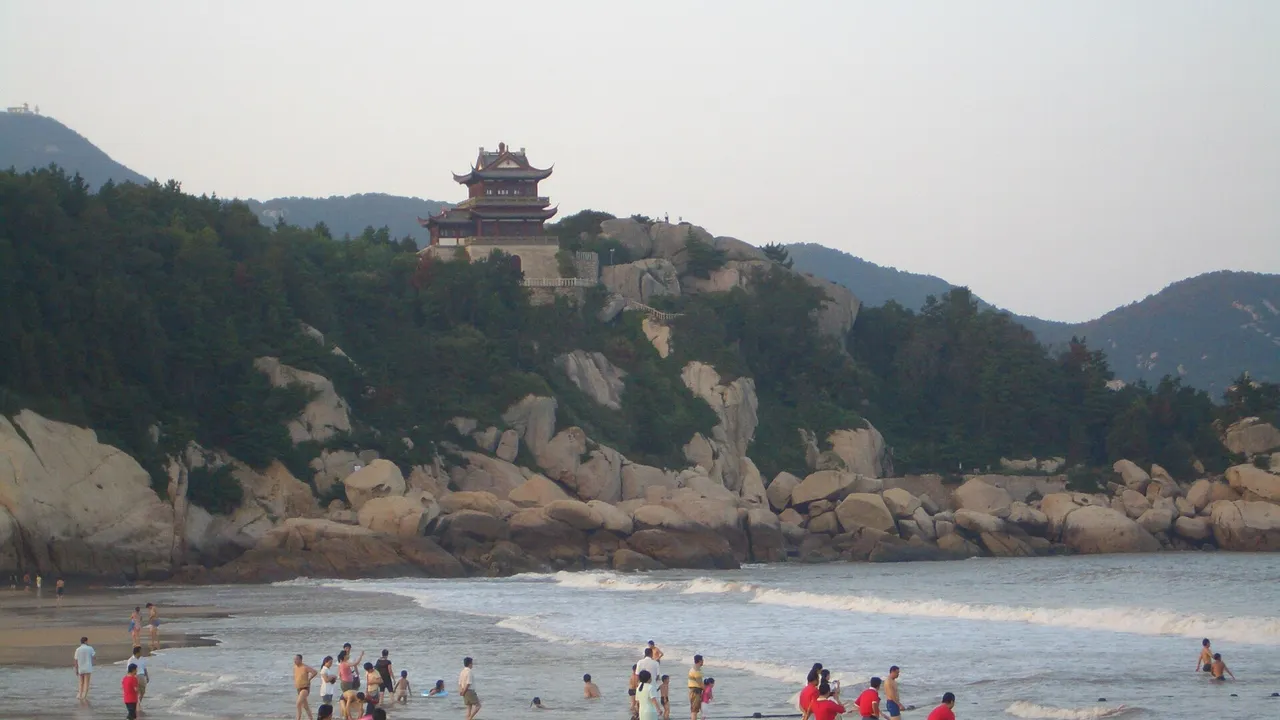
Itinerary at a glance
| Day 1 · 08:30 | Puji Temple: Starting the Read at the Principal Monastery |
| Day 1 · 13:30 | The Duobao Pagoda and Baibu Sands: A Yuan Survival and the Dusk |
| Day 2 · 08:00 | West Heaven: The Panshi Rock and the Hill Paths |
| Day 2 · 14:00 | Duangu Wharf and Nan Tianmen: The Old Landing and the Reefs |
| Day 3 · 07:30 | The South Sea Guanyin: 33 Meters toward the Open Sea |
| Day 3 · 09:30 | Zizhulin, the Refusal Hall and Chaoyin Cave |
| Day 3 · 14:00 | Baibu and Qianbu Sands: Two Beaches in Contrast |
| Day 4 · 07:30 | Fayu Temple: The Imperial Bearing of the Nine-Dragon Coffer |
| Day 4 · 13:30 | Xiangyun Road and Huiji Temple: The Climb and the Command View |
| Day 5 · 08:30 | The Brahma-Sound and Shancai Grottoes: Two Cliff Sites at the East End |
| Day 5 · 14:00 | Temple Tea and Dusk: The Buffer Afternoon |
| Day 6 · 09:00 | Lojia Island: The Crossing as Higher Step |
| Day 6 · 15:00 | The Guanyin Dharma Realm: The Lineage's Contemporary Page |
| Day 7 · 09:00 | Wushitang and Daqingshan: The Headland Finale |
| Day 7 · 14:00 | Shenjiamen Fishing Port: Closing Seven Days at the Harbor |
The route, stop by stop
Puji Temple: Starting the Read at the Principal Monastery
Seven days open with Puji at dawn, the principal Guanyin monastery and the narrative hub of the island. With few visitors mid-morning, read the Sea-Print Pond, stele pavilion and Great Round Compassion Hall one by one, fixing the temple's order and its imperial stele dealings as the reference for six more days of halls.
Day one's only task is grasping the layout: which temple keeps what, how incense is offered, how vows are made. At dusk walk the coast path to Baibu Sands for sunset, fixing the week's rhythm as deep reading mornings, sea afternoons.
The Duobao Pagoda and Baibu Sands: A Yuan Survival and the Dusk
The afternoon belongs to the Duobao Pagoda southeast of Puji, among the island's oldest surviving structures, its Yuan-era Buddha carvings sharpest in the slant of afternoon light. Pagoda, pond and halls in one frame make the island's classic shot.
Walk back to Baibu Sands at dusk to close day one. The westering light bronzes the wet sand, and the week's first sunset deserves to be watched properly to its end.
West Heaven: The Panshi Rock and the Hill Paths
Day two's morning enters West Heaven. The Panshi Rock holds two stones stacked unmoved for a millennium, the listening turtles and Meifu Hermitage lining the path, canopy keeping even July's noon heat outside the leaves. This ascent, lightly visited, is the island's best hiking warm-up.
A mid-slope deck looks back over the southern coast, views opening layer by layer with height. Turn wherever strength says, keeping the afternoon for the western shore.
Duangu Wharf and Nan Tianmen: The Old Landing and the Reefs
The afternoon walks two lines along the southwest shore: Duangu's Qing-era landing, stone steps running into the sea, its legend the Guanyin story of ordinary pilgrims; and Nan Tianmen's twin stones facing like a gate, reef pools surfacing after the ebb.
This shore restores Putuoshan to a fishing island: mooring posts, a lighthouse, an old stone bridge, nets drying. Sit on the reefs until the tide turns, meeting the sea on day two its own way.
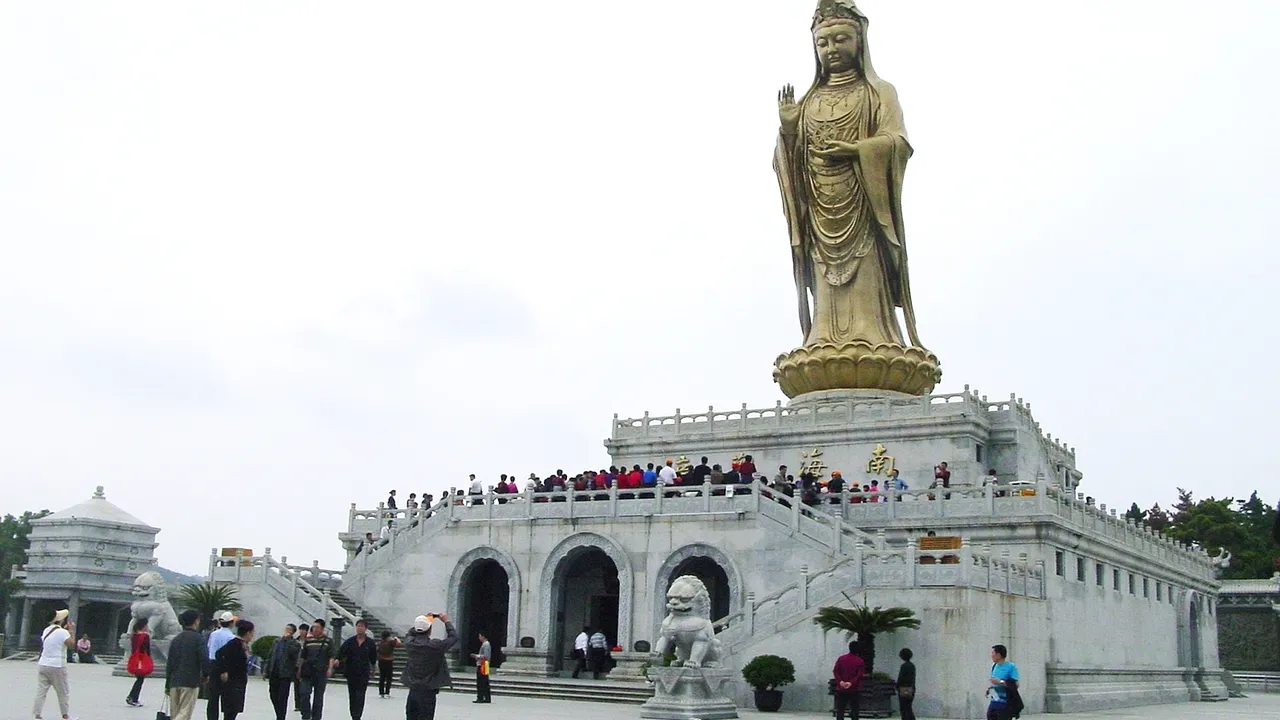
The South Sea Guanyin: 33 Meters toward the Open Sea
Day three's dawn goes to the South Sea Guanyin. The figure faces the Lotus Sea, visible kilometers out on clear days. Circle at dawn with sea wind and bells in one frame, the bronze robe at its softest in thin mist.
After incense, sit half an hour on the plaza watching the first fishing boats and freighters pass before the statue. Incense and shipping have shared this water for a millennium, the best vantage for understanding the island's double identity.
Zizhulin, the Refusal Hall and Chaoyin Cave
The morning chains three points on foot: Zizhulin's courtyard and purple bamboo, the Refusal Hall's origin story, and the flood-tide thunder of Chaoyin Cave. All lie within two hours' walking, a complete overture of Guanyin faith from legend to sound.
Give the cave twenty minutes of tide, the layers richest around the flood. The cliff view faces southeast, shipping lanes visible on clear days.
Baibu and Qianbu Sands: Two Beaches in Contrast
The afternoon walks both famous sands as one line: Baibu near the temples, fine-grained and gentle; Qianbu long and hushed, facing due east. The coast path between them runs about forty minutes, and only walking both reveals their distinct temperaments.
Wait at Qianbu for the moment of sunset and moonrise sharing the sky. Day three logs some sixteen thousand steps, and a walk in the sea wind outworks any relaxation technique.
Fayu Temple: The Imperial Bearing of the Nine-Dragon Coffer
Day four starts at Fayu, early for the nine-dragon coffer: eight dragons coiling the walls and one at the crown, a Ming imperial piece hung above a Buddhist hall, dignity built into the upward glance. Climb tier by tier from the Heavenly Kings hall to the Jade Buddha hall, the architecture swelling and settling with the hill.
The connecting galleries and stone steps between halls reward slow walking; among the three temples, Fayu holds the richest spatial layers. The morning's study ends at the Jade Buddha hall, the afternoon stepping onto Xiangyun Road behind the temple.
Xiangyun Road and Huiji Temple: The Climb and the Command View
Take Xiangyun Road up Foding behind Fayu in the afternoon, a thousand-plus steps, forty minutes to an hour. Pilgrims bowing every three steps share the treads with climbing visitors; past midway the sea wind stiffens, and the turn shrinks Qianbu to a white thread.
Huiji at the summit crowns three days of temple study, its platform gathering hill, temples and coastline into one gaze. After incense, cableway down, closing day four from the island's highest vantage.
The Brahma-Sound and Shancai Grottoes: Two Cliff Sites at the East End
Day five gathers the east end's two cliff sanctuaries. At the Brahma-Sound Cave two cliffs pinch a channel where the sea booms like chanting, the viewing terrace hung from the rock; the Shancai Grotto enshrines Guanyin's attendant youth, its front platform facing the eastern sea, worshippers asking wisdom or fortune as each needs.
Ten minutes on foot between them: give the flood-tide hour to Brahma-Sound's roar and the morning light to Shancai's sea. Day five's theme is listening and looking, steps kept under twelve thousand.
Temple Tea and Dusk: The Buffer Afternoon
The afternoon is the plan's midweek buffer: find a sea-viewing tea seat, brew a pot of Putuo temple tea, and organize four days of notes and photos. Island teatime is not consumption but maintenance of the itinerary.
At dusk watch the fishing fleet return along the pier, and if landings are under way, the sight of fresh catch going straight onto ice rewards the stop. Sleep early, for tomorrow crosses the water.
Lojia Island: The Crossing as Higher Step
Day six sails for Lojia in the morning. From the water, Putuoshan flattens into blue silhouettes; on the island, temples string along the ridge for an upward line of offering, the reclining-Buddha outline clearest on fine days. Test the saying, no Lojia, no completed pilgrimage, before day seven.
Run the three-hour loop at the slowest pace, steps many but sea platforms dense. On the return boat, buy tomorrow's crossing tickets or confirm coaches, zeroing out day seven's variables in advance.
The Guanyin Dharma Realm: The Lineage's Contemporary Page
The afternoon takes in the Guanyin Dharma Realm on Zhujiajian. From the Tang image left on this shore to a contemporary sanctum past ninety meters, seven days of narrative receive their final link. The halls hold solemn space, the displays tracing Guanyin devotion from India to Zhoushan systematically and clearly.
After the exhibits, return or overnight on Zhujiajian; staying over, eat seafood at Shenjiamen's port that night and bank strength for Daqingshan and the journey home.
Wushitang and Daqingshan: The Headland Finale
The last morning starts at Wushitang, the kilometer of black pebbles drumming as waves work the shore; then into Daqingshan National Park, the ring road climbing to the Qingshan deck for one final gaze that gathers every coast and temple of seven days.
Run the last inventory from the deck: Putuoshan on the horizon, Lojia to the left, Zhujiajian's sands below. The complete image of the Buddhist isle in sea and sky is assembled here and only here.
Shenjiamen Fishing Port: Closing Seven Days at the Harbor
Give the departure afternoon to Shenjiamen fishing port. One of China's largest, its forest of masts, the shouts of unloading and the damp air of the fish market frame a Putuoshan hinterland wholly unlike the temples, grounding seven days of Buddha-realm narrative in working smoke and salt.
Close with a seasonal seafood meal at the stalls, then head unhurried for airport or station. Seven days on, Putuoshan is no longer a mere incense place-name in memory, but a complete island of hill and sea, temple and fishery, past and present.
| Getting around |
|
| Budget | Island entry RMB 160, coupons about RMB 35 total, cableway and boats near RMB 200, Zhujiajian sights around RMB 200; roughly RMB 1500-2800 pp over seven days. |
| Best time | May and October are ideal: steady seas, kind temperatures, clear of both festival and summer peaks. |
FAQs
Which day of the seven can stay entirely free?
Day five's afternoon and day six's dusk are designed blanks, and any weather-wrecked day can empty out entirely. The itinerary's resilience comes from this redundancy: no hard afternoon targets, rest when needed, sweep gaps when possible, with elasticity far beyond the five-day version.
How does the spending spread across seven days?
Crossings with cableway and boats take about a fifth, six nights of lodging a third to two fifths, food eighty to one hundred fifty a day, tickets and coupons under four hundred combined, plus two to three hundred for Zhujiajian driving or charter. Festival-season lodging doubling is the biggest variable, so avoid it or book a month out.
Stay on the island or move to Zhujiajian for the last two days?
Both work: staying on-island keeps dawn and night yours but hauls luggage across on day seven; moving for the last two nights kills the day-seven round trip but surrenders two island dawns. Heavy bags or an early flight favor the move; experience favors staying.
Who suits the seven-day version?
Three groups: devotees completing the pilgrimage, whose daily worship wants slack; hikers and photographers, whose blank days insure against weather windows; and families with elders or children, best served by low-intensity elasticity. Time-pressed visitors should take the two- or five-day versions outright, since the seven-day comfort presumes a willingness to slow.