
Most treat Putuoshan as a shrine; this line reads it as an island: twelve square kilometers hiding mountain paths, tidal coasts, sea caves and a smaller island beyond. Day one climbs from West Heaven via Xiangyun Road to Foding hill; day two turns east for Qianbu Sands and the Brahma-Sound Cave, then crosses to Lojia; day three crosses again to Zhujiajian for Wushitang and Daqingshan.
The keyword for three days is tide: the sweat budget of Xiangyun Road, the cave's roar, the boats to Lojia, the clatter of Wushitang's pebbles, all tide-driven. Save the three-day tide table on your phone; it beats any guidebook.
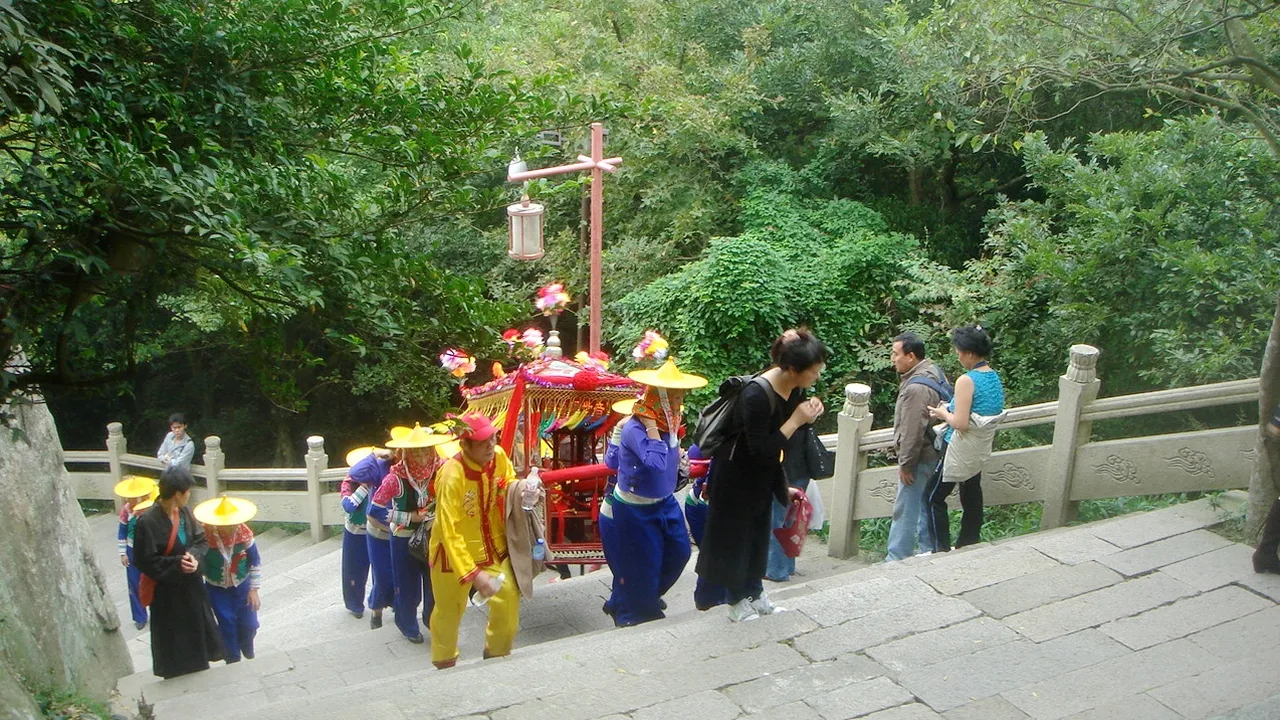
Itinerary at a glance
| Day 1 · 08:30 | West Heaven: Uphill from the Panshi Rock |
| Day 1 · 10:30 | Xiangyun Road: An Ascent of a Thousand-Plus Steps |
| Day 1 · 12:00 | Huiji Temple: The Summit of Foding Hill |
| Day 2 · 08:00 | Qianbu Sands: A Low-Tide Morning |
| Day 2 · 10:00 | The Brahma-Sound Cave: Listening to the Tide |
| Day 2 · 13:00 | Lojia Island: The Buddha Lying on the Sea |
| Day 3 · 09:00 | Wushitang: The Pebble Beach That Sings |
| Day 3 · 11:30 | Daqingshan: Headlands and Meadow |
| Day 3 · 15:00 | Baishan and the Return: A Granite Finale |
The route, stop by stop
West Heaven: Uphill from the Panshi Rock
Day one enters the hill through West Heaven. The morning path runs cool and quiet, Panshi Rock and the listening turtles strung along it, canopy sifting sun into flecks. This ascent draws far fewer walkers than the frontal pilgrim road, grades gentle, steps even, reaching the heights around Meifu Hermitage within the hour.
From mid-slope the southern coast flashes through the trees, harbor and pier below. Day one belongs to walking, its sights rocks and woodland, with no shopping or hall duty attached.
Xiangyun Road: An Ascent of a Thousand-Plus Steps
Xiangyun Road starts from Fayu's rear gate, stone steps winding to Foding hill, a thousand-plus treads, the island's classic climbing road. Pilgrims bowing every three steps need most of a day; ordinary walkers, forty minutes to an hour. Forest thickens along the way, sea wind strengthens with height, and the views back improve with every landing.
Midway a rest platform looks down on Qianbu Sands drawn as a white line. Side-step the steep flights, where knee braces and water bottles earn their full value.
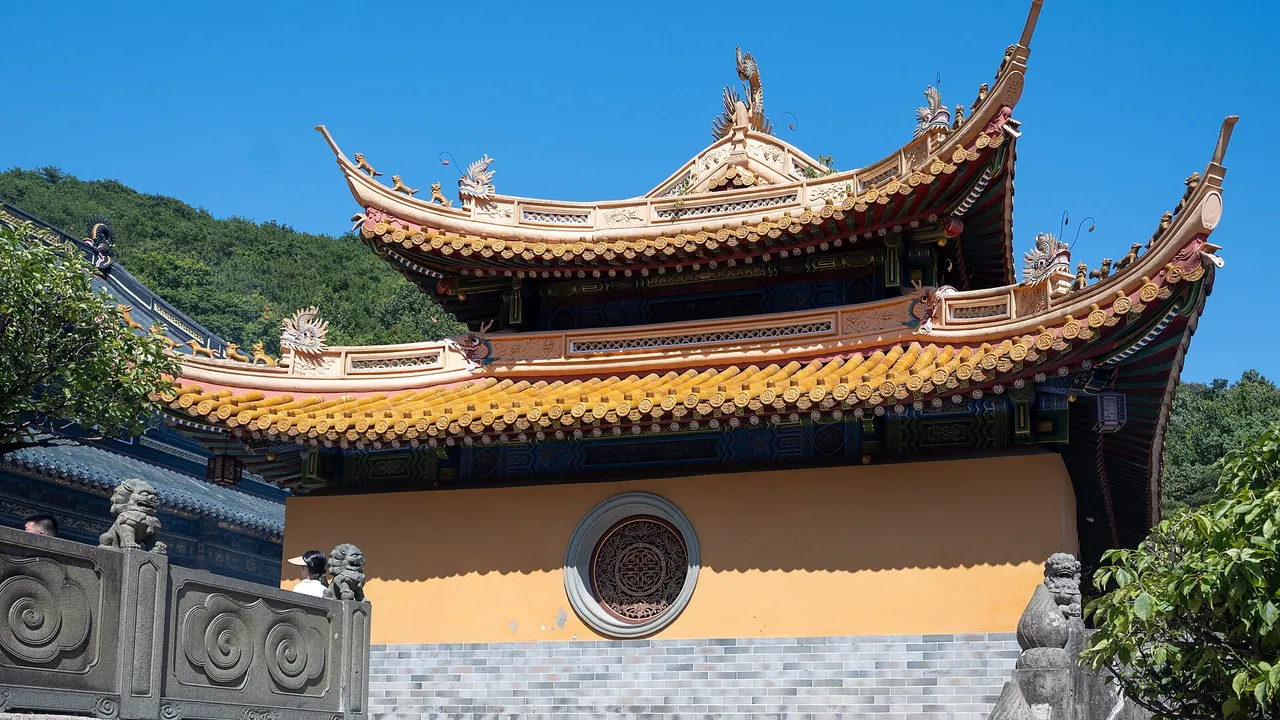
Huiji Temple: The Summit of Foding Hill
Xiangyun Road ends at Huiji, the island's highest temple, tucked into the tree shade of Foding's crown. Its vantage is unique: hill and sea spreading on one plane, shipping lanes and Zhujiajian's ridgeline visible in fair weather.
The Guanyin hall and heritage trees reward a slow pass, and the front platform makes the day's lunch stop. Ride the Foding cableway down to the mid-slope and save the knees for Lojia tomorrow.
Qianbu Sands: A Low-Tide Morning
Day two opens at the northern Qianbu Sands. After the ebb, shells and weed line the sand in ribbons while the eastern sea lifts the sun, runners and shell-pickers each claiming a stretch. Longer and quieter than Baibu, these sands are the island's golden shore for walking and jogging.
Walk to the sands' end where reefs surface at low tide, tidal pools hosting crabs and anemones. Check the day's low-water time; the hour around the ebb is the reef zone's open window.
The Brahma-Sound Cave: Listening to the Tide
East of Qianbu lies the Brahma-Sound Cave, the summit of the island's soundscape. Two cliffs pinch the channel, seawater revolving and thundering inside, bell-and-chime at the flood, distant chanting at the ebb. The viewing terrace clings to the cliff, hermitage nested among the rocks, monastic offices and surf scoring each other.
Stay twenty minutes minimum on the terrace; the tide's layers shift with every swell. Morning light runs favorable for both viewing and shooting, and from here you wait for the Lojia boat.
Lojia Island: The Buddha Lying on the Sea
A half-hour boat from the Putuoshan pier reaches Lojia. From the sea the island reads as a Buddha lying on his back, head, neck and chest drawn clearly, honored as where Guanyin practiced and attained the way, hence the saying that a Putuoshan pilgrimage is incomplete without Lojia. Temples line the ridge, and the lighthouse at the top marks an international lane.
The island circuit takes about three hours on many steps, some of them sea-cliff edges, so slow the pace. On the return boat the island settles back into a reclining Buddha; two viewings in one day, two entirely different feelings.
Wushitang: The Pebble Beach That Sings
Day three crosses to Zhujiajian, starting at Wushitang. This kilometer-long beach runs jet black, pebbles knocking together as waves advance and retreat like a muffled drum roll. The beach curves like a dragon wading into the bay, fishing boats moored along it, a sight unique in Zhoushan.
Walking the pebbles feels like nowhere else, and when swells arrive you can sit high and hear the stones' ensemble. Removing the black pebbles is forbidden, keeping the beach whole being an explicit local rule.
Daqingshan: Headlands and Meadow
Afternoon enters Daqingshan National Park, the mountain-sea cape of Zhujiajian's south end. The ring road climbs the headlands, and the Qingshan summit deck ranks among Zhoushan's finest views: golden sands, reef shores, fishing ports and open sea in layers. Side paths drop from the road into the wooded beach of Lisha.
Driving or chartering the ring saves the legs, and cyclists treat the road as a training ground. Summit wind runs strong, so mind hats and phones on the deck; afternoon backlight silvers the sea, the best shooting hour.
Baishan and the Return: A Granite Finale
Give Baishan two hours before leaving. This granite stone forest hides in Zhujiajian's interior, boulders standing like trees, crevices running like lanes, a world apart from Putuoshan's incense air. From the heights, Putuoshan island lines the horizon, the three days' route connecting into one visible thread.
Baishan exits straight to the Wugongzhi wharf for bags and onward boats or coaches. With three nature days walked, Putuoshan gains a layer in memory: not only a Buddha realm, but a real island.
| Getting around |
|
| Budget | Island entry RMB 160, Foding cableway about RMB 40 one way, Lojia boat ticket around RMB 70 extra, Zhujiajian sights RMB 100-150 combined; roughly RMB 600-900 pp across three days. |
| Best time | April-May and October-November walk best; summer afternoons spawn frequent thundershowers, so double-check tides and forecast before setting out. |
FAQs
Which stretch of the three days costs the most effort?
Xiangyun Road's thousand-plus steps are the clear physical peak, forty minutes to an hour of steady climbing, with Lojia's stepped loop second. Concerned legs can cableway both ways on Foding or turn back at mid-ascent. Around twenty thousand steps a day is normal, so knee braces and poles earn their pack weight.
How do Lojia boat tickets work, and what if I miss the boat?
Lojia tickets sell separately by real name at the Putuoshan pier, not included in island entry, capped in season and around festivals, so book online ahead. The island circuit fits the sailing schedule at about three hours, so note your return sailing on arrival, since missing it means waiting for an extra boat. Gales cancel automatically, refunds through the original channel.
Is a car mandatory for the Zhujiajian leg?
Not mandatory, just fastest: buses between Wushitang, Daqingshan and Baishan run sparse, and taxis queue in season. Self-drive or a half-day charter around two to three hundred yuan runs the loop smoothly. Tight budgets can keep only Wushitang and Baishan, both bus-reachable, leaving Daqingshan for next time.
What matters about watching the tides?
Three things: treat reef zones as open only around low tide and withdraw before the flood; read tide tables together with weather, since winds push real levels off forecast; and never linger on night flats, when the flood can be neither seen nor heard. Putuoshan's range is modest but its currents quick, and respecting the tide is respecting the sea.