
Five days is the comfortable length for the Shangri-La spine: two town days acclimatizing through old town and monastery, a full Potatso on day three, Napa plus Shika on day four, the gorge as a round trip on day five closing in hot springs. The effort curve reads low, low, high, medium, medium.
The routing avoids backtracking: Potatso and the gorge lie in opposite directions, kept to separate days; and Shika's summit view follows Napa, grassland first, then the same grassland from four thousand meters, the deeper read.
Itinerary at a glance
| 09:00 | Dukezong and the Prayer Wheel: Five Days' Zero Point |
| 14:00 | Diqing Prefecture Museum: The Old Town's Manual |
| 08:30 | Ganden Songzanlin Monastery: Day Two's Morning |
| 14:30 | Napa Lake's Yila Grassland: Day Two's Afternoon |
| 08:30 | Potatso's Shudu Lake: Day Three's Main Course |
| 13:30 | Bita Lake: The Second Lake Deep in the Woods |
| 09:00 | Shika Snow Mountain: Day Four Goes to 4,000 Meters |
| 17:00 | Chibuka Pedestrian Street: The Everyday After the Descent |
| 09:00 | Tiger Leaping Gorge: Day Five's Great River |
| 17:30 | Tianshengqiao Hot Spring and Farewell: The Five Days' Signature |
The route, stop by stop
Dukezong and the Prayer Wheel: Five Days' Zero Point
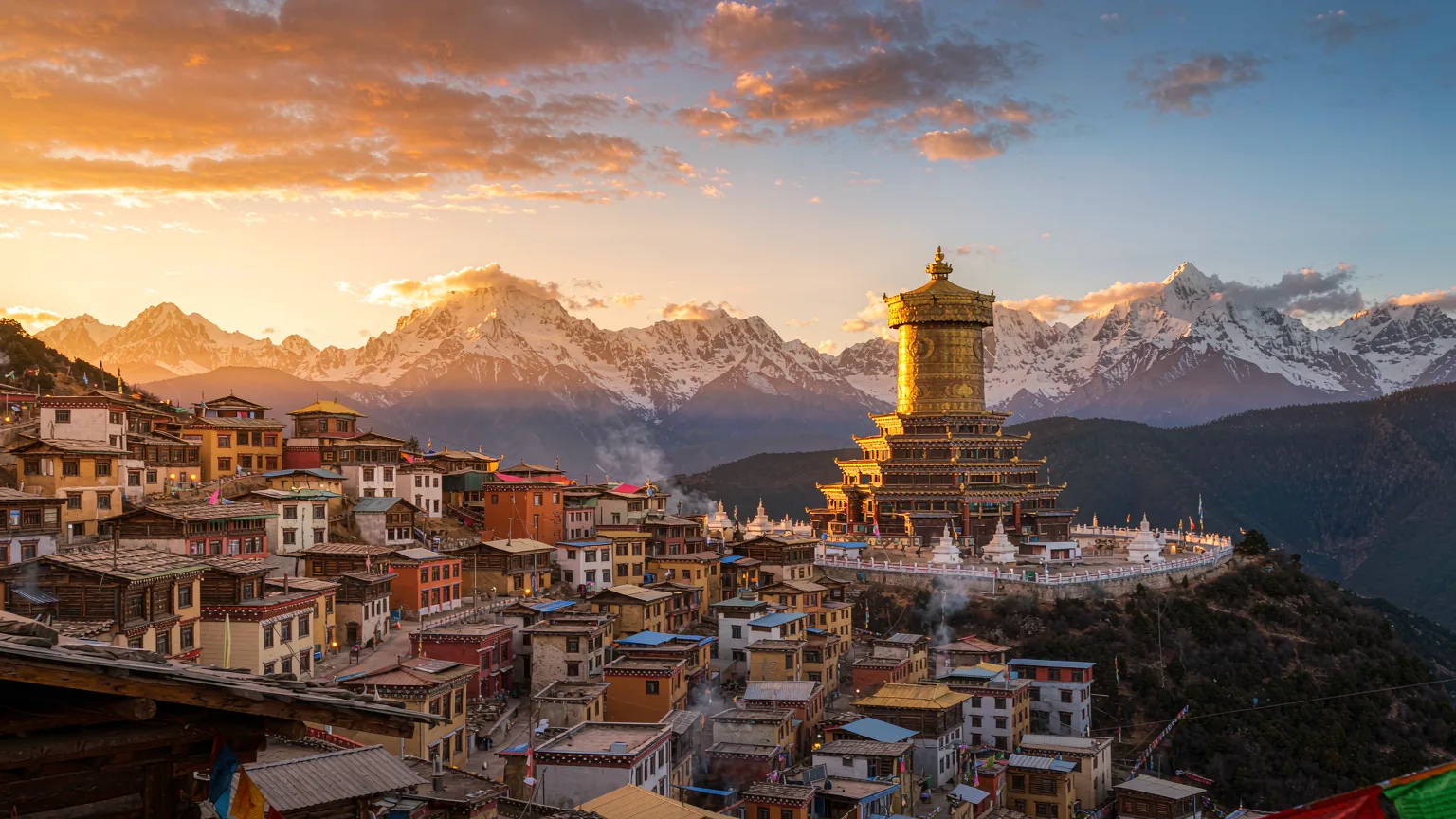
Day one does two things: sleep in the old town, climb Guishan. The Buddha temple's prayer wheel stands some twenty-one meters tall, needing seven or eight hands, widely held the world's largest, three clockwise turns as the arrival's first rite.
See the town from the summit, wander Sifang's lanes at will. No driving today, letting the body negotiate 3,300 meters slowly, dinner in an old-town Tibetan kitchen.
Diqing Prefecture Museum: The Old Town's Manual
Day one's afternoon reaches the prefecture museum, an hour and a half over the parallel-rivers geography, ethnic dress and ritual wares, and the caravan past. Returning to the old town with this loaded, Sifang's flagstones gain centuries.
Study the old Dukezong photographs and route maps, cross-referencing tomorrow's Guishan and the day-after monastery; the itinerary's depth starts here.
Ganden Songzanlin Monastery: Day Two's Morning
Day two's morning goes to Songzanlin, Yunnan's largest Tibetan Buddhist complex, dawn light kindling the gilt roofs floor by floor, the lake reflection below the classic frame. The park shuttle reaches the foot, then twenty minutes of steps.
Tour the Zhacang and Jikang halls bottom-up, then follow the elders clockwise around the prayer circuit. Two hours whole, and afterward sit lakeside for the monastery's reflection, a second viewing.
Napa Lake's Yila Grassland: Day Two's Afternoon
The afternoon reaches Napa, seasonal water that is lake in summer-autumn and pasture in winter-spring, grass meeting water on the Yila side. Ride or walk into the grassland, looking toward Shika, the range to be looked down from on day four surveyed today at eye level.
No need for the full forty-kilometer circuit; viewpoint parking suffices. The evening grassland light is the route's best camera hour, sunset watched before returning.
Potatso's Shudu Lake: Day Three's Main Course
Day three belongs to Potatso entire. Shudu's morning fog and spruce woods open the park, boardwalks along the shore, yaks grazing the far bank. Trails near 3,500 meters run slow, stopping when breath shortens.
The lake loop takes ninety minutes, the morning forest air the freshest hour of the trip; park food is thin, so pack snacks and water.
Bita Lake: The Second Lake Deep in the Woods
Bita in the afternoon runs deep and hushed, woods wrapping darker water. The offshore isle holds a legend of offering, and boardwalk-end squirrels, refused snacks, may follow a stretch; feeding is banned, so hold the line.
Ninety minutes around the lake; if Militang pasture is open, stop by, its meadow between forest and lake the park's most open frame.
Shika Snow Mountain: Day Four Goes to 4,000 Meters
Day four rides the Shika cableway, two stages to near 4,500 meters. The summit walkway runs unobstructed, Napa spreading below, yesterday's eye-level grassland underfoot today, snow peaks toward Meili and Haba stringing across on clear days.
Forty minutes to an hour up top, easy steps, descending at once on real headache. The cableway is the five days' only high-altitude event, and day four's banked acclimatization is exactly why.
Chibuka Pedestrian Street: The Everyday After the Descent
After the descent, evening goes to Chibuka, the locals' buying street: yak jerky, cheese curds, butter and dried mushrooms in rows, prices more honest than the old town's. Most of the souvenir list clears here.
Taste jerky before buying, pick curds from the day's batch. Walking back into the old town as lights come on, day four closes on the drop from four thousand meters to street level, one of highland travel's best flavors.
Tiger Leaping Gorge: Day Five's Great River
Day five drives about two hours to the upper gorge. The Jinsha, pinched between two snow mountains, narrows to fury with the leaping rock midstream, the roar landing in the chest at the decks. The viewing walk runs forty minutes on solid steps.
With legs and experience to spare, add the middle-gorge descent, steep, narrow, grippy shoes and a guide's confirmation; otherwise the roadside decks still see the river. The five days' loudest stop, a sound deeper in memory than any photo.
Tianshengqiao Hot Spring and Farewell: The Five Days' Signature
Back in town by evening, Tianshengqiao hands the five days' last hour to hot water. Thermal flow runs beneath the limestone arch, soaking the five days of steps, boardwalks and pasture out of the muscles.
Soak under twenty minutes, rise slowly. With anything left, the Grand Theatre's evening song-and-dance takes the final bow, per daily notices. Five Shangri-La days close on one deep sleep, the body's own score for the trip.
| Getting around |
|
| Budget | Five days of tickets and cableways plus charters and meals run about RMB 1500-2500 pp, excluding lodging and long-haul fares. |
| Best time | May-Jun azaleas, Sep-Oct autumn; run two low-intensity days after arrival before any high ground. |
FAQs
Are five days enough for Shangri-La?
The spine holds: old town, monastery, Potatso, Napa, Shika and the gorge all in. The Meili direction wants two more days on another thread; five days buys pacing, and acclimatization days cannot be purchased.
What about altitude sickness, where is the risk highest?
Risk ranks with altitude: Shika's 4,500-meter summit highest, Potatso's 3,500 next. Prevention is pacing, two low town days, water, little alcohol. Above four thousand, stay under an hour, descend at once on real headache, oxygen canister aboard.
Does the route work in winter?
Yes, with its own flavor: Napa turns golden pasture and birding season, snow lines drop lower and grander. Two cautions: Shika's summit turns colder, upgrade gear; some Baishuitai surfaces ice over and close. The structure stands.
How to control budget, what is worth spending on?
Tickets and cableways take the biggest bite, Potatso plus Shika around three hundred-plus; charters and meals flex most. Spend on a good driver and guide: the information edge on roads, showtimes and viewpoints outvalues any fare saved.