
Seven days here run four phases, adapt, read the town, climb, go out: two old-town days at low intensity for altitude; days three and four on monastery, museum and heritage workshops to finish the cultural base; days five and six on Potatso and Shika, height surrendered only once the body is ready; day seven outward on the Nixi and Baishuitai line.
Sleep in the Dukezong quarter all week, no changes, only early-out-late-back on the out-of-town days. About ten thousand steps daily on an effort curve of low, low, medium, medium, high, medium, medium; on the plateau, sustainability beats the box score every time.
Itinerary at a glance
| 09:00 | Sifang Street, Dukezong: Seven Days' Zero Point |
| 11:00 | Guishan Park and the Buddha Temple: The World's Largest Prayer Wheel |
| 09:30 | Ganden Songzanlin Monastery: Day Two's Morning |
| 14:00 | The Prefecture Museum and Moonlight Square: An Afternoon of Reading the Town |
| 09:30 | A Thangka Studio: Day Three's Craft Morning |
| 14:30 | Songlin Incense and the Kalachakra Center: Closing the Craft Day |
| 09:00 | Napa Lake's Yila Grassland: Day Four on the Grass |
| 08:30 | Potatso's Shudu and Bita: Day Five Takes the Height |
| 09:00 | Shika Snow Mountain: Day Six at 4,500 Meters |
| 15:00 | Chibuka Pedestrian Street: Street Level After the Summit |
| 09:30 | Tangdui Village, Nixi: Day Seven in the Pottery Homeland |
| 15:00 | Baishuitai and Tiger Leaping Gorge: The Week's Last Two Voices |
The route, stop by stop
Sifang Street, Dukezong: Seven Days' Zero Point
Day one sets no tasks: move into the old town and find the rhythm on Sifang's flagstones, once the tea-horse road's trading square, now sweet-tea houses and craft shops around the plaza, elders in prayer outnumbering visitors.
Sit for a pot of sweet tea whenever; sunning idle is not wasted time but the correct way to take the altitude. Keep day one under six thousand steps, head pressure and breathlessness normal signals, slow is fast.
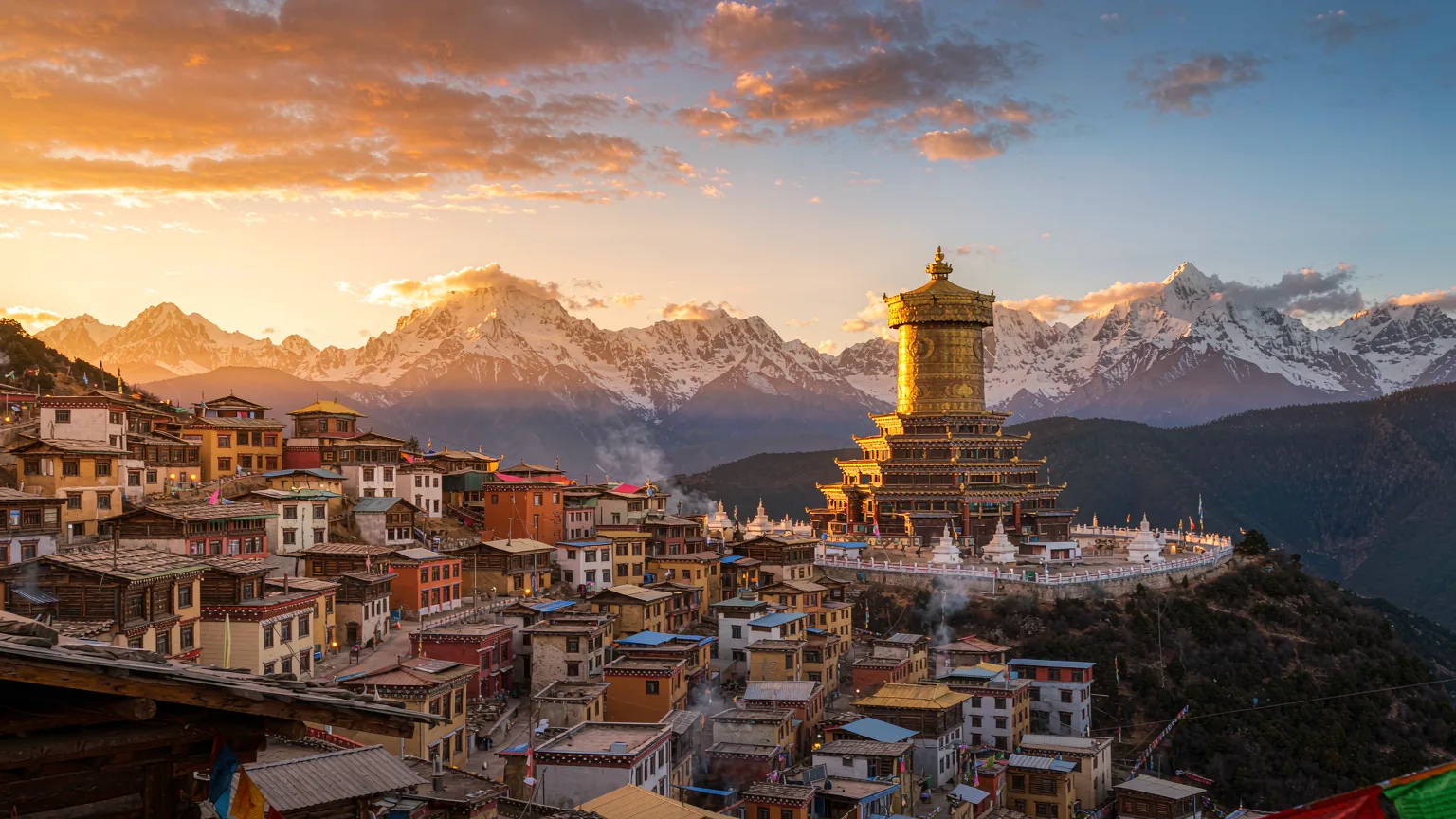
Guishan Park and the Buddha Temple: The World's Largest Prayer Wheel
Take Guishan unhurried by late morning. The Buddha temple's prayer wheel stands some twenty-one meters tall, needing seven or eight hands, widely held the world's largest, three clockwise turns, the sutras and gilding brightest before noon.
The summit platform frames the town: white walls and shingle roofs joined into a silver-gray sea. The week's geography starts building from this one view; every evening's way home will be recognizable from it.
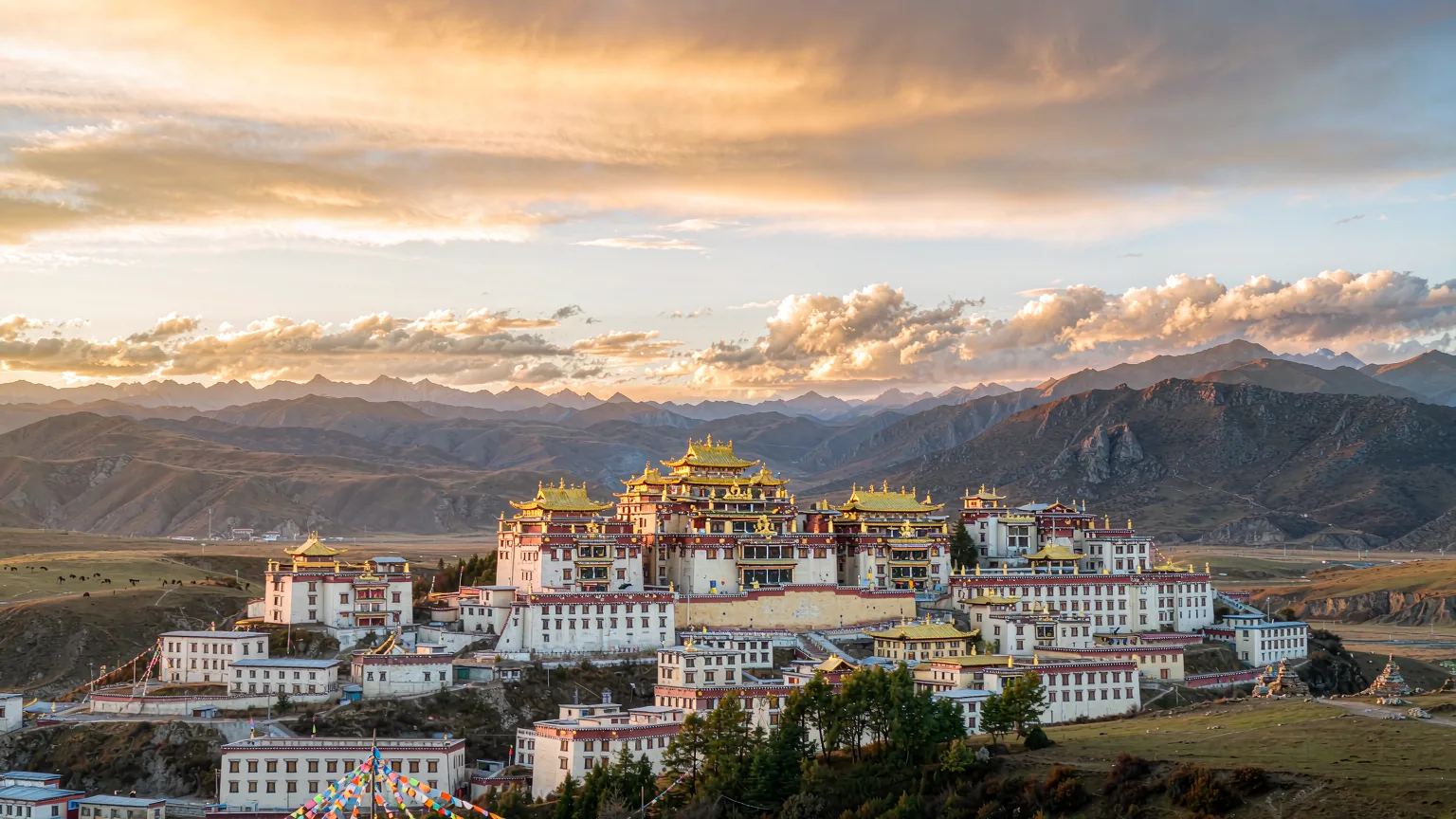
Ganden Songzanlin Monastery: Day Two's Morning
Day two's dawn goes to Songzanlin, Yunnan's largest Tibetan Buddhist complex, main halls rising up the hillside, dawn light kindling the gilt roofs floor by floor, the lake reflection below the classic frame.
The park shuttle reaches the foot, twenty minutes of steps, then the Zhacang and Jikang halls bottom-up, the prayer circuit clockwise with the elders. Two hours whole, then lakeside for the monastery's mirrored second showing.
The Prefecture Museum and Moonlight Square: An Afternoon of Reading the Town
The afternoon returns to town, an hour and a half well spent in the prefecture museum's geography, dress and ritual halls and tea-horse unit, studying the old Dukezong photographs and caravan maps above all.
The exit opens onto Moonlight Square, where locals dance the guozhuang at dusk; joining beats watching, the steps simple, a few circles and you have them. Day two closes on museum plus square, the town's base read complete.
A Thangka Studio: Day Three's Craft Morning
Day three reads craft. In the thangka studio, painters lay charcoal, fill mineral color and close with gold, months for even a small piece, canonical measure behind every stroke. Try one gilding stroke or sit a morning beside the palette.
Ask the pigments' origins: green from ground turquoise, red from cinnabar. Carry those questions to the afternoon's incense; the two threads meet on the relation of craft and faith.
Songlin Incense and the Kalachakra Center: Closing the Craft Day
The afternoon reaches the Songlin incense site, cedar and dozens of herbs ground, fermented, hand-rolled and dried seven days. Roll a few sticks yourself, the master correcting your grip, a stick's evenness deciding its burn.
By evening, the Kalachakra center, cosmic order rendered as geometry. A craft day running pigment to incense powder to mandala lands each time on making the invisible visible, the key to reading Tibetan culture.
Napa Lake's Yila Grassland: Day Four on the Grass
Day four reads the grassland at eye level first. Napa is lake in summer-autumn, pasture in winter-spring, grass and water meeting on the Yila side, horses scattered, black-necked cranes in winter. Ride or walk in, looking toward Shika's ridge.
Today is designed as see-then-climb: learn the mountain from the grassland so tomorrow's 4,000-meter overlook of the same grassland doubles in meaning. Evening light here is the week's best; watch sunset before returning.
Potatso's Shudu and Bita: Day Five Takes the Height
Day five belongs to Potatso entire: Shudu's morning fog and spruce woods, boardwalks along the shore, then Bita hushed and dark in the afternoon, woods wrapping the water. Trails near 3,500 meters run slow.
Park food is thin, pack snacks and water; open areas per daily notices. The week's most demanding day, so rest early in the old quarter, with 4,500 meters waiting tomorrow.
Shika Snow Mountain: Day Six at 4,500 Meters
Day six rides two cableway stages up Shika to near 4,500 meters. The summit walkway runs unobstructed, Napa spreading below, the grassland surveyed at eye level two days ago now underfoot, snow peaks toward Meili and Haba stringing across on clear days.
Forty minutes to an hour up top, easy steps, descending at once on real headache. Day six because acclimatization is banked; 4,500 meters is not for bravado but the hour that folds the whole plateau into the eye.
Chibuka Pedestrian Street: Street Level After the Summit
After the descent, the afternoon clears the souvenir list in one pass. Chibuka is the locals' street: yak jerky, cheese curds, butter and dried mushrooms at honest prices, a cut below the old town's craft shops.
Taste jerky first, pick curds from the day's batch, ask shelf life and check-in rules on edibles. The drop from 4,000 meters to street level is one of highland travel's best flavors, and tonight suits a good dinner.
Tangdui Village, Nixi: Day Seven in the Pottery Homeland
Day seven leaves town, half an hour to Tangdui in Nixi, where every household throws pots: village clay hand-built and paddle-formed, wood-fired to glossy black; beyond the national-heritage title, a livelihood that keeps the village fed.
Pottery families welcome visits and hands-on sessions; buy a stewpot or tea set at the kiln below town prices. Lunch in Nixi on authentic clay-pot chicken, the pot in its homeland, the culture line's most fitting close.
Baishuitai and Tiger Leaping Gorge: The Week's Last Two Voices
Day seven's afternoon picks one closing voice: southeast to Baishuitai's travertine terraces, about two and a half hours each way and easier split across two days with Tangdui, or southwest to the upper gorge's roar, two hours each way. With room for only one, take the gorge, forty minutes of viewing deck the best value on the board.
Back in town by evening, Tianshengqiao hands the last hour to hot water, soaking the week's steps, boardwalks and pasture out of the muscles. Under twenty minutes, rise slowly. Seven Shangri-La days close on one deep sleep, the body's final score.
| Getting around |
|
| Budget | Seven days of tickets and cableways plus charters and meals run about RMB 2500-4000 pp, excluding lodging and long-haul fares. |
| Best time | May-Jun for azaleas and greening grassland, Sep-Oct doubling autumn color with birding; winter brings thin crowds and grand snow with upgraded gear. |
FAQs
Are seven days too many, how against the five-day version?
The surplus buys pacing and depth: a full craft day, Nixi and pottery, and an easier acclimatization ramp. Five days suit tight schedules or a Lijiang connection; seven suits slowing down, the plateau's returns scaling with nights spent.
Which days can drop freely across the week?
Days three and seven flex most: crafts compress to half a day, and the outward day can keep only the gorge. Days one and two for adaptation and days five and six for height should stand, the twin base of safety and experience.
How should photographers plan the week's shots?
Dawn belongs to Songzanlin and the lake reflection, dusk to the Yila grassland and the Guishan panorama, Shudu wants morning fog, Shika wants blue sky. Seven days carry high fault tolerance, bad weather simply slides a day, the long itinerary's greatest gift to a camera.
Is this week feasible with parents?
Feasible with three subtractions: drop the middle-gorge descent, ride Shika stage one only, keep one far point on the outward day. The rest is already low-intensity, and watching for altitude matters more than the schedule, ask how everyone feels each night.