
Seven days read Suzhou a second way: not chasing sights but lodging inside the city's several kinds of time. Gardens keep their own hour, the first after opening; story houses theirs, an afternoon session; water towns run half a beat off the city's clock. Seven days each claim one stretch, letting Suzhou set the tempo.
The week's rule is one theme per day, one blank per day: no night program on garden days, no city errands on water-town days, no museums on lakeshore days. Suzhou's depth lies not in quantity but in how long you will sit beside one canal.
Itinerary at a glance
| D1 08:00 | The Humble Administrator's Garden: Where Garden Time Begins |
| D1 10:30 | Suzhou Museum: The Garden's Contemporary Neighbor |
| D1 13:30 | Lion Grove Garden: Diving a Labyrinth of Stone |
| D2 09:30 | The Suzhou Pingtan Museum: An Afternoon at the Story House |
| D2 19:00 | Pingjiang Night Market: The Water Lane's Night Shift |
| D3 09:00 | Hanshan Temple: A Morning of Bells |
| D3 14:00 | Shantang Street: From the Quiet West to Tonggui Bridge |
| D4 09:30 | Zhouzhuang: The Water Town's Slow Day |
| D4 14:30 | Luzhi: The Quieter Control Group |
| D5 09:30 | Suzhou Silk Museum: An Afternoon of Looms |
| D5 19:30 | Kunqu: Closing the Day in Aria |
| D6 10:00 | Ligongdi Causeway: Opening Lakeshore Day |
| D6 15:00 | Moonlight Marina: Cruise and Dusk |
| D7 11:00 | Su Embroidery: The Week's Final Needle |
| D7 13:00 | Songhelou (Guanqian): The Seven-Day Farewell Table |
The route, stop by stop
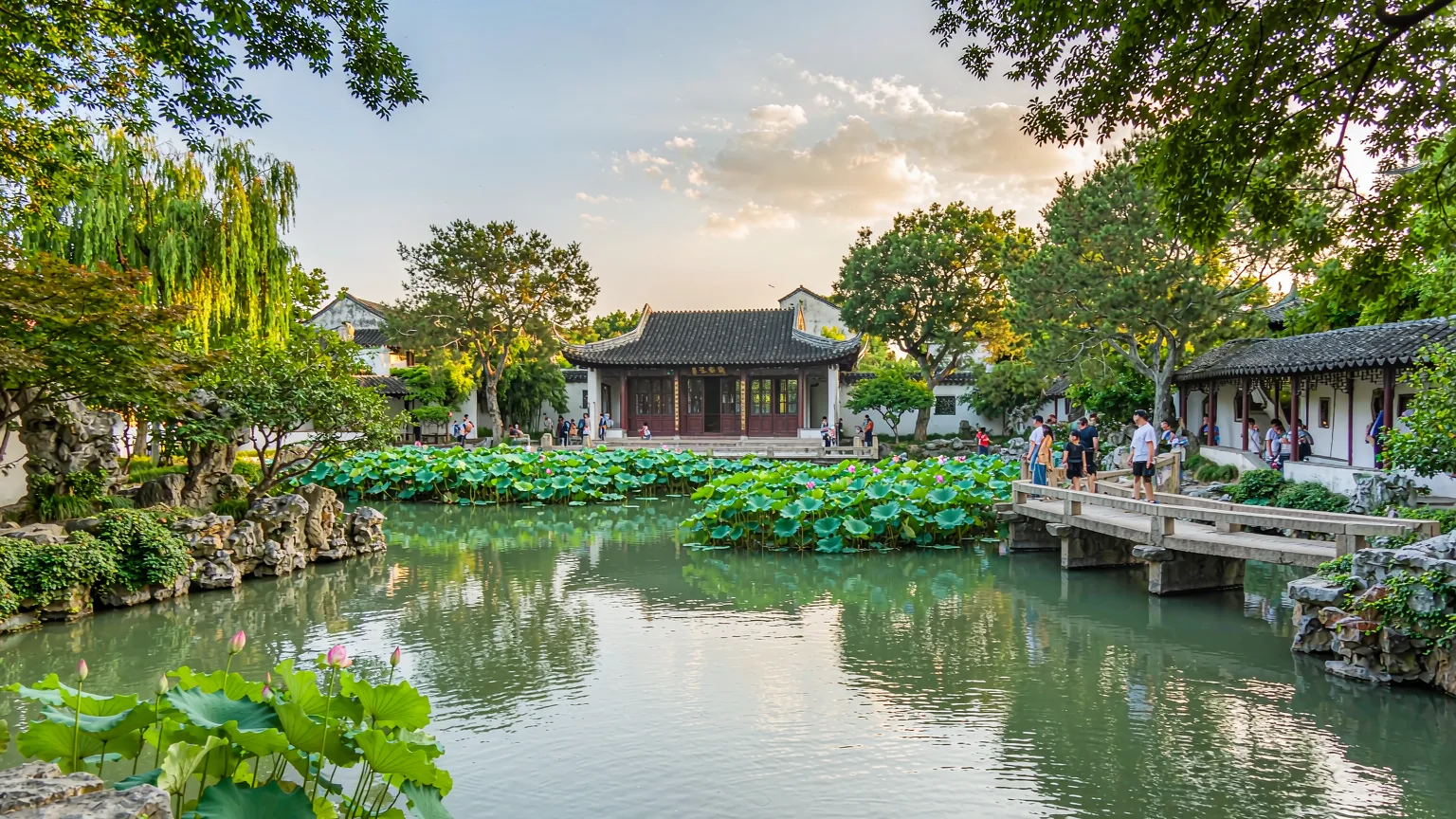
The Humble Administrator's Garden: Where Garden Time Begins
The week opens on garden time. Water skeletons the Administrator's Garden, three-fifths of it pooling the pavilions together, and the first hour after opening belongs to the garden alone: dew, birdsong and unbroken reflections.
Give it the whole morning and read every plaque and couplet. The fragrance of Yuanxiang Hall, the shadow of the Small Flying Bridge, the solitude of the Sit-in-Without-Company pavilion: day one learns the language of gardens, which the next six days will spend.
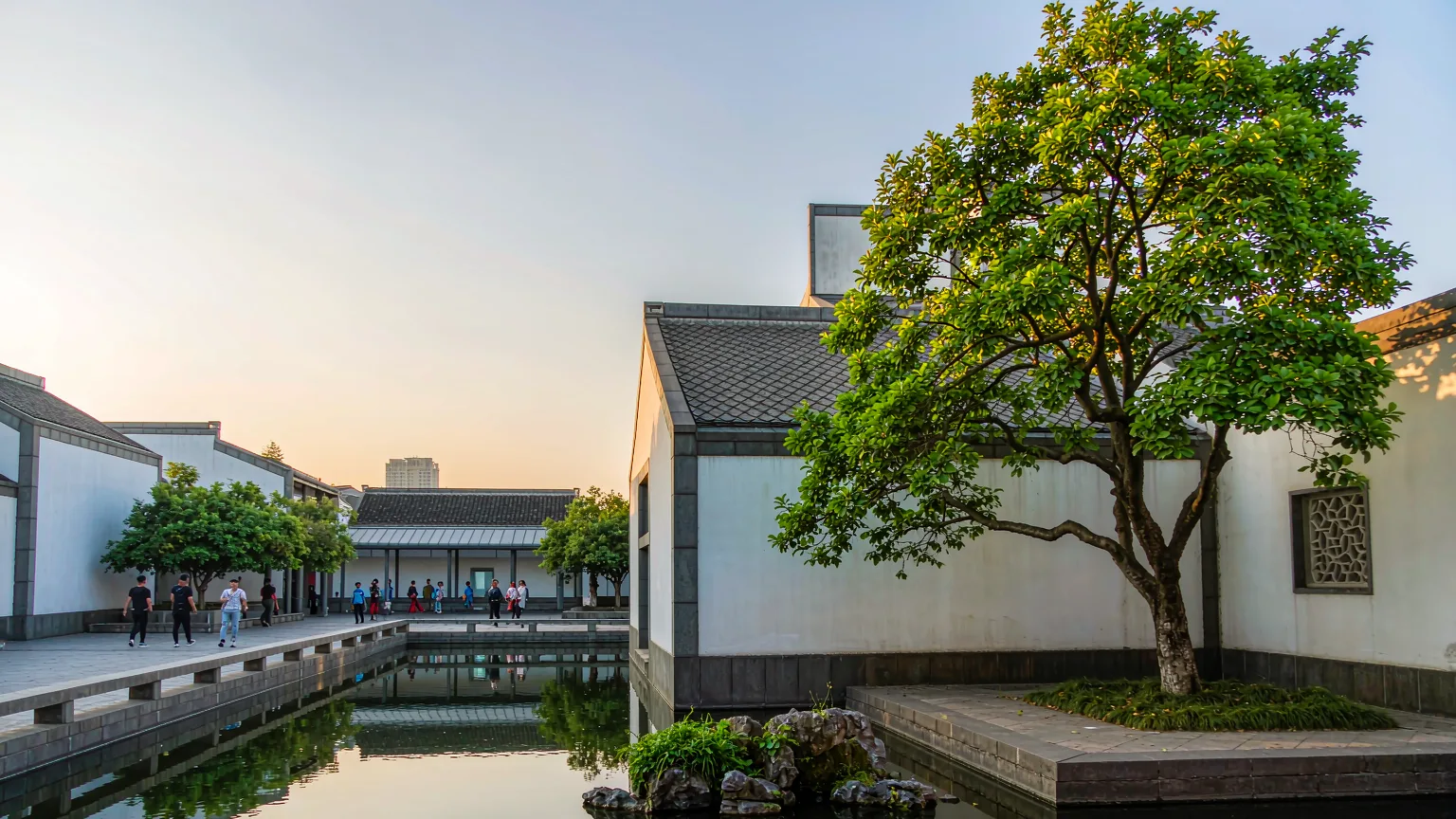
Suzhou Museum: The Garden's Contemporary Neighbor
Sharing the garden's wall, Suzhou Museum rewrites whitewashed walls and dark tiles in modern materials, its sliced-stone rockery using the wall as paper in dialogue with the five-century-old neighbor; the celadon lotus bowl and pearl sharira shrine anchor the collection.
After the galleries, pass through the Loyal Prince's Mansion. Day one studies how Suzhou houses its past: gardens show how the ancients composed scenery, the museum how the present catches that inheritance, each footnoting the other.
Lion Grove Garden: Diving a Labyrinth of Stone
The afternoon reaches Lion Grove. The Yuan temple garden's rockery spirals through three interlocking levels, and finding your way out is the garden language's most playful lesson, with all four virtues of Taihu stone on display at once.
Spend a full twenty minutes inside, then settle in the teahouse. Day one's steps will top ten thousand, so schedule only a Pingjiang stroll for night, keeping garden time to daylight.
The Suzhou Pingtan Museum: An Afternoon at the Story House
Day two belongs to sound. The pingtan museum's story house still runs, a few yuan of tea buying a session of soft Wu-dialect narrative, the sanxian and pipa interludes easier to follow than any plot. Tour the exhibits late morning, then sit for the afternoon session.
House custom never rushes guests, tea refilled three rounds without a hint. Handing one whole afternoon to a single session is the week's best-priced slowness.
Pingjiang Night Market: The Water Lane's Night Shift
Night returns to Pingjiang Road as the story house's neighborhood changes shifts, stalls lighting along the canal, boats sliding through the arches, sugar-painting sweetness mingling with river air.
Buy a warm cake and walk the river into the branch lanes, one wall away from the locals' evening. Tomorrow holds a temple at dawn, so close the day before midnight.
Hanshan Temple: A Morning of Bells
Day three reads temple time. Hanshan's bell has rung a millennium on one Tang poem, the stele corridor stacking generations of carvings, three strikes of the bell the morning's ritual.
Arrive before nine while the incense crowd is thin. After the temple, walk to Maple Bridge and the canal outside the walls, translating the poem's setting moon and crow into daylight fact.
Shantang Street: From the Quiet West to Tonggui Bridge
The afternoon reads street-market time since the Tang at Shantang. The canal Bai Juyi cut bound commerce to waterborne trade; walking west to east, guild halls and time-honored shops thicken along the banks.
Stop at Tonggui Bridge as sunset warms the canal, dine on the spot, and let the night boat's oar creak be the transfer between temple time and street time.
Zhouzhuang: The Water Town's Slow Day
Day four goes entirely to the water town. Zhouzhuang's canals, bridges and courtyard mansions form the complete Jiangnan specimen, Shen's seven-courtyard hall and the Twin Bridges the twin highlights, oared boats sliding beneath the arches.
Take the halls and bridges in the morning, the boat before noon, side lanes and teahouses after, and lanterns kindling at dusk. An overnight is ideal, for the water town at dawn belongs to the early.
Luzhi: The Quieter Control Group
The afternoon shifts from Zhouzhuang to Luzhi. A tier lower in commercial density, Luzhi keeps the water town's everyday register, Baosheng Temple's Tang painted-wall arhats the town treasure, old teahouses by the canal full of local elders.
Read the two towns against each other: Zhouzhuang the water town at its fullest, Luzhi its breathing and ordinariness. Return to Suzhou by evening, carrying the water town's slowness back to the city.
Suzhou Silk Museum: An Afternoon of Looms
Day five returns to craft time. The silk museum runs from cocoon to loom, masters weaving at reconstructed frames on the spot, and kesi's one-shuttle slowness keeps the same beat as the water town's days.
Understand the looms and every soft furnishing from the past four days acquires its pedigree. Two hours suffice, with proper stores nearby to complete the silk souvenirs.
Kunqu: Closing the Day in Aria
Night five goes to the water-polished aria. Kunqu bends each syllable three ways, highlight acts running twenty minutes, garden-setting performances the pricier advanced form, and the Peony Pavilion's Wander in the Garden and Startled Dream the standard entry.
Lost in lyrics, watch the water sleeves and percussion, which narrate themselves. Walk the old city's night lanes home and carry the melody into sleep.
Ligongdi Causeway: Opening Lakeshore Day
Day six switches to lakeshore time. Ligongdi reaches into Jinji Lake, cafes and galleries along the late-Qing causeway, glass towers across the water standing for another Suzhou.
Walk the causeway out and back, then settle into a lake-view coffee. Lakeshore day admits no museums, trading steps for caffeine and lake wind.
Moonlight Marina: Cruise and Dusk
The afternoon reaches Moonlight Marina for a Jinji Lake cruise, the modern skyline unfolding whole from the water, the week's only stretch spent seeing the city as scenery.
Return ashore before sunset and walk the lakeside path into the first lamps, tower lights and reflections merging across the water, the week's most open-ended blank.
Su Embroidery: The Week's Final Needle
The last day returns to the hand. Su embroidery ranks among the four great traditions, double-sided work showing two pictures from one fabric, and thread split to a single strand exists only in handwork.
Find a studio with the embroiderer stitching in view and watch the needle before discussing price. Press a small piece to take home: seven days of landscape, melody and stitch condense here into a keepsake you can touch.
Songhelou (Guanqian): The Seven-Day Farewell Table
The farewell table sits at Songhelou on Guanqian Street. The squirrel mandarin fish arrives knife-scored and fried under sweet-sour glaze, crisp and tart, with stir-fried shrimp and a pot of Biluochun green tea, all of Suzhou's sweet and umami at once.
Digest along Guanqian Street afterward, ticking off the souvenir list. Seven days of Suzhou close here: gardens, story houses, temples, water towns, looms, lakeshores and one embroidery needle, each both cover and footnote.
| Getting around |
|
| Budget | With two water-town tickets, performances and lodging throughout, about RMB 3500-5500 pp, excluding long-haul fares. |
| Best time | March-May and September-October run steadiest; early garden slots stay competitive all year, and water towns reward weekday visits. |
FAQs
Is seven days too long for Suzhou?
Not for deep travel: Suzhou's sight density is high but each unit small, and seven days give gardens, sound, temples, water towns, craft and lakeshore one day each. Worried about fatigue, cut the water towns to one town for the day or convert lakeshore day to full hot springs, with all flexibility held in the week's second half.
Which stops require advance booking?
Four hard bookings: real-name reservations for the Administrator's Garden and the museum, Lion Grove tickets in peak season, and any Kunqu performance you want. Everything else is on-site or free. Finish all bookings the day your dates are fixed; water towns and lakeshore can stay improvised.
How should stamina be distributed across the week?
The first three days carry the heaviest walking, day four's water towns tax the legs, days five and six deliberately slow, day seven keeps only the farewell table. Cap daily steps near twenty thousand, sit a while each afternoon, and remember Suzhou's comfort depends on how much you sit, not how far you walk.
With only four days, which three go?
Keep two garden days, one water-town day and the Kunqu night; drop the lakeshore day, the second water town and the standalone craft day, compressing the silk museum and embroidery into half a day. The seven-day frame is the full edition, four days remove the expansions, and the core of gardens and sound never misses a beat.