
Wuhan's other name is River City, and water is its true skeleton: the Yangtze and Han cross downtown, East Lake holds the big-city-lake record, and even Tangxun Lake is vast enough to own a fish-ball school of its own. Three waterside days skip the marquee sights and read how locals live off the water.
The structure is simple: day one on the Yangtze, ferrying across from Wuhan Guan and walking both riverfronts; day two on East Lake, from Tingtao into the greenway, closing with Tangxun Lake fish-ball soup; day three in Qingshan, watching an old industrial district hand its bank back to the public. Free or cheap throughout, the friendliest three days for a budget.
Itinerary at a glance
| D1 09:00 | The Customs House and Wuhan Guan Wharf: Setting Off from the Old Port |
| D1 10:30 | The Ferry Crossing: The Yangtze for Pocket Change |
| D1 14:00 | The Wuchang Riverfront: The Bank below the Great Bridge |
| D1 19:30 | The Night Cruise or the Zhiyin Hao: The Light Show from the Water |
| D2 09:00 | Tingtao, East Lake: A Lake Day Opening at Xingyin Pavilion |
| D2 11:00 | Greenway Riding and the Moshan Climb |
| D2 18:00 | Tangxun Lake Fish Balls: Dinner from Another Lake |
| D3 09:00 | The Qingshan Riverfront: An Industrial Bank Reborn |
| D3 11:30 | Daijiahu Park: From Fly-Ash Dump to City Lung |
| D3 15:00 | The Hankow Riverfront: Ending on the Largest of Them All |
The route, stop by stop
The Customs House and Wuhan Guan Wharf: Setting Off from the Old Port
Anchor day one at the old Customs House, the 1924 headquarters facing the river, its clock striking on the hour. The Wuhan Guan wharf before it is the ferry hub, and in the morning haze cargo boats and sand barges queue upstream.
Give half an hour to the riverside view first, then enter the waiting hall, where boards list departures; ordinary and fast ferries queue apart, and the crossing you want is Wuhan Guan to Zhonglu Road, about a yuan and a half.
The Ferry Crossing: The Yangtze for Pocket Change
The ferry is how Wuhan has commuted for a century, and now it is the best-value river experience for visitors. Once underway, climb to the upper deck: the great bridge spans downstream, the Yellow Crane Tower rises across the water, gulls trail the wake, and the deck sways gently when wind and current argue.
Fifteen minutes lands at Zhonglu Road wharf in Wuchang, straight onto its riverfront. Ride the crossing back and forth all day for a few yuan and watch the working channel up close, closer to the city's real life than any expensive cruise.
The Wuchang Riverfront: The Bank below the Great Bridge
The Wuchang riverfront stretches for kilometers, its most famous reach under the great bridge: looking up from below, the steel trusses and road deck stand fully exposed, and passing trains set the whole span humming, the best place to feel the first bridge's mass.
Paths string together waterside platforms and lawns where locals fly kites, fish and shoot wedding photos. At dusk the sun sinks behind the Hankow skyline, and the ten minutes before the lights come on gild the whole river.
The Night Cruise or the Zhiyin Hao: The Light Show from the Water
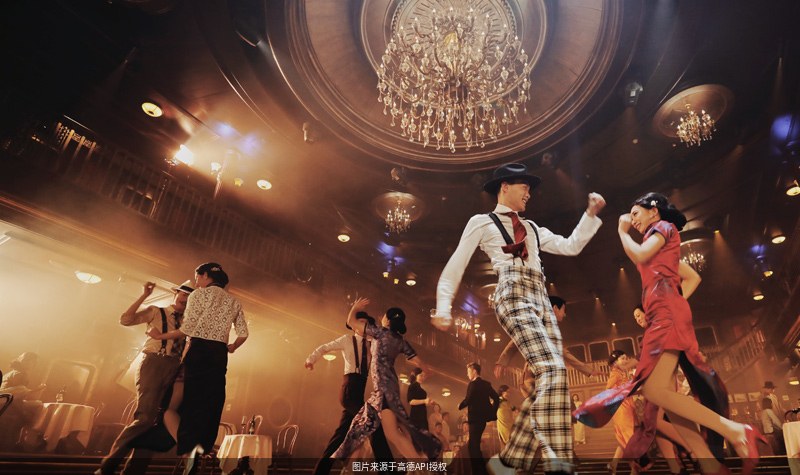
The night Yangtze belongs to boats. Ordinary night cruises sail from around Wuhan Guan for an hour or so out and back, the two-river light show ringing the vessel in full surround; the Zhiyin Hao plays a different game, a restored Republican-era liner as a drifting theater, where boarding means entering the play and actors perform through the cabins.
On a budget take the ordinary cruise; for immersive theater book the Zhiyin Hao ahead. Skipping both also works, since the riverfront banks frame the light show completely.
Tingtao, East Lake: A Lake Day Opening at Xingyin Pavilion
Day two trades river for lake. Tingtao is free, its Xingyin Pavilion standing on an islet honoring the wandering poet Qu Yuan; morning mist lies on the water, old swimmers take the steps down, anglers line the bank, the lake's most human hour.
From Tingtao follow the shore to the Liyuan greenway gate with water on one side the whole way. East Lake demands a full day to read, and Tingtao is only the overture; save your legs for the riding ahead.
Greenway Riding and the Moshan Climb
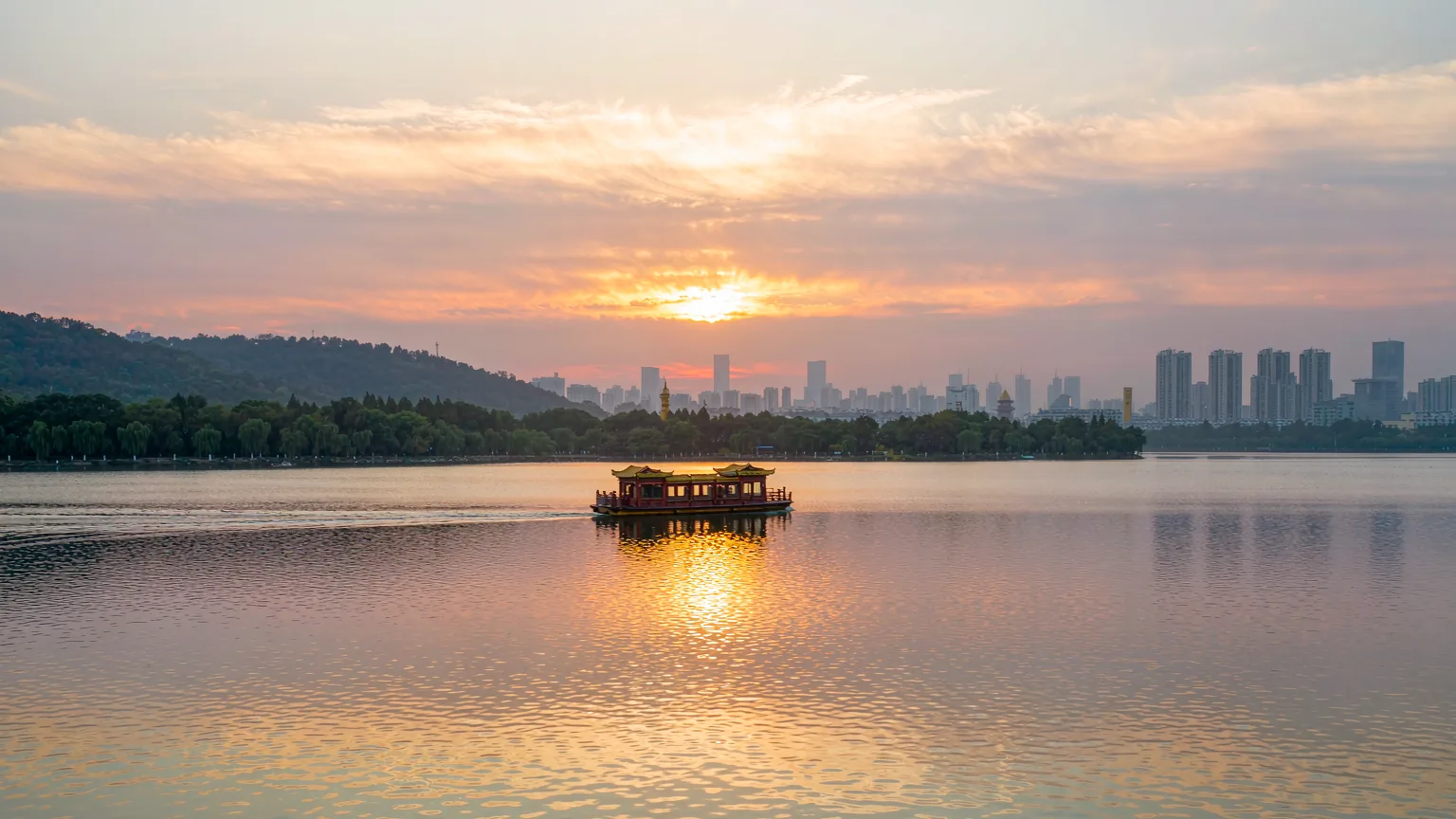
The lake-centre path runs with water on both sides, the greenway's best stretch; at Moshan, dismount and climb the Chu Sky Terrace for the panorama, where the lake's islands only resolve from height. Spring brings full water and winter the birds, each season completing the view differently.
In the afternoon ride toward Luoyan, quiet with open wetlands and a boardwalk end made for idling. The full network exceeds a hundred kilometers, so commit to the main line, lake-centre path, Moshan and Luoyan, five hours just right.
Tangxun Lake Fish Balls: Dinner from Another Lake
East Lake is not Wuhan's only water. Tangxun Lake ranks among China's largest urban lakes, and its shore runs a street of fish-ball specialists: fresh-pounded paste squeezed into balls, a clear broth with pepper and scallion, fried small fish or lotus chips on the side. The texture test is springy without starch, juicy inside.
It sits about forty minutes from downtown; whether the detour pays depends on the eater, but fish-ball devotees should come, and others can pair it with errands toward Jiangxia. A boiling bowl closes a riding day perfectly.
The Qingshan Riverfront: An Industrial Bank Reborn
Qingshan exists because of the steel works, and its riverfront remake is the model of Wuhan's industrial-bank transition: old wharves and stockyards out, gentle lawns, rain gardens and cycle paths in, the flood wall folded into the landscape, the bank reborn as the district's living room. Far quieter than the two-river hub upstream.
The frontage runs long, best on a rented bike along the shore, with relics of industrial structures dotted between lawns, a fine old-versus-new contrast against the skyline across the water. An hour's ride plus photos fills a morning.
Daijiahu Park: From Fly-Ash Dump to City Lung
Daijiahu's story bends more than most parks': it was the power plant's fly-ash dump, grown into a gray hill that dusted the wind; after remediation and backfilling it reopened as a park, keeping a stretch of old rail and industrial sculpture as exhibits of its own past.
Small enough for an hour, it pairs with the Qingshan riverfront into a half day. What you see is a micro-sample of China's old industrial transition, telling the cost and patience behind the phrase green hills and clear water better than any slogan.
The Hankow Riverfront: Ending on the Largest of Them All
Give day three's close to the Hankow riverfront, the largest riverside park on both banks: reeds, lawns and viewing platforms for kilometers, the opposite skyline sharp in afternoon light, barges filing past, kite lines running out of sight.
Walk the reed beds toward the Customs House and the waterside loop closes: three days ago you set out from Wuhan Guan, and now you stand before the same river. Dinner around Jianghan Road, with the lit park as an after-meal stroll.
| Getting around |
|
| Budget | Riverfronts and East Lake are nearly free, the ferry about RMB 1.5 a crossing; three days run roughly RMB 400-700 pp before lodging. |
| Best time | April-May and Sep-Oct suit the waterfronts; summer favors evening outings, while winter bird season flatters East Lake and the wetlands. |
FAQs
Ferry or night cruise, and are both worth riding?
The ferry is transport and experience at once, a yuan or two for a quarter hour of daytime channel life; the cruise is a sightseeing product, an hour of route with light-show angles for tens of yuan. Riding both overlaps heavily; on a budget, take the ferry and the free riverfront night view.
Does high water break this route, and when?
During flood season, mostly July and August, high water closes some waterside platforms and lower paths, and fog or flood peaks can suspend ferries, though the main line holds. Check water levels and wharf notices on the day, and keep a fallback for shoreline legs, switching to upper viewpoints or moving on early.
Is a dedicated trip to Tangxun Lake fish balls worth it?
For fish-ball devotees, yes: fresh-pounded and freshly boiled beats downtown chains clearly, and the lakeside setting adds to it. Under time pressure, skip it, since veteran restaurants downtown pour a competent bowl. If going, fold it into other Jiangxia plans; two forty-minute legs are the only real cost.
What safety points matter on a waterside three days?
Four rules: no wild swimming, the river and lake currents are serious; decks and boardwalks run windy and slick, so hold rails and move slowly; wear the life vest on cruises and note the exits; and keep children at arm's length, never crossing flood-season barriers. Follow the four and Wuhan's waters are all view.