
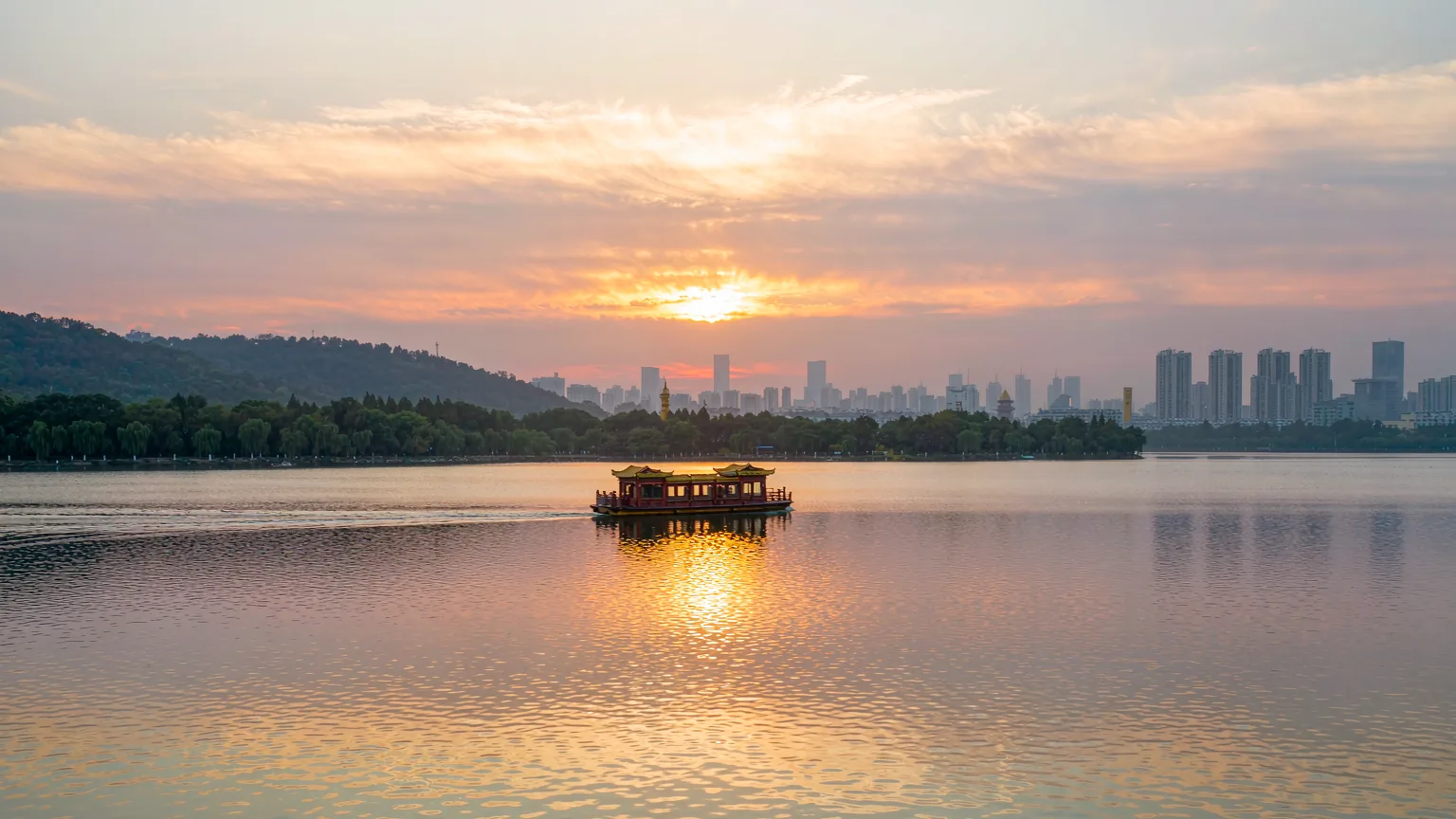
Wuhan's nature rests on two cards: the urban lake-and-hill card, where broad East Lake and its greenway make a rideable, walkable line, and the Mulan card in Huangpi north of the city, where valleys, waterfalls and Taoist halls hide an hour's drive out. Three days split cleanly: one lake, one mountain, one river.
The skeleton: day one all East Lake, from Tingtao through Moshan to Luoyan; day two an early start for Huangpi to chain the Mulan pools and Mulan Mountain; day three back to the Yangtze, Qingchuan Pavilion at the two-river confluence, a walk over the great bridge, and dusk on the Hankow riverfront. Pressure eases toward the end, with a lazy morning left in reserve.
Itinerary at a glance
| D1 09:00 | Tingtao, East Lake: The First Morning on the Shore |
| D1 11:00 | East Lake Greenway: Riding the Lake-Centre Path |
| D1 16:00 | Moshan's Chu Sky Terrace and the Cherry Garden Grounds |
| D1 19:00 | Luoyan: Wetland Dusk with the Migratory Birds |
| D2 08:30 | Mulan's Sky Pool: A Morning of Valleys and Falls |
| D2 14:00 | Mulan Mountain: Taoist Halls on the Ridgeline |
| D3 09:00 | Qingchuan Pavilion: The Best Seat at the Two-River Confluence |
| D3 11:00 | Walking the Yangtze Bridge: Hanyang to Wuchang |
| D3 15:00 | The Hankow Riverfront: Open Ground on the Yangtze |
| D3 19:30 | The Two-Rivers Light Show: The Yangtze Night Finale |
The route, stop by stop
Tingtao, East Lake: The First Morning on the Shore
Tingtao is East Lake's nearest entrance to downtown, free to enter, its lakeshore Xingyin Pavilion honoring the wandering poet Qu Yuan. Morning mist lies on the water, promenades run along the bank, and the corners where locals swim and fish at dawn are all here, the first live look at how Wuhan uses its lake.
Do not linger long, an hour or so: walk a stretch of shore, glance at the pavilion, then head toward the Liyuan greenway gate and save the main effort for riding. Teahouses in the park make fine rest stops, with lake wind through the halls beating any mall.
East Lake Greenway: Riding the Lake-Centre Path
The greenway is how East Lake should be seen, over a hundred kilometers of car-free path cutting the lake into rideable sections. The lake-centre path runs with water on both sides and wind straight off the surface, the best stretch of all; at the Moshan section, leave the lane and climb the Chu Sky Terrace for the full panorama of islands and peninsulas.
With time to spare, ride on toward Luoyan, where crowds thin, wetlands open wide and migratory birds steal the season. Riding everything is unrealistic; commit to lake-centre path plus Moshan, three or four hours with stops.
Moshan's Chu Sky Terrace and the Cherry Garden Grounds
Moshan is the high ground beside East Lake, its Chu Sky Terrace a tall platform in Chu style giving the lake's second-best view, while the Chu city gate and chime stage below keep the cultural scenery. In late March the cherry garden's night blossoms are nationally famous, a lit-up sea of flowers that is another world from daytime.
The terrace hosts its own chime shows, a fine alternative to the museum's; the hiking trail reaches the top in twenty minutes, easier than any queued elevator. Exit by the Moshan gate for a lakeside sunset and an unhurried end to day one.
Luoyan: Wetland Dusk with the Migratory Birds
Luoyan sits at East Lake's northeast corner, the quietest of the main areas: wetland, reeds and boardwalks far wilder than Tingtao. When migratory birds head south in autumn and winter, geese and ducks winter in flocks on the water, and at dusk the returning columns skim the surface, the wildest scene on the lake.
If day-one energy runs out, swap Luoyan to the third morning against Qingchuan Pavilion. Paths run flat and gentle, and the boardwalk's end holds the best view over the water.
Mulan's Sky Pool: A Morning of Valleys and Falls
Day two heads into Huangpi. The Mulan Sky Pool reserve lies on Mulan Mountain's northern slopes, tied to the legend of Mulan's grandmother's home: a valley of stepped falls over deep pools, stone stairs climbing beside the water, not steep but long. The upper half is all water, and the pool itself sits at the top, a mirror set into the mountains.
The reserve is large, and the cableway saves half the return; families with kids should walk up and ride down. Spring and summer bring the fullest falls, while autumn's turning woods make the photographer's day.
Mulan Mountain: Taoist Halls on the Ridgeline
Mulan Mountain is the legend's heart, its Taoist and Buddhist buildings strung along the ridgeline, the golden summit and the Lady's Hall never without incense. The pilgrimage trail climbs and falls through woods, no lighter than the pools, but the ridge offers Huangpi's finest views.
On the way down, eat a farmhouse meal in the village at the mountain's foot; Huangpi's three fresh dishes, meat cake, meatballs and fish balls, head every local banquet and repair a day's climbing in one bowl.
Qingchuan Pavilion: The Best Seat at the Two-River Confluence
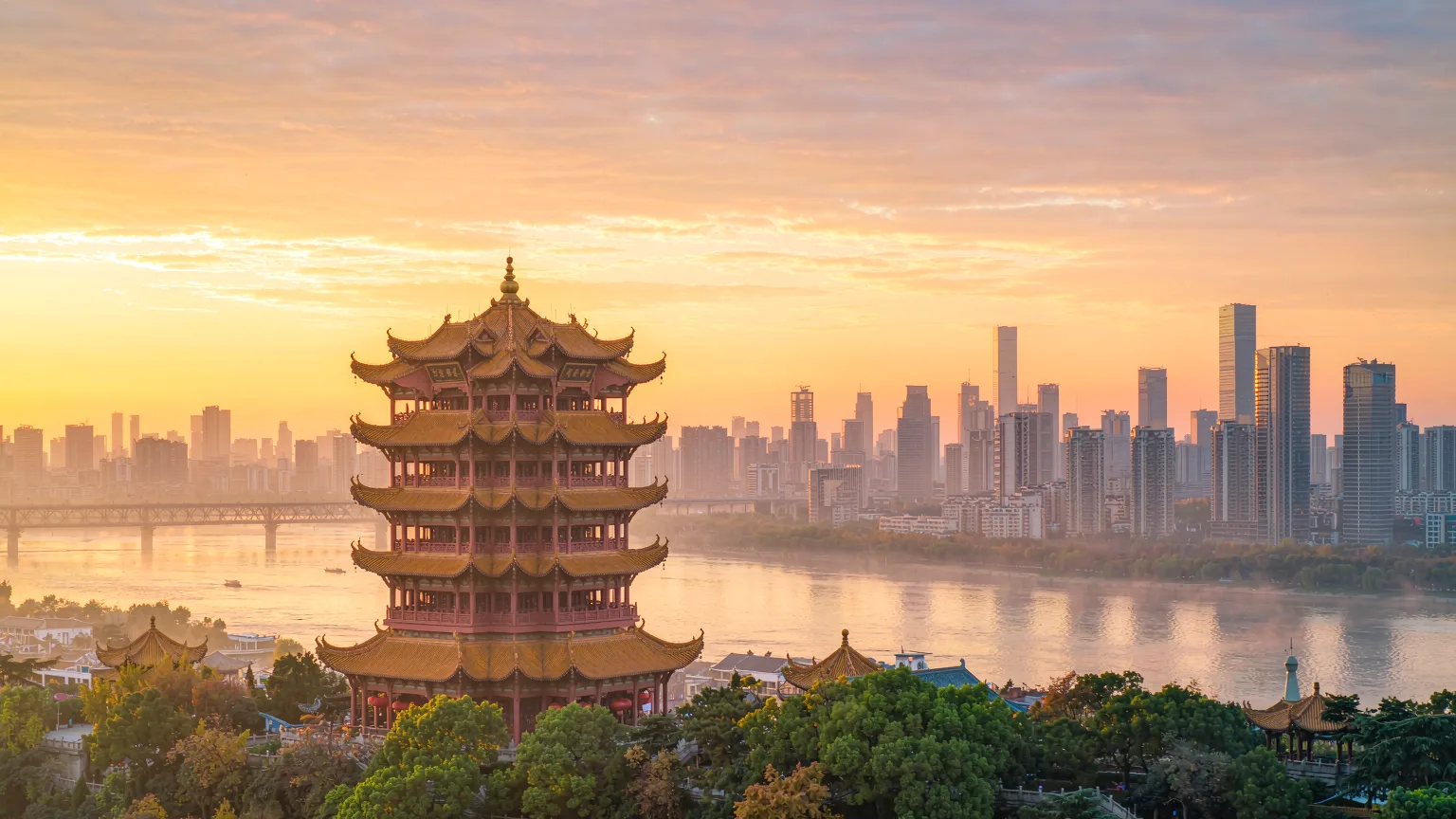
Day three returns to the river. Qingchuan Pavilion sits at the eastern foot of Turtle Hill in Hanyang, facing the Yellow Crane Tower across the water, the very scene of the Tang line about sunlit plains and Hanyang trees. The pavilion is modest but superbly placed: the Yangtze and the Han meet below, their waters muddy and clear, the boundary sharp on fine days.
From the pavilion a riverside walk reaches the Hanyang end of the great bridge, folding neatly into the next leg. Entry is free and crowds far thinner than at the tower, the connoisseur's vantage on two rivers.
Walking the Yangtze Bridge: Hanyang to Wuchang
Opened in 1957 as the first bridge over the Yangtze, Wuhan's great bridge carries road and rail together, with walkways flanking the road deck. The Hanyang-to-Wuchang crossing takes twenty-odd minutes, watching the two rivers meet, Turtle Hill's tower and the Yellow Crane Tower opposite, while trains thunder along the rail deck below.
The bridge is windy, feeling several degrees colder than downtown in winter; mind cyclists at the railing when shooting. Descend at the Wuchang end straight into the tower-and-alley district, solving lunch in the same move.
The Hankow Riverfront: Open Ground on the Yangtze
Across the river lies the Hankow riverfront, the largest park on the Yangtze, reeds, lawns and viewing platforms stretching for kilometers. In afternoon light, cargo barges file past while Wuchang's skyline looms faint across the water, runners and kite flyers each keeping their lane.
Walk the reed beds toward the Customs House, with the old concession buildings right beside, finishing that stretch before dinner. The park is free and utterly local; sit and watch the river and you understand the city's base note.
The Two-Rivers Light Show: The Yangtze Night Finale
After dark the building facades on both banks merge into one continuous light field; from the Hankow riverfront, the lit Yellow Crane Tower and Turtle Hill tower reflect into the river, the main view of the two-rivers light show. Themed runs usually start near the top of the hour, with drones or fireworks added on holidays.
No boat ticket needed; the free riverfront vantage is already excellent, and the night cruise is the upgrade if you want the water view. End at Jianghan Road metro for the ride home, closing three days here.
| Getting around |
|
| Budget | The greenway is free with bike rental around RMB 30 per half day; Mulan-area tickets total about RMB 150-200, with meals and lodging extra. |
| Best time | April-May and Sep-Oct run steadiest; summer actually suits the mountains, while winter river winds demand a real shell. |
FAQs
How demanding are the three days? How should effort be spread?
Effort tapers: two or three riding hours on day one, a four-to-five-hour mountain day two as the peak, and mostly flat strolling on day three. Placing Mulan in the middle leaves recovery on both sides; struggling seniors or kids can swap the mountain for a half day of farmhouse village and ride only the pools.
How do I reach the Huangpi Mulan sites without a car?
Three routes: book a city day-tour coach to the Mulan area with round-trip included, the least effort; ride rail transit to Qianchuan in Huangpi and transfer to rural buses or shared rides toward the mountain; or charter a car both ways, costing about the same as the coach split four ways. For shared rides, fix the return time in advance.
If choosing, East Lake or the Yellow Crane Tower? Is skipping the tower a pity?
For a nature-themed three days, East Lake outranks the tower, a humanities landmark that trades places with Qingchuan Pavilion, which is free, quieter and the better confluence view. Skipping the tower is no loss, since the lake and greenway rank first-tier nationally, though a distant look at its lights from the riverfront on day three repairs the longing.
Which season suits this route best, and is winter feasible?
April-May and Sep-Oct are steadiest, with kind temperatures and water levels; summer works too, cooled by lake wind, with the Huangpi hills a few degrees below downtown. Winter is feasible but windy by the river and stark in the mountain halls, while bird season, November to February, is Luoyan's exclusive bonus; bring a windproof shell and binoculars.