
Wuhan's historical strata run deep: Panlongcheng carried bronze civilization to the Yangtze 3,500 years ago, the Zeng Hou Yi chimes were buried 2,400 years ago, the 1911 Uprising fired in Wuchang, and the treaty-port years left whole districts of concession buildings and lanes in Hankow. Three days walk these four layers in reverse chronology.
The routing: day one in Wuchang at the provincial museum and the uprising district; day two in Hankow for Gude Temple, the Customs House and the lane quarters; day three north to Panlongcheng, then back for Guqin Terrace and Guiyuan Temple in Hanyang. The museums all need booking, so lock day-one slots early.
Itinerary at a glance
| D1 08:30 | Hubei Provincial Museum: The Underground Orchestra of Zeng Hou Yi |
| D1 11:00 | The 1911 Revolution Museum and the Red Building: Fifty-Two Days of Asia's First Republic |
| D1 14:30 | Yellow Crane Tower and Snake Hill: From Watchtower to Cultural Totem |
| D1 17:00 | Tanhualin: Mission Schools and Old Houses at Dusk |
| D2 09:00 | Gude Temple: A Burmese Stupa in Hankow |
| D2 11:30 | The Hankow Customs House and the Concession Blocks: A Century of Treaty-Port Facades |
| D2 14:30 | Li Huangpi Road and the Hankow Lanes: Life inside the Shikumen Blocks |
| D3 09:00 | Panlongcheng Site Museum: A Shang City on the Yangtze |
| D3 15:00 | Guqin Terrace: Ground Zero of the Soulmate Legend |
| D3 16:30 | Guiyuan Temple: Five Hundred Arhats as the Coda |
The route, stop by stop
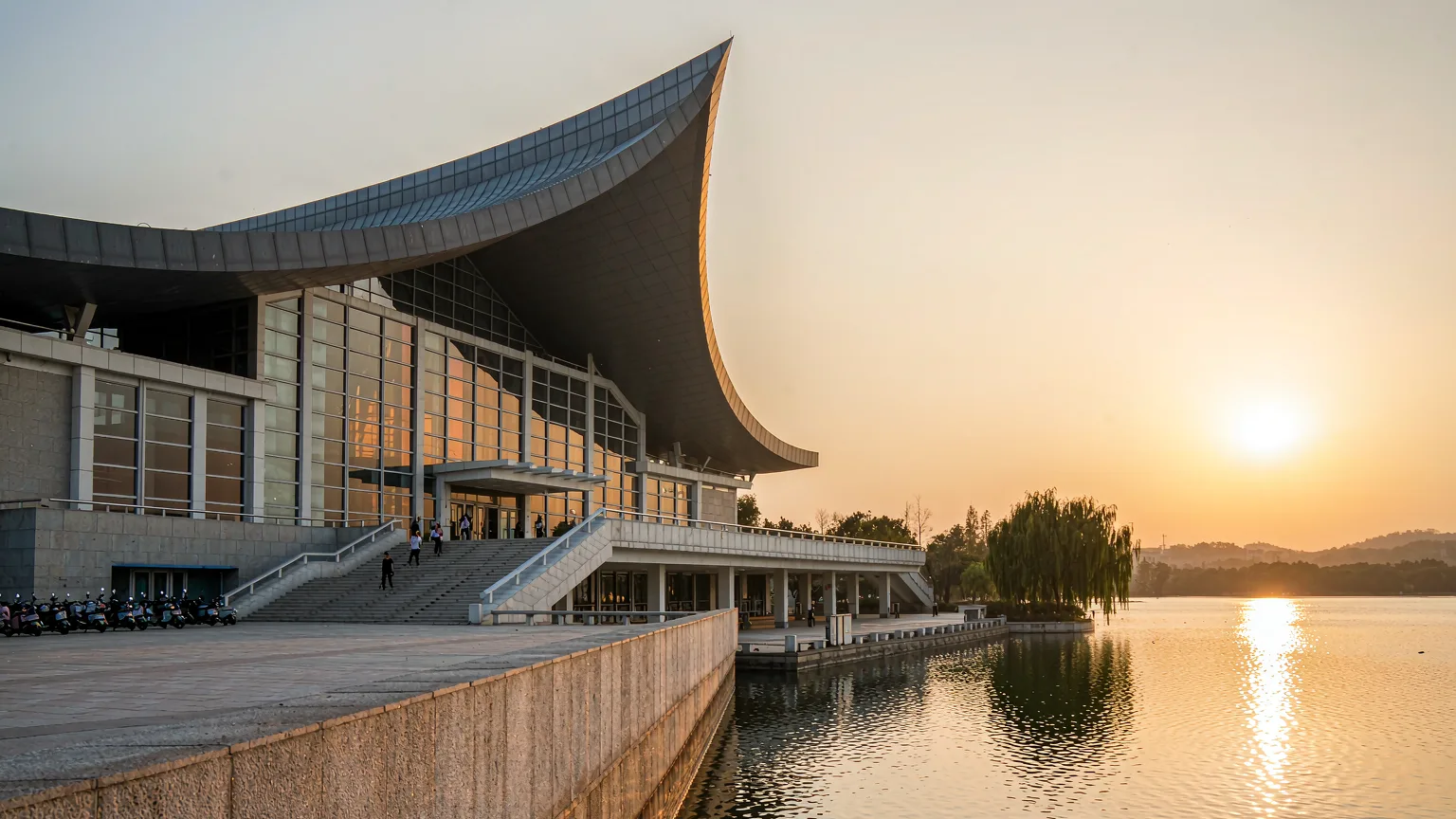
Hubei Provincial Museum: The Underground Orchestra of Zeng Hou Yi
Excavated in 1978, the tomb of Marquis Yi of Zeng yielded a full set of sixty-five chime bells still hung on their three-tier rack in playing order, with inscriptions recording the musical standards of the Warring States. Twenty minutes before the rack teaches more than ten essays: ritual music was not an abstraction but a precise acoustic engineering project.
The same tomb gave up bronze trays and censers cast by lost-wax method into layer upon layer of openwork, still near-impossible to replicate; the Sword of Goujian and the spear of Fuchai of Wu share a hall, the weapons of sworn rivals facing each other across a few cases, the museum's most theatrical tableau.
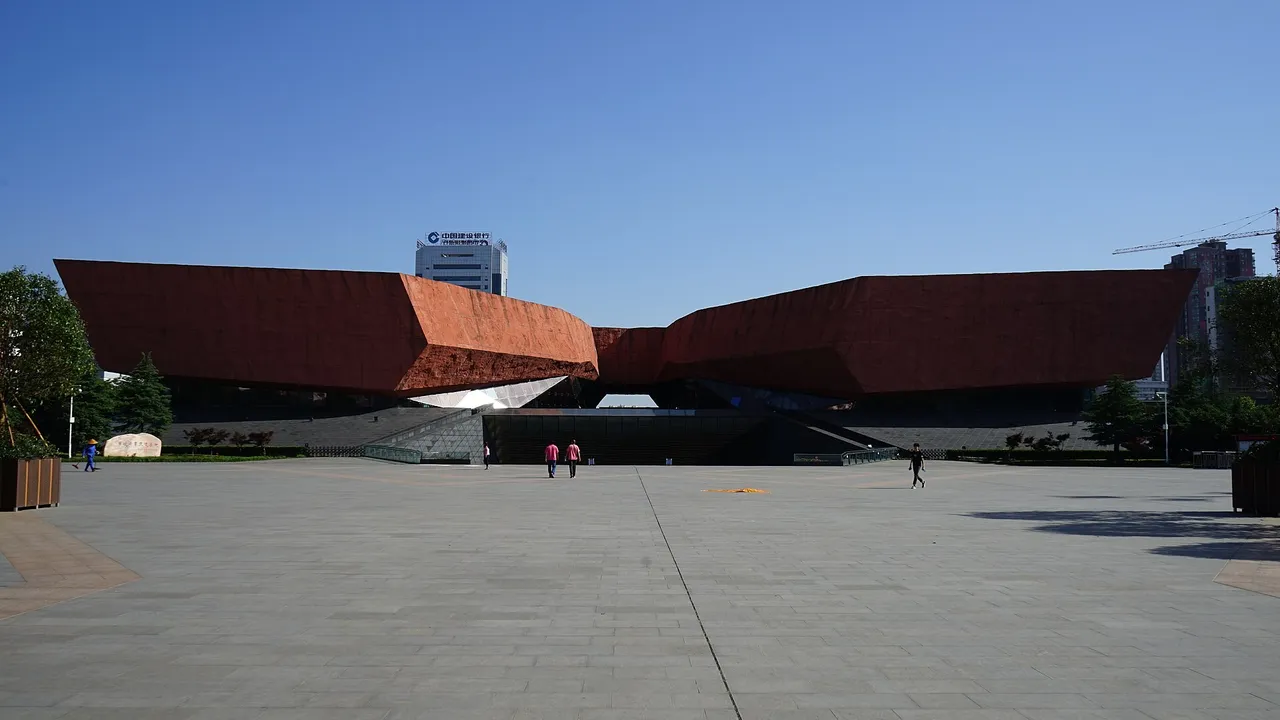
The 1911 Revolution Museum and the Red Building: Fifty-Two Days of Asia's First Republic
After the Wuchang Uprising, the Hubei military government set up in this red western-style house, telegraphing the nation, issuing proclamations and organizing volunteer armies, the epicenter of Chinese politics for fifty-two days. The restored council rooms and offices make the history physical; stand at the desk where the telegrams were signed.
The new galleries trace the chain from the night of the uprising to the change of power with film and artifacts, a modern counterpoint to the museum's bronze age. The two buildings adjoin; three hours covers both, with lunch nearby.
Yellow Crane Tower and Snake Hill: From Watchtower to Cultural Totem
The Yellow Crane Tower began as the military watchtower of Xiakou city in the Three Kingdoms era, won its fame through Tang poetry, and was destroyed and rebuilt through the dynasties, the current structure dating to the 1980s. Read it as more than a tower: the inscriptions, pavilions and defense remains along Snake Hill's ridge string together seventeen centuries of Wuchang.
For cultural depth, seek the records of each rebuilding and the exhibition of the Cui Hao and Li Bai poems; comparing stone carvings of the same poem across eras rewards attention. After the confluence view from the top, the east-gate descent path is calmer than the main gate.
Tanhualin: Mission Schools and Old Houses at Dusk
Tanhualin preserves a cross-section of modern Wuchang: mission schools, former churches and notable residences stacked up the slope, old brick still stamped with its kiln numbers. The lane works by contrast, century-old buildings housing cafes and design shops; come in the afternoon to browse, at dusk to read history.
Look for architectural details: western cornices on gables, Chinese lintels over courtyard gates, two languages reconciled on a single wall. The slanted evening light flatters the brick best, so sit at the lane's mouth with a drink before moving on.
Gude Temple: A Burmese Stupa in Hankow
Gude Temple is Wuhan's most photogenic building: the main hall modeled on Burmese Ananda-temple lines, its nine rooftop stupas and pointed arches mixing Gothic and Southeast Asian elements, nearly without peers among Chinese temples. Founded in the late Qing by lay Buddhists who sheltered wounded uprising soldiers, the name Gude honors such merit.
The hall interior is compact, half an hour to an hour; the details live in eaves, lattices and stupa carvings, so circle the building slowly. Morning light on the roofline is the golden hour for photographs.
The Hankow Customs House and the Concession Blocks: A Century of Treaty-Port Facades
Completed in 1924, the Hankow Customs House was the treaty port's customs headquarters, its clock tower about forty-six meters tall and once the tallest structure in Hankow. Greek columns under a British clock-tower crown, it now houses the customs museum on the port's opening and trade history, free to enter.
From the Customs House walk inland toward Zhongshan Avenue, where concession-era banks, trading houses and consulates cluster: the former HSBC building and the old police station all reward a look up. The quarter links to Li Huangpi Road, easy to finish in the same walk.
Li Huangpi Road and the Hankow Lanes: Life inside the Shikumen Blocks
Named for Li Yuanhong, Li Huangpi Road is among the best-preserved quarters of the old concession, red-brick houses now cafes and boutiques. The cross lanes hide the likeng, Hankow's version of shikumen alleys: the gate arches and courtyards of Tongxingli and Xian'anfang still house residents, laundry poles and flower pots sitting naturally against century-old brick.
The lanes are homes, not exhibits, so visit gently: photograph the arches, stay out of courtyards, walk around drying laundry. Old Hankow lives in these houses, and watching alley traffic from a corner cafe beats any gallery.
Panlongcheng Site Museum: A Shang City on the Yangtze
Panlongcheng was a city the early Shang built in the Yangtze basin about 3,500 years ago, pushing the bronze civilization's frontier to the Jianghan plain. The museum beside the site displays bronzes, jades and a reconstruction of palace foundations, telling the textbook-rewriting discovery that Shang civilization reached the Yangtze.
The site park outside shows the rammed-earth palace city in clear outline, and walking the remnants of a three-millennium wall feels very physical. Museum plus park take two hours, about an hour's drive from downtown, well placed for a departure day.
Guqin Terrace: Ground Zero of the Soulmate Legend
Back from Huangpi, the Hanyang afternoon slows. Guqin Terrace commemorates Yu Boya and Zhong Ziqi, whose story turned the phrase high mountains and flowing water into the core of Chinese friendship; the origin sits in this modest garden by Moon Lake, its stele corridor carved with centuries of tributes.
The inscriptions and panels tell the tale plainly for newcomers. Half an hour walking Moon Lake helps digest three days of history before the temple finale.
Guiyuan Temple: Five Hundred Arhats as the Coda
Guiyuan Temple closes the heritage run neatly: in this Qing-dynasty monastery's hall of five hundred arhats, no two clay figures repeat, and the counting game adds a street-level playfulness to a solemn space. The sutra library's paintings and jade Buddha are the final artifacts worth close study on this route.
By dusk the tour groups thin, and incense and bell tone gather three days of history into one quiet close. Metro runs easily back to Wuchang or Hankow, with dinner near the temple or back downtown.
| Getting around |
|
| Budget | Museums are mostly free with booking; tickets total roughly RMB 60-120 pp, with the chime show and some halls priced apart. |
| Best time | Year-round; most venues close Mondays, so keep that day off the plan or backfill with outdoor stops. |
FAQs
Which venues need booking, and what if slots run out?
The provincial museum, the 1911 museum, the Customs House museum and Panlongcheng all need free real-name booking on their own platforms, with the provincial museum tightest in season, three to five days ahead. If its slots vanish, try a weekday morning or swap days with Panlongcheng to spread the load.
Will the route make sense without a history background?
Yes. Every stop narrates itself: the provincial museum has the chime show and scene reconstructions, the 1911 pair tell a strict timeline, and Panlongcheng puts palace foundations right in front of you. Rent an audio guide or join a scheduled docent talk, and read each intro panel ten minutes early for a real boost.
Is Gude Temple out of the way, and is it worth the trip?
It sits in northern Hankow, metro plus a walk, hardly remote. The case for going is strong: no other Chinese temple looks like it, and architecture and photography fans rank it first. Half an hour for the main hall and stupa details suffices, and it chains with other Hankow stops in one day.
How do I dodge Monday closures across three days?
Make Monday an outdoor day: Tanhualin, the lanes, the bridge and the riverfront ignore closures. If Monday falls inside the trip, shift museums to adjacent days, move Panlongcheng to Tuesday, or re-anchor the whole start date. Checking each venue's same-day notice before departure is the safest policy.