
Seven days in Wuhan can drop the checklist mindset for a living-in-the-city one: one district and one theme per day, a proper breakfast each morning, an open afternoon, and evenings on the river or at the markets. The skeleton is four downtown days, two in Huangpi, one floating spare, taking the classic route apart and reinserting second-tier stops like Panlongcheng, Gude Temple and the lanes.
Three buffers are built in: a museum day pairing the provincial museum with the 1911 halls, a greenway riding day, and a free final day. Change hotels three times by district, two nights in Wuchang, three in Hankow, one floating, moving always in the morning with bags at the front desk for direct check-in on return.
Itinerary at a glance
| D1 07:30 | Breakfast on Liangdao Street: Sesame Paste Opens the Week |
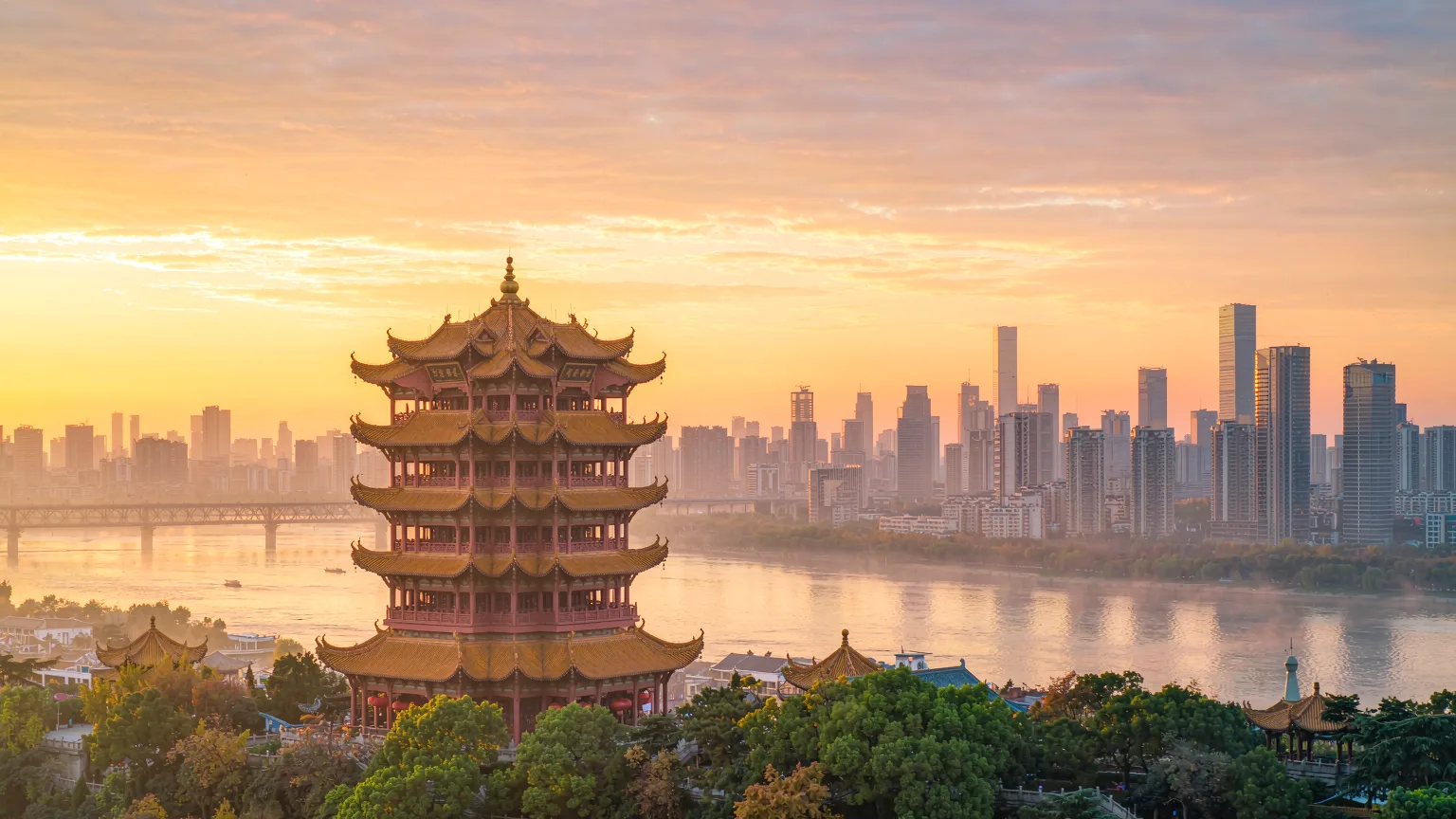
| D1 09:30 | Yellow Crane Tower and Snake Hill: The Ridge beyond the Main Hall |
| D1 16:00 | The Bridge and the Ferry: Walking It, Then Riding It |
| D2 08:30 | Hubei Provincial Museum: Half a Day of Bronze and Lacquer |
| D2 14:30 | The 1911 Museum and the Red Building: An Afternoon History Class |
| D2 18:00 | Tanhualin at Dusk: The Old Street Signs Off |
| D3 09:00 | Gude Temple and the Concession: One Day of Exotic and Old Dreams |
| D3 14:00 | Li Huangpi Road and the Lanes: Into the Shikumen Blocks |
| D3 19:00 | Jiqing Street Night Market: The Sound of Hankow after Dark |
| D4 09:00 | Wuhan University and the Greenway: One Day, Campus to Lake |
| D4 18:30 | Han Street and Songsong Road: Dinner after the Lake Day |
| D5 09:30 | Guqin Terrace and Guiyuan Temple: Hanyang's Soulmate and Arhats |
| D6 08:30 | Panlongcheng Site Museum: The Wuhan Older Than Wuhan |
| D6 14:00 | Mulan Mountain: Halls along the Ridgeline |
| D7 09:00 | The Free Day: Repeat Your Favorite Day |
The route, stop by stop
Breakfast on Liangdao Street: Sesame Paste Opens the Week
The first lesson of a deep visit is breakfast. Liangdao Street steams at seven: hot dry noodles from a stall grinding sesame paste fresh, alkaline noodles blanched twice, tossed and finished within three minutes, plus a mianwo ring and egg wine eaten standing. Wuhan runs one of China's largest breakfast systems, worth a whole morning of study.
Do not stop at one shop: noodles first, a mianwo two doors down, egg wine at a third stall. This meal sets the week's taste anchor, and each morning afterward picks a new street, threading breakfast through the seven days as a subplot.
Yellow Crane Tower and Snake Hill: The Ridge beyond the Main Hall
Climb the tower early before crowds fill in, reading the two-river confluence from the top. The current building is a 1980s rebuild, but Snake Hill is a real hill, its ridge path stringing the White Cloud Pavilion, stone inscriptions and defense remains into seventeen centuries of Wuchang. The gallery of the tower's rebuildings is the key to the city's cultural weight.
Enter east, descend at the main hall, walk the ridge: the least-effort line. Two hours, then stroll to Hubu Alley at noon to patch any snack gaps.
The Bridge and the Ferry: Walking It, Then Riding It
In the afternoon walk the great bridge from the Wuchang end, watching the confluence and the trains below, twenty-odd minutes to the Hanyang side; return by metro, then ferry across again from Zhonglu Road. One bridge, one river, known twice, by foot and by boat.
You land at Hankow's Customs House quay, where the old building and the lit riverfront close day one at full volume. Dinner around Jianghan Road, night snacks by stamina.
Hubei Provincial Museum: Half a Day of Bronze and Lacquer
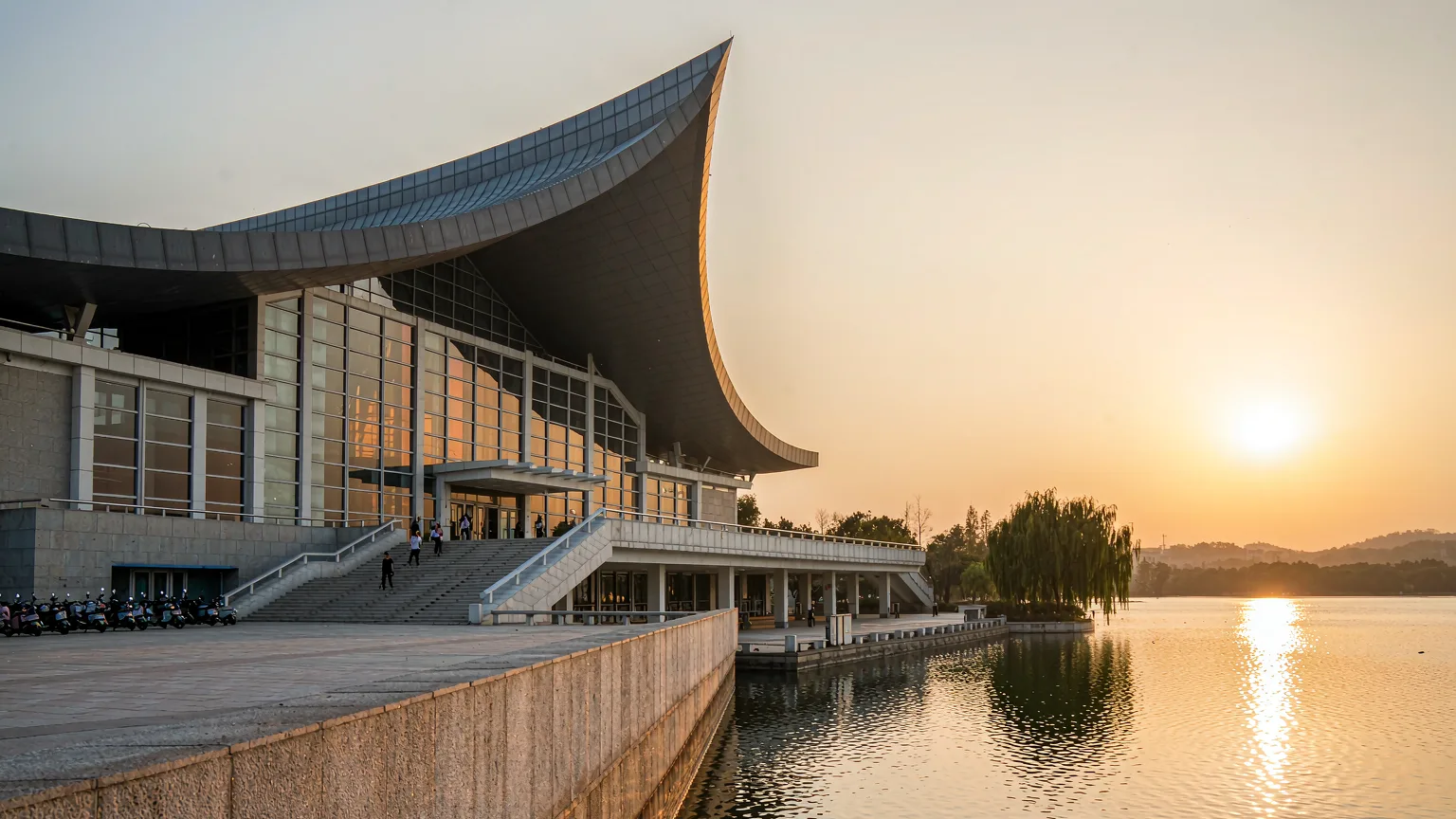
Give day two's whole morning to the museum. Beyond the Zeng Hou Yi chimes and the Sword of Goujian, split time three ways: the patterns of Chu lacquerware, the gold and jade of the Ming Prince Liangzhuang tomb, and the lost-wax bronzes. Labels run dense, so take an audio guide or docent talk, two to three hours covering it.
Place the chime show mid-visit as a rest: twenty-five minutes of ancient tunes on replica bells, seated, before the second half. A museum day is one of the seven-day route's designed buffers, and the afternoon is deliberately left open.
The 1911 Museum and the Red Building: An Afternoon History Class
In the afternoon jump from bronze to modern history: the 1911 Revolution Museum and the Red Building adjoin, free with booking. The Red Building housed the uprising's military government, its council rooms and offices restored; the new galleries unpack the night of the uprising frame by frame, three hours across both.
Two or three metro stops from the provincial museum, the line runs smooth. Exit through Shouyi Square and give the evening to Tanhualin's old houses in slanting light, the museum day ending on a street.
Tanhualin at Dusk: The Old Street Signs Off
Dusk is Tanhualin's best hour: tour groups drained, slant light on the brick, the bookstore in a former church and the cafes switching on. Sit at a street-facing table and let two days of history settle; the lane's value is half architecture, half its power to slow you down.
Eat nearby, with Liangdao Street beside it wearing its late-night face at the noodle shops.
Gude Temple and the Concession: One Day of Exotic and Old Dreams
Day three enters Hankow. Start at Gude Temple, the Burmese-style hall mixing Gothic and Southeast Asian elements, morning light perfect for the rooftop stupas; then follow Zhongshan Avenue through the concession blocks, the Customs House, bank palaces and trading-house facades an open-air line of modern commercial history.
The day's theme is the century after Hankow opened as a treaty port: the exotic temple and the colonial commercial blocks are two faces of one era. Rest at a Li Huangpi Road cafe before diving into the lanes in the afternoon.
Li Huangpi Road and the Lanes: Into the Shikumen Blocks
The afternoon targets the likeng, Hankow's shikumen alleys: the gate arches, courtyards and brick of Tongxingli and Xian'anfang still housing residents, laundry poles and flower pots natural against century-old walls. Enter from the side lanes off Li Huangpi Road and work inward, ten times quieter than the main streets.
The lanes are homes, not exhibits: photograph arches freely, stay out of courtyards, walk around drying laundry. Chat with an elder sunning at the gate; Hankow dialect strains the ear but the meaning lands.
Jiqing Street Night Market: The Sound of Hankow after Dark
Night three goes to Jiqing Street, braised platters, crayfish and barbecue filling the tables while musicians thread between them selling songs. Order oil-braised crayfish with spiced duck neck and fried noodles, and let the performer-audience play run as dinner theater, a Hankow formula unchanged for decades.
After three walking-heavy days, eat freely tonight: the calories return what the kilometers took. Jianghan Road metro sits close for the ride home.
Wuhan University and the Greenway: One Day, Campus to Lake
Day four chains the university to the lake: climb from the gate up the cherry avenue through the Republican buildings in the morning, exit the east-lake side straight onto the greenway, rent bikes before noon, ride the lake-centre path, climb Moshan for the panorama, and spend the afternoon's leftover legs toward Luoyan.
The elegance is the join: no transit between campus and lake, one tree-lined path between buildings and open water. Check entry rules ahead, cherry season needing fast booking.
Han Street and Songsong Road: Dinner after the Lake Day
Two dinner directions off the greenway: Hubei restaurants on Han Street for Wuchang fish and lotus soup, or a few metro stops to Songsong Road for a seated snack crawl. After half a day moving, sit down properly and order claypots and shaomei in one round.
The lit riverside stroll on Han Street closes the day well, metro at the street's mouth. Day four done, past halfway, with Hanyang tomorrow.
Guqin Terrace and Guiyuan Temple: Hanyang's Soulmate and Arhats
Day five crosses to Hanyang at the week's slowest morning pace: the soulmate legend and steles of Guqin Terrace, a Moon Lake stroll, then counting five hundred arhats at Guiyuan and sitting a while in the incense. Rush neither stop; half of deep travel lives in hours with no agenda.
The afternoon is free: wander Hanyang's streets or return to Hankow for gaps, the Customs House museum or the shopping street. Sleep early, Huangpi tomorrow.
Panlongcheng Site Museum: The Wuhan Older Than Wuhan
Day six heads north to Huangpi, starting at Panlongcheng: a city Shang builders raised on the Yangtze 3,500 years ago, the palace foundations clearly outlined in the site park. The museum explains the textbook-rewriting discovery that Shang civilization reached the Yangtze, the bronzes and jades too fine for an isolated outpost.
Museum plus park take two hours, transferring to Mulan Mountain in the afternoon, a short drive with lunch in the town below and the whole afternoon left for the mountain.
Mulan Mountain: Halls along the Ridgeline
Climb Mulan Mountain in the afternoon, Taoist and Buddhist halls strung along the ridgeline, the golden summit never without incense. The pilgrimage stairs rise and fall through woods, two to three hours for the core, and the ridge looks over Huangpi's hills and fields, a layer of Wuhan invisible from downtown.
Eat farmhouse food in the village below, Huangpi's three fresh dishes heading the table. Overnight in Huangpi or return downtown, day seven left free.
The Free Day: Repeat Your Favorite Day
Day seven sets no stops; compose it from the week's feel: return to the museum for another chime show, eat deeper on Liangdao or Songsong Road, ride the Luoyan stretch to finish the greenway, or hunt souvenirs on Jianghan Road and at the heritage pastry shops. The last day belongs to gaps and goodbyes.
Keep one fixed ritual: ride the ferry once more at dusk. The river you have watched all week gets one final look for a yuan and a half, Wuhan Guan to Zhonglu Road, between sunset and lights, a full stop for the trip.
| Getting around |
|
| Budget | Excluding lodging and long-haul transport, plan RMB 1200-2000 pp over seven days; tickets run free or cheap, with meals and the Huangpi trips the big lines. |
| Best time | Apr-May and Sep-Oct run steadiest; add the cherry gardens in mid-late March, and use museum days to offset winter river wind. |
FAQs
Do seven days breed repetition and fatigue, and how do I pace it?
The design bakes in three buffers, a museum day, a riding day and a free day, so effort runs high, flat, high, flat, low, high, low. Repetition is avoided by never repeating themes: one heavy stop per day, filled out with streets and meals, and on a tired day trigger the droppable-stop fallback without guilt.
Three hotels feels like a hassle; can I stay on one side only?
Yes: compromise with two nights one side and five the other, trading twenty to forty minutes of added commuting on some days. Metro crossings are efficient, single-base lodging works fine, and moving bags only once is its own saving. Pick the base by which evenings run latest.
Do the two Huangpi days deserve two sevenths of the trip?
Worth it if interests match: Panlongcheng is a key site of Yangtze bronze civilization and Mulan pairs legend with landscape, both far from the downtown experience and the very increment that separates seven days from three. Indifferent to sites and climbs, compress to one day, Panlongcheng morning and the pools afternoon, freeing a day downtown.
How much more does seven days cost than five, and where is the extra best spent?
Roughly thirty to forty percent more, mostly lodging and Huangpi transit. The three best spends: the chime show ticket, cheap for its presence; one night cruise or the Zhiyin Hao for the surround of the light show; and a chartered car in Huangpi, whose saved hours buy an extra mountain. The most memorable items, breakfasts and lanes, cost nothing at all.