
Taihuai is the core basin of Wutai Shan, the Qingshui River threading through a valley packed with temples large and small, so walking makes honest sense: from your guesthouse, almost no stop exceeds twenty minutes. This route chases not fame but the daily rhythm of pilgrimage, the circling pilgrims, the courtyard censers, the old custom of opera for the Fifth Lord, all within foot reach.
Order the day by the incense clock: circumambulation is emptiest at dawn, Luohou Temple quiet mid-morning, Wuye Temple at its fullest around noon, and Shuxiang Temple rewards a slow afternoon. The town sits near 1700 meters, strong sun but easy breathing, though temperatures plunge at dusk, so start with your jacket on.
Itinerary at a glance
| 08:00 | Morning at Tayuan Temple: The First Circle beneath the Great White Stupa |
| 09:30 | Luohou Temple: The Blooming Buddha and Blended Traditions |
| 11:30 | Wuye Temple: Incense and the Opera Stage |
| 14:00 | Shuxiang and Puhua Temples: From Manjushri's Home to the Close |
The route, stop by stop
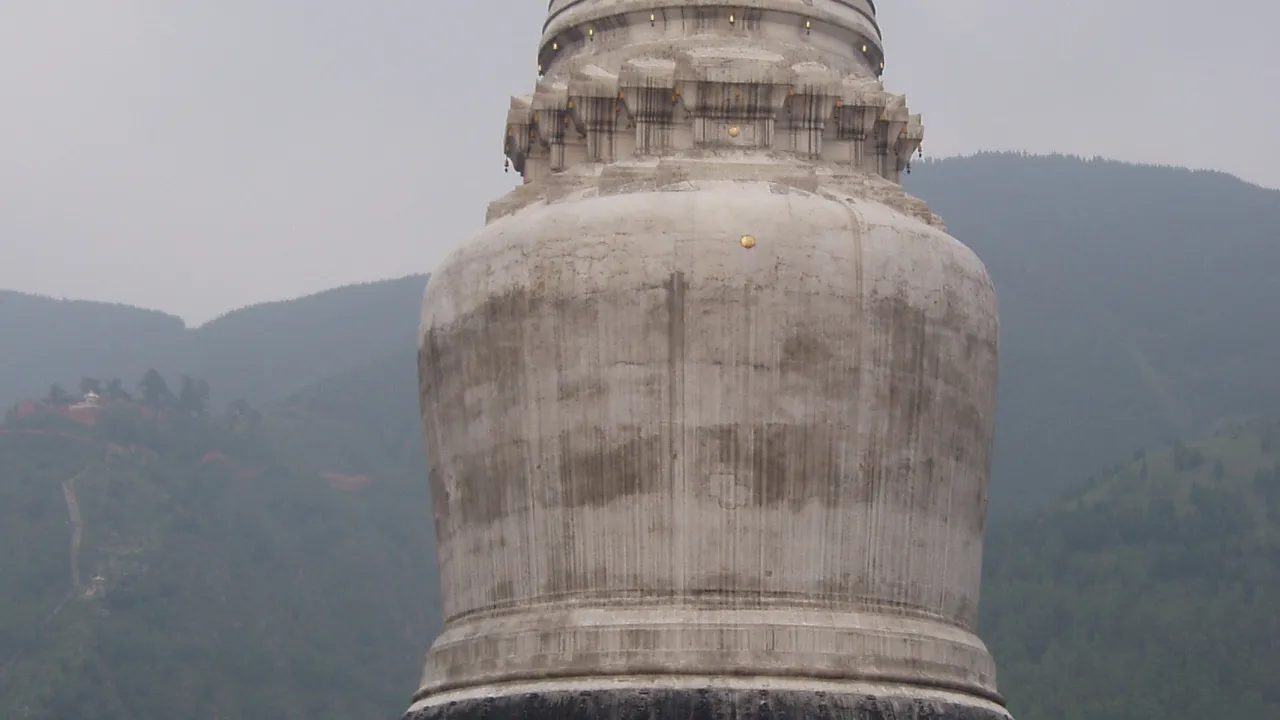
Morning at Tayuan Temple: The First Circle beneath the Great White Stupa
Start the day with the circle. In the prayer-wheel corridor around the Great White Stupa's base, script covers bronze drums that creak as they spin, mingling with wind chimes on the spire. Fall in with the dawn pilgrims and walk clockwise, one lap around fifteen minutes; the customary three laps leaves your palms warm and ready for the halls.
The ten minutes when slanted light hits the stupa are the best for photos, the white plaster almost translucent. The temple halls enshrine Buddhist relics; remove your hat and keep your voice low inside, then resume your own pace outside.
Luohou Temple: The Blooming Buddha and Blended Traditions
Luohou ranks among the five great monasteries of the mountain, strongly Tibetan in color, its red walls and gilt roofs set apart in town. Its fame rests on the Blooming Buddha: a giant carved lotus whose petals slowly open and close on mechanisms below the hall, revealing the Buddha at the flower's heart; when the monks work it, the hall falls silent but for the wooden turning.
Beyond that spectacle, the Manjushri hall and the sutra collection reward a slow look, Han layout inlaid with Tibetan ornament, a sample of how the two traditions coexist here. Crowds are thin and courtyards deep; sit ten minutes under a side-hall eave.
Wuye Temple: Incense and the Opera Stage
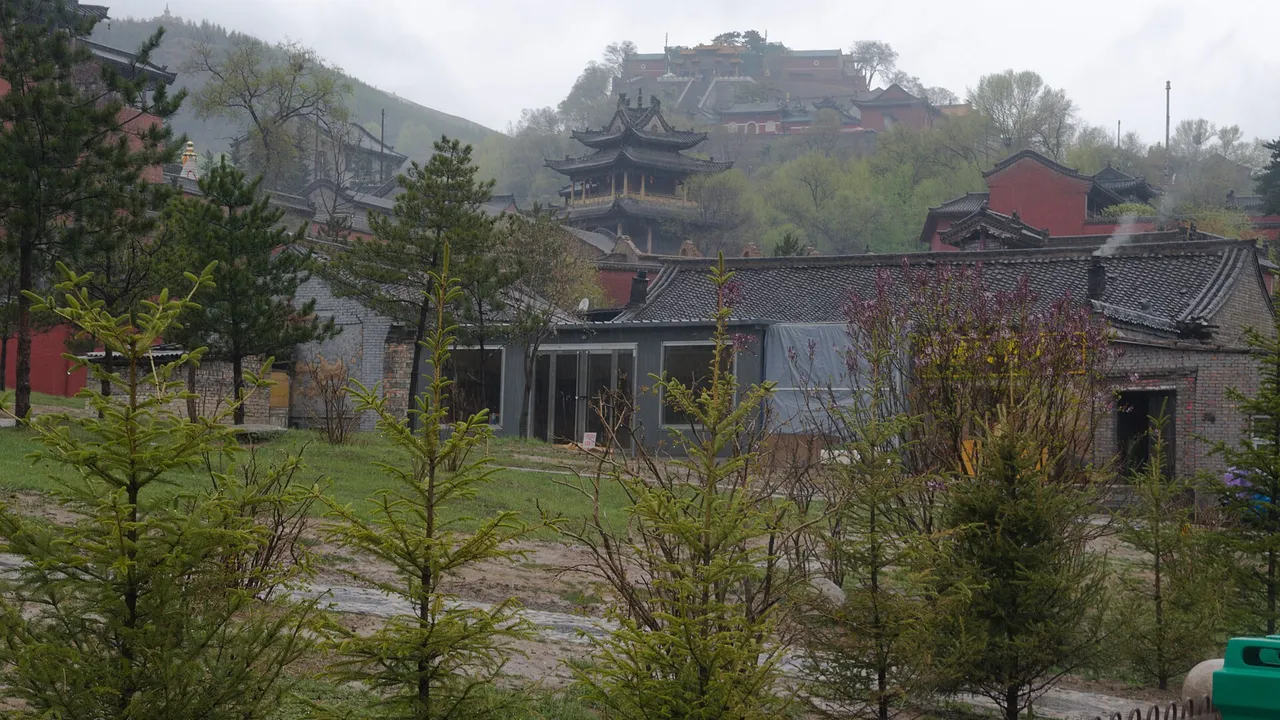
Wuye Temple's formal name is Wanfo Ge, the Ten Thousand Buddha Pavilion, honoring the Dragon Fifth Lord, the most fervent wish-making spot on the mountain. Queues peak around midday while locals favor dawn. In front stands an opera stage, and performing opera for the Fifth Lord is this temple's unique way of repayment; when a show runs, the crowd packs three deep.
Beyond incense, note the pavilion itself: two floors stacked with Buddhas numbering past ten thousand. The custom runs vow first, repayment when granted, and that human contract underlies centuries of undiminished incense here.
Shuxiang and Puhua Temples: From Manjushri's Home to the Close
Shuxiang Temple sits on the south bank of the Qingshui River; its Manjushri pavilion holds a striding-lion Manjushri statue near ten meters tall, the largest on the mountain, hence the claim as Manjushri's ancestral home. The suspended sculptures of five hundred arhats on both walls shift expression with your angle, the summit of the mountain's sculptural craft; stand at the hall's center and turn slowly.
Continue south to Puhua Temple, whose gateway and screen wall blend Han and Tibetan styles at their finest, usually uncrowded. By now the day has run some twenty thousand steps; the town streets warm up again, so find a teahouse and let the day's sounds play back.
| Getting around |
|
| Budget | Temple coupons total about RMB 20-40 and meals RMB 50-80, walking free of transport cost; roughly RMB 100-150 pp per day, excluding the RMB 135 mountain entry. |
| Best time | Walkable all year, coolest in July and August; 6:30 to 9 am is the best window for circumambulation and photos. |
FAQs
Is a full walking day in Taihuai exhausting, and how should I order it?
The loop runs about twenty thousand steps on gentle slopes, fine for average fitness. Order it against the crowd clock: dawn circumambulation, Luohou mid-morning, Wuye around noon, Shuxiang in the afternoon, dodging each peak. Teahouses and benches let you pause anytime; no need to force the finish.
Wuye Temple is packed; must I go at midday?
No. Midday simply runs the longest queues; at 6-7 am you worship almost on arrival, and evenings after services thin out too. Vows keep no fixed hour, sincerity suffices. If you only want the opera-repayment scene, ask your guesthouse whether a show runs that day and come for the edges then.
Which months suit this route best?
July and August hold around twenty degrees, prime cool-season weather but peak crowds; June and September thin out with fine colors. Temples stay open in winter and the snowed-in stupa is lovely, though icy steps demand real care. Avoid the week around Golden Week, when lodging and queues double.
What should I watch for while walking?
The town sits near 1700 meters, altitude fine for most, but ultraviolet runs strong: hat and sunscreen are musts. Flagstones slicken after rain, so grippy shoes; hats off in halls, voices low, pace slow. Carry water, refills are easy in town, and keep a jacket on hand all day.