
With one day at Wutai Shan, the trade-off is clear: give the hours to the core temples of Taihuai town and close with the mini pilgrimage of Dailuoding. This is the bodhimanda of Manjushri and first of China's four sacred Buddhist mountains, yet a full circuit of the five terraces runs about fifty kilometers, so a single day should go deep on the busiest, richest sites instead.
Arrive at opening. The morning belongs to Xiantong and Tayuan temples ahead of the tour groups, the afternoon climbs Pusa Ding for the town panorama, and dusk goes to Dailuoding. The full-terrain trek and the cableway are alternatives; the 1080 steps of Dazhi Road are the version most people scale to their fitness. The mountain runs some ten degrees cooler than the plain, so carry a jacket in any season.
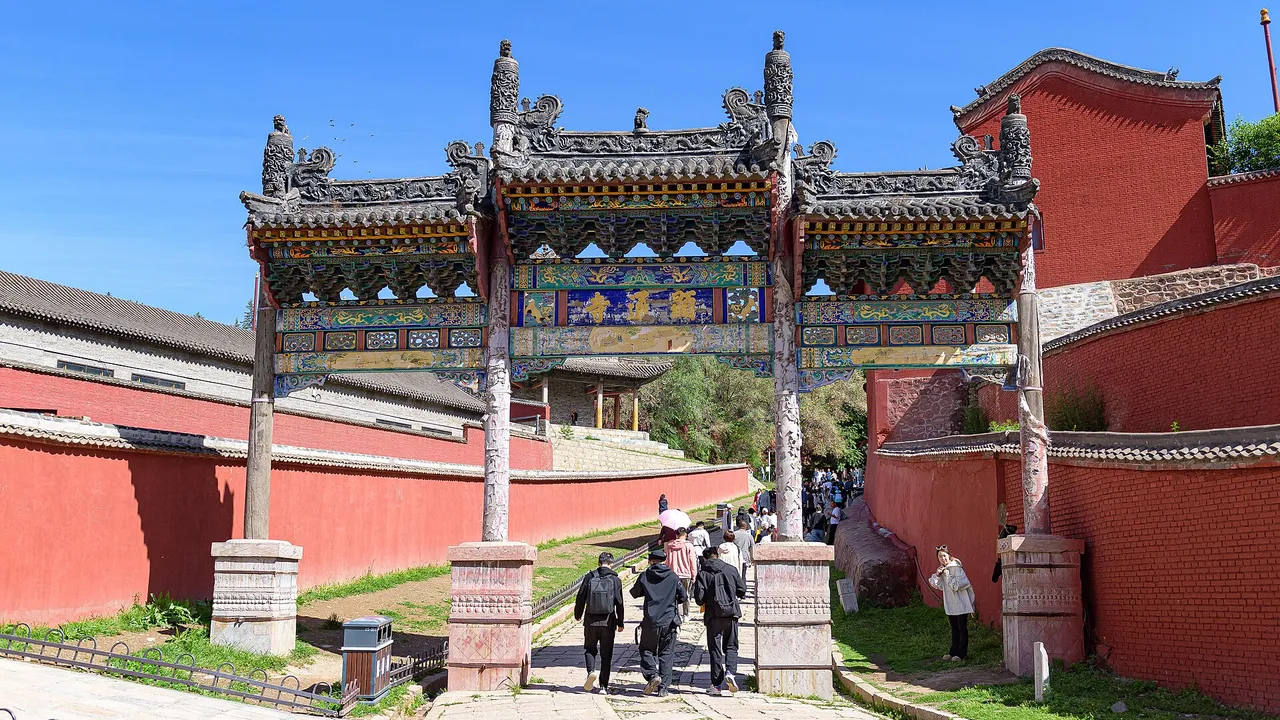
Itinerary at a glance
| 08:00 | Xiantong Temple: The First Morning at the Founding Temple |
| 10:00 | Tayuan Temple's Great White Stupa and Wuye Temple: The Center of It All |
| 13:30 | Pusa Ding: Glazed Roofs above 108 Steps |
| 16:00 | Dailuoding: The Mini Pilgrimage of 1080 Steps |
The route, stop by stop
Xiantong Temple: The First Morning at the Founding Temple
Xiantong is the oldest temple on the mountain, founded in the Eastern Han and the root of the Manjushri tradition here. Past the main Manjushri hall lies the heart of the compound: a Ming bronze hall flanked by bronze pagodas, their lattices and brackets cast in fine detail, glowing in the morning slant of light, among the most photogenic frames on the mountain.
The Wuliang Hall is a pure brick structure without a single wooden beam, enshrining Vairocana. Before the tour groups land, bells and chimes drift across the courtyards; sitting a while on the stone steps of a side hall comes closer to pilgrimage than any checklist.
Tayuan Temple's Great White Stupa and Wuye Temple: The Center of It All
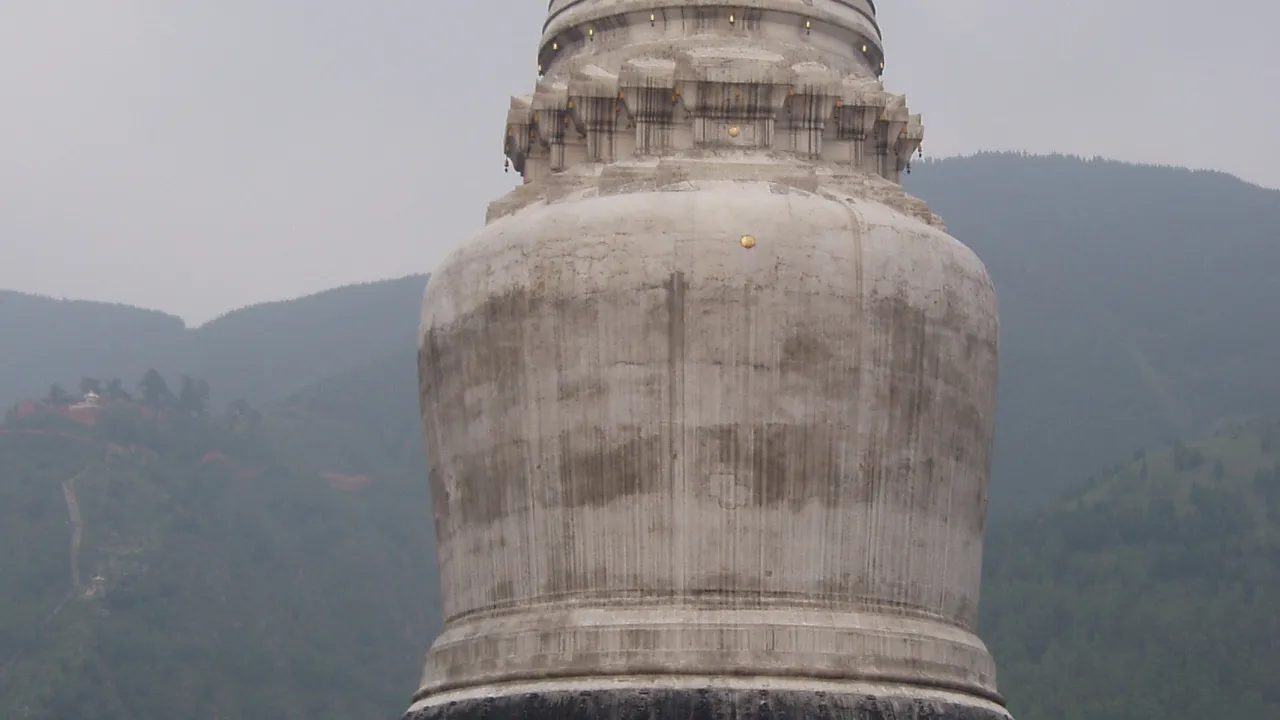
The Great White Stupa of Tayuan Temple is the mountain's landmark, a whitewashed Tibetan stupa over fifty meters tall. Circumambulate clockwise, as the rule goes, and spin the prayer wheels along the walls the same way. At dawn the walkers are pilgrims from afar; fall in line and your footsteps merge with the chanting.
Wuye Temple, right beside it, is the busiest shrine on the mountain, its wish-making queue running from dawn to dusk. Enter, offer incense before the Dragon Fifth Lord's hall; vows are made sincerely here and repaid faithfully, and locals know the etiquette of that exchange.
Pusa Ding: Glazed Roofs above 108 Steps
Pusa Ding crowns Lingjiu Peak as the largest Tibetan Buddhist temple on the mountain, where Qing emperors stayed on pilgrimage, its halls roofed in tricolor glazed tiles of imperial rank. The 108 front steps climb straight to the gate; turn at the top and the temple cluster and the Great White Stupa spread below.
Inside, Tibetan and Han styles blend across the Manjushri hall, the main hall and the stele pavilions, all worth a slow pass. This is the best vantage over the temple cluster, and afternoon light saturates the glazed tiles, so stand still and let the clouds move before you shoot.
Dailuoding: The Mini Pilgrimage of 1080 Steps
Pilgrims who walk all five terraces complete the grand circuit of some fifty kilometers; Dailuoding gathers the five Manjushri figures in one hall, so one climb counts as the mini pilgrimage. Dazhi Road's 1080 stone steps take the average walker forty minutes to an hour; the Dailuoding cableway does it in minutes.
From the hall of the five Manjushri figures, the five terrace silhouettes line the horizon, often wrapped in drifting cloud by evening. Descend in daylight on foot or by cable, and wear your jacket before setting off; Taihuai cools fast after sundown.
| Getting around |
|
| Budget | Mountain entry RMB 135 in season, incense coupons RMB 6-10 per temple, Dailuoding cableway about RMB 50 one way; around RMB 300-450 pp with meals. |
| Best time | June to September is the comfortable window, cool as autumn up high; summit roads partly close in winter, and the 1080 steps ice over after snow. |
FAQs
What is the easiest way to get to Wutai Shan?
Most travelers take the train from Taiyuan to Wutaishan Station in a bit over an hour, with direct services from Beijing too. The station still sits some forty kilometers from Taihuai, so transfer to a shuttle or shared car for another ninety minutes. Drivers can reach the visitor center directly, though peak-season parking runs tight, so arrive early.
How do I buy the mountain entry ticket and temple coupons?
Entry costs RMB 135 in season, a bit less off-season, sold via official online channels or the visitor center under real-name booking. Core temples like Xiantong, Tayuan and Pusa Ding charge incense coupons of a few to ten yuan, paid on site; cableway tickets sell separately, and booking online in peak season saves the queue.
With one day, grand circuit or the core temples?
You must choose. The grand circuit runs about fifty kilometers and takes two to three days, so one day cannot cover it. The safe play is the core temples of Taihuai plus the Dailuoding mini pilgrimage; a chartered terrace loop shows the summits but sacrifices most temples. Pilgrims should favor the latter plan.
What etiquette and dress rules apply in the temples?
Remove your hat entering a temple, no photos or loud talk inside the halls; keep clothing past the knee and leave slippers outside. Use the eco incense temples provide, since outside incense may not enter hall areas by rule; always circle stupas and spin prayer wheels clockwise. Mountain nights chill fast, so pack a jacket even in summer.