
The grand circuit is Wutai Shan at its hardest: clockwise over all five terraces, East, North, Central, West and South, some fifty kilometers over two to three days; pilgrims say one full lap equals five hundred years of chanting. There are no shortcuts, only exposed alpine meadow between terraces at 2800 to 3061 meters, four seasons in one day, and wind chill far below the forecast.
This three-day plan splits the load: day one enters at Hongmen Pass for East, North and Central Terraces, sleeping at Xitai or below; day two takes West Terrace, Shiziwo, Golden Pavilion and South Terrace down; day three rests and closes at the Womb Cave. Resupply points are scarce, so carry two days of water and hot food, with hardshell and down jacket regardless of season.
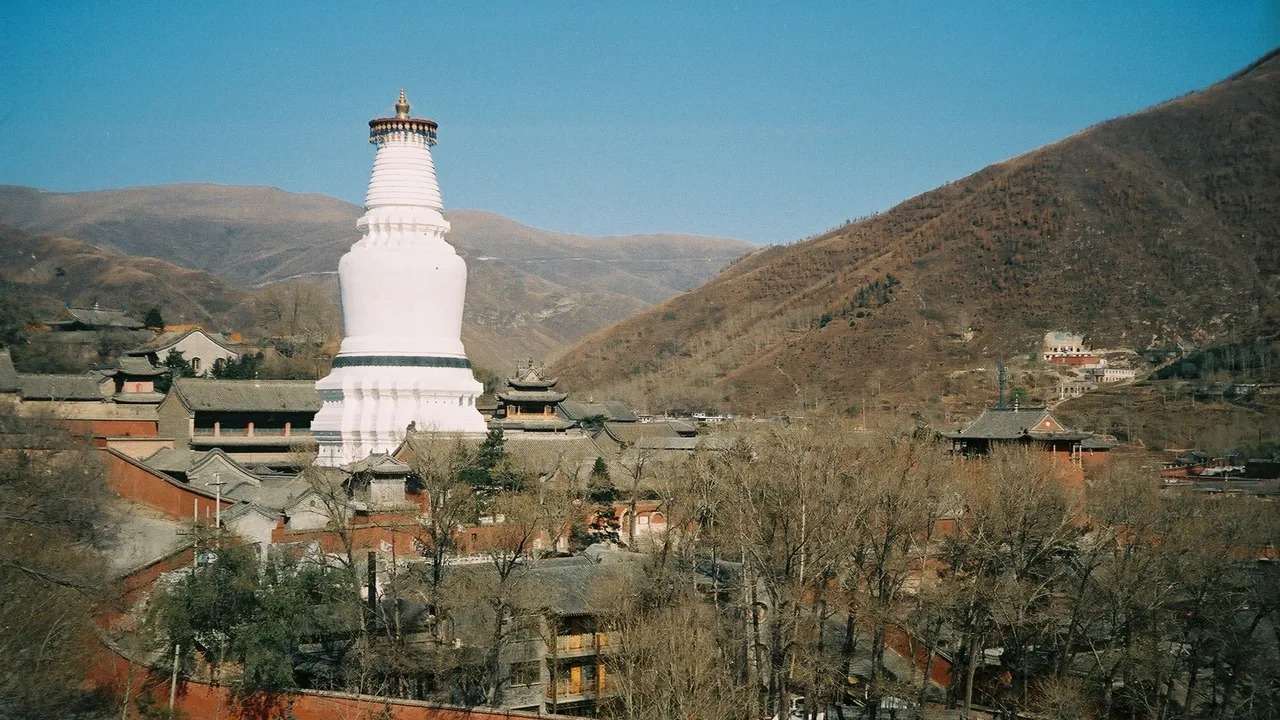
Itinerary at a glance
| Day 1 · 08:30 | Hongmen Pass and Dongtai's Wanghai Peak: The Start and the First Terrace |
| Day 1 · 10:30 | The North China Roof Archway: The Windiest Saddle |
| Day 1 · 12:30 | Beitai's Yedou Peak: 3061 Meters |
| Day 1 · 15:00 | Zhongtai's Cuiyan Peak: Boulders and Dusk |
| Day 2 · 08:30 | Xitai's Guayue Peak: The Morning That Hangs the Moon |
| Day 2 · 11:00 | Shiziwo and Jixiang Temple: A Glazed Pagoda on the Ridge |
| Day 2 · 14:00 | Golden Pavilion Temple: The Thousand-Armed Guanyin and the Long Slope |
| Day 2 · 16:30 | Nantai's Jinxiu Peak: Flower Meadows and the Finish |
| Day 3 · 09:00 | The Womb Cave: Through and Reborn |
The route, stop by stop
Hongmen Pass and Dongtai's Wanghai Peak: The Start and the First Terrace
Hongmen Pass is the saddle on the summit road out of Taihuai and the classic trailhead, reachable by scenic-area bus from town. A kilometer or so east rises Dongtai, Wanghai Peak at 2795 meters, its Wanghai Temple enshrining the Wisdom Manjushri. No need to chase sunrise on day one; save the legs for the long slopes ahead.
The terrace's name speaks of sea-viewing: on clear days clouds churn below your feet and distant ridgelines float like islands on milk. Take the view, return to the pass, and the real walking begins toward the roof of North China.
The North China Roof Archway: The Windiest Saddle
On the fork north from Hongmen stands a stone archway carved North China Roof, the circuit's notorious wind gap where summer gusts fling rain into your face and winter drifts bury ankles. Beyond it stretches kilometers of gentle climb through meadow holding nothing but prayer flags and the path.
No shelter exists on this stretch, so guard sun and wind at once: hat cords tied, sunglasses pressed tight, gloves at hand. When spent, crouch behind a flag heap out of the wind; two minutes restores you, but never loiter mid-saddle.
Beitai's Yedou Peak: 3061 Meters
Beitai, Yedou Peak, stands 3061 meters tall, the highest of North China and the top of the five terraces, its Lingying Temple keeping incense alive year-round. From the marker stone, look back down the ridgeline you climbed; reaching here is the morale midpoint of the whole circuit.
After Beitai the route swings southwest toward Zhongtai, dipping then rising, so brace your knees. This midday meadow is the most sun-exposed and fog-prone stretch; follow the cairns and flags and never cut your own line.
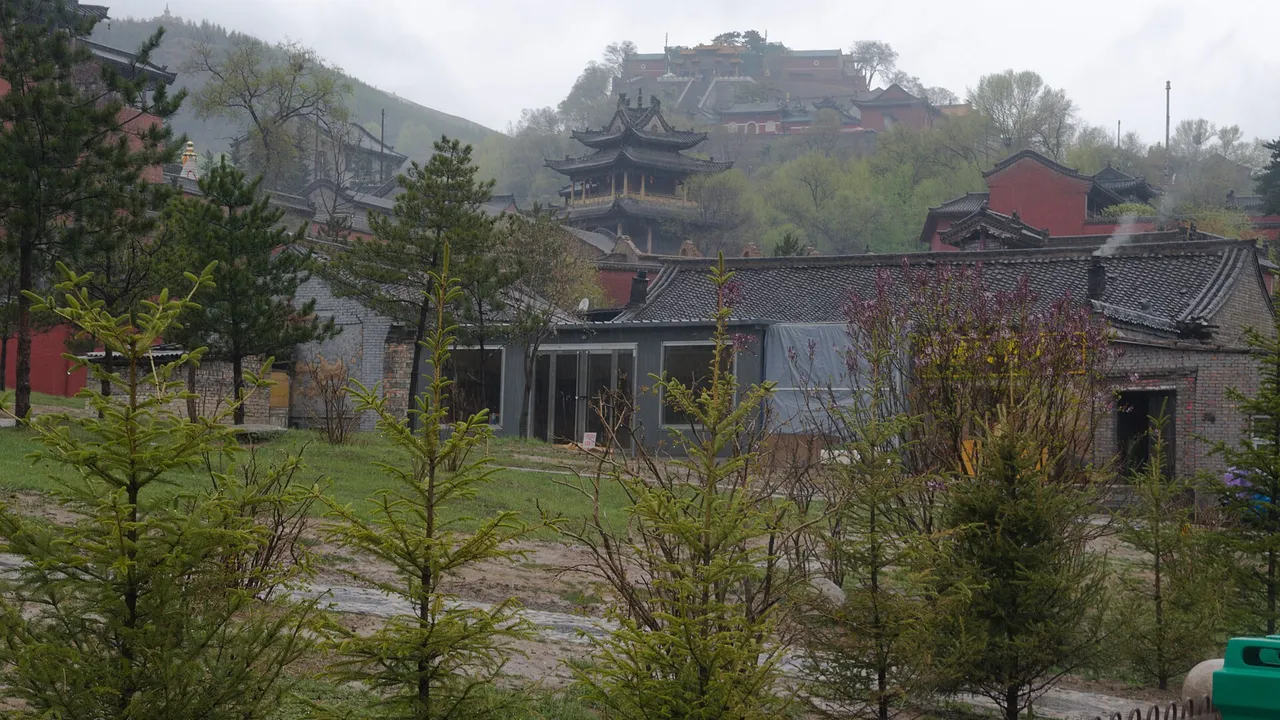
Zhongtai's Cuiyan Peak: Boulders and Dusk
Zhongtai, Cuiyan Peak, rises about 2890 meters, its top strewn with gray-green boulders that give the meadow a second texture. Yanjiao Temple enshrines the Child Manjushri, and the boulder field behind it is the most photogenic terrain of the five, evening light raking every stone grain sharp.
Day one ends by dusk: the strong push to overnight at Xitai, ordinary legs descend from Zhongtai to lodging at the road head. Clouds pile up over the summits in the afternoon, and if darkness gathers in the distance, retreat decisively; mountain thunderstorms show no mercy.
Xitai's Guayue Peak: The Morning That Hangs the Moon
Day two opens at Xitai; if you overnighted there, the door opens onto Guayue Peak at 2770 meters, Falei Temple enshrining the Lion-Roar Manjushri. The terrace lies flat like a resting ox, morning mist often hugging the meadow and burning off within ten minutes of sunrise.
Heading south from Xitai, the route enters the circuit's classic ridgeline, high ground unfolding toward Shiziwo. The grade stays friendly, ideal for a steady rhythm with eyes on the alpine flower meadows flanking the path.
Shiziwo and Jixiang Temple: A Glazed Pagoda on the Ridge
Shiziwo, the Lion's Den, takes its name from the legend of Manjushri taming a lion here; founded in the Tang and rebuilt in the Ming, its Wanfo glazed pagoda is the most striking building on the circuit, its body set with colored glass Buddhas so that sunlight turns the whole tower into an unearthed artifact at scale, wind flags snapping around it.
Nearby Jixiang Temple is the resupply rest point, where hot water is beyond price at altitude. Eat dry rations on the front steps and watch the trail of pilgrims winding along the far ridge, the loosest hour of the whole route.
Golden Pavilion Temple: The Thousand-Armed Guanyin and the Long Slope
Golden Pavilion Temple sits in the col between South and West Terraces; its standing thousand-armed Guanyin rises over seventeen meters, the largest indoor Guanyin statue on the mountain, cast centuries ago. After two days of open meadow, stepping into the shadow of a hall is itself part of the experience.
Beyond the temple, a long gentle slope runs toward Nantai, the last major climb of the circuit. Legs tire after two days, so walk it small-stepped and slow-cadenced, settle the mind, and Nantai arrives sooner than expected.
Nantai's Jinxiu Peak: Flower Meadows and the Finish
Nantai, Jinxiu Peak, stands 2489 meters, the lowest and gentlest of the five, its summit meadow ablaze with wildflowers in summer, hence the name Brocade. Reaching Nantai closes the grand circuit; the descent trail toward the old south terrace leads to the Womb Cave and the road.
The summit temple enshrines the Wisdom Manjushri, its forecourt wide open, the best seat on the whole route for an idle half hour. The walk down to the road takes about two hours; evening scenic buses return to Taihuai, or phone a pickup.
The Womb Cave: Through and Reborn
Day three keeps no schedule and saves the close for the Womb Cave, a natural karst cave with a mouth so narrow that only one person squeezes through sideways; the faithful hold that passing through equals rebirth, a year's fatigue washed away. The cave runs two chambers deep, inner walls polished bright by countless hands.
The cave clings to the hillside south of Taihuai, forty minutes up on foot, with a cableway as the alternative. On the third day after the circuit your legs are heaviest, so most ride up and walk down; in season, budget an hour for the queue at the cave mouth.
| Getting around |
|
| Budget | Walking itself adds little beyond the entry ticket; monastery lodging or town beds run RMB 50-300 a night, transfers RMB 150-300; roughly RMB 400-800 pp for three days. |
| Best time | June to September works best, meadows greenest in July-August though afternoon storms come often; from October to May summit winds and snow make it a no-go for novices. |
FAQs
What gear does the grand circuit require?
Hardshell pants and jacket, fleece and down are the baseline, since day-night swings and wind are the biggest variables; plus hiking boots, poles, headlamp, power bank, two days of food and a liter-and-a-half bladder minimum. Gloves and hat go year-round, for July dawns can near freezing. Download maps and tracks offline; signal comes and goes.
Can a novice finish the grand circuit in two days?
It has been done but should not be assumed: the two-day version averages twenty-five kilometers daily with over two thousand meters of gain, demanding on knees and lungs. Novices do better on three slow days, or a car drop at Hongmen Pass to skip the first climb. Without regular training in the prior two weeks, choose the mini pilgrimage plus summit-road sightseeing instead.
What if summit weather turns suddenly?
Every terrace keeps resident temples, and sheltering there through thunder, fog or snow is the standard move, routine to the monks. Check two forecasts before setting out, one for the town and one for the summits, often a season apart. Sit out a whole day in a temple rather than race a storm, for on open meadow you are the tallest point.
How do resupply and lodging work along the route?
Summit temples take overnight guests, dorm beds a few tens of yuan, usually with morning and evening vegetarian meals; register before dusk. Hot water is common, food resupply nearly absent, so carry two full days. Charge power banks in town, outlets on the mountain run tight. Keep small cash, as some merit boxes scan poorly.