
Seven days is the length that reads Wutai Shan whole: the first three for the temple cluster in and around Taihuai, walkable halls large and small plus rural stone carving; days four and five trek the grand circuit, all five terraces over some fifty kilometers; day six closes the circuit at the Womb Cave, day seven exits for Nanchan and Foguang, or is simply left to the river flats and teahouses.
The plan refuses full pages, holding buffer slots on days three and six. Seven days exist to go slow: a stele read slowly, a slope walked slowly, a full afternoon seated in a temple. Depth of pilgrimage tracks days directly and pace inversely.
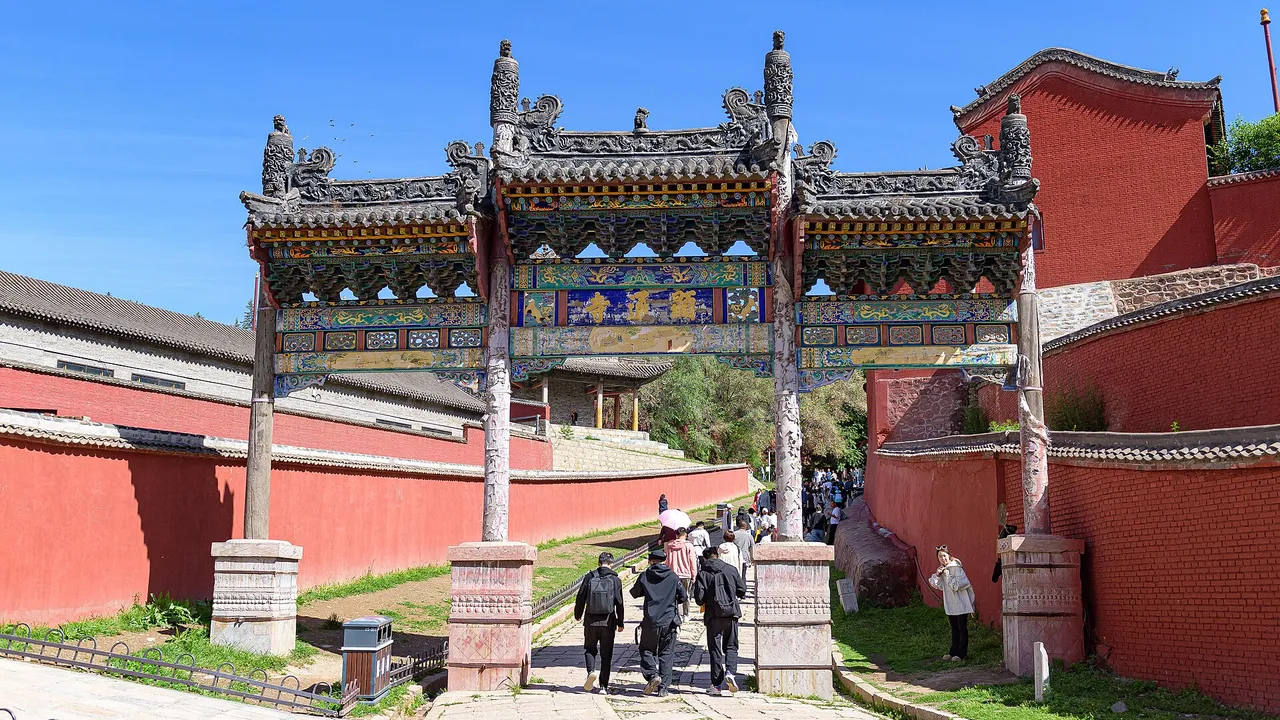
Itinerary at a glance
| Day 1 · 08:30 | Xiantong Temple: Read the First One Properly |
| Day 1 · 11:00 | Tayuan and Wuye Temples: First Incense beneath the White Stupa |
| Day 1 · 14:30 | Luohou Temple and a Town Dusk |
| Day 2 · 08:00 | Pusa Ding and Shuxiang Temple: Steps and Suspended Sculpture |
| Day 2 · 10:30 | Dailuoding: The Formal Mini Pilgrimage |
| Day 3 · 09:00 | Bishan and Puhua Temples: The Buffer Day |
| Day 3 · 14:30 | The Moon Pool: Settling the Mind before Departure |
| Day 4 · 07:00 | Grand Circuit, Day One: Hongmen, East Terrace and North Terrace |
| Day 4 · 15:00 | Zhongtai and the Summit Night: Evening at 2900 Meters |
| Day 5 · 07:30 | Grand Circuit, Day Two: West Terrace, Shiziwo and South Terrace |
| Day 6 · 09:30 | The Womb Cave: The Circuit's Full Stop |
| Day 6 · 14:00 | Town Sweep: What Was Missed or Begs a Second Look |
| Day 7 · 08:30 | Nanchan Temple: Out of the Valley to the Oldest Timber |
| Day 7 · 11:00 | Foguang Temple: Closing with the First National Treasure |
The route, stop by stop
Xiantong Temple: Read the First One Properly
Seven days still open at Xiantong, but this time the whole morning belongs to it. Walk the seven courtyards in order, bronze hall and pagodas, the brick Wuliang Hall, steles of every era, building the timeline in your head. Day one establishes the coordinate system every later hall will reference.
Before dusk, watch monks and pilgrims cross the plaza out front, the town at its most ordinary. Sleep early; the pace of seven days is decided by the first night's rest.
Tayuan and Wuye Temples: First Incense beneath the White Stupa
Enter Tayuan around eleven, when noon sun whitens the stupa to its brightest, and circle clockwise three laps. The prayer-wheel corridor deserves slow, wheel-by-wheel attention, beginning the unhurried rhythm that seven days will compound.
Wuye Temple stands adjacent, the pre-noon queue still manageable. First incense belongs here by local logic: the Fifth Lord keeps near-term wishes in folk faith, Manjushri keeps long wisdom in the dharma, and seven days will ask for both.
Luohou Temple and a Town Dusk
The afternoon takes Luohou and the Blooming Buddha; even missing the demonstration, the Tibetan painting and sutra halls carry an hour. Leaving, wander the Qingshui southward past small gateless temples, entering any whose door stands open for a ten-minute sit, the freest way to tour a seven-day town.
Return to the center by dusk and pick a local-favored vegetarian kitchen for dinner. Cap day one near fifteen thousand steps, saving appetite for six more days.
Pusa Ding and Shuxiang Temple: Steps and Suspended Sculpture
Day two links two temples before lunch: up Pusa Ding for glazed roofs and the mountain panorama, down and over to Shuxiang for the striding-lion Manjushri and five hundred suspended arhats. One looks down, one looks up; morning light flatters both.
Give the suspended work ten extra minutes: no two arhat faces repeat, the craftsmen molding street life into a Buddha hall. Once these faces register, the mountain's sculpture turns from backdrop into characters.
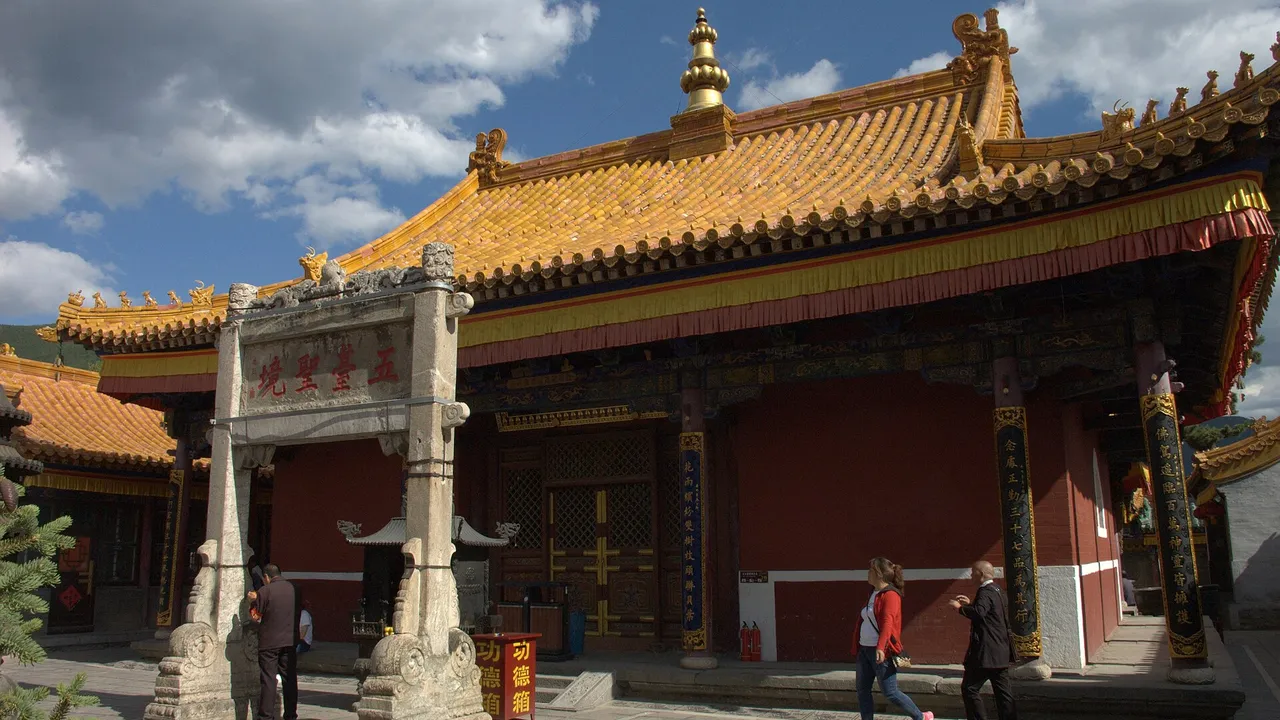
Dailuoding: The Formal Mini Pilgrimage
Set off at half past ten for Dailuoding, Dazhi Road's 1080 steps, the plan's first true physical spend. Climb slowly, counting treads, resting two minutes at each pavilion where pilgrims often keep up a counting chant.
The summit hall of five Manjushri figures is today's destination and the completed rite of the mini pilgrimage. On clear days the terrace positions read plainly from the platform, a preview for day four's trek. Ride the cableway down and save the knees for the grand circuit.
Bishan and Puhua Temples: The Buffer Day
Day three is a deliberate buffer: Bishan in the morning, Puhua after lunch, both the slowest-paced temples on the mountain. Bishan's ten-directions temper, old trees and stone benches fill a whole morning, while Puhua's blended gateway shows its richest detail in afternoon light.
The buffer also belongs to gear: the two-day grand circuit starts tomorrow, so check boots, headlamp, power bank, rainwear and two days of food. Store luggage at the inn and take only one hiking pack.
The Moon Pool: Settling the Mind before Departure
Give the afternoon's last slot to the Moon Pool, the col's tiny temple and its legendary basin. Settling the mind the day before the circuit has practical value: most exhaustion over two days of walking comes from haste, and a smoothed temper makes the path easier.
Eat early back in town and sleep before nine. Fill bottles, pack rations, charge the phone overnight; the earlier the morning start, the wider the weather window on the terraces.
Grand Circuit, Day One: Hongmen, East Terrace and North Terrace
Day four starts at dawn: scenic bus to Hongmen Pass, up Dongtai's Wanghai Peak first, back to the saddle and north past the North China Roof archway to Beitai's Yedou Peak, 3061 meters, the highest point of the route and its emotional crest.
The afternoon pushes on to Zhongtai's Cuiyan Peak, sleeping by strength at Yanjiao Temple on Zhongtai or Falei on Xitai. Some twenty kilometers land today; tired is normal, tired yet orderly is the goal.
Zhongtai and the Summit Night: Evening at 2900 Meters
Zhongtai's boulder field lives in afternoon light, Yanjiao Temple enshrines the Child Manjushri and takes overnight guests. Nights come early at altitude with a hard temperature drop, and the post-sunset sky is the trek's bonus program, the Milky Way unreasonable clear over a lightless meadow.
Evening chanting drifts from the hall, and a day's walk puts dorm guests to sleep fast. Vivid dreams on a first high night are normal; keep water at the pillow, for midnight sips matter more than anything.
Grand Circuit, Day Two: West Terrace, Shiziwo and South Terrace
Day five opens at Xitai's Guayue Peak, the morning running the ridgeline past Shiziwo's glazed pagoda and Jixiang Temple, the afternoon closing on Nantai's Jinxiu Peak. Some twenty-five kilometers land today, but the grades run kinder than day one, and once in rhythm the walking flows.
Nantai ends the five; sit before the temple and look back over two days of ridgeline, the rite at its most complete in this moment. The descent to the road takes about two hours, then bus or booked car back to Taihuai.
The Womb Cave: The Circuit's Full Stop
Day six wakes without an alarm, reserving the circuit's last rite for the Womb Cave. Squeezing through the one-person crevice symbolically zeroes out fifty kilometers of fatigue. The cave rides the hillside south of town, cableway direct; if legs have not recovered, do not walk it.
The afternoon stays blank: a long bath at the inn, the two days' laundry, and a proper meat meal in town. Halfway through the plan, body maintenance outranks any sight.
Town Sweep: What Was Missed or Begs a Second Look
The afternoon sweeps the town for gaps: courtyards skimmed in the first days, halls missed to queues, corners praised by others but unfound. This is where seven days cash in, since every temple in Taihuai accepts a second visit as completion.
At dusk, circle the stupa once more at Tayuan, the last of the week. Usually by the third lap you notice the rhythm has changed entirely since day one.
Nanchan Temple: Out of the Valley to the Oldest Timber
The last day charters out, Nanchan first. The Great Buddha Hall of 782 stands in its village, twelve centuries upright without nails. After the terraces' wind and rain, this small hall deepens what standing means.
The Tang sculptures share the frame's age; the hall is dim, so let eyes adapt at the doorway before moving figure to figure. The village is quiet, and a last minute on the forecourt lets the week's weight settle.
Foguang Temple: Closing with the First National Treasure
Reach Foguang around midday, the east hall's Tang timber, sculpture, murals and inscriptions closing the week. In 1937 Liang Sicheng and Lin Huiyin overturned history for Chinese architecture here, and standing where they rigged their ladders ends the journey's knowledge line properly.
Climb for the brackets, enter with a flashlight for the inscriptions. Then ride back to Taihuai for your bags, the afternoon drive the right hour to reread a week of notes. Seven days of deep reading close complete; the mountain's story, begun at the gate on day one, only now rounds full.
| Getting around |
|
| Budget | Entry RMB 135, coupons about RMB 100, Dailuoding cableway around RMB 80, terrace lodging and transfers near RMB 300, valley charter about RMB 500; roughly RMB 2000-3500 pp over seven days. |
| Best time | June and September are ideal: summits open, meadows still green, temples clear of the summer peak. |
FAQs
What do seven days add over five?
The extra two days mostly fund the grand-circuit trek plus buffers: the five-day version charters the summits, while seven days walk them properly over two days, adding the Womb Cave close and a town sweep. For pilgrims and trekkers those two days outweigh the fare gap many times; pure sightseers are fully served by five and need not force it.
How do the two circuit nights actually get booked?
Summit monastery lodging needs no online booking, same-day registration before sunset, though East and West Terrace beds tighten in season, so arrive early. When temples fill, some summits have villager-run dorms. The safe play is asking your Taihuai innkeeper for that day's bed news before setting out; they usually know.
How should the budget split across seven days?
Lodging and charters dominate: six inn nights take about a third, summit monastery stays cost nearly nothing, and the valley charter's four to six hundred splits by head. Coupons and cableway total near two hundred, food fifty to a hundred a day. Keep a tenth as float, since circuit-day surprises usually mean reroutes and hired cars.
When should the plan be shortened?
Compress decisively in three cases: two forecast days of summit gale or snow, cutting the trek for a chartered circuit; persistent physical trouble, dropping the circuit to rest in town; icy valley roads, postponing the Tang halls for town temples. The plan serves body and weather, never the reverse; learning to let go is part of the seven days.