
The countryside of Wutai Shan is another scripture. In the valleys along the Qingshui River scatter temples without ticket gates and natural villages: Longquan's carved gateway called an open-air museum of stone art, Zhenhai Temple hidden deep in pines, the Moon Pool and its centuries of legend. Visitors are few, and the rhythm of monks and farmers is the scenery itself.
Keep one base in Taihuai for all three days, radiating outward by charter or on foot: day one for the temple cluster southeast of town, day two for Nanshan and the villages downriver, day three folding back inside town. The country line's appeal lies in no single building but in the relation of valley, crops, temple and people.
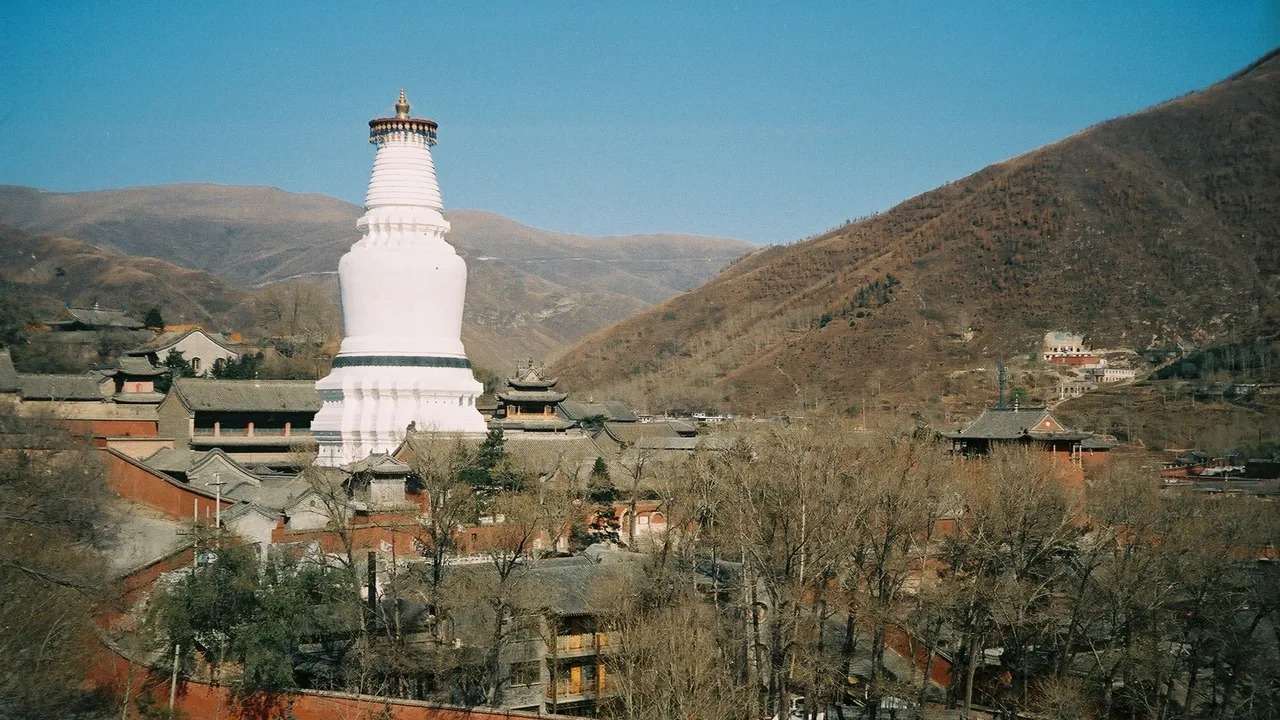
Itinerary at a glance
| Day 1 · 08:30 | Longquan Temple: An Open-Air Museum of Stone Carving |
| Day 1 · 10:30 | Zhenhai Temple: The Zhangja Seat Deep in the Pines |
| Day 1 · 14:00 | The Moon Pool: The Legend of Seeing Lives Past |
| Day 2 · 08:30 | Nanshan Temple: A Century-Long Project Carved in Stone |
| Day 2 · 11:30 | Villages along the Qingshui River: Crops, Screen Walls and Lunch |
| Day 2 · 15:00 | Jifu Temple: An Afternoon at a Nunnery |
| Day 3 · 08:30 | Puhua Temple: The Blended Gate in Morning Light |
| Day 3 · 10:30 | Yangbaiyu Village and a Farmhouse Table |
| Day 3 · 14:00 | The Qingshui Gravel Flats at Dusk: Closing Three Country Days |
The route, stop by stop
Longquan Temple: An Open-Air Museum of Stone Carving
Longquan sits at the mouth of the valley southeast of Taihuai, and the first sight is its Republican-era stone gateway, entire in pale jade color, brackets under the eaves and dragons along the beams each carved from separate blocks of gray stone and assembled, masons doing with knives the work of carpenters and smiths. The nine-dragon screen behind is just as dense, revealing more with every minute.
The temple takes its name from a spring beside it, tied by legend to the five dragon kings. The compound is small, half an hour for most, an hour for carving lovers, for every rail panel carries a tale worth deciphering.
Zhenhai Temple: The Zhangja Seat Deep in the Pines
Zhenhai hides on a pine-covered slope south of town, the seat of the Qing-era Zhangja incarnation lamas, wrapped in folk legend of an emperor's renunciation here. The temple climbs with the hill, pines grown to full embrace, halls half-hidden in shade, the quietest great monastery around Taihuai.
Inside, Kangxi-era steles and the memorial stupa of the fifteenth Zhangja reward a slow look, the stupa's brick carving mellow in the filtered pine light. Visitors thin enough to hear the wind in the needles; rest on the stone platform beyond the wall, better than any deck.
The Moon Pool: The Legend of Seeing Lives Past
The Moon Pool is a tiny hill temple named for its stone-lined basin, where folk legend holds that the fated may see their former lives in the water, drawing centuries of watchers leaning over the edge. The basin is not always wet, and what is seen was never the pool but each watcher's own imagination and moment.
The temple sits in a col reached only to the foot of the hill by car or foot, the last path narrow and steep. Half its appeal is the legend, half the hush; afternoons are near empty, squirrels and tits outnumbering people, the most hermit-like stop of the three days.
Nanshan Temple: A Century-Long Project Carved in Stone
Nanshan climbs the slope south of town in three linked parts, Jile, Shande and Youguo, founded in the Yuan and grandly restored in the Republican era, six centuries of building in one precinct. The whole monastery is a three-dimensional exhibition of stone carving, rails, screens, arched gates and stairs dense with work of different eras, the summa of the mountain's stone art.
Seven tiers rise with the hill, the themes shifting as you climb, opera scenes and auspicious beasts below, Buddhist figures above. From the top tier, the Qingshui valley spreads in morning mist below, the countryside line's finest dawn view.
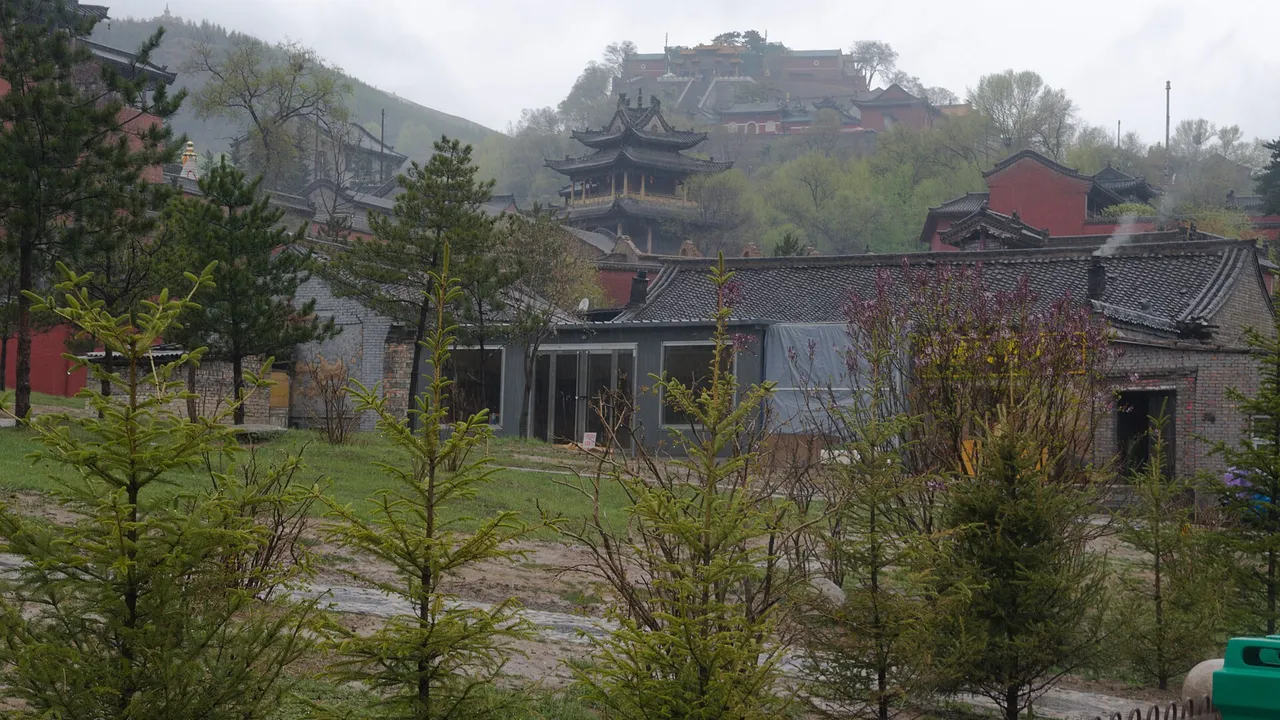
Villages along the Qingshui River: Crops, Screen Walls and Lunch
Below Nanshan, walk the Qingshui downriver past villages that are the true base color of the countryside: walls of stacked stone, blessing characters on screen walls, corn and naked oats drying on rooftops. Farmhouse kitchens are few but honest, stewed chicken, oat noodles, mountain greens, all grown within the village.
Lunch happens in the village, a riverside stroll digesting after. Locals are long used to cameras; greet before shooting courtyards or portraits and the reply is warmth, sometimes a handful of just-picked sea-buckthorn.
Jifu Temple: An Afternoon at a Nunnery
Jifu spreads on the slope north of Taihuai, among the larger nunnery compounds on the mountain, yards neat and halls hushed; unlike the grandeur of great Han monasteries everything here is built to a spare scale. Afternoon sun slants into the courts where nuns recite under the galleries, voices thin and even.
View at a respectful distance, staying out of living quarters and away from close shots of the nuns. Cats sun themselves before the halls, clearly well fed and unafraid of people, the best footnote to a country temple: creatures treated kindly do not fear us.
Puhua Temple: The Blended Gate in Morning Light
Day three folds back into town, opening with Puhua's morning light. After a day of stone carving, see this Republican-era restoration from another angle: Han brick carving and Tibetan painting share one wall at the gateway and screen, brighter in color than any neighbor, a coat worn out of its century yet fitting perfectly.
At dawn Puhua is nearly empty, the sweep of brooms on stone trading notes with the eave bells. Half an hour suffices, then take a hot bowl of tofu pudding at the stall by the gate, sharing a table with villagers.
Yangbaiyu Village and a Farmhouse Table
South of Puhua lies Yangbaiyu, a mixed belt of village edge and market carrying a third more everyday smoke than the town center. The lanes are quiet mid-morning, each household at its own task, drying grain, splitting wood, patching walls, last year's red couplets still on gates and screens.
For lunch pick a family-run table, ordering as yesterday: one stew, one oat dish, one plate of seasonal mountain greens. This kind of meal needs no strategy, only the patience to sit and respect for a bowl of hot soup.
The Qingshui Gravel Flats at Dusk: Closing Three Country Days
The country line ends with no objective at all: return to the gravel flats of the Qingshui and sit on the cobbles doing nothing. The river slides out of town carrying mountain silhouettes in the evening light, temple outlines lighting up one by one, the incense thinning in the river wind until only the water sounds.
What three countryside days really show is the mountain's other identity: not only the bodhimanda of Manjushri but a valley where people farm, herd and go to school. Carrying that home comes closer to pilgrimage than any strand of beads.
| Getting around |
|
| Budget | Temple coupons total about RMB 40, a two-day charter RMB 600-800, farmhouse meals RMB 30-60 per person per sitting; roughly RMB 500-800 pp over three days, excluding the RMB 135 mountain entry. |
| Best time | May-June and September bring the best colors and the quietest villages; in the July-August crush, the countryside line is the answer to the crowds. |
FAQs
What is the smartest transport plan for the countryside line?
You need only half a day to a day of chartering: day one runs on foot plus bus toward Longquan, day two charters half a day for Nanshan and the downriver villages, day three walks throughout. Settle destinations and waiting time in one negotiation; country cars carry no meters, so having your guesthouse host witness the deal is safest.
Do country temples charge, and do they keep regular hours?
Country temples charge a few yuan of incense coupon or nothing at all, hours floating with monastic routine, generally open by day and closing early evening, earlier than the core sights. Some small temples shut at midday; if so, view the exterior and return on your way back. The RMB 135 mountain entry still applies regardless of temples.
What should I know about eating in the villages?
Farmhouse meals price per head or per table, so confirm portions and prices before ordering, with wild greens floating by season. Sensitive stomachs should skip cold-dressed dishes and favor stews and noodles. Carry small cash, as some yards take no QR codes; thank the hosts in person, for courtesy here runs more genuine than at sights.
What hazards should country walking prepare for?
Three things: mountain day-night swings mean sun at noon and chill by dusk, so carry a jacket all day; village dogs run free, so stop, stand steady and avoid eye contact while owners call them back; stone steps and gravel flats slicken in rain, so wear grippy shoes. Signal breaks in the valleys, so save offline maps first.