
Seven days is Wuxi in full. Two days read the Lake Tai core and its island through, day three circles Lake Li, day four enters Huishan for halls, garden and spring, day five spends the old city on museum and academy, day six goes to canal and street life, day seven to Mashan's Buddha and Zen, with Dangkou closing the run. Two or three highlights a day, a sustainable pace.
The point of depth is slack: spare hours absorb a xi opera performance, a figurine-painting session, an unscheduled teahouse afternoon. The route blocks by geography to avoid daily long hauls; keep one base along metro line 1, considering a night in Nianhuawan only for the Mashan evening.
Itinerary at a glance
| D1 08:00 | Yuantouzhu: Depth's First Lesson |
| D1 14:00 | Taihu Fairy Island: The Mid-Lake Lesson |
| D2 09:30 | Liyuan Garden: A Slow Second Reading |
| D2 14:00 | Changguangxi Wetland: Afternoon Vapor |
| D2 17:00 | Lihu Bridge Park: The Loop's Finish Line |
| D3 08:30 | The Huishan Halls: The Day's Front Page |
| D3 11:00 | Jichang Garden and the Second Spring: The Early Afternoon |
| D3 15:00 | The Clay Figurine Museum and Workshop: Reading the Craft Deeply |
| D4 09:00 | The Wuxi Museum: Opening the Old-City Day |
| D4 13:30 | Donglin Academy and the Xue Mansion: Two Faces of the Scholar Class |
| D5 09:30 | Qingming Bridge and Nanchang Street: Canal Day in Daylight |
| D5 15:00 | Nanchansi and Sanfengqiao: Completing the Street Picture |
| D6 09:00 | The Grand Buddha at Lingshan: Opening Mashan Day |
| D6 14:30 | Nianhuawan: Day Show into Night Show |
| D7 09:30 | Dangkou Ancient Town: The Seven-Day Close |
The route, stop by stop
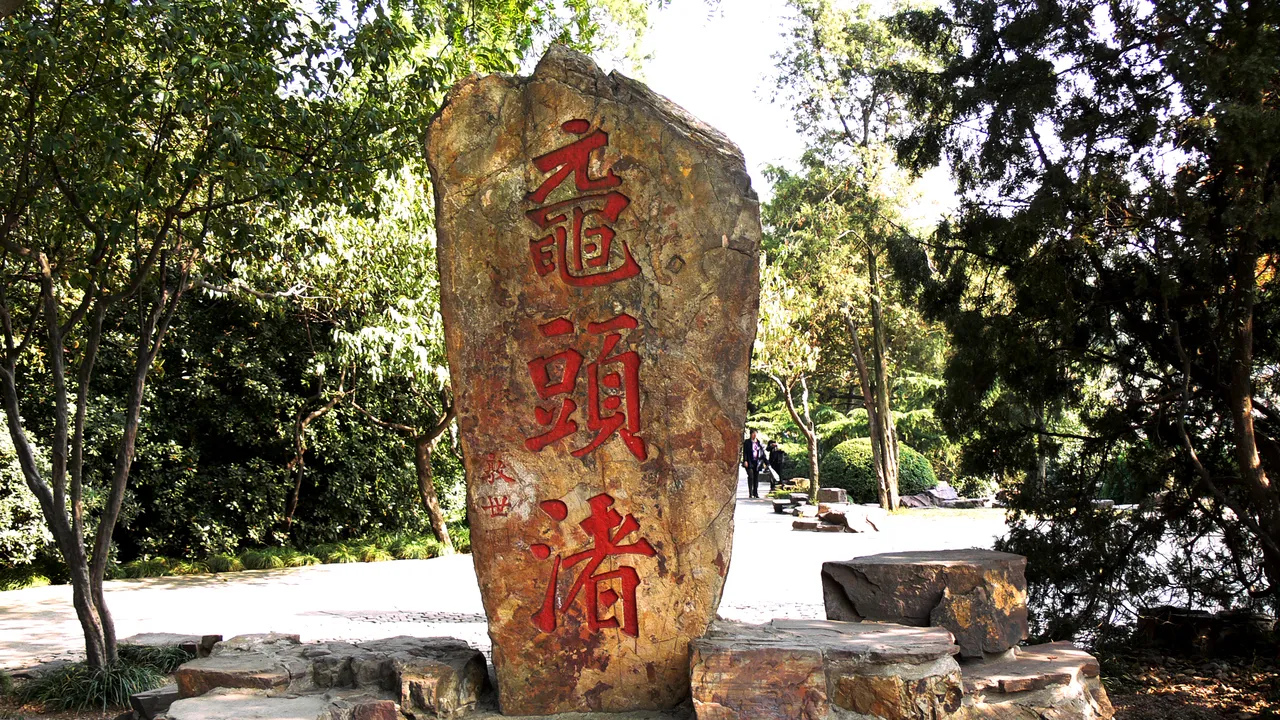
Yuantouzhu: Depth's First Lesson
The seven days still open at Yuantouzhu, but walked differently: beyond the loop, add the wooded Chongshan path and the Luding Hill summit, trading eye-level water for the overlook where Lake Tai's scale finally registers. Blossom season and autumn each keep their own case.
Stay in the grounds in the afternoon for the blossom valley and the orchid garden; the deep way is not racing the boat timetable. Schedule nothing in town tonight, sleep early, and set the trip's unhurried tone from day one.
Taihu Fairy Island: The Mid-Lake Lesson
Take the afternoon boat to the island, dodging the morning group peak. The Taoist halls and grotto statuary reward close looking, and the red-cord corridor of the matchmaker shrine is the island's most lived-in corner. From the high point, lake on every side with the city far off, Lake Tai's coordinate system assembles.
The return boat lands toward evening, the deck delivering a sunset that gathers the water into gold. Dine by the scenic gate, then settle the week's rhythm at the hotel; tomorrow the lakes change.
Liyuan Garden: A Slow Second Reading
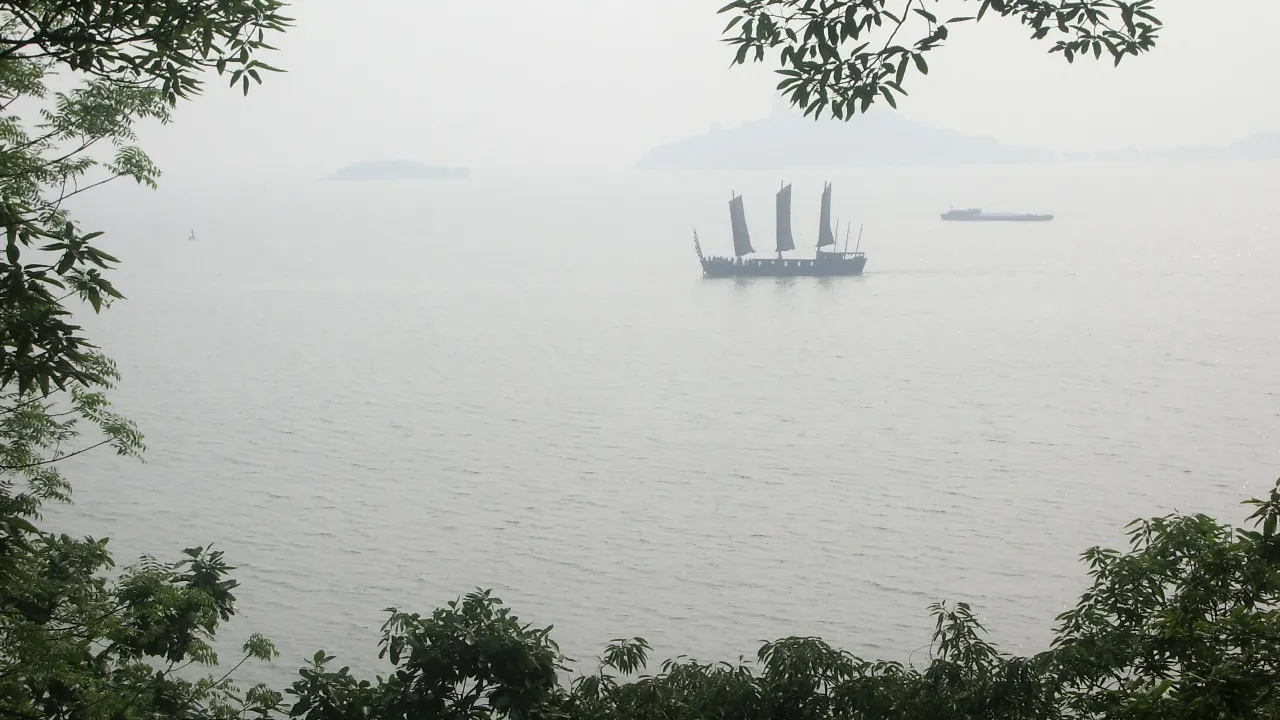
Day two circles Lake Li, opening at Liyuan. Give the garden three hours instead of two: stand at every corridor window, watch boats pass from the Four Seasons pavilions, and get lost ten minutes in the rockery by design. The Fan Li and Xishi story gets its full telling in the garden-history exhibit.
The lakeside teahouse deserves an hour over local tea, the luxury depth travel affords. Leave south along the greenway, with Changguangxi after lunch.
Changguangxi Wetland: Afternoon Vapor
Enter Changguangxi after lunch, dodging the joggers' morning peak; the wetland at this hour belongs to birds and reflections, a full ninety minutes on the boardwalk loop with pauses before and after Shitang covered bridge. The swamp cypress turns color in autumn, this stretch's hidden season.
The wetland is the week's cheapest and quietest stop: free, uncommercial, held up entirely by water and trees. Dinner in the university district afterward, then line 1 home direct.
Lihu Bridge Park: The Loop's Finish Line
Close day two at Lihu Bridge Park. The cable-stayed bridge against the sunset water is Wuxi's first-choice dusk frame. Walk a stretch of shore path eastward and trace the whole lake's south-to-north outline, completing the loop properly.
At night the bridge lights come on and the lake settles. Dinner on the lakeside commercial street or back in town, with an optional night walk by the water, Lake Li's evenings gathering the mind better than its days.
The Huishan Halls: The Day's Front Page
Day three belongs wholly to Huishan. Walk the hall street first, studying the Fan Zhongyan, Gu Kejiu and Lu Zhi shrines closely, reading along three threads: hall names, ritual format, steles. Ancestral halls are the above-ground remains of Jiangnan clan society; understand one and the whole street comes alive.
The second hour of the morning goes to the Longtou River's street life, teahouses, figurine shops and snack stalls interleaved with the halls so the pace never stales. Lunch in the town on tofu pudding and noodles.
Jichang Garden and the Second Spring: The Early Afternoon
Jichang inside Xihui Park carries the day. This Ming garden pushes borrowed scenery and piped water to the limit, the Eight-Sound gully's acoustics, Zhiyu pavilion's angles and Seven-Star bridge's rhythm all rewarding repetition, with Qianlong's Beijing copy adding a comparative line.
Walk on to the Second Spring, pools, inscriptions and Abing's tomb forming a small circuit. The melody's story lands hardest on site, the spring still running from the stone dragon heads. Two hours covers both.
The Clay Figurine Museum and Workshop: Reading the Craft Deeply
Spend the afternoon reading the craft deeply at the museum. From street toys to opera scenes, hand-shaped figures to molded production, the two technical lineages of the Huishan figurine run in deliberate contrast through the galleries. Afterward, choosing a hand-painted Afu on the street becomes a different exercise.
The workshop session is the day's easter egg, half an hour to shape your own small figure. Close at a riverside teahouse; day three runs the week's densest culture load, so schedule nothing more tonight.
The Wuxi Museum: Opening the Old-City Day
Day four enters the old city, opening with the museum. The canal and industry halls run the main line, explaining the economics behind three days of water, hill and halls: why Wuxi grew rich and why it built factories first in modern times, the answers in the cases. The yixing and figurine rooms serve as review.
Two hours, then out for lunch with the whole afternoon inside the old city's walking circle. The museum carries the week's highest information density; give it full attention.
Donglin Academy and the Xue Mansion: Two Faces of the Scholar Class
Link two scholars' compounds in the afternoon. Donglin Academy is the engaged lecturing ground, one couplet carrying the family-and-state view to its end; the Xue mansion is the home of a man returned from abroad, its East-meets-West layout holding late-Qing curiosity about and guard against the world. One at court, one abroad, the contrast is the flavor.
About two hours across both, with a pastry rest in the Chong'an quarter between. Walk back along Zhongshan Road toward evening; day four's information load caps here.
Qingming Bridge and Nanchang Street: Canal Day in Daylight
Day five goes to the canal. In the morning walk the river from Nanchansi to Qingming Bridge, reading the bridges, the kilns and the water lane's structure, with the silk and kiln museums completing the trade details. Daytime halves the crowds and shows the architecture best.
Eat local on the street at noon and spend the afternoon on Nantang and the lanes across the water. Canal day works in layers: buildings and history by daylight, lamps and water by night, the same bridge crossed twice feeling like two different bridges.
Nanchansi and Sanfengqiao: Completing the Street Picture
The afternoon completes the street line. Forty minutes for Nanchansi and its pagoda, the market's pastry stalls set by three with plum cakes and jade cakes as afternoon tea, then a proper rib dinner at Sanfengqiao and a vacuum pack from the counter.
Return to Nanchang Street at dusk for the lights, with the night boat decided by clock and energy. Day five is the week's most street-level, running light to store strength for the two Mashan days ahead.
The Grand Buddha at Lingshan: Opening Mashan Day
Day six goes to Mashan, and the deep way gives Lingshan a whole morning. Sequence the Buddha, Xiangfu Temple, the Nine-Dragon Bath and the Fan Palace by show times, keeping forty minutes for the palace interior, whose dome and column craftsmanship deserve section-by-section looking.
Pick a morning slot for the bath show, thinner crowds than the afternoon. Ride the shuttles by section and save the legs for the stairs to the Buddha's feet. Lunch inside the grounds, then move to Nianhuawan.
Nianhuawan: Day Show into Night Show
Book Nianhuawan as a double feature: sutra-copying, incense and teahouses through the afternoon to finish the slow program, vegetarian dinner, then the lighting and water-screen shows after 7:30 as the main reel. Day and night here read like two towns; only together are they complete.
The deep-trip optimum is sleeping in town tonight, walking back after the show and re-walking the empty lanes before the crowds next morning. On a budget, watch the last water-screen and taxi back to town, forty minutes.
Dangkou Ancient Town: The Seven-Day Close
The last day goes to Dangkou on the outskirts. The Hua clan's charity estate is the physical sample of the Jiangnan charity-estate system, and the former homes of Qian Mu and Qian Weichang tie this small town into modern academic history. Against the density of the previous six days, Dangkou runs at stroll speed.
Sit in the riverside teahouse until the afternoon sun slants, and the week closes here: lake, hill, garden, city, river, Buddha, town, seven Wuxis each in its place. The ride back takes an hour, and both Wuxi stations serve evening departures easily.
| Getting around |
|
| Budget | Tickets total about RMB 550-650, with meals, lodging and local transport putting the full run at RMB 2800-4500 pp before long-distance travel. |
| Best time | March-May and October-November overall best; seven days leave ample slack for weather, swapping indoor substitutes in when rain lands. |
FAQs
Are seven days really necessary? What separates five from seven?
Five days see it all, seven see it through: the extra two buy the complete Lake Li loop, a full deep day at Huishan and the Dangkou close, plus the trip's first genuinely free half day. Short on leave, take the five-day version, dropping Dangkou and the figurine workshop, and the core experience survives intact.
What is the smartest lodging plan for seven days? Change hotels or not?
Do not change; one base carries the week: along metro line 1 between Sanyang Plaza and Nanchansi, with only the Mashan night worth relocating to Nianhuawan. Hotel changes cost more time than they save on driving, and stable luggage is depth travel's invisible perk.
Which days tire most across the week, and how to regulate?
Day one at Yuantouzhu and day three at Huishan log the most steps, both buffered with teahouse and workshop stops. The rule is one droppable stop per afternoon, cut it when tired, and day seven is deliberately stroll-grade so the body recovers before departure.
How to control a seven-day budget, and what is the biggest variable?
Tickets cap near RMB 600; lodging and Nianhuawan are the variables, an in-town night at roughly RMB 500-1000, and the difference funds two days of meals and transport. Control it by locking rooms two weeks ahead, leaning on snack shops and noodle houses, and taking the bus special line to Mashan instead of door-to-door taxis, holding the whole run near RMB 3000.