
Chengde was the Qing summer capital, and the whole city grew around the Mountain Resort. With one day, the trade is clean: the resort takes the morning, the great Buddha of Puning Temple takes midday, Putuo Zongcheng Temple the afternoon, and Qingchui Peak closes the evening. The four sights run clockwise on the map with almost no backtracking.
Two moves matter. First, arrive early: the palace quarter and lakes are quietest before the tour waves land. Second, use the outer-temples combo ticket properly, one pass covering both Putuo Zongcheng and Xumifushou. The high-speed rail from Beijing takes just over an hour, so a day trip works, though an overnight lets you keep the resort's dusk for day two.
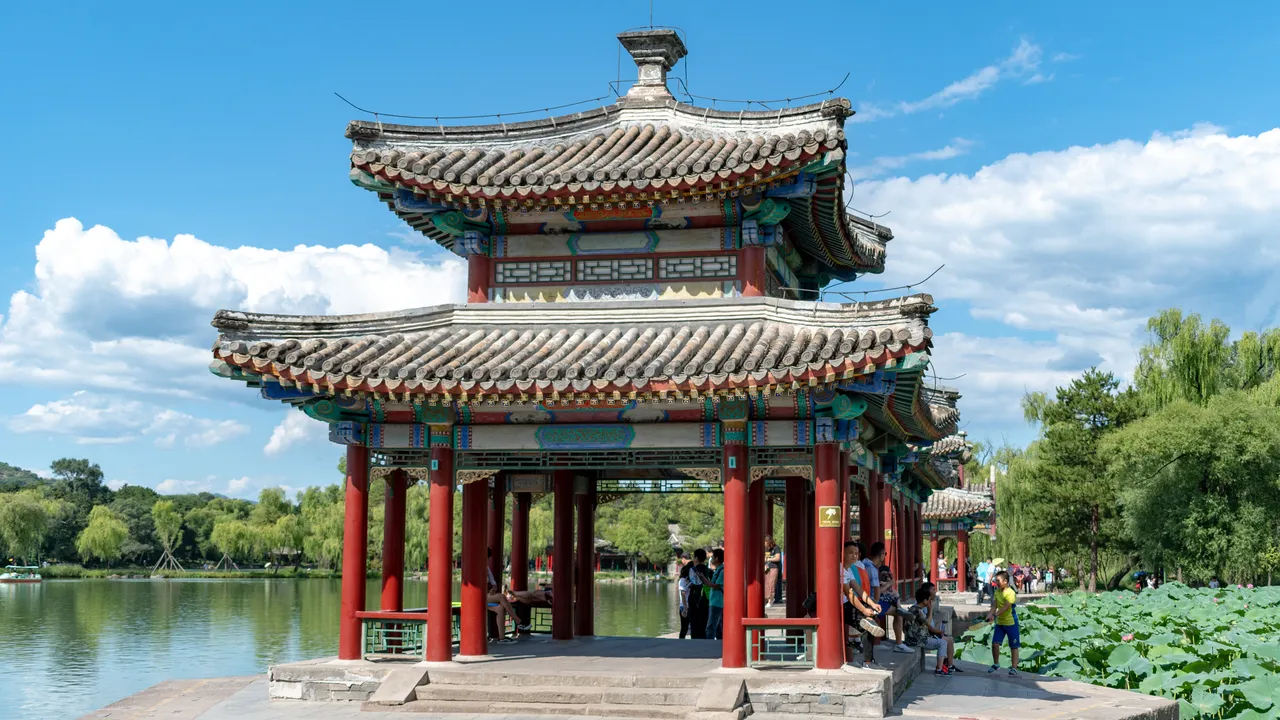
Itinerary at a glance
| 09:00 | The Mountain Resort: From the Palace Quarter to the Lakes |
| 12:30 | Puning Temple: Looking Up at the Thousand-Armed Guanyin |
| 14:30 | Putuo Zongcheng Temple: A Potala on the Grassland |
| 17:30 | Qingchui Peak: Closing at the Foot of Sledgehammer Rock |
The route, stop by stop
The Mountain Resort: From the Palace Quarter to the Lakes
The Mountain Resort was the Qing emperors' summer palace and remains China's largest imperial garden. The grounds split into the lake, hill and plain zones plus the palace quarter; one day will not cover it all, so give the morning to the palaces and lakes: the nanmu scent of the Hall of Frugality and Honor, the west chamber of the Hall of Mist and Waves, then the lake paths past Ruyi Isle and the Misty Rain Tower, a Jiangnan waterscape transplanted beyond the Great Wall.
At the lakes' far end stands the Rehe Spring: one spring begets one river, named Rehe below the welling point and recorded in old gazetteers as the shortest river under heaven, unfreezing even at twenty below. From the Water Heart Pavilion the lake mirrors the outline of Sledgehammer Peak, the most photogenic angle in the garden. Two hours covers the lakes; skip the hill zone and head out for the next stop.
Puning Temple: Looking Up at the Thousand-Armed Guanyin
Puning Temple holds a special place among the Eight Outer Temples: the front half follows a strict Han-style monastic layout, while the rear Great Vehicle Pavilion copies Tibet's Samye Temple, two architectural languages meeting in one courtyard. Inside stands the thousand-armed, thousand-eyed Guanyin, over twenty meters tall, carved from joined timbers and the tallest wooden Buddhist statue still standing; reading all ten faces takes several minutes of looking straight up.
Chanting often drifts through the halls, and the scent of butter lamps and juniper smoke belongs to another world from the resort's gardens. Climb to the platform behind for a view back over Sledgehammer Peak and the city, a perspective often worth more than the ticket. The whole visit runs one to one and a half hours.
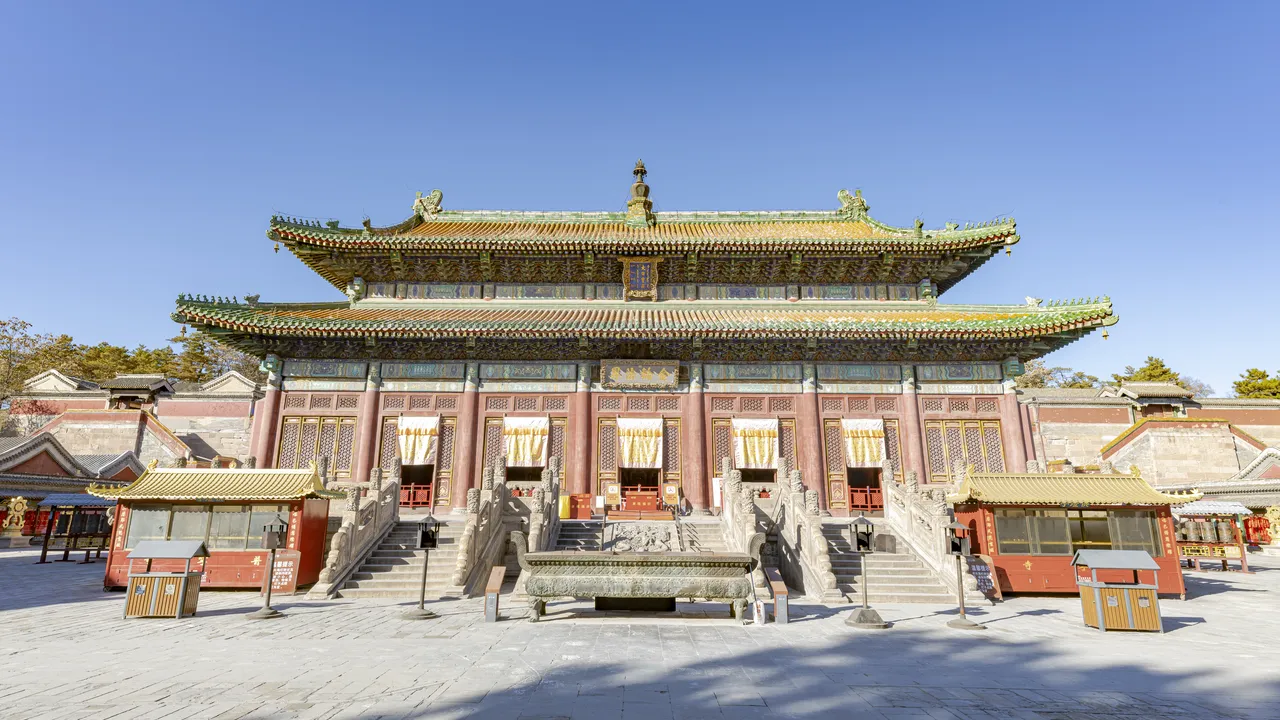
Putuo Zongcheng Temple: A Potala on the Grassland
Modeled on the Potala in Lhasa, Putuo Zongcheng is the largest of the Eight Outer Temples, raised in the Qianlong era for the emperor's sixtieth birthday and the empress dowager's eightieth. The great red terraces climb the hillside above rising tiers of white buildings; from the lower square the highland silhouette is real, which is why locals simply call it the little Potala.
The gilded, fish-scale copper roof of the Wanfa Guiyi Hall hides at the core the red terraces enclose; you only read it properly from the top platform. The climbing steps are steep and unfriendly to hard soles and skirts. Afternoon light reddens the walls best and tour groups thicken then, so entering around half past two threads the needle.
Qingchui Peak: Closing at the Foot of Sledgehammer Rock
Qingchui Peak is Sledgehammer Rock to every local: a lone purplish-red column northeast of the resort, thick on top and narrow at the waist, named by the Qianlong emperor after a ritual chime stone. It rewards two positions: the long view across the resort's lakes, and the upward gaze from its base. Evening light comes in from the west and turns the column crimson; ride the cableway up before its last run and watch the whole town glow at sunset.
Farmhouse restaurants at the foot serve a proper closing dinner, wood-fire chicken with mountain mushrooms and griddle cakes at honest prices. Look back once at the rock in the dusk before heading in; the taxi back to town takes about ten minutes, and last buses follow the posted schedules.
| Getting around |
|
| Budget | Tickets (Mountain Resort about RMB 145, Puning Temple 80, the Putuo Zongcheng plus Xumifushou combo 80, Qingchui Peak 50) plus meals run about RMB 400-550 pp. |
| Best time | May-Sep suits best, when the resort's lakes are at their summer greenest; on peak weekends the Putuo Zongcheng Temple crowds up, so finish the resort in the morning. |
FAQs
What is the fastest way to reach Chengde from Beijing?
High-speed rail wins: Beijing Chaoyang to Chengde South takes about an hour, with taxis or buses into town at the station. Driving the Beijing-Chengde expressway takes roughly two and a half hours, with outbound morning jams on peak weekends. The sights cluster downtown, so buses plus taxis cover everything without any rail transit.
Do the Mountain Resort and Outer Temples need booking? Any combo tickets?
In peak season book the resort's ticket ahead with real names via official channels; walk-up stock is unreliable. Each outer temple sells separately, while Putuo Zongcheng and Xumifushou share a combo pass around RMB 80. A resort-plus-temples package exists and pays off if you stay more than a day; check posted prices.
If I must choose one, the resort or the Outer Temples?
Pick the Mountain Resort first: it is the city's main event, the palaces and lakes alone take three hours, and its historical layers run deepest. Among the temples, Puning and Putuo Zongcheng suffice, one for the carved Buddha, one for architectural sweep; drop Xumifushou and Qingchui Peak without guilt when time runs out.
Any payment or dress tips for Chengde?
QR payments work across town, but carrying some cash smooths things at hillside stalls and farmhouse eateries. Remove hats inside temple halls and check signs before photographing interiors. The peak climb and red-terrace steps call for soft, grippy shoes, and on the grasslands and summits even summer nights chill, so keep a jacket packed.