
Every building in Chengde tells one story: how the Qing managed its northern frontier. The Mountain Resort was where emperors summered and governed, and the Hall of Frugality and Honor received Mongol princes and the returning Torghut leaders. Each of the outer temples copies a prototype, Lhasa, Shigatse, Xinjiang, and each was a political statement. Walk this line and you read a standing, three-dimensional history of the Qing borderlands.
Depth needs background, so the route runs sites first, footnotes after: the palace quarter's architecture of power in the morning, Puning Temple's religion and carpentry at noon, the two Tibetan-style temples' concrete arts of courtship in the afternoon, and the Chengde Museum at dusk to string it together. If you hire one guide only, spend it on the morning palaces.
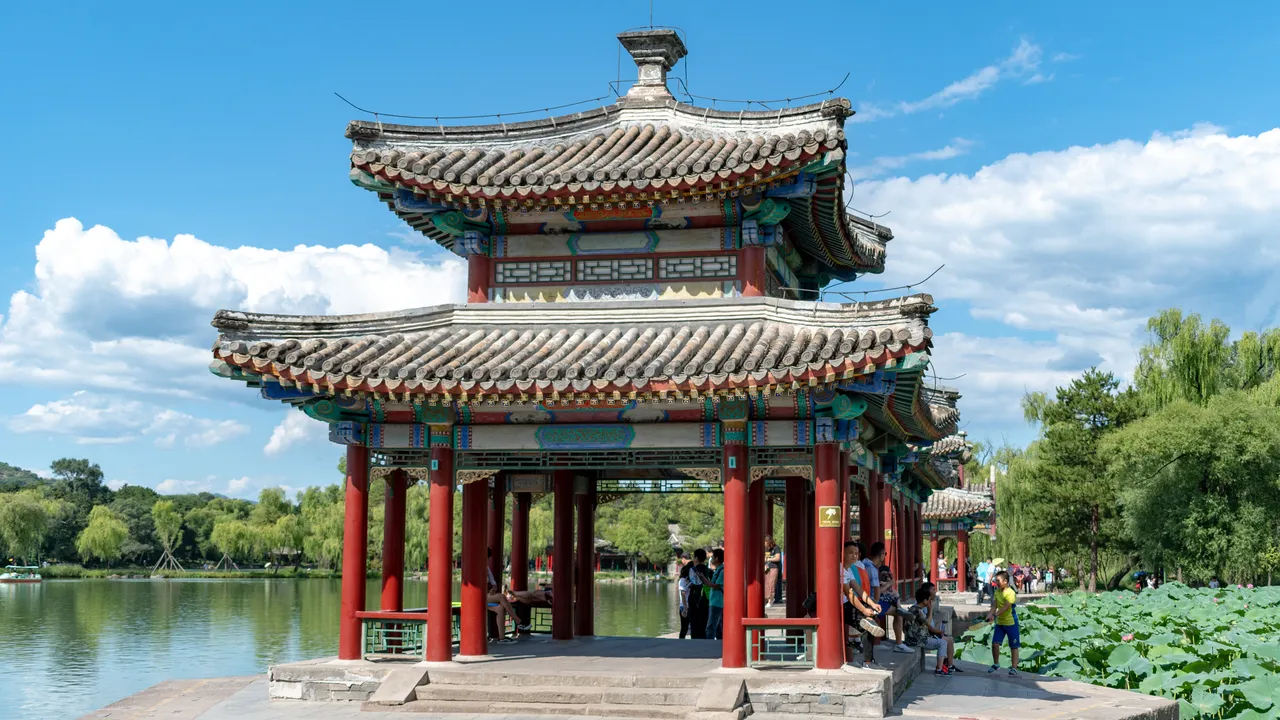
Itinerary at a glance
| 08:30 | The Palace Quarter: The Spatial Grammar of Power |
| 11:00 | Puning Temple: The Peak of Carpentry and Faith |
| 14:00 | Putuo Zongcheng and Xumifushou: One Combo Ticket, Two Arts of Courtship |
| 17:00 | Chengde Museum: Threading the Day Together |
The route, stop by stop
The Palace Quarter: The Spatial Grammar of Power
The palace quarter is the resort's face and heart. The main hall, the Hall of Frugality and Honor, is built of golden-thread nanmu with no painted decoration, authority carried by the wood's own scent and grain, and here the emperor received Mongol princes and religious leaders. Beyond run the Four Knowledge Study and the Hall of Mist and Waves, the imperial bedroom at the resort where the Xianfeng emperor died and the two dowager empresses began their regency.
Two details anchor the visit: the nanmu truth is a nose test, lean close to the columns for the cool fragrance; and the interiors are restored to period placement, screens, seats and vessels all articulating ritual order. The quarter takes an hour, its interpretive labels unusually good, slow reading beats rushing.
Puning Temple: The Peak of Carpentry and Faith
Puning Temple rose in the Qianlong era to mark the alliance with the Oirat Mongols after the Dzungar campaigns; its very name, Universal Peace, is a political wish. The front half is Han-style, the rear copies Tibet's Samye Temple, the Great Vehicle Pavilion standing for Mount Sumeru with surrounding halls as the four continents, a whole cosmology framed in timber and brick.
Inside, the thousand-armed Guanyin tops twenty meters, the world's tallest surviving wooden Buddhist statue, spliced from giant timbers with a three-story armature hidden within the body. Circle the hall and study the beams and bracket sets, Qing official carpentry coexisting with Tibetan ornament in one building; an architecture student could lose a morning here.
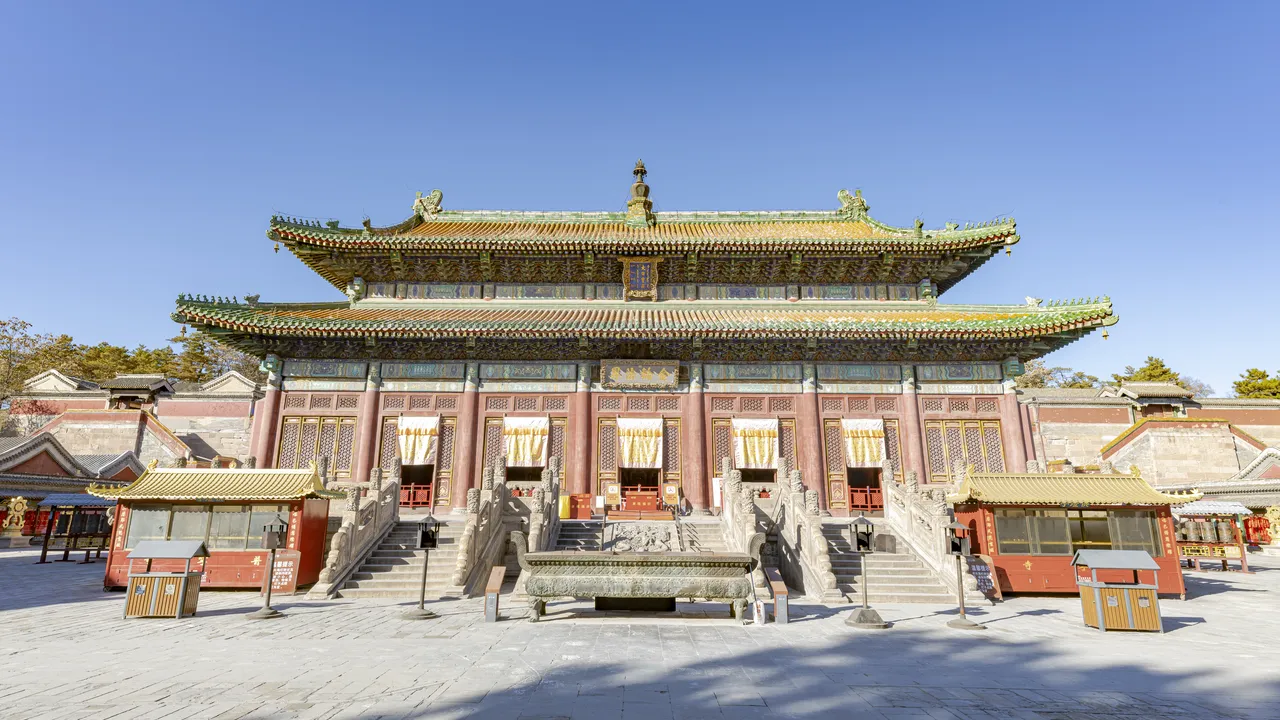
Putuo Zongcheng and Xumifushou: One Combo Ticket, Two Arts of Courtship
Pack both temples into one afternoon slot, since a combo ticket of about RMB 80 covers them. Putuo Zongcheng copies the Potala, built for Qianlong's sixtieth birthday and his mother's eightieth; the gilded roof of the Wanfa Guiyi Hall crowns the red terraces, and the Torghut Mongols, returning from their epic trek, were received here, their story still inscribed on the steles.
Xumifushou copies Tashilhunpo in Shigatse and served as the residence of the Sixth Panchen Lama, who traveled east to congratulate the emperor; the golden tiles and dragon ridges of the Miaogao Zhuangyan Hall are unique beyond the wall. One copies Lhasa, one Shigatse, finished within years and standing side by side at the mountain pass, the empire's religious diplomacy written in architecture.
Chengde Museum: Threading the Day Together
Ending at the museum is the route's masterstroke. The hall, the pavilion and the golden roof you saw all acquire context here: the grand strategy of the autumn hunts and the courtship of the Mongols, the background of the Dolon assembly, the full tale of the Torghut return, and how a river valley grew into an empire's summer capital. Reading the exhibits with a day of memory behind you triples the yield.
The Qing artifacts and the architectural-elements gallery reward close attention, and several scale models clarify structures the day left fuzzy. Two hours closes the loop, and the dusk outside the resort wall is waiting at the exit.
| Getting around |
|
| Budget | Tickets (resort about RMB 145, Puning Temple 80, the two-temple combo 80, museum free) plus meals run about RMB 350-450 pp. |
| Best time | Year-round, shielded from weather inside halls; in season tour groups thicken, so hit the palaces at opening and the two temples off-peak. |
FAQs
Will this route land without a Qing history background?
Not much, and there are fixes: hire one live guide in the palace quarter to raise the frame, and treat the museum's galleries, written as a layperson's primer, as an evening review. The cheapest alternative is the online tour on official channels beforehand, then rent the audio device on site.
Are all the Outer Temples worth entering, and how to choose?
Three is the daily ceiling: Puning for the wooden Buddha and the Han-Tibetan synthesis, then the combo pairing the Lhasa and Shigatse copies in one ticket. The Pule and Anyuan temples photograph fine from outside; save ticket money and hours for the principals.
How bad are the culture sites in peak season, and how to dodge crowds?
The palace quarter and Putuo Zongcheng are the crowd magnets, and the pattern is clear: palaces jam 9:30-11:00, the temples 14:00-16:00 with tour waves. Counter it by entering the palaces at opening, Puning around midday, and the two temples after four, when the light also turns golden for photos.
What are the photo rules inside the temples?
The common rule: no photography of statues and ritual objects inside halls, free rein in courtyards and on exteriors; some halls post explicit signs, follow them. Ask monks before portraits, keep quiet and skirt chanting sessions, and drones are banned over the temples, so the red-terrace platform suffices for panoramas.