
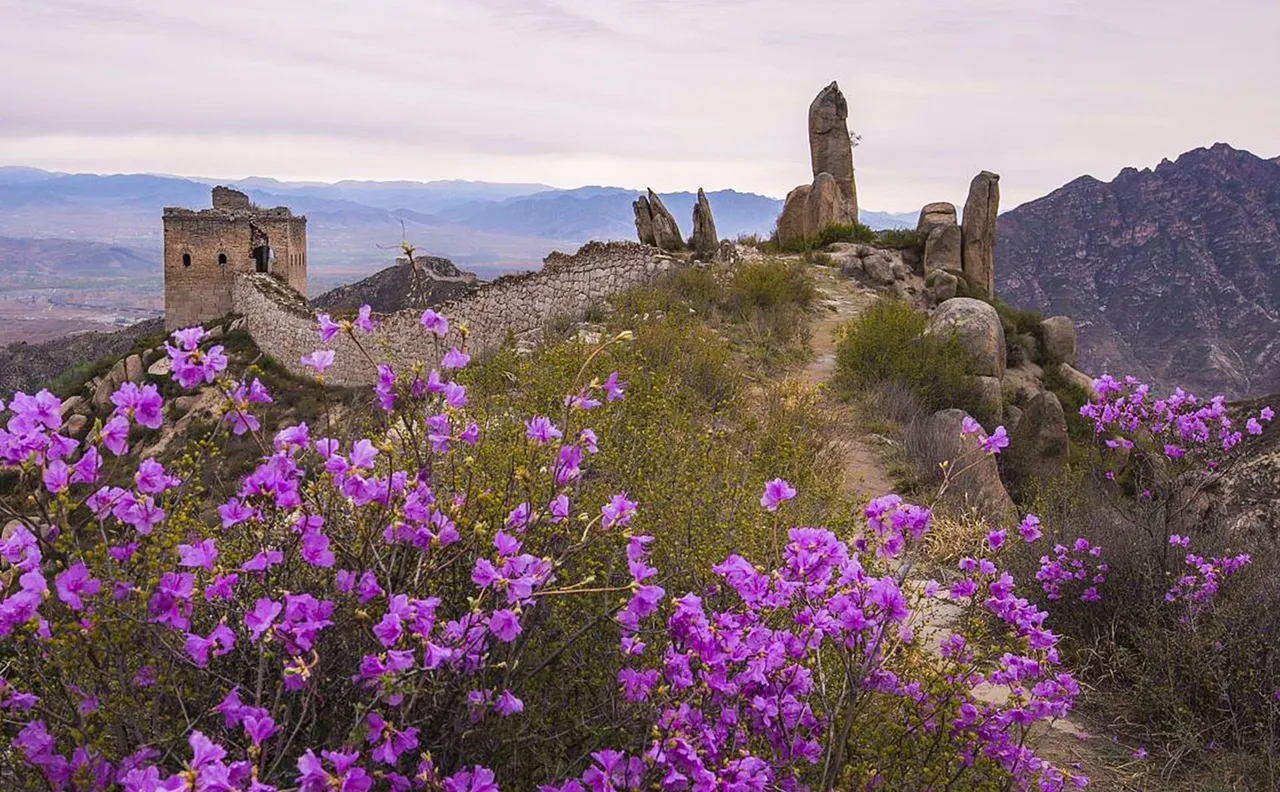
Chengde's geography holds a garden in one hand and pushes open a plateau with the other. Around the city run Yan Mountain foothills, the rock columns of Sledgehammer and Twin Pagoda Hills standing as specimens of three hundred million years; three-plus driving hours north, the land climbs past fifteen hundred meters into Saihan's planted forest and the Yudaokou grasslands rolling toward the Inner Mongolian edge. Three days cover both altitudes.
The plan splits one day in town, two on the plateau: climb first to save legs and set the rhythm, then charter north, forest at Saihan, grass at Yudaokou, closing at the Luan River source. The plateau's distances scatter its sights, making a charter or shared car nearly the only sane choice; self-drivers should respect mountain roads and fuel-station gaps.
Itinerary at a glance
| Day1 · 08:30 | Qingchui Peak Forest Park: Knowing the Column on Foot |
| Day1 · 14:00 | Twin Pagoda Hill: Liao Brick Pagodas atop Two Columns |
| Day2 · 09:30 | Saihan National Forest Park: First Breath of the Forest Sea |
| Day2 · 11:30 | Seven Star Lake: Boardwalks at Wetland Pace |
| Day2 · 15:00 | Taifeng Lake and the Birch Belt: The Afternoon's Slow Lens |
| Day2 · 19:00 | The Forest-Farm Town: One Night on the Plateau |
| Day3 · 08:30 | Moon Lake: Yudaokou's Mirror |
| Day3 · 11:00 | The Luan River Source: Where One River Feeds the Map |
| Day3 · 13:30 | Taoshan Lake and the Road Home: The Steppe's Coda |
The route, stop by stop
Qingchui Peak Forest Park: Knowing the Column on Foot
Three nature days start in hiking shoes. The park trail threads birch and oak on mostly gentle grades, an hour and a half to the top. Up close the column dwarfs its postcard: a danxia sandstone pillar nearly forty meters tall, thick on top at over ten meters across, standing on one thin waist through three hundred million years of wind.
The summit deck is the city's best overlook, the Rehe valley, the resort wall and the golden temple roofs all in one frame. Geology fans should note the spheroidal weathering on the flanks, the waist being where soft layers gave way first.
Twin Pagoda Hill: Liao Brick Pagodas atop Two Columns
The afternoon's puzzle is stranger: Twin Pagoda Hill raises two standing rock columns, each crowned by a Liao-dynasty brick pagoda, and how builders ferried brick up sheer stone nine centuries ago remains unsettled. A loop trail circles the hill, silhouetting the columns and pagodas from many angles, the north walkway offering the best read.
Crowds run thinner than at Qingchui Peak, and evening light flares on the red sandstone. Buses reach it from downtown, and with Qingchui east and this west, the day collects both of Chengde's geological wonders.
Saihan National Forest Park: First Breath of the Forest Sea
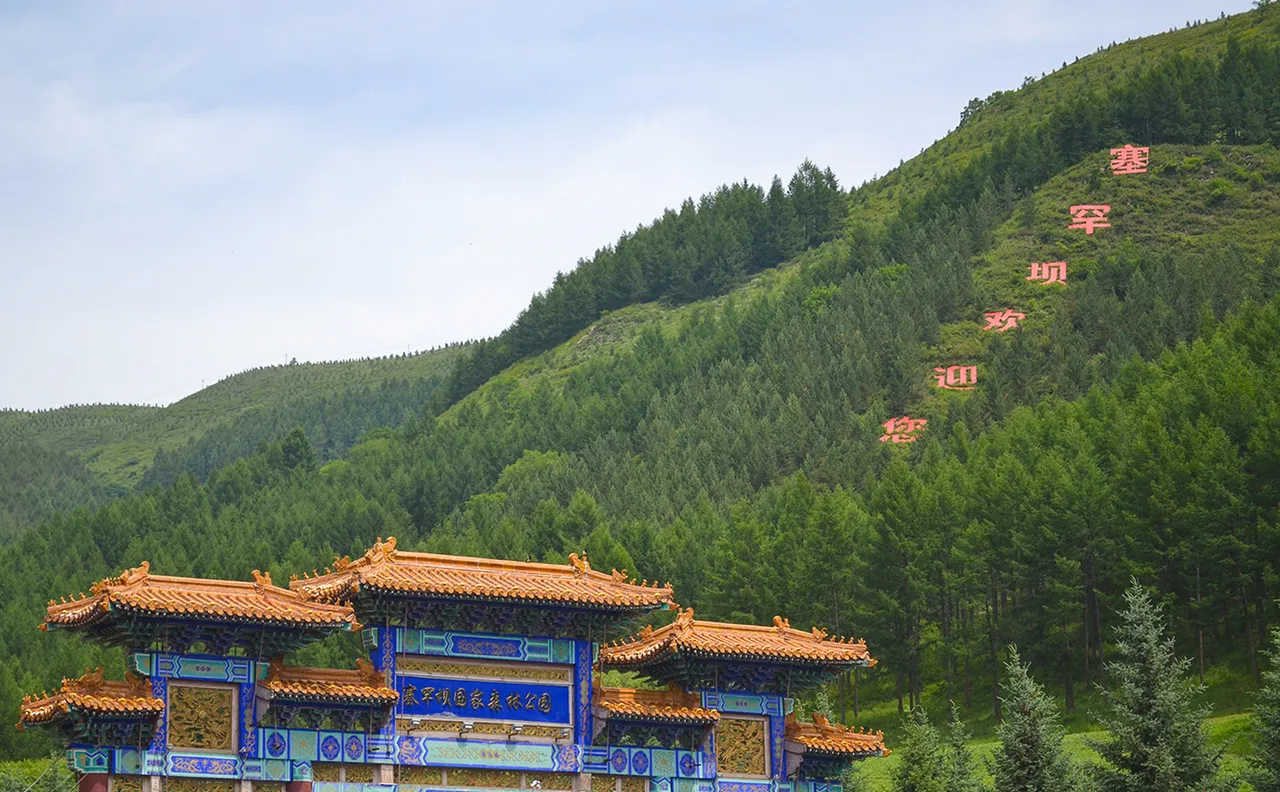
Charter north early on day two; after three-plus hours the farmland outside the window turns into endless larch. Saihan holds the planet's largest planted forest, the sixty-year answer of three generations of planters to a plain that once blew sand in their faces. The Saihan Pagoda area anchors the park; from the tower the green horizon shows no seam.
Trails mix larch with birch, August woods running seven to eight degrees below the city, the air thick with resin. This stop has one task: breathe deep, then believe the green ahead was planted by hand.
Seven Star Lake: Boardwalks at Wetland Pace
Seven Star Lake is Saihan's signature: seven waters arrayed on the meadow like the Big Dipper, boardwalks riding the wetland, clouds doubled in the pools. The zone joins migratory birds and grassland marsh; with luck the waterfowl rise and land around you. The full boardwalk takes about ninety minutes, and shortcuts off the boards end in water, the meadow floating on it.
Noon light runs harsh; Seven Star reads best in morning backlight and evening burning clouds, which is why the plan slots it late morning. The warning signs mean it: wetland water is deep, mud soft, and stuck cars make the local news every season.
Taifeng Lake and the Birch Belt: The Afternoon's Slow Lens
The afternoon deliberately slows. Taifeng Lake lies glass-flat, its grassy banks made for a picnic mat and half an hour of nothing; the birch belt east of the lake ranks among Saihan's most photogenic woods, and in late September, leaves fully gold, the light patches in the trunks stop people mid-step.
Nothing here demands completion; wander and stop as the mood asks. Drivers know this spot is for waiting on light, so tell yours in advance to hold an extra hour for sunset, with lodging right in the forest-farm town, no rush at all.
The Forest-Farm Town: One Night on the Plateau
Dinner and the night both sit in the forest-farm town, grown to serve the plantation and now the plateau's tourism hub. Order by one idea: iron-pot stewed chicken or beef with Bashang oat noodles, the mountain mushrooms the local pride, dried ones giving a deeper broth than fresh. Afterward walk to the town's edge and look up; the Milky Way shows naked-eye here.
Book rooms ahead, since peak weekends leave the town sold out at double prices. Pick heated rooms: even midsummer nights run near ten degrees on the plateau.
Moon Lake: Yudaokou's Mirror
Day three enters the Yudaokou grassland-and-forest scenic zone. Moon Lake is its calling card: a round water set mid-pasture, natural riding tracks and meadow along the shore. At dawn the lake is a mirror, cattle and horses drinking at the rim, reflections complete to the point of fiction. The full circuit walks in about an hour, or ride half of it.
Flowers peak June through August, and the globe-flower banks covering the shoreline reward early risers. Herders' horse strings line the lake; settle price and duration before mounting, usually charged per lap, talk first, ride second.
The Luan River Source: Where One River Feeds the Map
The Luan River seeps from these meadows, first pools, then streams, running hundreds of kilometers to the Bohai Sea. The site is modest, boardwalks reaching into the wetland, every puddle underfoot eventually a Tianjin tap. Its meaning is geographic rather than scenic: Bashang's rainfall parts here between the Hai and Liao river systems.
Watching water surface from the grass at the boardwalk's end, wind turbines and steppe beyond, gives the trip's stillest frame. Box-ticking fails here; sit ten minutes and do nothing.
Taoshan Lake and the Road Home: The Steppe's Coda
One optional stop remains before the drive. Taoshan Lake lies deep in Yudaokou, far quieter than Moon Lake, long and narrow, its banks under chokeberry trees that burn red with fruit in autumn. The hush runs to bee-hum level, the closest thing to empty wilderness in three days.
The return road then becomes the sight itself: rolling grassland highway where herds hold right of way, and yielding to livestock is Bashang law. Back in Chengde by evening, a hot noodle bowl in the old town closes three days and two altitudes, garden to steppe, legs sore and eyes full.
| Getting around |
|
| Budget | Bashang passes run about RMB 200-300 pp, a two-day shared charter RMB 400-600 pp, and the whole trip with food and lodging RMB 1200-1800. |
| Best time | Jun-Sep greens the grasslands, while mid-to-late September's golden birch is Saihan's annual peak; day-night swings on the plateau top fifteen degrees, so pack warm year-round. |
FAQs
Is chartering a car really necessary for Saihan?
Essentially yes. Plateau sights scatter and buses run sparse; public transport covers two stops a day at best, shrinking three days into two. Shared charters pay off for pairs and up, arrangeable via hotels and licensed fleets; self-drivers need mountain-road experience and refuel at half a tank.
What does the Bashang combo pass include, and is it worth it?
It generally covers Saihan park, Yudaokou and the main ticketed sites, with the exact mix adjusted yearly and posted at sale points. This plan enters at least three times, so the pass nearly always wins; visiting only Seven Star Lake, single tickets flex better. Fix your three-day route first, then do the math.
Will I get altitude sickness on the Bashang, and what to prepare?
At thirteen hundred to nineteen hundred meters most people feel nothing worse than mild breathlessness on day one. The real threats are swing and sun: near ten degrees at dawn and dusk, savage UV at noon, so sunscreen, a hat and a thick jacket form the trinity. Sleep in heated rooms; colds vastly outnumber altitude cases.
When is Saihan at its most beautiful?
Two windows: June-August green, when steppe and forest hit peak saturation and globe flowers open; and gold around mid-September, birch and larch turning, the photographers' annual migration. Winter snow-plain has its beauty but sites close and roads turn risky, advised only for drivers with snow experience.