
The right way to take Dali's old town is not ticking sights but spending time. This route stays deliberately walkable: finish the two main streets in the morning, lunch beside the water sounds of Honglongjing at noon, duck into a library or cafe through the harshest ultraviolet hours, and return to Renmin Road at dusk to watch a quiet lane put on its night clothes.
The town is small; Fuxing and Renmin roads cross once, splitting it into four quarters where getting lost costs nothing. Comfortable shoes and a heart without alarms matter more than any guide.

Itinerary at a glance
| 09:00 | Dali Ancient Town Pedestrian Street: From North Gate to the Heart |
| 11:00 | Honglongjing Street: Water Sounds and Lunch |
| 14:00 | Dali Prefecture Library: The Right Way to Dodge the Sun |
| 17:30 | Renmin Road, Dali: Waiting for the First Lantern |
The route, stop by stop
Dali Ancient Town Pedestrian Street: From North Gate to the Heart
The pedestrian street is the core stretch of Fuxing Road, running from the Cangshan Gate to the Wuhua Tower. Mid-morning the street is still waking: silversmiths tap away in their shops, tie-dye stalls drape half a wall in blue and white, and the smells of rose pastry and rusun cheese mingle. The right pace is a stop every fifty meters; watching the artisans beats browsing the goods.
Main-street shops repeat themselves; the good things hide in side lanes. Turn where the locals carry their vegetables and you meet the other half of town life.
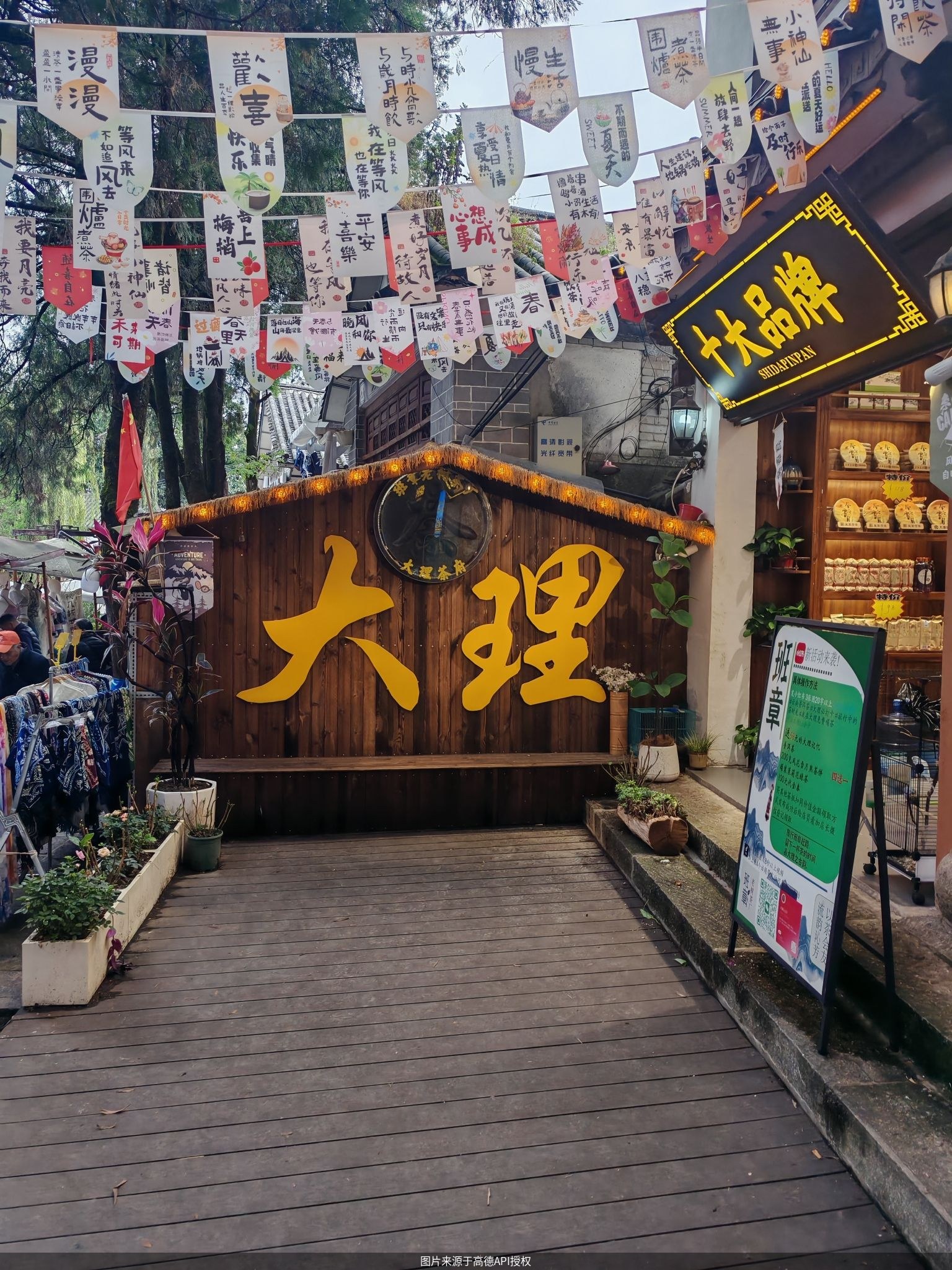
Honglongjing Street: Water Sounds and Lunch
Honglongjing is the town's most watery lane: a clear channel drawn down from the Cangshan streams along the street past teahouses, small eateries and inns. The eaves cut most of the noon sun, and a seat beside the channel is the town's most comfortable dining spot: order sour-spicy fish or a mushroom pot and eat slowly to the sound of water.
A small shrine to the Jade Emperor closes the lane; most people turn back at the water feature, but fifty more steps buy you a quiet flight of stone steps alone.
Dali Prefecture Library: The Right Way to Dodge the Sun
Two to four in the afternoon is when Dali's ultraviolet turns unreasonable, and the library is the best refuge. The old building hides in a lane, its courtyard shaded by mature trees and stone benches, its reading rooms cool and quiet, half local students and half long-stay readers. Travelers register with passport or ID and may sit without a card.
The local-documents room keeps old gazetteers of the Nanzhao and Dali kingdoms and Bai studies; ask the staff to open it if curious. Napping fifteen minutes by the window surprises no one. This is the Dali-style afternoon.
Renmin Road, Dali: Waiting for the First Lantern
Renmin Road at dusk changes shifts: young stallkeepers lay out handmade jewelry, used books and black-and-white photographs on cloth, cafes move tables into the street. Take a seat, order a local craft beer or lemon tea, and watch visitors and residents cross at the same corner. This is the loosest hour of the town.
Walk Renmin Road's upper stretch to its end and fields and the Cangshan range appear; half an hour before sunset the lane mouth offers a rare open view of the town.
| Getting around |
|
| Budget | Roaming the old town costs almost nothing in tickets; meals and coffee run RMB 80-150 pp. |
| Best time | Year-round; in high season the town is kindest before ten and after nine, with midday best spent indoors. |
FAQs
Where should I stay in the old town for a citywalk day?
Pick inns around Renmin Road or Honglongjing: plenty of night atmosphere without facing the main street, and mornings sleep late. Fuxing Road's flanks are livelier but louder; Yeyu and Guangwu roads run quieter with more eateries. Book at least a week ahead in high season.
Do I need tickets inside the old town?
The old town itself is free, and the wall can be climbed at marked points free or for a small fee per the posted notice. Old maintenance-fee checks no longer apply to walk-in visitors, though some courtyards and exhibits sell separate tickets in the tens of yuan, by interest.
Really hide in a library all afternoon? Does that waste the day?
It is a trade, not a waste: the plateau noon sun is brutal, and forcing a walk earns sunburn and fatigue. The library takes only two hours; after three the light softens and Renmin Road's dusk segment follows naturally. If indoors truly pains you, swap it for tea at a Honglongjing teahouse instead.
What does a citywalk day cost, and what safety notes apply?
Without shopping, RMB 100-200 a head covers it decently: two simple meals, two coffees and snacks. Safety is no worry in town; remember three things: watch wet stones and steps, walk dark lanes in company at night, and buy silver or jade only from clearly priced proper shops, never high-value goods from street stalls.