
Five days is Dali's comfortable floor: one day each for mountain, city, towns and lake plus a closing half day, every theme getting its full day with no rushing between. Days one and two base in the old town and clear the pagodas and Cangshan; day three runs north to Xizhou and Zhoucheng for Bai craft and courtyards; day four loops to the east shore with a lakeside night.
Day five returns to the old town to fill in missed lanes or a museum, then leaves unhurried. Dali's sights sit close together, so five days keep daily transport under two hours and hand the rest to experience.
Itinerary at a glance
| Day 1 · 09:00 | Dali Ancient City: Know the Town Before the Views |
| Day 1 · 19:00 | Honglongjing by Night: The First of Five Evenings |
| Day 2 · 09:00 | The Three Pagodas: Morning's Front Light |
| Day 2 · 15:00 | Bai Three-Course Tea: Scheduling the Etiquette |
| Day 3 · 08:30 | Xizhou Ancient Town: A Day of Craft and Courtyards |
| Day 3 · 14:30 | Zhoucheng Tie-Dye: Making Your Own Blue |
| Day 4 · 09:00 | Shuanglang and the East Shore: The Lake from the Other Side |
| Day 4 · 14:00 | Little Putuo and Wase: Reefs and Fishing Kitchens |
| Day 5 · 09:00 | Jizhao Nunnery on Cangshan: A Settling Finish of Mountain and Vegetarian Food |
| Day 5 · 17:00 | Erhai Park: The Five-Day Farewell View |
The route, stop by stop
Dali Ancient City: Know the Town Before the Views
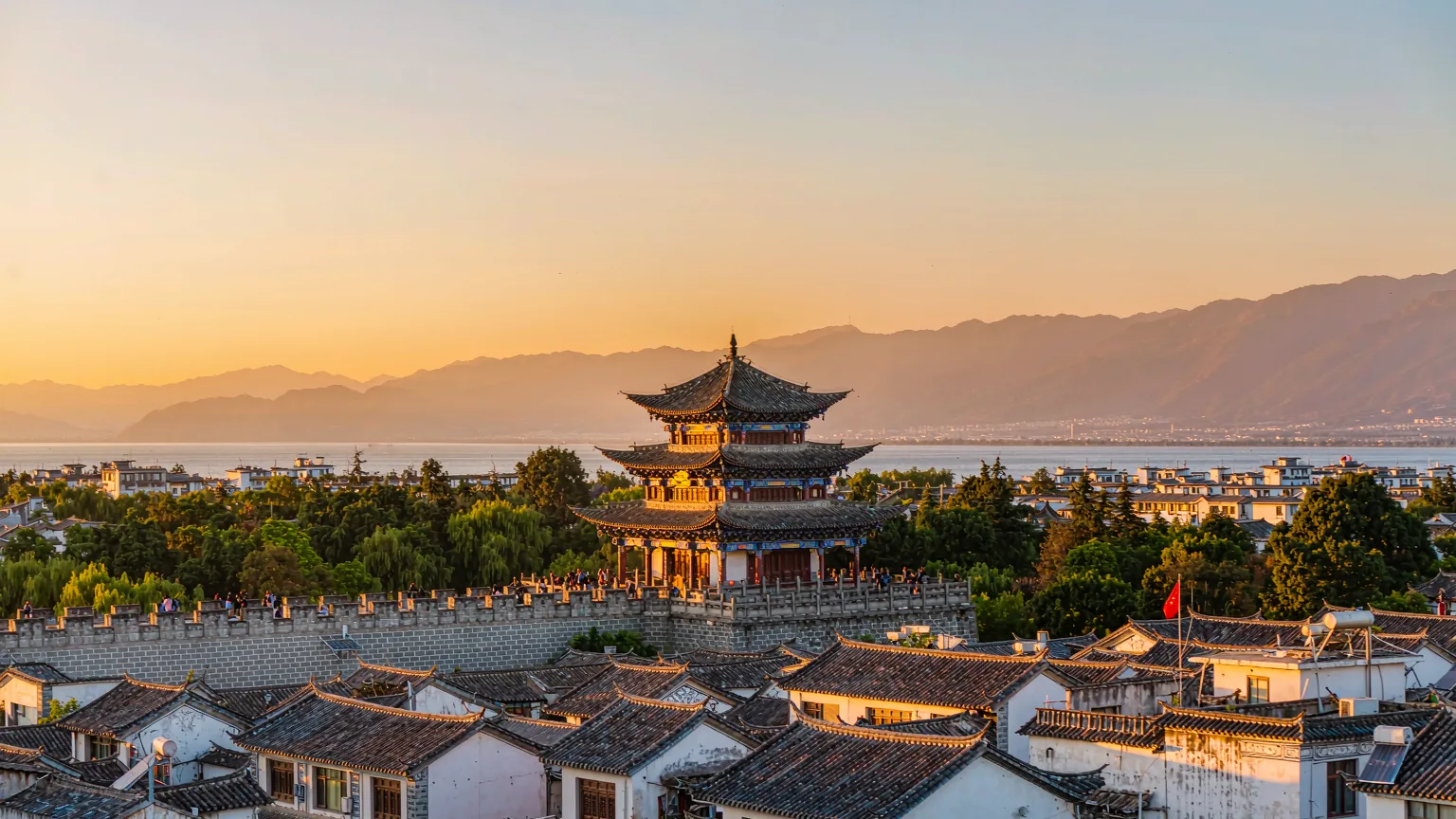
No expedition on day one; learn the old town thoroughly. Morning from the north gate down Fuxing Road, cutting into Renmin Road and Yangren Street midway, lunch by the Honglongjing channel. The old town is the base of all five days, so scout the supermarket, pharmacy and rental shops now, and the next four days run on entirely different efficiency.
In the afternoon climb the wall once or see the Nanzhao steles at the municipal museum, laying the historical ground for what follows. Sleep early; the mountain comes tomorrow.
Honglongjing by Night: The First of Five Evenings
Return to Honglongjing for dinner as the lanterns come on and the water sounds sharpen at night. Open and close day one with food: sour-spicy fish or a wild mushroom pot, with a pot of local tea. Dali's rhythm takes an evening to settle, and altitude drowsiness at night is no shame, so sleep early.
Afterward walk Fuxing Road home and memorize the night-lit lane mouths; the next four days will use this map daily.
The Three Pagodas: Morning's Front Light
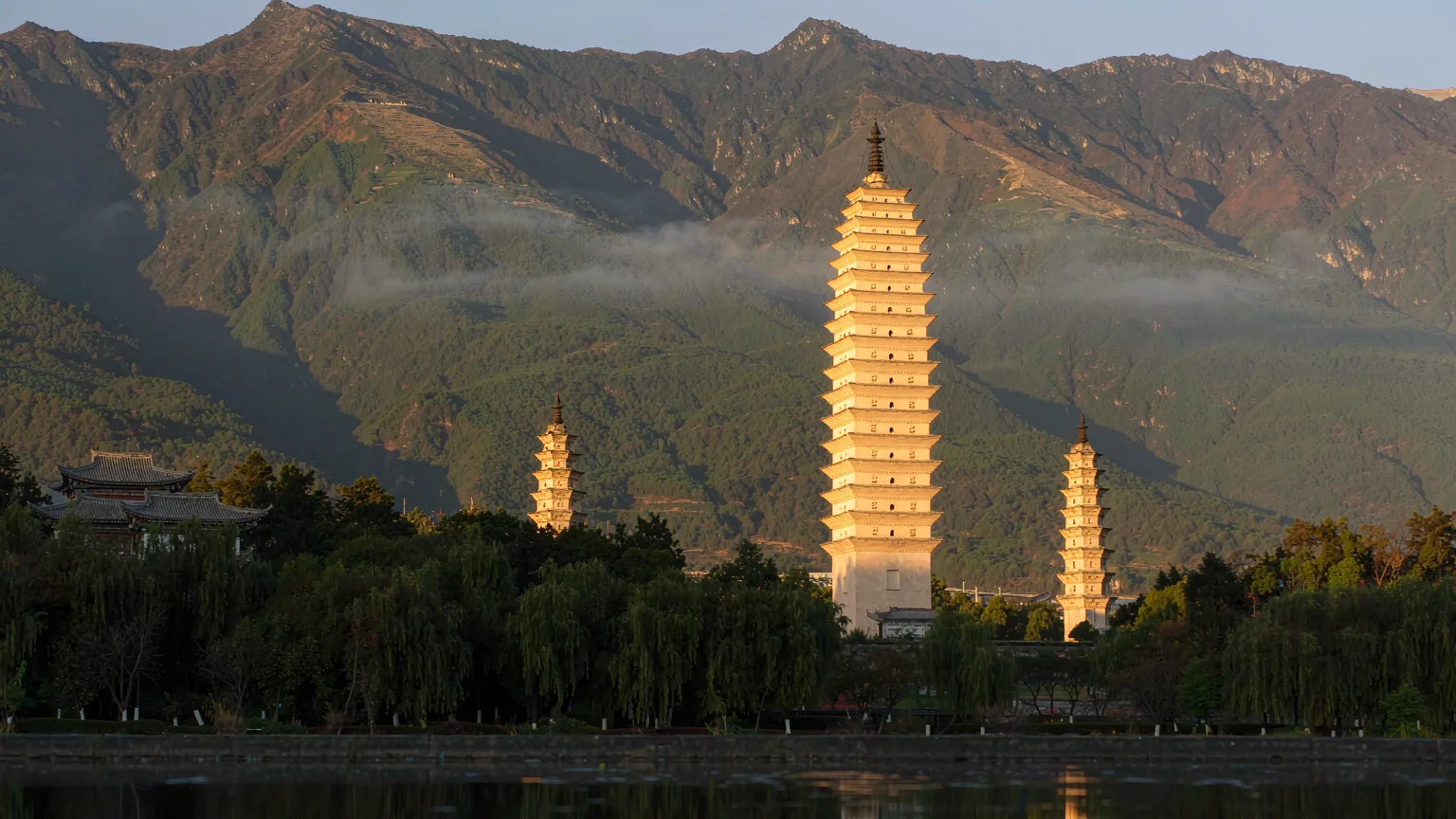
Day two belongs to Nanzhao and the Dali kingdom. Morning at the pagodas beats the pre-eleven front light and thin crowds; shoot the reflection park, then enter the temple grounds. Two hours here, focused on the towers' form and the temple's axis, two millennia of Buddhist history laid along one line.
Return to the old town for lunch and a noon nap; the midday ultraviolet is not worth braving. The day runs deliberately loose, saving legs for this afternoon and tomorrow.
Bai Three-Course Tea: Scheduling the Etiquette
Take a three-course tea sitting in the old town this afternoon, putting Bai etiquette formally on the five-day agenda. Afternoon sittings run thin on people and full on commentary, so the bitter-sweet-aftertaste sequence lands clearly. It previews Xizhou and Zhoucheng: etiquette and craft are the two legs Bai culture stands on.
After the session rest at your lodgings and keep the evening free. The key to five days is one blank block per day, and Dali is built for doing nothing.
Xizhou Ancient Town: A Day of Craft and Courtyards
Day three runs north to Xizhou. Morning for the Yan Family Compound and the old-house lanes, with freshly slapped baba as second breakfast. Xizhou concentrates the Bai's architecture; the three-bays-and-screen-wall grammar repeats down every lane. Morning groups are thin, and gate towers can be shot crowd-free.
A proper Bai lunch in town, then transfer to Zhoucheng, twenty minutes on, with the driver slowing through farmland worth the request.
Zhoucheng Tie-Dye: Making Your Own Blue
Afternoon in Zhoucheng goes hands-on. The Puzhen workshop session starts with binding and stitching, the master teaching folds and ties; two dips and an unpicking later, your own blue-and-white scarf is done on the spot. Only after making one do the shop prices suddenly compute.
A tie-dye museum and the old vats round out two hours. Return to the old town by evening and sort photos and purchases after dinner.
Shuanglang and the East Shore: The Lake from the Other Side
Day four crosses east. Morning in Shuanglang covers Yujii Island and the shoreline; looking west, Cangshan becomes the admired object for the first time. Give the lanes and art spaces two hours and eat fish lakeside at noon.
Then run the lake road south to Little Putuo and Wase, where reefs and shallows make the east shore another world from the west. Check into a lake-view room in Wase or Shuanglang for an east-shore sunset.
Little Putuo and Wase: Reefs and Fishing Kitchens
Little Putuo's reef shrine is compositional more than touristic, twenty minutes ample. The bank around Wase Wharf earns its keep after four, kind to long exposures and reflections.
Dinner goes to Caixiangyuan in Wase, sour-spicy fish and seaweed-taro soup being the east shore's standard answers. Walk the wharf after, the lake so quiet you hear water working the rocks.
Jizhao Nunnery on Cangshan: A Settling Finish of Mountain and Vegetarian Food
The last morning climbs. Round trip on the Gantong cableway, a walk to Jizhao Nunnery for its succulents and orchids, and the vegetarian lunch at the noon bell. Closing five days with a bowl of temple food is decent syntax: after four days of lake and towns, give the final hours back to the mountain itself.
Descend after lunch and fill the afternoon with the Erhai Moon Wetland or the old town's leftovers, leaving at ease by evening.
Erhai Park: The Five-Day Farewell View
Give the last hour before departure to Erhai Park. From the Tuoshan summit, five days of lake, city, towns and mountain resolve into one picture, Dali's farewell ceremony for travelers. As the sun drops through a Cangshan pass, the worth of walking slowly shows itself.
The park descends straight into Xiaguan and the railway station, luggage and transport aligned. Dali never needs finishing in one visit; five days are plenty of reason for a next one.
| Getting around |
|
| Budget | Mid-range five days run RMB 2000-3500 pp covering four nights, tickets and local transport, excluding long-haul travel. |
| Best time | March-June and September-November work best, blossom and autumn each with merits; dodge Golden Week and the densest holiday week. |
FAQs
Are five days too long? Does Dali deserve them?
It deserves them, provided you accept Dali's rhythm as slow rather than crowded: one anchor a day, the rest for doing nothing, tea and lanes. Checklist travelers can clear the main sights in three; five days are for people who intend to live there a while.
What does five days cost, and how do I trim it?
Mid-range runs RMB 2000-3500 pp covering lodging, tickets, local transport and meals, excluding travel to Dali itself. Savings sit in beds and rides: old-town inns at RMB 150-300 off-season are perfectly good, buses over taxis save tens a day, and shared charters cost half of solo hire.
Can the order flex? Lake loop first or mountain first?
It flexes on two principles: give the weather window to Cangshan, swapping an east-shore day when the cableway halts; and give your two strongest-leg days to the mountain and the rides. Lake first then mountain also works, moving the closing view from the park to the corridor, equally logical.
Which two days are the least cuttable?
The pagoda day and the Xizhou-Zhoucheng day: one is Dali's historical identity, the other the concentrate of Bai life and craft; drop either and the city shrinks to pure scenery. Cangshan and the lake loop flex most, swappable or compressible by weather and legs.