
Seven days turn travel into half-residence. The first three base in the old town, walking city, pagodas, mountain and corridor once each while learning the town's living radius; days four and five sleep on the east shore, looping the lake by day and listening to water at night; day six climbs north to Jizu Mountain for a Buddhist range's sea of clouds, and day seven lands on the Tea Horse Road at Shaxi.
No day carries more than two anchors, transport stays inside three hours, and large blank blocks stay reserved for sun, market stalls and nothing at all. Dali's depth is not more sights but finally having time to sit two afternoons in the same courtyard.
Itinerary at a glance
| Day 1 · 09:00 | Dali Ancient City: Day One's Job Is Fitting the Map into Your Head |
| Day 1 · 19:00 | Honglongjing: The First of Seven Nights |
| Day 2 · 09:00 | The Three Pagodas: A Slow Royal Day |
| Day 2 · 16:00 | Bai Three-Course Tea: The Etiquette Lesson Before the Long Stay |
| Day 3 · 08:30 | Jizhao Nunnery on Cangshan: Giving the Mountain Back to Itself |
| Day 3 · 15:30 | The Corridor at Caicun: A Loose Ride After the Descent |
| Day 4 · 09:00 | Xizhou Ancient Town: Reading the Town Like a Textbook |
| Day 4 · 14:30 | The Zhoucheng Dye Workshop: A Full Craft Session |
| Day 5 · 09:00 | Shuanglang: A Morning in the East-Shore Base |
| Day 5 · 13:30 | Little Putuo and Wase: An East-Shore Afternoon |
| Day 6 · 08:00 | Jizu Mountain: A Buddhist Range Out of Dali |
| Day 6 · 17:00 | The Ride Home: One Last East-Shore Night |
| Day 7 · 09:30 | Jianchuan Woodcarving: A Craft Lesson on the Way |
| Day 7 · 14:00 | Shaxi Ancient Town: The Week's Full Stop and Next Beginning |
The route, stop by stop
Dali Ancient City: Day One's Job Is Fitting the Map into Your Head
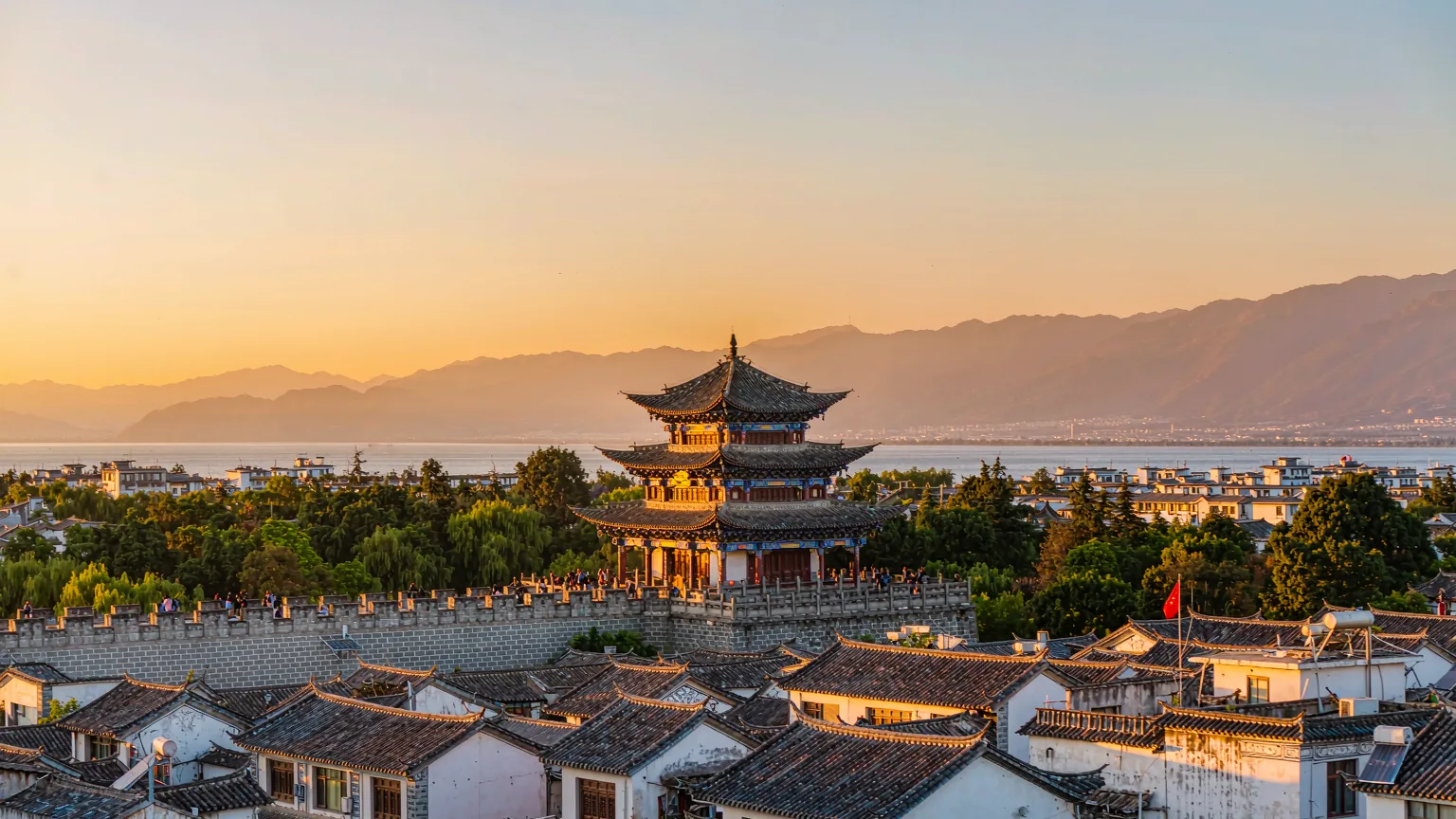
Day one of seven is deliberately blank. Morning walks Fuxing Road from the north gate to the south; afternoon works the flanking lanes, the boutiques of Renmin Road, the local kitchens of Yeyu Road, and the direction of the Guangwu Road market. The wet market deserves one serious pass, mushrooms, rusun cheese and flowers laid out by season, the first lesson in how Yunnan eats.
Take the first dinner by the Honglongjing channel and sleep early. Altitude adaptation hates heavy legs; the slower day one goes, the stronger the next six run.
Honglongjing: The First of Seven Nights
Night one starts learning the old town's evening from Honglongjing. Water runs under the lamps, teahouses and kitchens warm up, and off-peak the lanes belong to locals. Sit with a pot of tea until nine and memorize the night geography: which lane mouths to your bed, which road to the north gate, knowledge the week will reuse daily.
Night temperature swings hard, so carry a layer. Book no shows and no bars tonight; set the body clock to local time.
The Three Pagodas: A Slow Royal Day
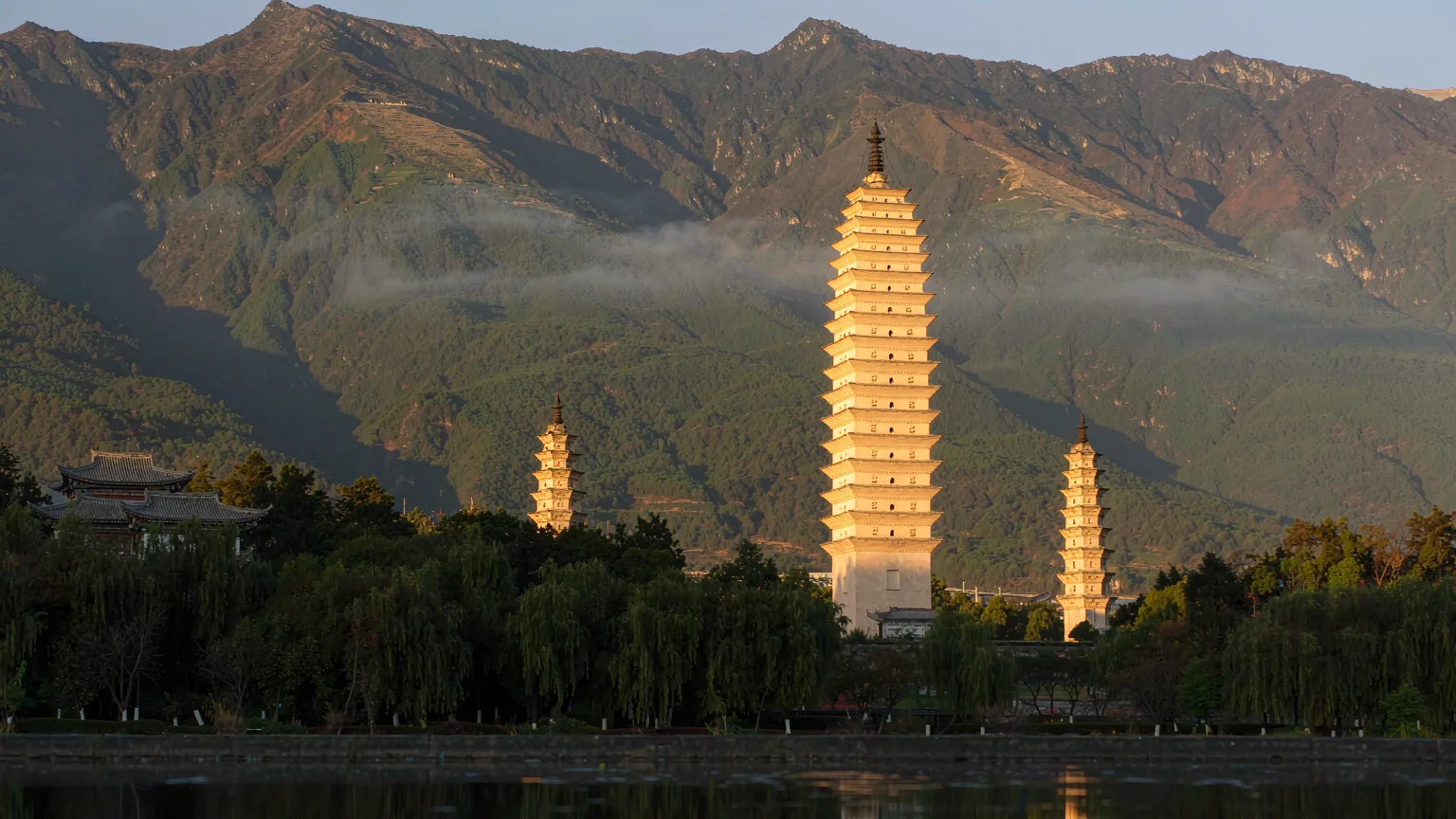
Day two gives the pagodas a full half day: shoot the reflection park in the morning and walk the temple axis slowly as pre-noon light draws the towers' outlines sharpest. Unlike a one-day sprint, spare hours justify the museum cabinet by cabinet; the labels on the pagoda finds and sculpture carry real information.
Nap back in the old town after lunch, then take a three-course tea sitting at dusk, joining history and etiquette in a single day.
Bai Three-Course Tea: The Etiquette Lesson Before the Long Stay
Placing the tea on day two rather than day one is deliberate: the week's back half runs to Xizhou and Zhoucheng, so learn the etiquette in town first and everything later gains a layer. Afternoon sittings carry the fullest commentary; beyond bitter, sweet and aftertaste, the master covers Bai wedding and guest customs, material nobody will narrate for you in the villages.
Dine nearby afterward and turn in early; the mountain comes on day three.
Jizhao Nunnery on Cangshan: Giving the Mountain Back to Itself
Day three goes wholly to the mountain. The Gantong cableway lifts you up in the morning; the nunnery's courtyard and vegetarian lunch are the appetizer, then the Yudai cloud path runs toward Qingbi Stream. This mid-cliff traverse stays gentle underfoot, cliff and fir one side, the whole Dali plain the other, scenery without a destination.
Mountain time runs on its own clock, and a passing cloud is reason enough to rest. Descend mid-afternoon and book a foot massage in the old town that night.
The Corridor at Caicun: A Loose Ride After the Descent
Skip the hotel after descending and roll straight into the corridor at Caicun for an evening stretch. Five o'clock's light slants onto the lake, the S-bend and drowned trees wearing a different face in the low sun. Ride an hour to sunset and eat at the wharf; the mountain and the lake change hands within one dusk.
The luxury of a long trip is not rushing: an unfinished corridor can wait for another day, return the bike tonight, and let tomorrow decide itself.
Xizhou Ancient Town: Reading the Town Like a Textbook
Day four runs north and gives Xizhou a whole morning. Hear the Yan compound's commentary to the end, then read Bai life as it lives in the lanes and the market: a local morning market where vegetable and tie-dye stalls split the street. Circle the fields outside on the raised paths; the crops of each season are Dali's calendar.
A Bai lunch in town, then transfer to Zhoucheng for dyeing, returning to the old town or moving east by evening.
The Zhoucheng Dye Workshop: A Full Craft Session
Seven days buy Zhoucheng far more time than a day trip: a full dyeing session runs past two hours from drawing to unpicking, with the old vats and the cloth-drying yards to tour besides. The fermented indigo smell, the stitchers' hand speed, the blue lengths swaying in the yard: these are the working floor of Bai craft.
Finished pieces need drying time; if the afternoon must move on, have the workshop ship your piece, postage a few tens of yuan.
Shuanglang: A Morning in the East-Shore Base
Day five relocates east for the next two nights in Shuanglang or Wase. Morning walks the lanes and Yujii Island first, with lake-view cafe terraces made for postcards. Seen from the east at this hour, Cangshan turns sculptural, complementing everything the west shore said about the lake.
Fish in town at noon; hand the afternoon to the lake road and the reefs.
Little Putuo and Wase: An East-Shore Afternoon
Head south along the lake road; Little Putuo's reef and shrine take twenty minutes, and the stretch worth slowing for is the shore around Wase, reefs reaching into the lake with afternoon light bouncing off the west shore like a diffuser over the water. Bring a book and sit the reefs out until sunset.
Dinner is fishing-kitchen food in Wase; the road home runs quiet at night, so walk with care.
Jizu Mountain: A Buddhist Range Out of Dali
Day six stretches the map to Jizu Mountain in Binchuan, the seat of the disciple Mahakashyapa, named for its cock's-foot silhouette. From Zhusheng Temple at the base to the Golden Summit temple, mix cableway and foot; the summit stands past three thousand meters, sunrise east, Cangshan and Erhai west, and when the cloud sea boils you ride it like a ship's prow.
A day return from Dali demands an early start, on the road before eight for a two-hour drive. Summit paths are step-heavy, so pace yourself; the cableway removes most of the climb.
The Ride Home: One Last East-Shore Night
Reach the east-shore lodgings by dusk and keep the last night itinerary-free. Eat slowly at a lakeside kitchen and edit the week's photographs. If energy survives the ride back, stop at a village en route; Binchuan's grapes and citrus in season cost almost nothing.
Sleep early: day seven crosses to Jianchuan and Shaxi, the longest driving day of the week.
Jianchuan Woodcarving: A Craft Lesson on the Way
Day seven runs north to Jianchuan. The county town and carving-town workshops open in the morning; watch a master cut a lattice door live, the layers from rough blank to fine relief legible at a glance. Jianchuan hands built most of Yunnan's old woodwork, and once you can read one door, the heritage halls of Dali and Kunming all come with a reference frame.
Lunch in the county town; workshop-direct stores price small pieces honestly, the best place in the week to buy gifts.
Shaxi Ancient Town: The Week's Full Stop and Next Beginning
The week's last stop is Shaxi, half an hour southwest of Jianchuan county town, where the Tea Horse Road's old market lives quietly in its valley: Sideng Street, the square, the ancient stage and Xingjiao Temple, horseshoe wear still on the flagstones. Sit with a coffee by the square and run the seven days of Dali back through your head.
Sleep in Shaxi or return to Dali, both fine. The town suits an ending and a next beginning: from here the old road runs on north toward Lijiang and Shangri-la.
| Getting around |
|
| Budget | Mid-range seven days run RMB 3000-5000 pp covering six nights, tickets and local transport, excluding travel to and from Dali. |
| Best time | April-June and September-November suit long stays; the rains bring afternoon showers, so keep mountain and lake days swappable. |
FAQs
What lodging plan saves the most hassle across seven days?
Three phases are sanest: three nights in the old town, two on the east shore, one in Shaxi or back in town. Keep lodging changes to three or fewer and store bags by phase at each inn. To simplify further, base the whole week in the old town and day-trip the east shore and Shaxi, trading longer daily drives.
What does a week cost, and where do budgets blow up?
Mid-range runs RMB 3000-5000 pp with six nights, tickets, local and charter transport, and meals. The leaks are charters and experiences: day-rated driving passes a thousand fast, and tea, dyeing and cableways are cheap singly but stack. Lodging swings up to double between seasons, so shoulder dates save the most.
Does the rainy season derail a seven-day plan?
Limited, with contingencies: Dali's rain falls mostly as afternoon showers and mornings hold steady. Pair Cangshan and Jizu as swappable, assigning whichever fits the forecast, and keep Shaxi as the rainproof backstop. Pack a light raincoat; July afternoons are near-ritual.
Is a solo seven days safe, and will it feel lonely?
On safety, Dali runs calm, so simply avoid remote lanes at night. Loneliness is a false problem: the resident culture of the old town and Xizhou is mature, and cafes, markets and hostel commons act as natural meeting grounds with high odds of finding companions. The solo trick: structure the days and leave the evenings open.