
Hohhot walks on two lines: the old city's temples and street life, and Xinhua Street's officialdom and modernity. This one-day route takes half of each: morning weaving among Dazhao, Saishang Old Street and Tongshun Lane, midday passing the Great Mosque and flatbread stalls, afternoon eastward along Xinhua Street to the General's Yamen, and dusk on a bench in Qingcheng Park.
Six kilometers all told, on foot plus two short bus hops. Hohhot's metro lines 1 and 2 skip the old city, so walking reads this temple city's strata best: prayer flags and a mosque minaret, Ming-Qing storefronts and 1990s housing blocks sharing a single street.
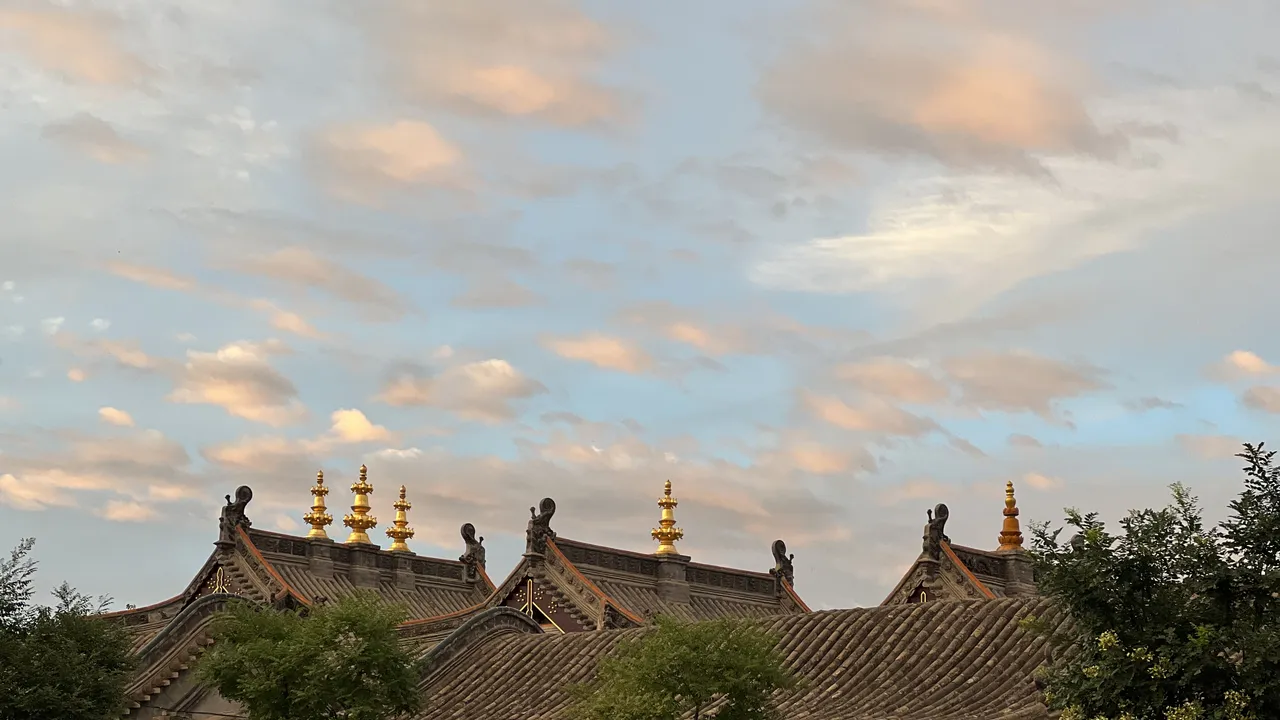
Itinerary at a glance
| 09:00 | Dazhao Temple and Saishang Old Street: The Old City's Heart |
| 11:30 | Tongshun Lane and the Great Mosque: Two Aromas on One Lane |
| 14:30 | The General's Yamen: Suiyuan City inside One Compound |
| 17:00 | Qingcheng Park: A Dusk Bench and the Lake Surface |
The route, stop by stop
Dazhao Temple and Saishang Old Street: The Old City's Heart
The walk opens at Dazhao. Morning incense just lit, the Silver Buddha hall hushed; circle the hall and exit through the rear into Saishang Old Street, the old city's commercial origin, where leather-picture, silver and dairy shops drop their plank shutters after nine.
The street rewards looking up: gate-lintel brickwork and painted eaves all live above eye level. At the street's end Tongshun Lane takes over and snack density spikes, the aroma of lamb shaomai, flatbreads and dried milk skin claiming the rest of the route.
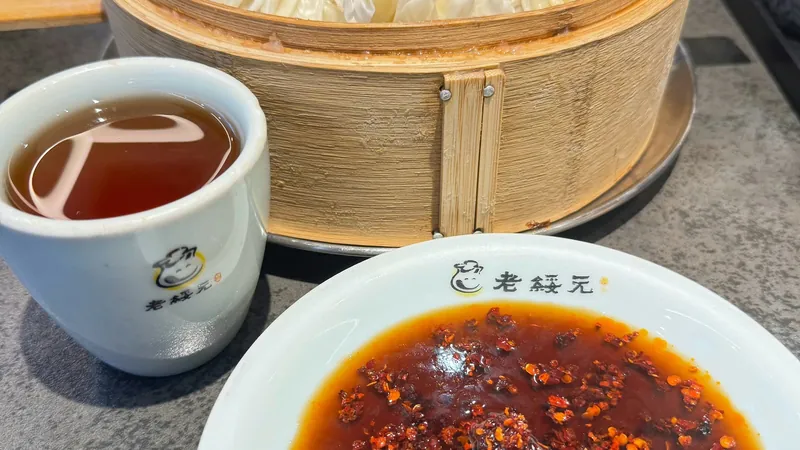
Tongshun Lane and the Great Mosque: Two Aromas on One Lane
Tongshun Lane is the old city's food spine, shaomai kitchens, offal-soup pots and flatbread ovens in a row. Near the lane's end stands the Hohhot Great Mosque, a Qing complex where Chinese halls and an Arab-style minaret coexist, the plainest footnote to this city's plural makeup.
Observe etiquette passing the mosque: knees covered, voices low, no disturbing prayer times. Buy a fresh-baked beizi flatbread in the lane and eat it walking, the Hohhot mobile breakfast.
The General's Yamen: Suiyuan City inside One Compound
East along Xinhua Street on foot or two bus stops, reach the General's Yamen. The Qing office of the Suiyuan garrison general ranks among the best-preserved frontier yamen compounds in the country, the plaque hailing the First Prefecture of the Southern Steppe over the main hall. Exhibits lay out Suiyuan's founding and Qing garrison systems, and the courtyard sequence teaches the spatial hierarchy of official architecture at a glance.
Watch the courtyard progression between the first and second halls, with couplets and steles carrying the detail. An hour covers it, and Xinhua Street's traffic returns you to the present at the gate.
Qingcheng Park: A Dusk Bench and the Lake Surface
The walk closes at Qingcheng Park. This old park, called home by generations of Hohhot residents, holds a lake, pavilions and square-dancing formations, the lakeside loop at its liveliest by dusk. The day resets here: buy a local dairy popsicle, sit by the water, and watch sunset tangle the water tower with tree shadows.
Buses cluster outside the gate; dinner nearby, or ride back to the old city for a make-up round of shaomai. That is the point of a citywalk: not every step needs a purpose.
| Getting around |
|
| Budget | Built on free streets and low-priced sights, about RMB 60-140 per person including transport and snacks. |
| Best time | Most comfortable on May-Sep evenings; in winter compress the outdoor stretches, the yamen and park still walkable. |
FAQs
Does this walk suit seniors and kids?
Yes, flat throughout and splittable: keep the old-city leg to Dazhao and the street, moving Tongshun Lane and the yamen to the afternoon. Kids favor the temple and park, and seniors get benches and cloisters at the yamen whenever needed.
Can visitors enter the Great Mosque?
Outside prayer times the courtyards and some halls open to visitors per posted notice. Dress below the knee and not sheer, women may bring a headscarf, enter prayer halls only by invitation, and never photograph worshippers. This is a living place of worship; quiet respect is the only ticket.
The old city has no metro, so what transport works best?
Flag-fare taxis cover most old-city moves, with dense buses but stop names that take adjusting. The optimal play: lodge inside the old city or along metro line 1, walk by day, and ride at dusk.
When does the old street look its best?
Around ten in the morning, shops open and light slanting into the lanes, the double window for walking and photos; after six, lanterns offer a second window, though shops wind down, better for eating and strolling than buying. A walk-plus-taxi mix works best.