
Hohhot's past stacks four layers: Ming temples, the Qing garrison city and a princess residence, a Liao-era White Pagoda, and the steppe chronology assembled in the modern museum. Three days take one each: the old city's temples and street life first, the yamen to the suburban pagoda second, museum and Zhaojun grounds closing the arc third.
Tickets run cheap and drives short; the real costs are legwork and interpretation. The temples carry deep background, so strongly consider the museum first or last (placed here on day three): with the chronology underneath, the temples yield twice as much.
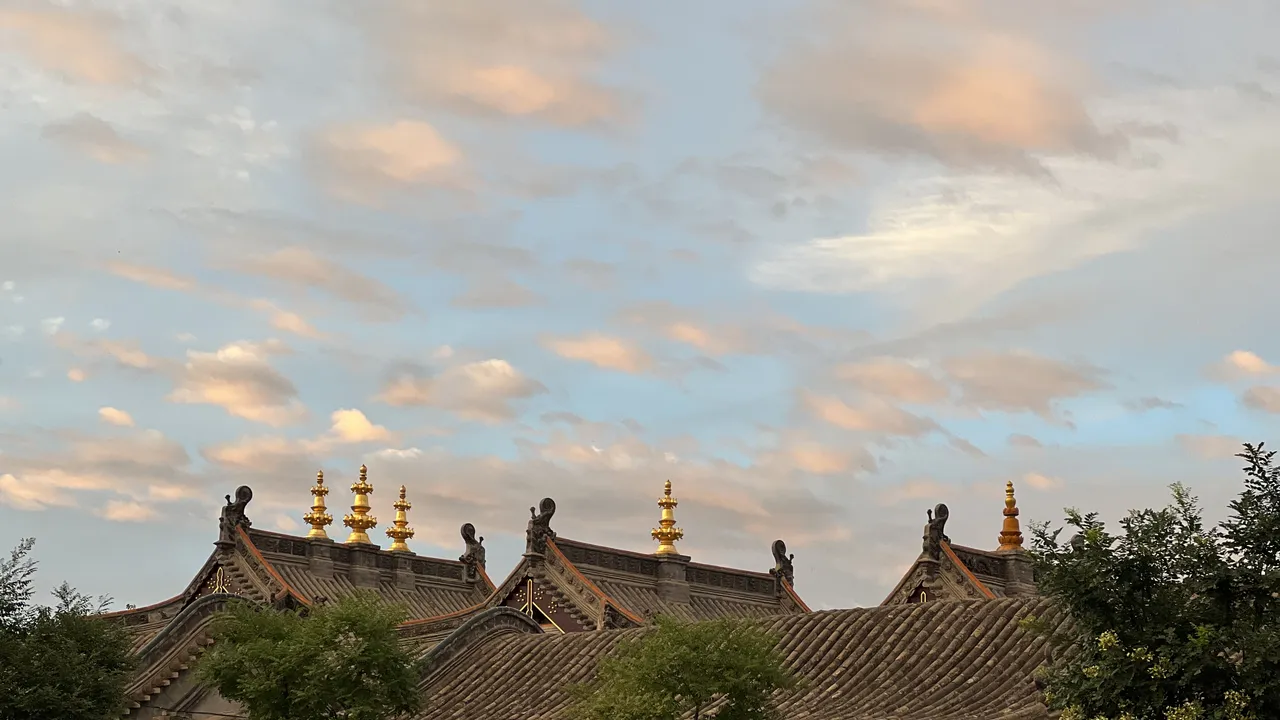
Itinerary at a glance
| 09:00 | Day 1 · Dazhao Temple: Where the Temple City Begins |
| 10:30 | Day 1 · Saishang Old Street and Tongshun Lane: The Street-Level Base Layer |
| 14:00 | Day 1 · Xilitu Zhao: A Different Bearing Next Door |
| 16:00 | Day 1 · The Great Mosque: The Minaret of the Hui Quarter |
| 09:00 | Day 2 · The Five Pagoda Temple: From Brickwork to the Stars |
| 10:30 | Day 2 · The General's Yamen: The Power Space of Suiyuan City |
| 14:00 | Day 2 · The Princess Residence: A Qing Princess in Hohhot |
| 16:00 | Day 2 · The White Pagoda (Wanbu Huayanjing Pagoda): A Liao Echo |
| 09:00 | Day 3 · The Inner Mongolia Museum: Three Days under One Roof |
| 14:00 | Day 3 · The Zhaojun Museum: Closing before the Green Tomb |
The route, stop by stop
Day 1 · Dazhao Temple: Where the Temple City Begins
Three days open at Dazhao. Founded in the Ming Wanli era, its trio of the silver Buddha, carved dragon and murals headline, the great hall's depth and caisson ceiling fusing Han and Tibetan vocabulary. Enter at dawn, incense just lit and tourists absent, the temple at its daily best.
An hour covers it, and the rear gate spills into Saishang Old Street. The morning's homework is building the temple city's spatial sense: Dazhao as center, several lamaseries within a one-kilometer radius.
Day 1 · Saishang Old Street and Tongshun Lane: The Street-Level Base Layer
Enter the old street through Dazhao's back wall, Ming-Qing storefronts shoulder to shoulder, brick-carved lintels and painted eaves rewarding an upward look. The street's end hands off to Tongshun Lane, flatbread ovens and shaomai kitchens scenting the morning's second half.
Shaomai for lunch, one liang with brick tea. The afternoon target waits across the lanes at Xilitu Zhao.
Day 1 · Xilitu Zhao: A Different Bearing Next Door
Xilitu Zhao stands a few hundred meters southeast of Dazhao, founded in the Ming and expanded in the Qing, elevated in status during the Kangxi reign as the seat of the Fourth Dalai Lama's teacher. Unlike the Silver Buddha temple's splendor, Xilitu's great hall rises taller, Tibetan detailing beneath Han double eaves, with the ancient Buddha hall worth a close study.
An unhurried hour, then walk toward the Great Mosque, giving the day's last stretch to the Hui quarter's streets.
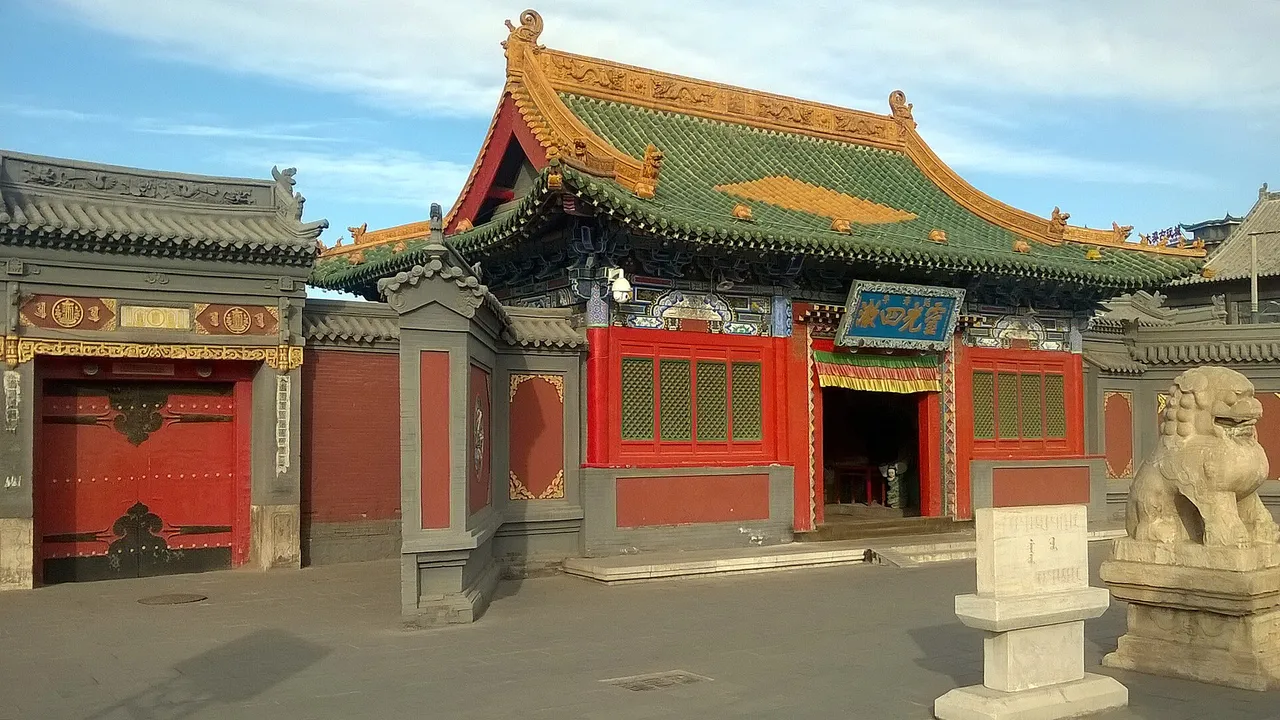
Day 1 · The Great Mosque: The Minaret of the Hui Quarter
The Hohhot Great Mosque is a Qing complex where Chinese halls and an Arab-style minaret coexist, a landmark of the city's plural makeup. Outside prayer times the courtyards open, brick and wood detail reading best in evening light.
Observe etiquette: knees covered, quiet visit, no disturbing prayer. Dinner afterward on the quarter's streets, where shaomai and flatbread aroma serve as navigation.
Day 2 · The Five Pagoda Temple: From Brickwork to the Stars
Day two opens at the Five Pagoda Temple. The Vajrasana Pagoda's brickwork peaks Qing craft, and the Mongolian star chart on the rear screen wall is a national rarity. Enter at opening, morning light raking the tower and resolving the carving's layers.
An hour covers it, the point living in the contrast between the gate's samsara reliefs and the chart behind: one tower holding two cosmologies, faith and science.
Day 2 · The General's Yamen: The Power Space of Suiyuan City
The morning's second stop is the General's Yamen. The Qing garrison general's compound survives intact, its first, second and third halls stepping down a central axis under the First Prefecture of the Southern Steppe plaque, with exhibits clarifying garrison systems and city founding. Metro line 1 serves the area.
The craft is reading the courtyard hierarchy and the couplets and steles. An hour, then lunch along Xinhua Street.
Day 2 · The Princess Residence: A Qing Princess in Hohhot
In the afternoon reach the residence of Princess Hejing Kejing, built for a Kangxi daughter married into Khalkha Mongol nobility, among the best-preserved Qing princess residences. The layout follows standard princely regulation, and exhibits clarify her ties to the northern frontier's politics.
Courtyards and garden survive well, an hour to ninety minutes. The area lacks metro service, so bus or taxi.
Day 2 · The White Pagoda (Wanbu Huayanjing Pagoda): A Liao Echo
Reach the suburban White Pagoda before dusk. The Wanbu Huayanjing Pagoda is a Liao brick tower inlaid with dozens of inscribed name-panels across dynasties, Chinese, Khitan, Jurchen and Phagspa scripts sharing one tower, holy ground for script-history lovers. The body is weathered, its eroded brick speaking more directly than any display case.
The compound is small, an hour. This being far from the center, close day two here and head straight back for dinner.
Day 3 · The Inner Mongolia Museum: Three Days under One Roof
The last day closes at the museum. After the temples, yamen, residence and pagoda, the chronology galleries click into place: Xiongnu, Xianbei and Mongol eras mapping automatically onto the buildings you walked, the goldwork, saddlery and documents in the cases answering what you saw in the field.
Two to three hours, prioritizing the Liao and Mongol zones. Out by noon, then south to the Zhaojun grounds.
Day 3 · The Zhaojun Museum: Closing before the Green Tomb
The three days' final stretch goes to the Green Tomb south of town. Wang Zhaojun's grass-crowned mound rises from the plain, the park and museum laying out alliance marriage, centuries of verse and artifacts. From the mound top the city's plain and far hills open in one sweep, giving three days of buildings and figures their geographic coordinates.
Two unhurried hours, back in town before dusk. A shaomai dinner ends the arc: the temple city's story told, the green city's table just beginning.
| Getting around |
|
| Budget | Tickets total about RMB 200-300; with transport and meals, three days run roughly RMB 800-1300 per person. |
| Best time | May-Sep are best; the museum and some houses close Mondays, so keep Mondays out of the plan. |
FAQs
Which day is the heaviest?
Day two: four points at the widest spread, the suburban pagoda alone thirty minutes each way. Cut the princess residence or move the White Pagoda to day three's morning, and the day relaxes at once. A guide saves half the effort.
Should the museum come first or last?
Both work: first gives the chronology that makes the temples legible; last lets you carry three days of questions to their answers. This plan puts it third, saving the temples' freshness for their actual setting. Ending with the museum adds resonance.
The White Pagoda is far out; is it worth the trip?
For script-history and architecture lovers, yes: four scripts on one tower's panels exist nowhere else. Casual visitors can drop it and narrow day two to three stops, comfort first. The pagoda's age justifies the drive.
Does temple-visiting order matter?
Yes: Dazhao first (grandest, fullest background), Xilitu second (a contrast in temperament), the mosque last (a plural close), delaying fatigue the longest. Leading with the best during your freshest morning is the universal rule. Give the best to your freshest morning.