
Five days read both of Hohhot's faces: three urban days from the old-city temples to museum and yamen, a full steppe day on day four to glance at Inner Mongolia's heart, and day five closing the culture at the Zhaojun grounds and the princess residence before an old-city farewell. The city-to-steppe ratio runs four to one, the pace relaxed.
The anchor is the steppe day: it wants good weather and fresh legs, so it sits on day four, with the first three days as adaptation and buffer alike. Should weather cancel the grassland, day five's content shifts forward; the five-day frame carries ample slack.
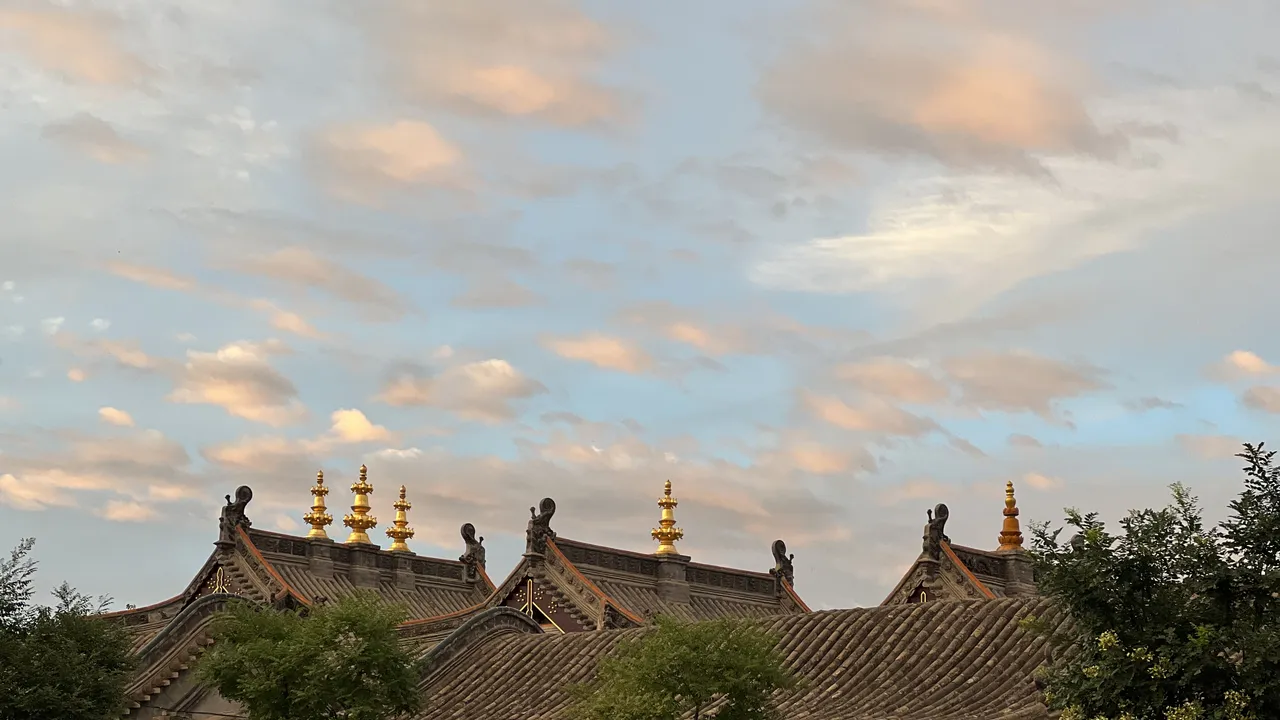
Itinerary at a glance
| 09:00 | Day 1 · Dazhao Temple: The Five Days' Preface |
| 11:00 | Day 1 · Saishang Old Street: First Lesson in Streets and Crafts |
| 14:00 | Day 1 · Xilitu Zhao: A Different Bearing across the Lanes |
| 09:00 | Day 2 · The Inner Mongolia Museum: The Steppe's Master Index |
| 13:30 | Day 2 · The General's Yamen: First Prefecture of the Southern Steppe |
| 15:30 | Day 2 · The Five Pagoda Temple: A Star Chart to Close the Axis |
| 08:00 | Day 3 · Xilamuren Grassland: The Road Out and the Welcome |
| 11:00 | Day 3 · Riding, Herders and Bonfire: A Complete Steppe Day |
| 14:00 | Day 4 · The Zhaojun Grounds: From the Steppe back to the Green Tomb |
| 16:30 | Day 4 · The Princess Residence: A Courtly Footnote |
| 09:30 | Day 5 · The Great Mosque and an Old-City Farewell |
The route, stop by stop
Day 1 · Dazhao Temple: The Five Days' Preface
Five days open at the temple city's heart. Dazhao's trio of silver Buddha, carved dragon and murals rewards slowness, and the on-site rooms tell how Hohhot grew around its temples, setting the coordinate system for the days ahead.
An hour and a half, then the old street, shaomai at noon, and Xilitu Zhao in the afternoon, day one living entirely within a kilometer of the old city.
Day 1 · Saishang Old Street: First Lesson in Streets and Crafts
The street rewards an upward look at its brick lintels, plank doors and painted eaves, with leather-picture, silver and dairy shops opening through the morning. Tongshun Lane at the street's end handles lunch.
Afternoon's Xilitu Zhao shares the old city, within walking distance. Day one schedules nothing far, tuning jet lag and legs.
Day 1 · Xilitu Zhao: A Different Bearing across the Lanes
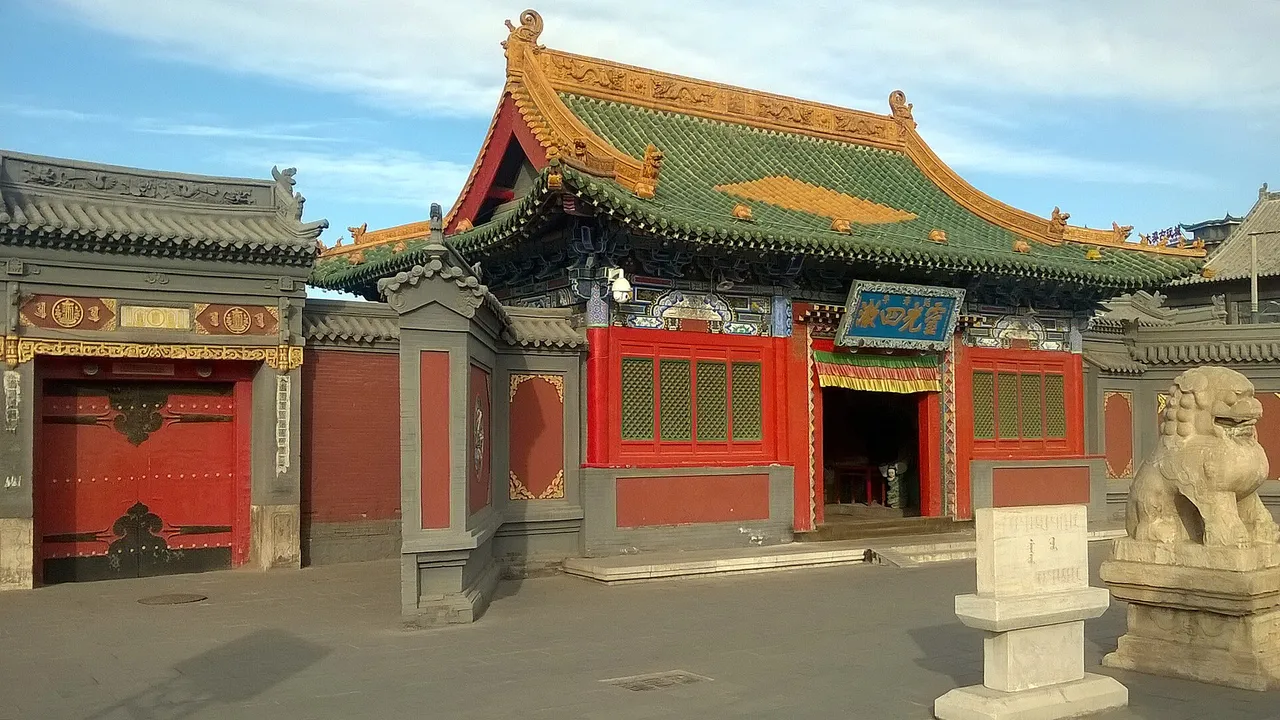
Xilitu Zhao was founded in the Ming and honored in the Kangxi reign as the seat of the Fourth Dalai Lama's teacher. Its great hall rises tall, Han double eaves fused with Tibetan detailing, a standing contrast to Dazhao's splendor; only seen together do the temples sketch the temple city's lineage.
An unhurried hour, a dusk stroll under the old street's lanterns, dinner and early rest before the museum-paced day two.
Day 2 · The Inner Mongolia Museum: The Steppe's Master Index
Day two's morning belongs to the museum. Dinosaurs to Mongol horses, Xiongnu to the Mongol era, two to three hours walk the full line of steppe nature and culture, with Liao pieces and Mongol goldwork exceeding expectations.
Lunch nearby, then Xinhua Street west to the General's Yamen, the city's east-west axis walked in one day.
Day 2 · The General's Yamen: First Prefecture of the Southern Steppe
The yamen ranks among the best-preserved frontier garrison compounds nationally, its halls stepping down the axis, exhibits exhausting Suiyuan's founding and garrison systems. Paired with the morning museum, it makes an institutions-versus-civilization diptych.
An hour, then Qingcheng Park at dusk for digestion, dinner in the mall district or the old city by mood.
Day 2 · The Five Pagoda Temple: A Star Chart to Close the Axis
Late afternoon suits the Five Pagoda Temple, its brickwork and the Mongolian chart behind reading best in slant light. One compound holding two cosmologies, faith and science, makes the axis's best full stop.
An hour, dinner back in the old city or along Xinhua Street. Day three's morning stays free, a preparation day before the steppe.
Day 3 · Xilamuren Grassland: The Road Out and the Welcome
Day three rolls out north early, the terrain turning to rolling hills and pasture ninety minutes later. Arrival opens with the welcome rites: the stirrup cup and khata being old steppe etiquette, a courteous sip sufficing.
After bags, learn the camp's layout: yurt rows, dining hall, the riding muster point. The free morning belongs to a first long look at the grass.
Day 3 · Riding, Herders and Bonfire: A Complete Steppe Day
Ride late morning, short loops to wetland or cairns or a longer run to a herder household, price and duration settled before mounting. The noon long-table feast of hand-torn mutton and toasting songs is the ritual core, tea in place of wine fully honoring the rite.
Watch the complete sunset at dusk, the Milky Way surfacing after dark, the bonfire party dancing till ten. Overnight in a yurt, temperatures crashing, jacket and long trousers non-negotiable.
Day 4 · The Zhaojun Grounds: From the Steppe back to the Green Tomb
Day four returns from the steppe at midday, the afternoon going south to the Zhaojun grounds. Wang Zhaojun's grass-crowned mound rises from the plain, the park and museum laying out alliance marriage and centuries of verse, footnotes of history for the breadth felt on the grass yesterday.
Two unhurried hours, back in town before dusk. The south-city taxi takes about twenty minutes, the return prebooked.
Day 4 · The Princess Residence: A Courtly Footnote
Reach the princess residence before dusk, the Kangxi daughter's marriage residence complete in its princely regulation, exhibits clarifying the politics of that union. Paired same-day with the Zhaojun grounds, it forms a twin narrative of two women and the northern frontier.
An hour, then old-city hotpot or shaomai, a hot broth welcoming the steppe-weary bones home.
Day 5 · The Great Mosque and an Old-City Farewell
The last day closes in the old city. The Great Mosque's Chinese halls and Arab-style minaret share one compound, landmark of the temple city's plurality, quietly visitable outside prayer times.
A final circuit of the Hui quarter and the old street, souvenirs squared away, and a noon shaomai writing the five days' full stop. Hohhot's goodness reveals itself only to those who stay.
| Getting around |
|
| Budget | Tickets and steppe activities total about RMB 500-800; with transport, meals and lodging, five days run roughly RMB 2200-3500 per person. |
| Best time | Jun-Aug green the steppe and soften the city; the museum closes Mondays, so keep it out of the plan. |
FAQs
Which day carries the flex?
Days four and five flex: if weather kills the steppe, Zhaojun and the residence move up; day five's free morning absorbs the White Pagoda or shopping gaps. Do not touch the first two days, bookings and fresh legs both rest there.
Overnight at the camp or day-trip the grassland?
The overnight earns its keep: sunset, stars and bonfire are the steppe's essence and all arrive at night. Sensitive to lodging hygiene or traveling with seniors and kids, the day trip still catches sunset and gives up stars and fire. Sunset, stars and bonfire all live at night.
Where does the five-day budget concentrate?
Steppe activities and charters dominate, then lodging and meals, with tickets a mere few hundred total. The budget lever lives in grassland extras: settle riding duration and routes clearly, and confirm group-meal standards ahead. Riding and add-ons carry the flex.
Is this route manageable with seniors?
The four urban days are pressure-free; skip riding and the bonfire, enjoying the feast and sunset seated. The steppe's day-night swing is the biggest variable, so pack layers and medicine and confirm the camp's medical point ahead. Ask the camp to arrange support ahead.