
Seven days is Hohhot at its most advanced: no sight-sprinting, the city read like a book by its pages. The first three days form the first volume, temples, lanes and a star chart; days four and five the middle volume, yamen, residence, the Green Tomb and a Liao pagoda; day six's full steppe day is the book's illustration spread; day seven writes the afterword in parks and one last shaomai.
The seven-day line's core asset is slack: every theme can take an extra hour, every meal can revisit yesterday's kitchen. Book three to five days ahead in season, watch the weather for the steppe day, and otherwise simply follow the rhythm.
Itinerary at a glance
| 09:00 | Day 1 · Dazhao Temple: Page One of the Chronicle |
| 14:00 | Day 1 · Saishang Old Street and Tongshun Lane: Street Life 101 |
| 09:00 | Day 2 · Xilitu Zhao: The Chronicle's Second Page |
| 14:00 | Day 2 · The Five Pagoda Temple: Two Cosmologies, One Tower |
| 16:00 | Day 2 · The Great Mosque: A Plural Close |
| 09:30 | Day 3 · The General's Yamen: From Temple City to Garrison City |
| 13:30 | Day 3 · The Inner Mongolia Museum: Assembling the Whole Thread |
| 09:30 | Day 4 · The Princess Residence: The Court's Steppe Branch |
| 14:00 | Day 4 · Moni Mountain Heritage Village: The Workshop Layer of Steppe Craft |
| 09:30 | Day 5 · The Zhaojun Grounds: The Green Tomb and the Alliance Narrative |
| 14:30 | Day 5 · The White Pagoda (Wanbu Huayanjing Pagoda): A Liao Time Capsule |
| 08:00 | Day 6 · Xilamuren Grassland: The Road Out, the Welcome and the First Look |
| 11:00 | Day 6 · Riding, Herders and the Long Table: The Steppe Daylight |
| 19:00 | Day 6 · Sunset, the Milky Way and Bonfire: The Steppe Night |
| 09:30 | Day 7 · Manduhai and Qingcheng Parks: The Chronicle's Afterword |
The route, stop by stop
Day 1 · Dazhao Temple: Page One of the Chronicle
Seven days open at the temple city's heart. Dazhao's trio of silver Buddha, carved dragon and murals earns a slow ninety minutes, the on-site rooms telling how Hohhot grew around its temples, the whole itinerary's preface.
Out into the old street, with day one's afternoon scheduled for nothing new, building spatial sense and appetite in the lanes, early to bed.
Day 1 · Saishang Old Street and Tongshun Lane: Street Life 101
The afternoon street is an observation class: brick lintels, leather-picture and silver shops behind plank doors, flatbread ovens and vegetable-shelling elders. Tongshun Lane bridges the stomach between lunch and dinner.
An after-dinner stroll under the lanterns sets the seven days' key of slow. Sort the week's luggage today, storage and daily wear kept apart.
Day 2 · Xilitu Zhao: The Chronicle's Second Page
Day two's morning goes to Xilitu Zhao, honored in the Kangxi reign as the seat of the Fourth Dalai Lama's teacher. Its tall hall fuses Han double eaves with Tibetan detailing; read against yesterday's Dazhao, the temple city's lineage gains depth.
An hour, lunch in the old city, the afternoon moving to the Five Pagoda Temple. Day two still lives in the old-city radius, where walking patience beats any checklist.
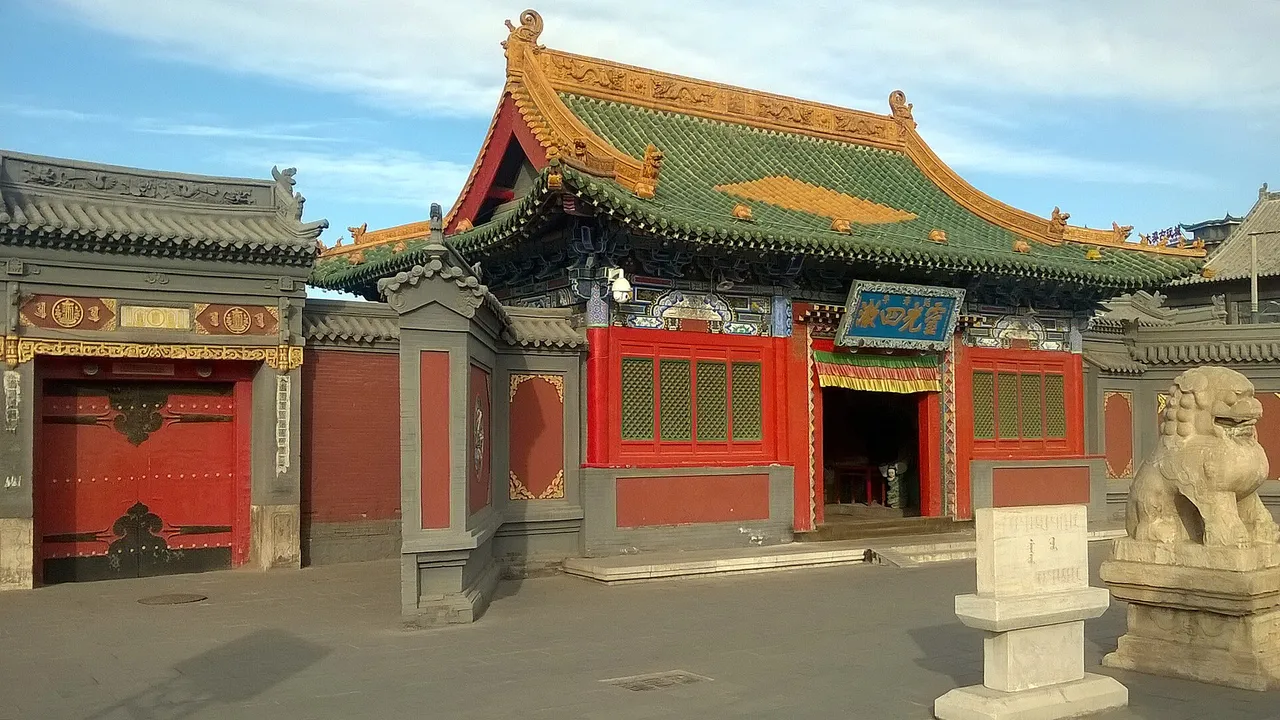
Day 2 · The Five Pagoda Temple: Two Cosmologies, One Tower
Give the afternoon temple real time: the brickwork peaks Qing craft, and the Mongolian star chart on the rear screen wall is a national rarity. Faith and science in one compound, thirty minutes each at minimum.
Ninety minutes at most, back to the old city by dusk for hotpot. The old city's core trio, Dazhao, Xilitu and the Five Pagoda Temple, now fully read.
Day 2 · The Great Mosque: A Plural Close
By evening reach the Great Mosque, Chinese halls and an Arab-style minaret in one compound, landmark of the temple city's plurality. Outside prayer times the courtyards visit quietly, brick detail best in setting light.
Dinner in the Hui quarter after, dense with flatbread ovens, offal pots and beef kitchens. Mind etiquette: knees covered, voices low, prayer times respected.
Day 3 · The General's Yamen: From Temple City to Garrison City
Day three switches narrative tracks to military and civil administration. The yamen served the Qing Suiyuan garrison general, halls stepping down the axis under the First Prefecture of the Southern Steppe plaque, garrison systems and city founding told in full.
An hour, metro line 1 serving the area. Lunch along Xinhua Street, museum in the afternoon.
Day 3 · The Inner Mongolia Museum: Assembling the Whole Thread
The afternoon museum is the assembly hall for everything seen so far: the temples' Buddhas, the chart's constellations, the yamen's institutions, each finding its larger backdrop in the galleries. Allocate time by taste across dinosaurs, mammoths, Liao and Mongol zones.
Two to three hours, rest in the old city after. Day three ends the twin story of temple city and garrison city; day four moves to residences and crafts.
Day 4 · The Princess Residence: The Court's Steppe Branch
Day four's morning goes to the princess residence, the Kangxi daughter's marriage home complete in princely regulation, exhibits clarifying the frontier politics behind the union, the week's most courtly stop.
An hour to ninety minutes, the morning quiet and bright. Lunch nearby, the heritage village in the afternoon.
Day 4 · Moni Mountain Heritage Village: The Workshop Layer of Steppe Craft
The afternoon heritage village clusters workshops of leather pictures, paper cutting, dough sculpture and horsehead-fiddle making, masters working on the spot, one question drawing out a craft's whole biography. The motifs seen in the temples these past days find their folk sources here.
Hands-on sessions run about thirty to a hundred yuan per craft, leather pictures and paper cutting suiting beginners. Two hours minimum, the village large, so pick workshops deep rather than wide.
Day 5 · The Zhaojun Grounds: The Green Tomb and the Alliance Narrative
Day five heads south to the Zhaojun grounds. The Green Tomb crowns the plain with grass, the park and museum laying out alliance marriage, centuries of verse and artifacts, a restrained complete telling. From the mound top, city and far hills open in one sweep.
Two unhurried hours, lunch south or back in town, then out to the suburban White Pagoda.
Day 5 · The White Pagoda (Wanbu Huayanjing Pagoda): A Liao Time Capsule
The suburban afternoon pagoda is the week's oldest stop. The weathered Liao brick tower stands inlaid with dynasties of inscribed panels, Chinese, Khitan, Jurchen and Phagspa scripts sharing one tower, holy ground for script-history lovers.
An hour in the compound, windy so bundle up. Return straight to town and sleep early, the steppe day dawning next.
Day 6 · Xilamuren Grassland: The Road Out, the Welcome and the First Look
Day six rolls north early, high-rises giving way to rolling hills and pasture ninety minutes later. The welcome rites of stirrup cup and khata are old steppe etiquette, a courteous sip sufficing. Learn the camp layout first, then take the first long look at the grass.
The free morning belongs to slopes, wind and cloud shadows. The steppe day's trio: sun protection, water, jacket, none optional.
Day 6 · Riding, Herders and the Long Table: The Steppe Daylight
Ride late morning, short loops to wetland or cairns or a longer run to a herder household, price and duration settled before mounting, gear checked. The household visit watches milk tea made and the sheep pens, tasting the fresh salty brew mandatory etiquette.
The noon long table is the ritual core: hand-torn mutton, blood sausage and stews in rotation, toasting songs rising again and again. Tea in place of wine fully honors the rite, then a half-hour yurt nap.
Day 6 · Sunset, the Milky Way and Bonfire: The Steppe Night
The steppe dusk lays groundwork from six, the horizon burning gold-red at sundown, the unobstructed full sunset no city offers. Half an hour after dark the Milky Way surfaces, the bonfire party dancing till ten.
Temperatures crash at night, jacket and trousers non-negotiable; a tripod helps star shots, phone night mode an easy start. Sleep in the yurt tonight and catch the steppe sunrise before returning.
Day 7 · Manduhai and Qingcheng Parks: The Chronicle's Afterword
The last day back in town belongs to two parks. Morning Manduhai runs quiet, shade and lake suiting a slow flip through the week's photos; afternoon Qingcheng runs lively, square dancers and chess elders the city's most vivid expression.
An evening return to the old city for the final shaomai, one liang with brick tea. Seven days of temples, yamen, Green Tomb, Liao pagoda and steppe file away over this meal; Hohhot's goodness needs a full week to taste whole.
| Getting around |
|
| Budget | Tickets and steppe activities total about RMB 700-1000; with transport, meals and lodging, seven days run roughly RMB 3200-4800 per person. |
| Best time | Jun-Aug flatter both steppe and city; the museum and some houses close Mondays, so keep Mondays out. |
FAQs
Is the seven-day pace too loose?
The looseness is design, not defect: Hohhot's sights run compact, and depth beats distance. Add the White Pagoda on day three or the heritage village on day five if restless, but keeping one blank block daily is the line's correct usage.
What if steppe-day weather turns bad?
Steppe activities flinch at thunderstorms and high wind, with camps halting riding and bonfires. The backup swaps days six and seven or compresses the grassland to a half day. Watch forecasts from two days out and stay in touch with your driver.
What about Mondays across the seven days?
The museum and yamen close Mondays, with the residence partly affected too. Place Monday on an old-city day or the steppe day, which knows no closing hours; the seven-day frame has ample slack to route around. Slotting Monday onto the steppe day is safest.
Who suits this seven-day line?
It suits slow travelers drawn to history, architecture and daily life, and deep family trips with school-age kids. Skip riding for seniors and toddlers; the rest is flat with low physical demand and a high patience threshold.