
Beyond the crowds of Xidi and Hongcun lies a looser layer of southern Anhui: Lu village's carving rivals Chengzhi Hall, Mukeng's bamboo sea lets you hear the wind, Chengkan lays its lanes by the eight trigrams, and Shendu's river unrolls like a handscroll. Three days without a single headline attraction.
The joy of a country route is process, not checklist: courtyards drying chili, elders playing chess at hall gates, scooters waiting at the ferry. Charter and roam is the right posture, and with slack time every stop earns an extra half hour.
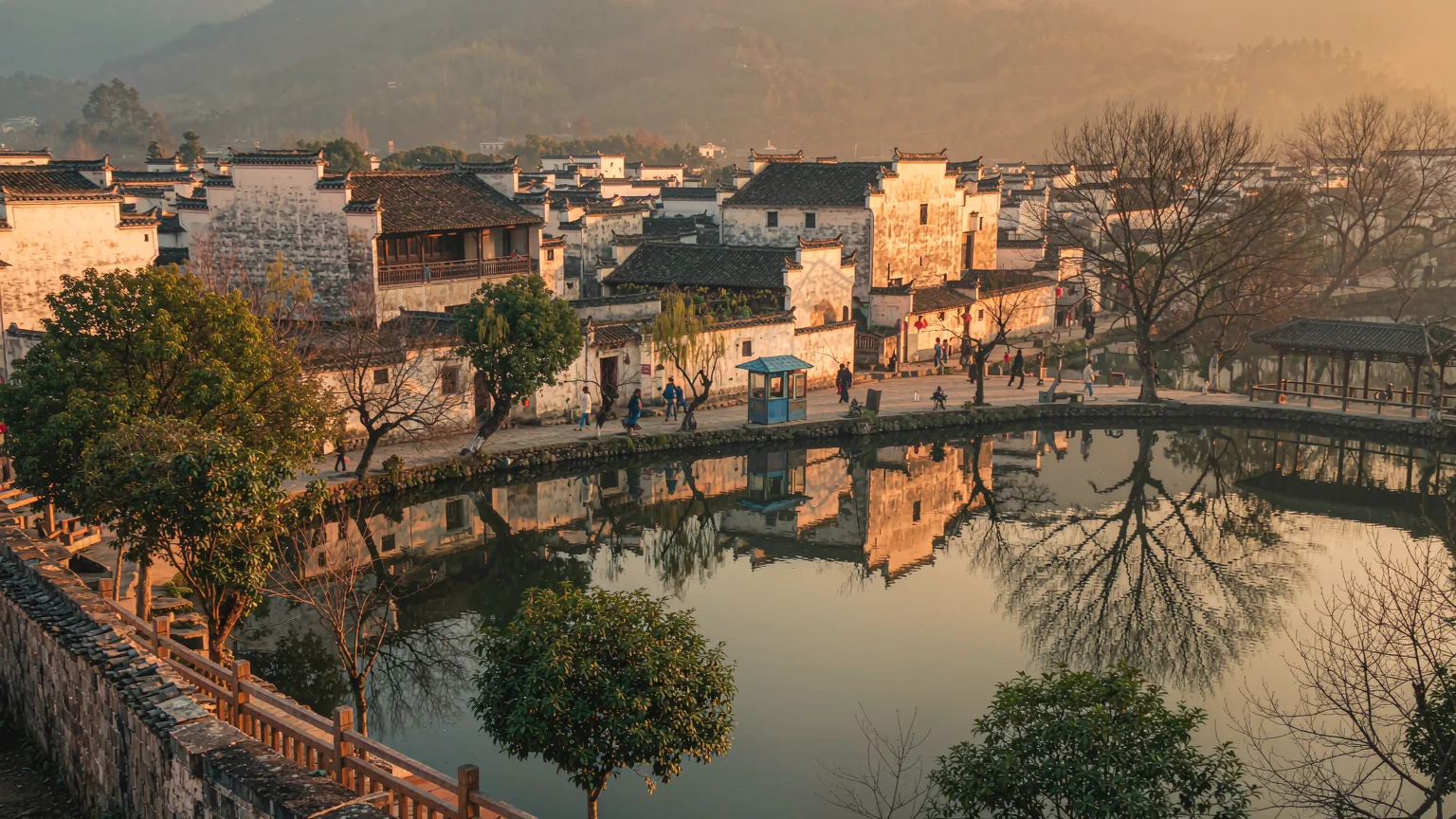
Itinerary at a glance
| 08:30 | Lu Village's Carved Mansions: An Underrated Peak of Woodcarving |
| 11:00 | The Mukeng Bamboo Sea: The Crouching Tiger Grove |
| 15:00 | Qishu Lake: Still Water beside Hongcun |
| 09:00 | Chengkan: A Village Laid Out by the Eight Trigrams |
| 11:30 | Qiankou Residences: A Ming Village Relocated into a Valley |
| 14:30 | Xixinan: A Small Village of Poplars and Streams |
| 08:30 | Shendu Port and the River Gallery: Where the Xin'an Opens Up |
| 13:30 | Yangchan's Earthen Towers: Huizhou's Other Branch, in Rammed Earth |
| 16:00 | Miantan and the Ride Home: A Riverside Evening |
The route, stop by stop
Lu Village's Carved Mansions: An Underrated Peak of Woodcarving
Lu village's Zhicheng Hall is called the carved mansion: its lattices, balustrades and lintels all dense with opera scenes and flowers, said to have taken twenty carvers twenty years. Where Chengzhi Hall gilds, this house shows knife work and patience, and the crowds are a fraction.
At dawn Lu village is nearly empty, villagers lighting stoves in the lanes. After the mansion, wander freely; an unhurried morning without a gate is how a country route should begin.
The Mukeng Bamboo Sea: The Crouching Tiger Grove
The Mukeng bamboo sea is a valley of moso groves and the location of Crouching Tiger's bamboo fight. When wind passes, the whole valley sways together, green waves rolling off the ridge, and the sound heals more than the sight.
The loop trail takes about ninety minutes on gentle grades. In summer the grove is natural air conditioning, five degrees below town at least; in late autumn the bamboo turns gold-green, another temperament entirely.
Qishu Lake: Still Water beside Hongcun
Qishu Lake sits three kilometers south of Hongcun, a reservoir turned quiet, open water where morning fog walks the surface, and at extreme low water the drowned old village below occasionally shows. Commerce is nearly absent, just field paths and egrets circling.
Dusk is the photographers' secret: the sunset dyes the lake gold-red with the Huangshan skyline behind. If any stop on three days deserves pure idling, this is it.
Chengkan: A Village Laid Out by the Eight Trigrams
Chengkan styles itself the bagua village, laid out by the Kan trigram and its water: the Zhongchuan river loops the village, three streets and ninety-nine lanes interlacing like a maze. Locals call it the first village of the south-of-the-river lands, home to the Luo clan since the Tang.
The Baolun pavilion hall sets the ceiling for Ming ancestral architecture, beams and painted surfaces superbly kept. Getting lost here is part of the design; follow the water and you will find your way out.
Qiankou Residences: A Ming Village Relocated into a Valley
Qiankou is an open-air museum assembled by relocating endangered Ming buildings into one valley, and it is free. A dozen-plus period houses, halls and an archway sit in village formation, each one enterable for beams and carving, far better than peering over rails.
Architecture lovers can spend two hours, ordinary visitors one. This is the clearest textbook of Huizhou building, and after it every village reads itself.
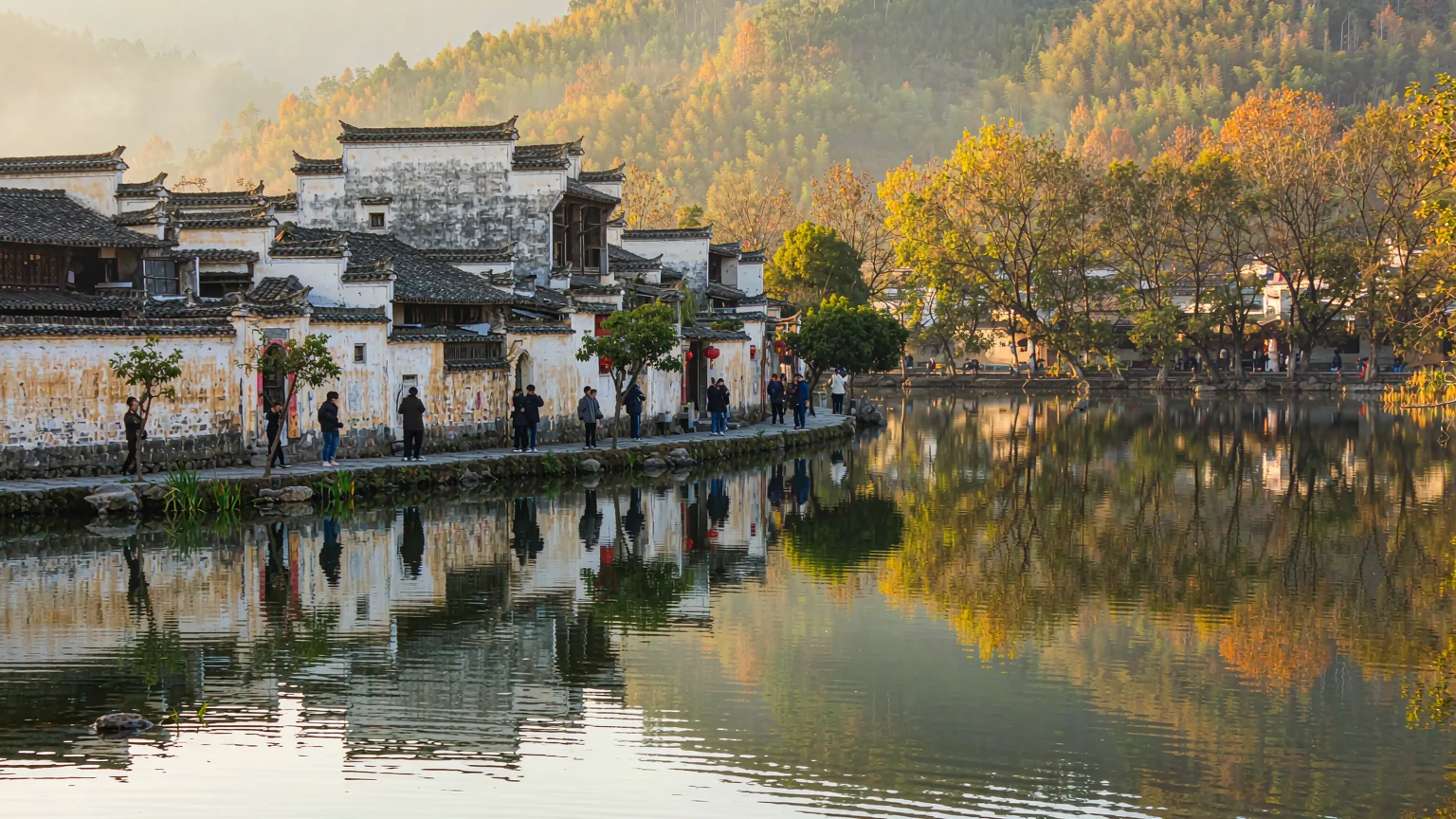
Xixinan: A Small Village of Poplars and Streams
Xixinan is a quiet village in the Huizhou district, its entrance shaded by a century-old poplar grove along a feeder of the Fengle river, summer canopy thick and streams ankle-deep, the locals' weekend swim and picnic ground. Old houses sit by running water with none of the park polish.
Designers have lately turned some mansions into cafes and guesthouses; one drink under the trees and the afternoon is earned. This village exists for an entire afternoon of doing nothing.
Shendu Port and the River Gallery: Where the Xin'an Opens Up
Day three reaches Shendu in Shexian, where the Xin'an river gallery begins. The water opens wide between green flanks, spring rapeseed lining the banks and autumn mist on the current, and the correct way to see it is a boat drifting downstream.
The cruise runs about two and a half hours with stops at old villages like Tanxiao, famous for camphor trees and loquat groves. This river was the merchant road to Hangzhou, and two hours aboard is half a history of the Huizhou trade.
Yangchan's Earthen Towers: Huizhou's Other Branch, in Rammed Earth
Yangchan is a hilltop Zheng-clan village that, priced out of brick by its remoteness, built every wall in rammed yellow earth, accidentally growing the only earthen-tower cluster in southern Anhui. Two hundred-plus ochre blocks stack up the slope, blazing with chili and corn every autumn.
Village shuttle vans handle the winding access road, and footpaths string the viewpoints inside. This is the day's most photogenic stop, ochre walls against drying reds and golds, a cover shot at random.
Miantan and the Ride Home: A Riverside Evening
Miantan sits on the north bank, known for loquats and the folk custom of the nine-surname fishermen. At dusk the boats come home and the riverside lane smells of fruit and cooking smoke; in season, two catties of just-picked white loquats make a sweet ending.
Miantan back to Tunxi is about an hour by car, or head straight for Shexian North station. A country route bends easily, and scheduling the last drive at sunset is this route's own way of saying goodbye.
| Getting around |
|
| Budget | Off-track entries mostly sit in the tens of yuan, RMB 400-800 pp over three days; the charter is the big line item. |
| Best time | Year-round; spring fields and autumn drying racks add color, while bamboo and rivers are the summer coolers. |
FAQs
How does this route trade off against the classic Xidi-Hongcun line?
It depends on crowd tolerance: first-timers should take the classic line, Hongcun deserves its reputation once; repeat visitors or queue-haters gain an order of magnitude on the country route. The two also hybridize well, half classic and half country across three days is the smartest recipe.
Do the off-track sights need advance tickets?
Lu village, Mukeng and Chengkan sell at the gate, with online purchase skipping windows on holidays; Yangchan's shuttle queues in season, so arrive early. For the cruise, phone a day ahead to confirm sailings, though tickets themselves sell on site.
What if it rains for three days?
The country line fears sun, not rain, and a light rain is a bonus: fog in the bamboo, mist on the river, deeper tones on the earthen walls. Adjust by shortening viewpoint walks, putting long drives and indoor stops like Qiankou and the halls under the heaviest rain, and packing waterproof shoes and coats.
How do I find a charter driver, and what does it cost?
The guesthouse front desk is the first channel, since local drivers know every gate and transfer point; expect RMB 400-700 per day by vehicle class, and a three-day package negotiates near RMB 1500. Confirm fuel and tolls included, driver meals separate, and agree surge rules for itinerary changes upfront.