
Kashgar's old town ranks among China's finest walking quarters: earthen architecture, living street life and workshops still at work, all packed into two or three square kilometers. The line starts at the east gate ceremony, threads the artisan bazaar lanes, idles away noon on the century-old teahouse's upper floor, and ends atop the Gaotai dwellings above the Tuman River, the whole skyline at your feet.
All on foot, gentle in effort yet tangled in lanes, the trick is to navigate by people, not maps: follow the smell of naan ovens and the ring of coppersmiths' hammers. The town's beauty lives in the lanes themselves, not in pin-points; lower the checklist and raise the eyes.
Itinerary at a glance
| 09:30 | The East Gate Ceremony: The Old Town's Morning |
| 11:00 | The Craft Bazaar: Living Trades at Work |
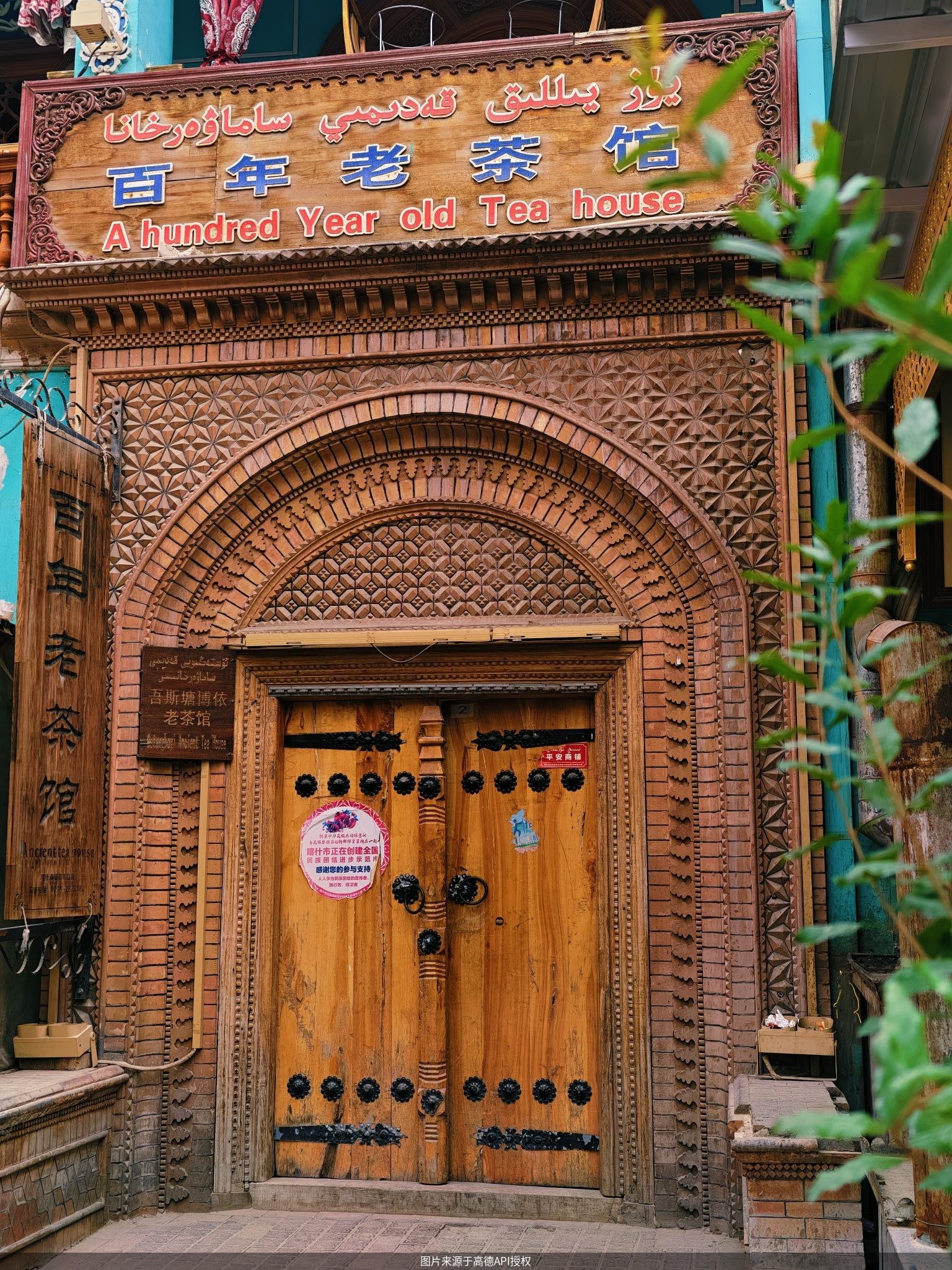
| 14:00 | The Century-Old Teahouse: Slower Hours Upstairs |
| 17:00 | The Gaotai Dwellings: Dusk on the Cliff Edge |
The route, stop by stop
The East Gate Ceremony: The Old Town's Morning
Begin at the east gate ceremony: drums, the unbolting gate, a welcome dance, and then the crowd disperses into the lanes as the town starts its day. Watch the opening minutes, then move, leaving the crowd behind for the deeper alleys.
Early light is the softest in the city: the ochre walls' hue, residents sweeping doorsteps, the smell of naan fresh from the pit. At this hour the lanes belong to locals, so soften your step and greet with a smile.
The Craft Bazaar: Living Trades at Work
The craft lanes zone by trade: in the copper alley smiths hammer out ewers and trays stroke by stroke, the wood lane flies shavings, pottery wheels spin as they have for generations, and naan bakers slap dough onto oven walls. None of this is performance; these are working shops taking real orders.
Craft-watching etiquette is watch first, ask second, and seek consent before shooting; most artisans happily demonstrate. A small copper piece or pottery bowl starts at a few tens of yuan, far warmer than mall souvenirs.
The Century-Old Teahouse: Slower Hours Upstairs
At noon the century-old teahouse is the old town's lounge: its timber-railed upper floor fills with local elders over pots of brick tea and naan chunks, while folk players sing to the rawap after lunch. A film location once, yes, but its virtue is not the cinema, it is that time genuinely slows here.
Shoes come off upstairs where signed, and tea refills freely. The lyrics may pass you by; watch the elders' hands and nods instead, teahouses like this growing rare in China.
The Gaotai Dwellings: Dusk on the Cliff Edge
At dusk, reach the Gaotai dwellings above the Tuman River, terraced clusters of earthen housing stacked up the loess bluff, its over-street bridges and cantilevered balconies the most recognizable silhouette of old Kashgar; the renovated open zone admits visitors, and the river with East Lake beyond reads best in evening light.
From the bluff top, the pre-sunset panorama of the whole town is this walking line's terminus. Wind comes off the water carrying moisture and grill smoke, the exact note for the day's close.
| Getting around |
|
| Budget | The old town is free, Gaotai entry per posted prices, teahouse spending RMB 15-40, and a full day lands near RMB 80-150 pp before meals. |
| Best time | April-June and September-October walk best, with summer split strictly into morning and evening legs; the craft bazaar hums in its working morning, while the teahouse hosts folk musicians after lunch. |
FAQs
Can I get lost in the old town, and what then?
You will get lost, and that is half the fun. The fix is simple: the town is small, and any lane reaches a main road within twenty minutes outward; steer by minarets and the main alleys, or ask a resident at a shopfront, most happily point the way. Offline map plus the sun's bearing makes it doubly safe.
Is the old teahouse overrun or too touristy?
Famous indeed, yet its base color remains an elders' teahouse: regulars play chess and chat in the inner seats year-round. Dodge the tour-peak around three in the afternoon and come near eleven or at dusk; order an extra pot and linger, and the experience changes completely.
Is Gaotai worth a dedicated visit?
Yes, an irreplaceable piece of the townscape: the scale of earthen housing suspended on the bluff exists nowhere else. Parts still rotate through renovation, so confirm open zones via official notices beforehand; schedule it at dusk for the highest viewing value.
How far is the day's walking, and how hard is it?
Six to eight kilometers with few cumulative stairs, gentler than most old-town lines. The real cost is midday sun: in summer compress eleven to four into teahouse and indoor time, walking lanes at both ends, and the energy math turns easy.