
Kashgar's heritage runs in two layers: the living old town and its memories in the city, mosque, craft bazaar, teahouse, Ban Chao's fort and the Fragrant Concubine's tomb; and the layer in artisans' hands beyond it, the Yengisar pottery village preserving Uyghur ceramics whole. Three days, one pass through each layer, is how Kashgar is truly read.
Day one belongs wholly to the old town, ceremony, craft lanes, teahouse, Gaotai and the night market; day two to venues and tombs, museum, Pan Tuo, Xiangfei and the muqam park; day three leaves for Yengisar. In-city movement is walking; only day three needs a charter.
Itinerary at a glance
| 09:00 | Id Kah Mosque: The Heritage Line's Starting Point |
| 10:30 | The Old Town's Craft Lanes: The Memory of Trades |
| 14:00 | The Century-Old Teahouse: A Rest Before the Afternoon |
| 16:30 | The Gaotai Dwellings: Heritage on the Bluff |
| 20:00 | The Han Bazaar Night Market: The Line's Smoky Close |
| 09:30 | The Kashgar Museum: Day Two's Underdrawing |
| 12:00 | Pan Tuo City: The Eastern Han Fort |
| 14:30 | Xiangfei Garden: An Afternoon of Tomb and Legend |
| 17:00 | The Twelve Muqam Folk Park: The Musical Footnote |
| 09:00 | The Yengisar Pottery Village: Day Three at the Kilns |
The route, stop by stop
Id Kah Mosque: The Heritage Line's Starting Point
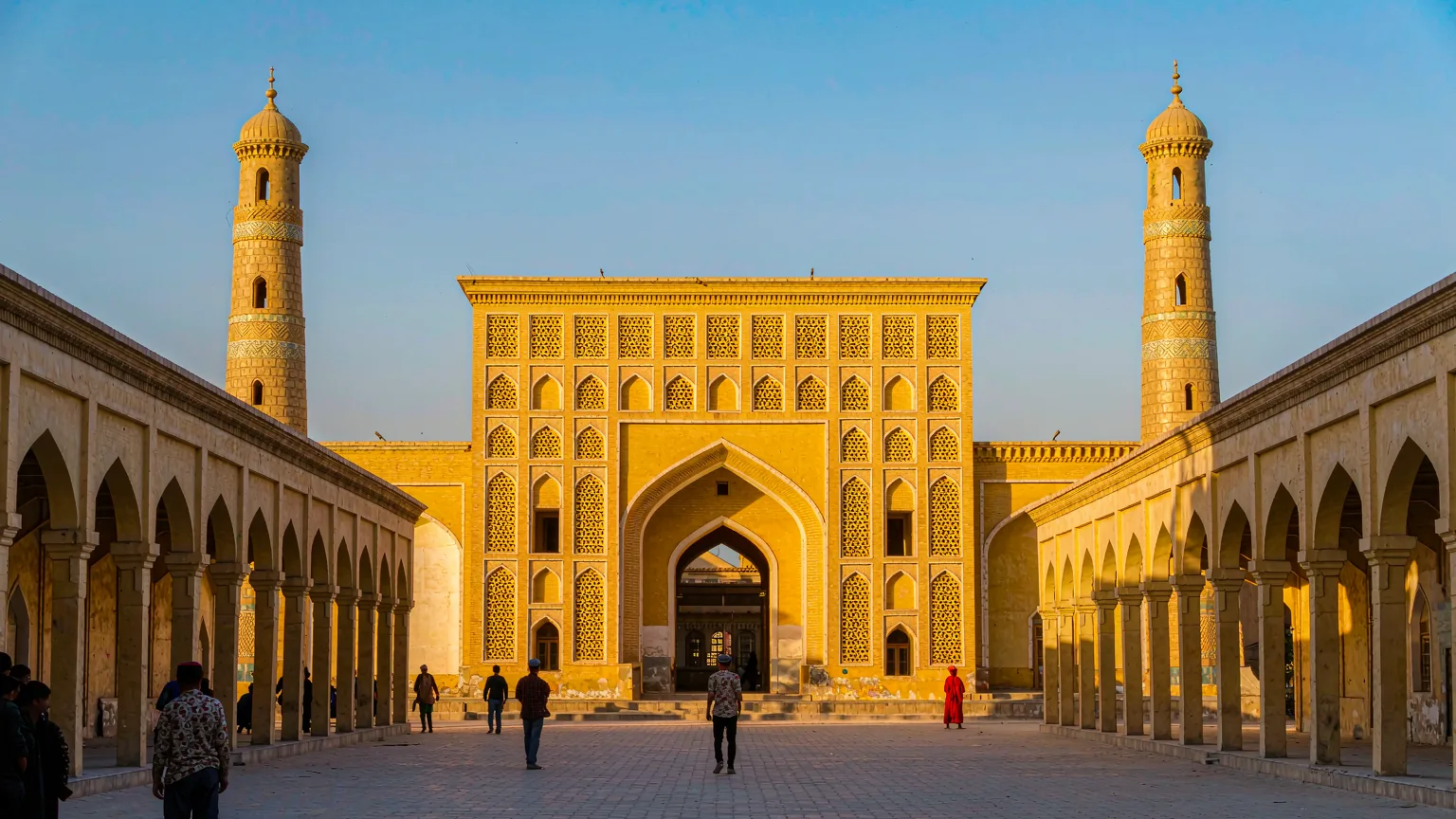
Three days open at the city's spiritual landmark. For centuries Id Kah Mosque has been Kashgar's heart, its square beneath yellow walls and minarets witnessing every major moment of this oasis town; visit in the late morning outside prayer, halls, courtyard and pulpit held solemn.
The takeaway is understanding over photographs: the symbiosis of mosque, square, bazaar and old town is the prototype structure of a Central Asian city. Once that clicks, three days of lanes stand up in relief.
The Old Town's Craft Lanes: The Memory of Trades
Walk from the mosque into the old town as the craft lanes hit their working stride: coppersmiths' hammers, the hum of pottery wheels, the scent of shavings from wood shops, zoned trade by trade. These are working businesses, not stage sets, and watching artisans labor is itself the heritage.
The pace is slow: two shops per lane beat a dozen skimmed. Small copper pieces and pottery bowls price kindly for buyers, carrying far more provenance than main-street souvenirs.
The Century-Old Teahouse: A Rest Before the Afternoon
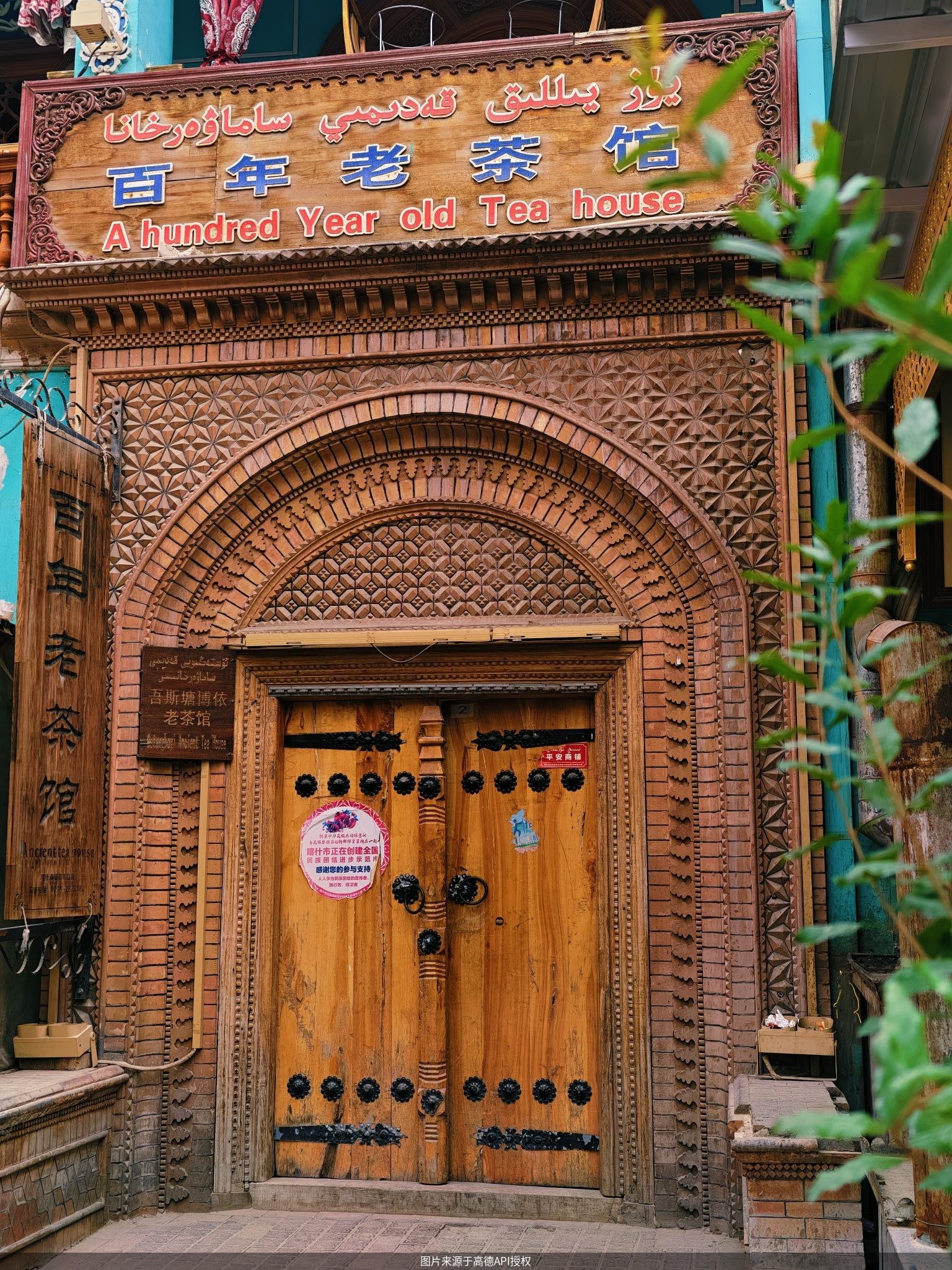
Rest at the old teahouse after lunch: the timber second floor, brick tea and naan, the rawap sounding under the veranda, local elders and travelers sharing one room. It is a living specimen of old-town social life and the best observation post for the city's tempo.
Order a pot and sit an hour watching the lane parade below. Heritage lines keep no schedule, and half an hour of teahouse light beats one more rushed stop.
The Gaotai Dwellings: Heritage on the Bluff
At dusk, the Gaotai dwellings, one of the old town's last untouched stretches, terraced earthen housing with over-street bridges, cantilevered balconies and spiral stairs in a texture all its own; open zones admit you into the cliff-top homes and the ingenuity of living hung over the edge.
From the bluff, the backward view of old town and Tuman River is the trip's finest frame; heritage turns concrete here, not one artifact but an entire settlement living in concert with the terrain.
The Han Bazaar Night Market: The Line's Smoky Close
Night one closes at the Han Bazaar: whole roast lamb, gangzi stew, roasted eggs and yogurt shaved ice in a row, the market itself intangible heritage, bazaar nightlife carried on for centuries.
The day's crafts, music and tea all settle into the market's smoke. Heritage lines die by museumification; this dinner is the antidote.
The Kashgar Museum: Day Two's Underdrawing
Day two runs the order in reverse, commentary before the original text. The morning fills in at the museum, the general galleries from prehistory to modern times dropping yesterday's old town into a two-thousand-year frame, Silk Road artifacts and excavated documents included.
Reading the cases with yesterday's concrete impressions beats the reverse: caravan paperwork in glass echoes the bazaar's fruit stalls, history and present annotating each other.
Pan Tuo City: The Eastern Han Fort
Around noon, Pan Tuo City, where Ban Chao held and managed for years; the memorial park's statue, wall remnants and displays make the Eastern Han's stewardship of the Western Regions concrete, the first great chapter of Kashgar's two-millennia urban story.
Stand on the rampart ruins over the oasis and imagine the decisions made here two thousand years ago, to stay and to build. An hour suffices, midday light best for photos.
Xiangfei Garden: An Afternoon of Tomb and Legend
The afternoon brings Xiangfei Garden, the Apak Hoja family tomb a masterpiece of Islamic funerary architecture, its green-glazed dome solemn and splendid in the sun; the Fragrant Concubine legend overlays the family history, and a good guide draws the boundary between tale and record, the visit's most interesting thread.
The scriptorium and mosque annexes survive well, and the garden waterways invite slow walking; two unhurried hours, then tea at the garden room to bridge into evening.
The Twelve Muqam Folk Park: The Musical Footnote
Dusk at the muqam park closes day two, instrument and costume halls handing history over to sound; catch a rehearsal or small performance and the couplets and hand drums give two days a resonant landing.
Muqam verses sing love and parting; sit in the garden for a stretch and the days' seeing and reading become hearing and feeling, day two completing its turn from objects to people.
The Yengisar Pottery Village: Day Three at the Kilns
Day three leaves the city, about ninety minutes by charter to the pottery village in Yengisar county, where Uyghur mold-and-wheel ceramics pass down generation to generation, wheels, glazes and earthen kilns kept traditional, and national heritage bearers' studios show the whole process.
The hands-on is throwing or glazing a blank, fired and shipped later; the wares run rustic and practical, bowls, ewers and vases from tens to hundreds of yuan, warmer than any souvenir-shop ceramic.
| Getting around |
|
| Budget | Tickets total about RMB 150-200 pp, mosque 45, Xiangfei 30, Pan Tuo 30 and more, with a Yengisar day charter near RMB 400-600, plus meals and beds across three days. |
| Best time | May-October is prime; the ceremony and workshops run mornings, Yengisar kilns fire on weekdays, and Friday prayers pack the mosque district after midday. |
FAQs
Is a chartered day to Yengisar worth it?
For craft and heritage lovers, absolutely: the pottery village is living transmission, not scenery. Chartering buys time autonomy to linger in workshops; buses save money but surrender the clock, and village connections wobble. As the line's only out-of-city day, the charter earns its fare.
Can the three days be reordered?
Yes, by one principle: the old town fits any day holding the ceremony, but keep the museum day adjacent to the old town or before Yengisar, commentary next to its text. Fridays crowd the mosque district, so swap in Yengisar or the venue day instead.
How do I carry the pottery home?
On-the-spot packing decides everything: ask the workshop to wrap each piece in paper or foam and box them rigid; many provide simple cartons. Check it in marked fragile, or carry it boxed; for large or multiple pieces, ship directly with freight and insurance written on the receipt, steadier than hauling.
Which stop is most underrated across the three days?
Pan Tuo City. Obscure name, modest scale, yet it opens Kashgar's two-thousand-year story and sees almost no crowds; give it an hour and much of the old town and museum suddenly gains time coordinates, the line's best value stop.