
People joke that Kashgar's coastline runs up the Pamir. This three-day line collects the plateau's brightest water: day one climbs the China-Pakistan Friendship Highway past White Sand and Karakul lakes to sleep by the Stone City at Tashkurgan; day two takes the Dragon-Spine Road and the Bandir blue lake before returning; day three finds water hugged by dunes at Dawakun.
Two prerequisites: a border permit, since Tashkurgan county sits inside a border administration zone, obtainable free at convenient Kashgar city points or your registered residence beforehand; and a charter, mountain public transport being thin and a Pamir day trip unable to reach the Dragon-Spine Road. Settle those two and the rest is sky and water.
Itinerary at a glance
| 10:30 | The Oytag Red Mountains: First Sight Going Up |
| 12:30 | White Sand Lake: The Two-Color Pass |
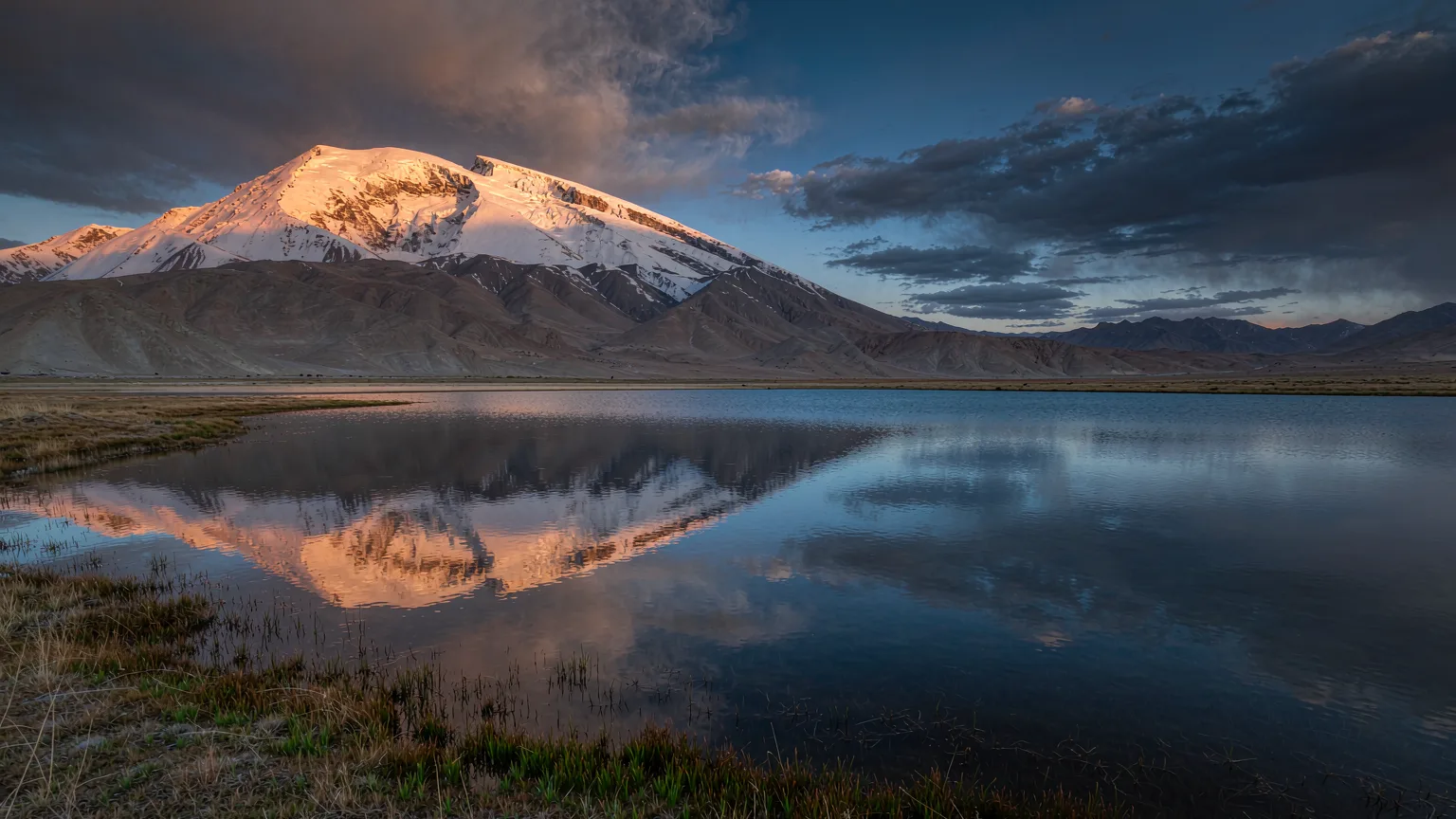
| 14:30 | Karakul Lake: The Mirror of Muztagh Ata |
| 17:30 | The Stone City and Golden Grass Beach: Tashkurgan at Dusk |
| 09:30 | The Tashkurgan Wetlands: Pasture in Morning Light |
| 11:30 | The Dragon-Spine Road: Six Hundred Sworn Curves |
| 13:30 | The Bandir Blue Lake: A Sapphire in the Gorge |
| 10:00 | Dawakun Desert Scenic Area: The Sand Sea and Its Lake |
| 16:00 | The Dawakun Lakeshore and the Ride Home: Finishing the Water |
The route, stop by stop
The Oytag Red Mountains: First Sight Going Up
Leaving Kashgar up the China-Pakistan Friendship Highway (national route 314), the first visual strike is Oytag's red mountains: ochre folds like congealed flame against white snowpeaks, a violent contrast; roadside viewing bays suffice with ten minutes.
This is the drive's overture, so backseat passengers should not sleep: from the Gez gorge on, every bend bends the light. As altitude climbs, drowsiness in the car is an early altitude sign, so drink water and talk less.
White Sand Lake: The Two-Color Pass
White Sand Lake is the highway's most photogenic stop: silver dunes pressed against blue-green water, wind combing the sand into regular ridges, the mirror complete on calm days; the roadside deck shows it all, no long walking needed.
Altitude already tops three thousand meters, so move slowly off the bus; lakeside wind runs big and hard, layer up before stepping out, and late morning light flatters the blue at its most saturated.
Karakul Lake: The Mirror of Muztagh Ata
Karakul is the line's climax: at 3600 meters the lake faces Muztagh Ata, a snowpeak above 7500 mirrored in the water while Kyrgyz herders' yurts and camels drift the shore; on still days the mirror is the Pamir's most famous frame.
A short lakeside walk suffices, boardwalk and viewing deck offering different takes: the deck for panorama, the boards for reflection. Camel rides are optional; agree the price before mounting.
The Stone City and Golden Grass Beach: Tashkurgan at Dusk
Dusk arrives in Tashkurgan town. The Stone City holds the ruins of the ancient Silk Road kingdom of Puli on its hillock, while the Golden Grass Beach wetland below turns gold toward evening, boardwalks crossing it, snowpeaks and meadow framed together as the county's signature shot.
This is the day's landing: give sunset to the grass beach, then dinner and a bed in town; nights run quiet on the plateau, and early sleep secures tomorrow's Dragon-Spine legs.
The Tashkurgan Wetlands: Pasture in Morning Light
Day two opens at the Tashkurgan wetlands, cattle and sheep scattered over dawn-lit meadow with Tajik villages and snowpeaks behind, the wetland road allowing stops anywhere; morning mist often hangs, the day's softest frame.
This stop is the itinerary's breathing hole: no objective, twenty minutes roadside watching herders move their flocks through. Plateau mornings bite, down jackets no exaggeration.
The Dragon-Spine Road: Six Hundred Sworn Curves
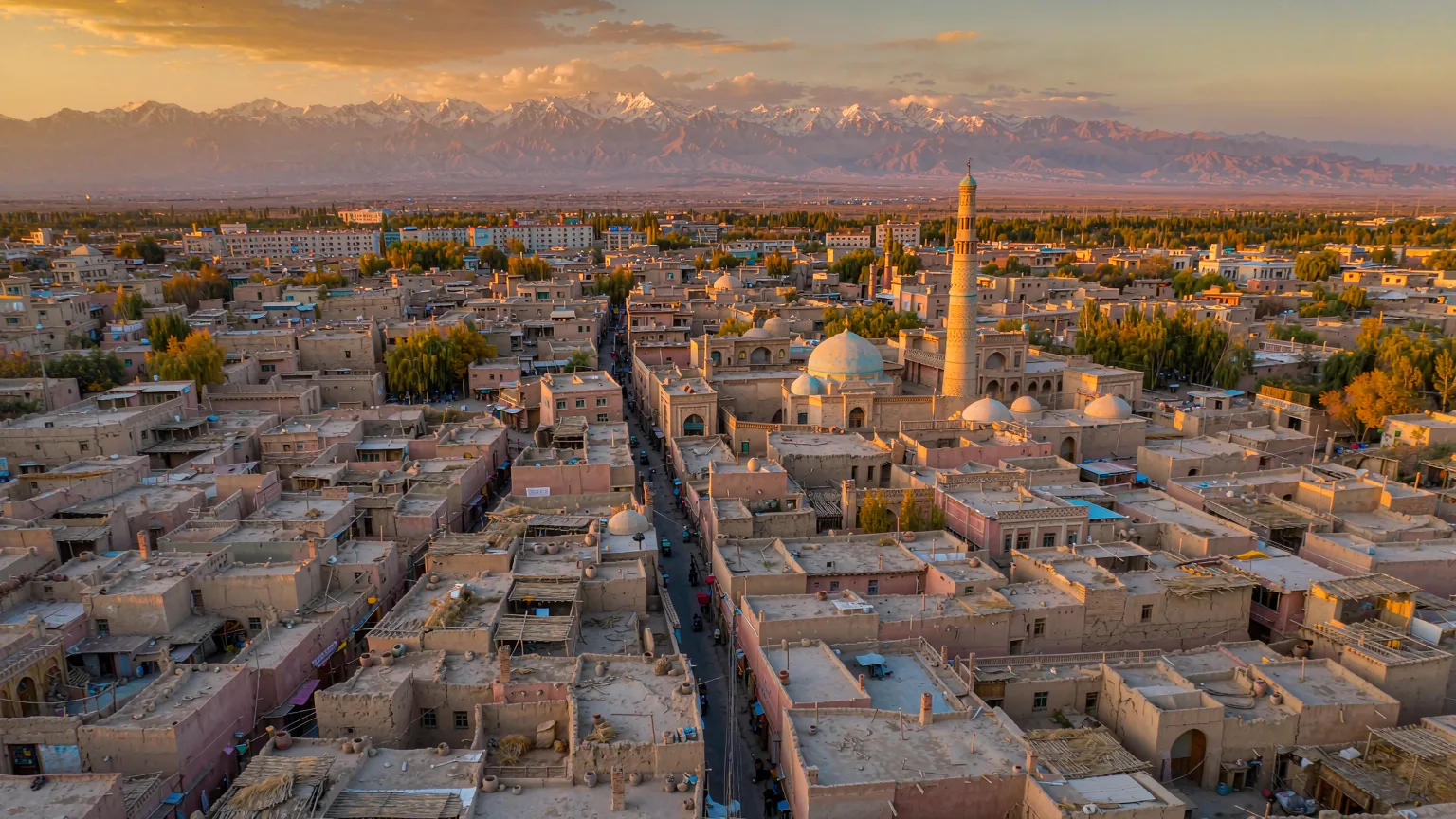
The Dragon-Spine Road is the region's internet-famous drive: more than six hundred curves braid black from valley floor to crest, and the viewpoint bears the slogan about having walked every crooked road today so life runs straight hereafter; self-drive and charter both fine, surface smooth, bends tight and grades steep.
The road offers small and large loops; when pressed, ride to the viewpoint and back. Passengers belt up, the motion-sick medicate early, and the driver holds low gears throughout.
The Bandir Blue Lake: A Sapphire in the Gorge
Descending the Dragon-Spine, the Bandir blue lake (the Xiabandi reservoir) lies en route, water so deep a blue it nears indigo, its shoreline shifting with levels, viewpoints strung along the lakeside road, the Pamir's other extreme: Karakul's blue is open, this one fathomless.
Stay half an hour and finish the Pamir blues. The afternoon turns homeward, Tashkurgan to Kashgar about four hours, with a possible second stop at White Sand Lake.
Dawakun Desert Scenic Area: The Sand Sea and Its Lake
Day three turns to Dawakun in Yopurga county: a lake cradled by dunes, sand, oasis and water in one frame, a composition unique in Xinjiang; climb the dunes for the ridgelines in the morning, then wait by the lake as wind wrinkles the surface. Sand sledding, camels and desert buggies are all established activities.
The site is compact, one day plenty; midday desert heat argues for climbing early, sheltering lakeside at noon, and returning to the dunes after four when the light turns gold.
The Dawakun Lakeshore and the Ride Home: Finishing the Water
The afternoon lakeshore is Dawakun's other half: desert water carries an odd serenity, reeds, waterbirds and far dunes stacking the layers; shore fish restaurants serve the lake's own catch with naan, a natural pairing.
From Dawakun the ride home runs about two hours, back in Kashgar by evening; three days have covered plateau lakes, wetland, gorge indigo and desert water, and the coastline with no sea closes its loop.
| Getting around |
|
| Budget | Tickets total about RMB 150-250 pp, Karakul near 45, the Stone City combo near 50, Dawakun about 60 plus activities, with three-day charter around RMB 1800-2600. |
| Best time | June-October is prime, grass greenest and lakes fullest in July-August; Tashkurgan sits above 3100 meters, so slow day one against altitude sickness; winter closes some roads and sites. |
FAQs
Where do I get the border permit, and how long does it take?
Convenient processing points in Kashgar city issue same-day permits from your ID, usually done in minutes and free; foreign travelers follow their own procedures and should inquire ahead. Home-town processing beforehand also works. Without the permit, checkpoints will not release you toward Tashkurgan.
Is altitude sickness serious here, and how to prevent it?
At 3100 and 3600 meters most people feel only mild head tightness and breathlessness, manageable but not to be dismissed. The three defenses: slow the first day, no alcohol or hair-washing that night, water throughout; bring rhodiola if that is your habit. Severe headache or vomiting means immediate descent to Kashgar.
Can any day be cut from the three?
With only two days, cut Dawakun and stretch the Pamir into a relaxed two-night version, adding morning mist and the Dragon-Spine at leisure. Conversely, one day argues for abandoning the mountains for the city entirely; a one-day Pamir round trip is so poor it beats not going only barely.
How do I find a charter and negotiate the price?
Hotel front desks, proper travel platforms and local driver groups are the three channels; compare two or three quotes beforehand. In negotiation, confirm fuel and tolls included, who pays the driver's meals and lodging, daily hours and stop counts; a continuous three-day booking beats daily haggling. Sign a simple written sheet stating price and route.