
Kashgar is southern Xinjiang's warehouse, and shopping day means buying at origin: the China-West Asia International Trade Market, billed among Central Asia's largest bazaars, lays dried fruits, herbs, Atlas silk and carpets straight from producers; the pedestrian street and department store handle the modern layer; and craft shops like Xinnawa close the last mile with instruments and handwork.
Discipline matters doubly here: dried fruits price by the kilo, agree terms before bagging; knives and some crafts face check-in restrictions, so settle shipping on the spot; and silk versus rayon reveals itself in a burned thread, an in-trade custom, never an insult to request.
Itinerary at a glance
| 10:00 | The China-West Asia International Trade Market: A Central Asian Bazaar |
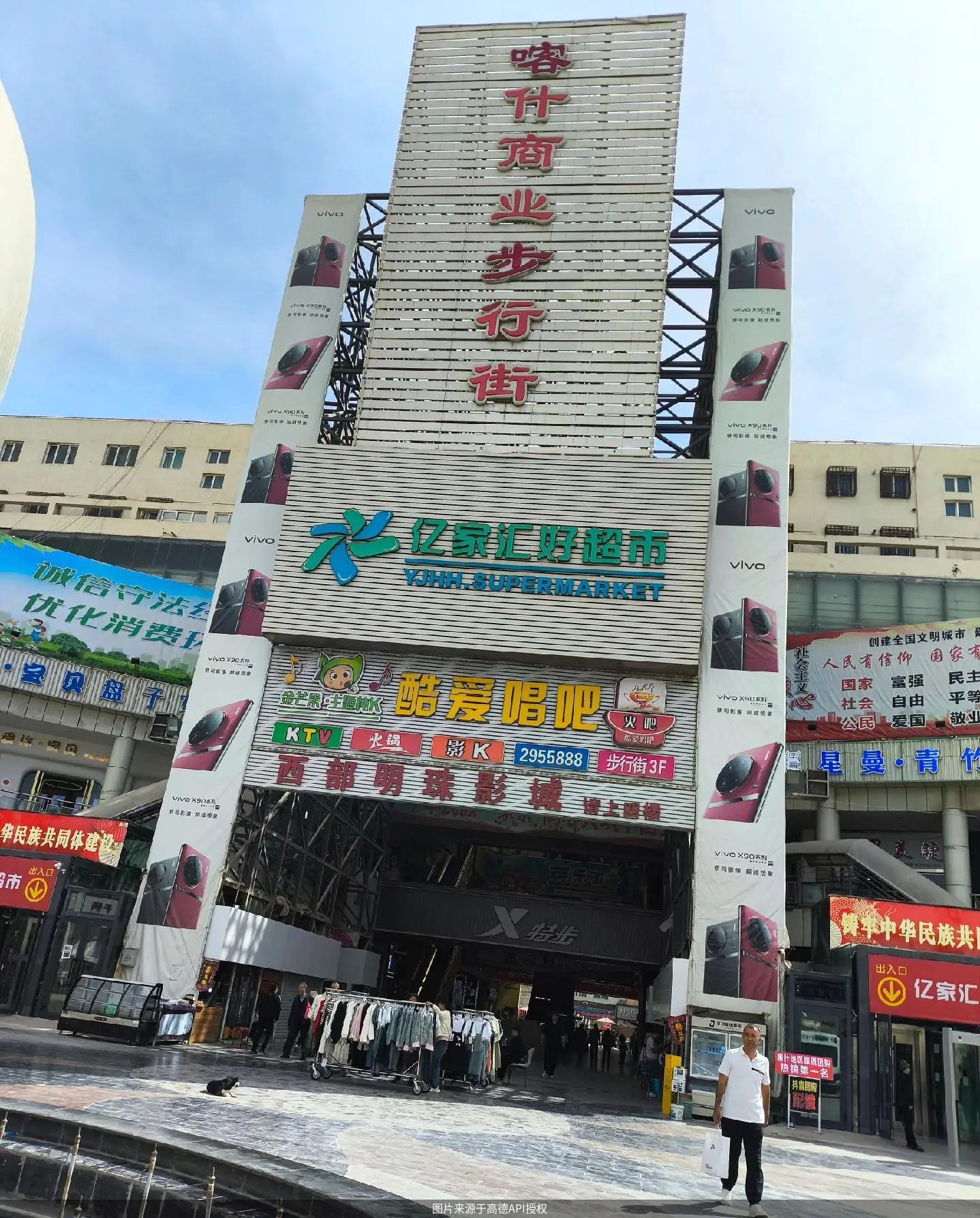
| 13:30 | The Commercial Pedestrian Street: Downtown's Retail Layer |
| 16:00 | Huanjiang New World Department Store: The Modern Counters |
| 18:30 | Xinnawa Ethnic Instruments and Crafts: Carrying a Lute Home |
The route, stop by stop
The China-West Asia International Trade Market: A Central Asian Bazaar
The morning belongs to the trade market, locally the East Bazaar. Stalls zone by category: the dried-fruit quarter prices almonds, dried figs, jujubes and raisins by the kilo with tastings free; the cloth quarter runs thousands of Atlas silk patterns; carpets, herbs and copperware hold their own quarters, more than half a day holds.
Dried-fruit custom: taste, ask, agree, then weigh in front of you and request vacuum packing for check-in. For Atlas silk, burn a thread to prove silk before falling for a pattern; scarves and bolts differ wildly in price, so decide the use first.
The Commercial Pedestrian Street: Downtown's Retail Layer
Afternoon on the pedestrian street fills gaps: chain pharmacies, supermarkets, sportswear and local specialty stores shoulder to shoulder, completing any medicines, snacks and daily goods the bazaar missed. Food courts cover lunch with proper polo and laghman houses.
This stop's value is practical over scenic: chain specialty shops price openly, the no-haggling fallback for reluctant bargainers. Buy and bank the heavy stuff first, and the afternoon's instrument round stays light.
Huanjiang New World Department Store: The Modern Counters
Huanjiang New World stands for modern Kashgar: full floors of beauty, fashion and homeware priced like any inland department store. Its virtue is not hunting but certainty, the easy answer for important recipients and hassle-averse friends.
The basement and top floor often hold local designer and creative-goods collectives, where Atlas silk motifs reappear as refined ready-to-wear beyond anything at the bazaar; for younger recipients, this floor outclasses dried fruit.

Xinnawa Ethnic Instruments and Crafts: Carrying a Lute Home
Shopping day ends at Xinnawa, rawaps, dutars, hand drums and ghichaks wall to wall, prices tiering from performance-grade to souvenir-grade, with owners often musicians themselves who can tell each lute's story; even buying nothing, a played interlude repays the stop.
The key is logistics over selection: small hand drums travel with you, full lutes must ship or check in, so settle packing, freight and insurance on the spot. Miniature rawap keepsakes start at a few tens of yuan, the trip's most distinctive gift.
| Getting around |
|
| Budget | Souvenir budgets swing wide: dried fruits from RMB 100, Atlas silk 100-600, instruments 150 into the thousands; most travelers finish respectable gifting within RMB 300-800. |
| Best time | Any season; the bazaar stocks fullest and stays coolest in the morning, liveliest but tightest on weekends; watch the scale on dried fruits, and settle shipping before buying any instrument. |
FAQs
How do I bargain at the bazaar without being rude?
Bargaining is part of the transaction, never rude, what offends is haggling then walking; open at about seventy percent of the asking price, close within two or three rounds; skip it for food and open-priced department stores. A calculator exchange of numbers crosses every language barrier.
How do I pick dried fruits and herbs without getting burned?
Fruits pass three tests: taste, color, scale, weighed in front of you and vacuum packed; herbs run deep water, so limit yourself to recognizable jujubes, goji and cistanche, and never touch the precious kinds without an expert. One rule: nothing enters your mouth that you have not tasted first.
Can purchased knives board a plane or train?
Not on your person: both civil aviation and rail ban carrying controlled blades, and checked carriage faces airline rules too. The one safe play is shipping from the shop on the spot, proper stores all run courier partnerships from a few tens of yuan, keep the tracking number. Accept this and buying a knife turns painless.
Is one day enough for the bazaar, and which zones first?
Half a day covers the spine: dried fruits, Atlas silk and carpets, three priorities, the rest in passing. Order fruits first, sharpest senses and free tastings, silk second, carpets last, heaviest, priciest, most negotiation-draining, then give the afternoon to the street and mall for gaps.