
The five-day plan earns its keep on the altitude curve: three days in 3,650-meter Lhasa, sequenced as adjust day, palace day, culture day, covering the Jokhang, the Potala and Sera; then day four crosses the roughly 5,013-meter Mila Pass and descends into Nyingchi, where town sits near 2,900 meters and the oxygen returns, most people sleep and eat measurably better there; day five closes with Basum Tso or the entrance of the Yarlung Tsangpo Grand Canyon.
The budget: Jokhang about RMB 85, Potala about 200 in season and 100 off-season, Sera about 50, Basum Tso tickets and shuttles at posted rates, round-trip transport to Nyingchi RMB 200-400, and the five days with lodging and meals run RMB 2500-4000 per person. Booking is the skeleton: the Potala takes real-name reservations one to seven days ahead, locked on landing, and the Nyingchi leg needs a pre-arranged car or tour, about five hours each way on the Lhasa-Nyingchi expressway.
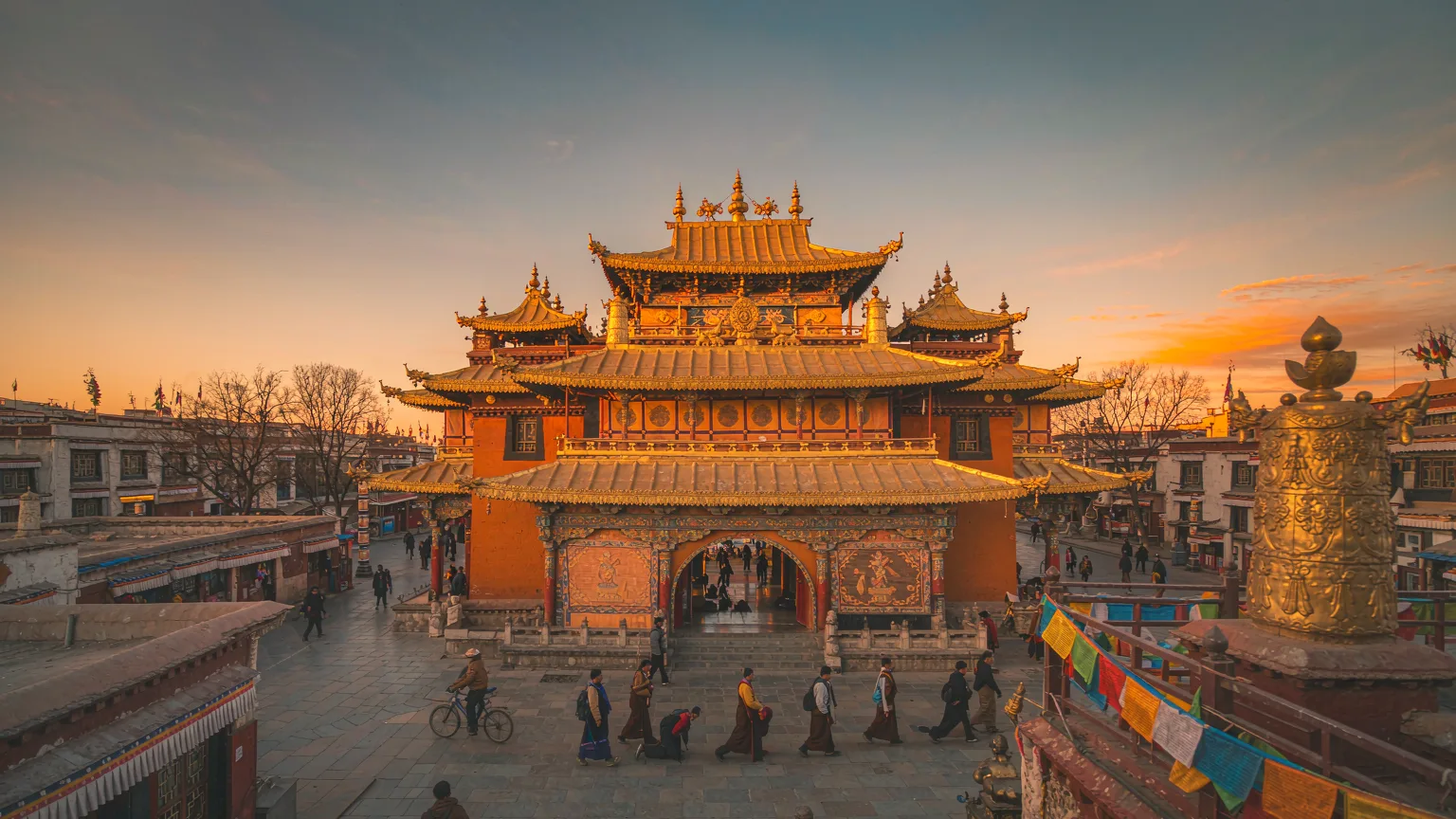
Itinerary at a glance
| DAY1 09:30 | Day One: The Jokhang and Barkhor at Altitude |
| DAY2 09:00 | Day Two: The Potala, the Trip's Physical Peak |
| DAY3 15:00 | Day Three: Norbulingka and the Sera Debates, the Culture Close |
| DAY4 08:00 | Day Four: Over Mila Pass into Nyingchi and Basum Tso |
| DAY5 09:00 | Day Five: The Grand Canyon Entrance and the Road Back |
The route, stop by stop
Day One: The Jokhang and Barkhor at Altitude
Day one holds only gentle old-city content. Enter the Jokhang at nine-thirty (about RMB 85), circle the main halls and golden roof clockwise, walk one slow Barkhor lap, lunch on noodles and sweet tea, then nap an hour back at your room. About four kilometers total, paced so a bench is always near.
The day's job is calibration: log your breathlessness, sleep and headaches, and set the coming intensity accordingly. Sun yourself at Zongjiao Lukang or hold a tea-house table all afternoon, and sleep early. Book the Potala the moment you land, but never for today.
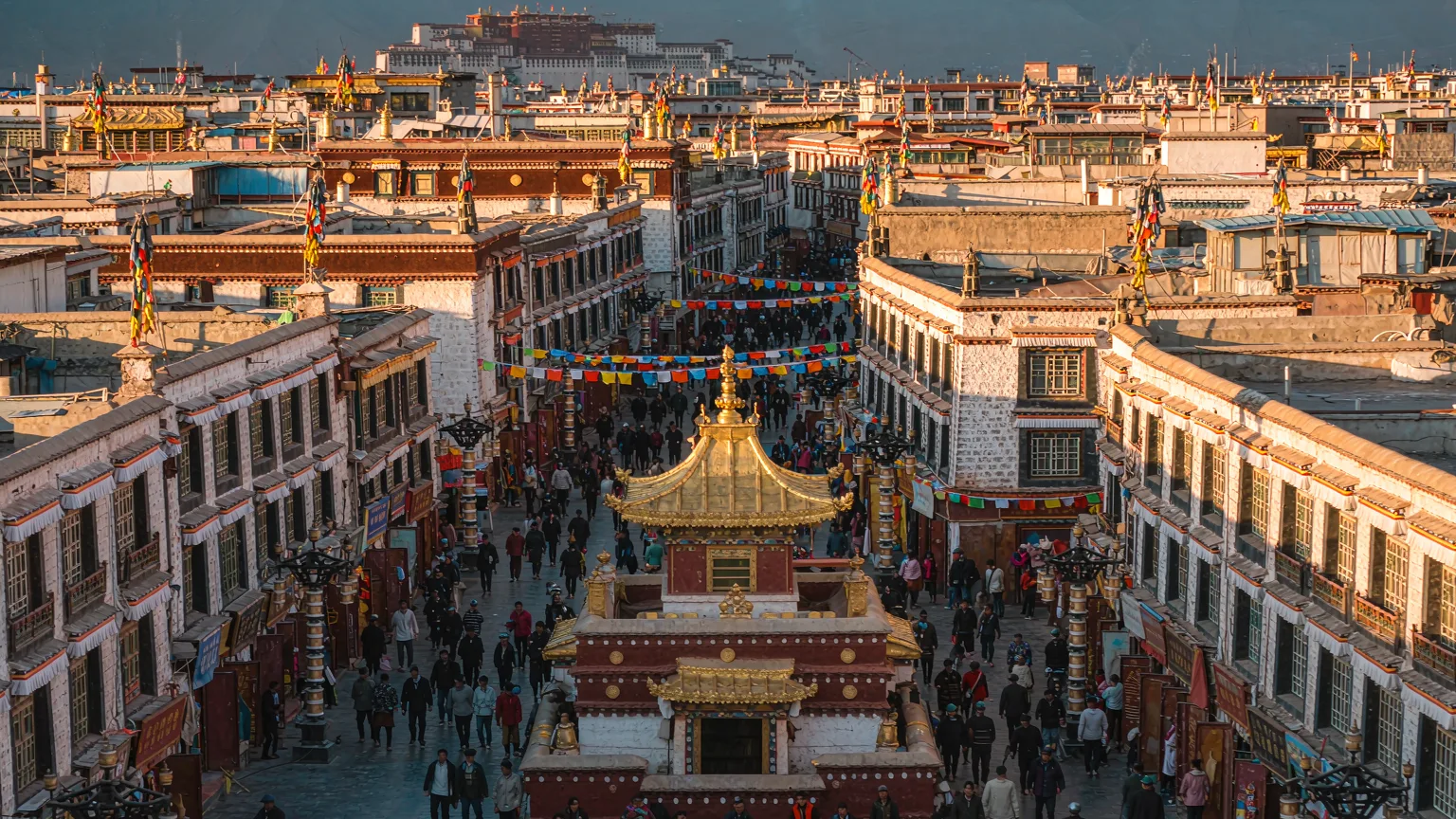
Day Two: The Potala, the Trip's Physical Peak
Arrive an hour before your slot, about RMB 200 in season and 100 off-season. Start through the snow city, climbing the switchbacks ten steps and one breath at a time; interior time caps around an hour with no photos, running the White and Red Palaces' chapels and stupa halls. About two hours total, the biggest physical ask of the five days.
The north gate drops you at Zongjiao Lukang, the lake framing the palace's rear reflection, a natural debrief. Keep the afternoon to naps and tea houses, sleep hard that night, and expect delayed fatigue tomorrow morning: keep day three light until noon.
Day Three: Norbulingka and the Sera Debates, the Culture Close
Morning at Norbulingka (about RMB 60): gentle paths, deep shade, the New Palace murals and lake pavilion, ninety minutes at a stroll. Light lunch, then rest until ten to three.
At three sharp, the Sera debate courtyard (entry about RMB 50): claps and drawn-out challenges for one to two hours, watched quietly from the edge. Debates skip Sundays, so pin this to Monday through Saturday. Back to town by evening, dinner early, ready for tomorrow's long drive.
Day Four: Over Mila Pass into Nyingchi and Basum Tso
Leave at eight on the Lhasa-Nyingchi expressway, pausing briefly at Mila Pass (about 5,013 meters, photos only), then descending as the window shifts from alpine meadow to canyon forest. By afternoon you reach Basum Tso: jade-green water, Tashi Island's Tsodzong monastery at its heart, and boardwalks stringing snow peaks, forest and lake into one composition; tickets and shuttles at posted rates.
Overnight at Basum Tso or in Bayi town near 2,900-3,400 meters, where the oxygen returns in genuinely felt ways: most people sleep noticeably deeper than in Lhasa. Order a Lulang stone-pot chicken or local Tibetan dinner, walk it off afterward, and let the trip's second half start refilling the tank.
Day Five: The Grand Canyon Entrance and the Road Back
Day five offers a choice. The canyon option: ride from Nyingchi to Pai town, where the triangular face of Namcha Barwa, if the clouds lift, gives the trip's most photogenic single frame; half a day at the entrance area, return in the afternoon. The easy option: a gentle morning around Nyingchi town or Kadinggou, then straight back after lunch.
By evening you are in Lhasa again, or positioned near Nyingchi airport for tomorrow. Three days in Lhasa, two in Nyingchi, altitude rising then falling: the structure itself minimizes altitude risk. At RMB 2500-4000 per head, this is the balanced way to do Lhasa properly without letting the plateau win.
| Getting around |
|
| Budget | Jokhang 85, Potala about 200 in season or 100 off, Sera 50, Basum Tso with transport about 300-500: roughly RMB 2500-4000 pp over five days |
| Best time | May-Oct is prime; book the Potala one to seven days ahead, on landing. Nyingchi's low altitude and dense forest make it the ideal late-trip recovery leg |
FAQs
Should Nyingchi come first or Lhasa?
This order is safer: acclimatize three days in Lhasa before descending to Nyingchi. Reversing it wastes the low-altitude recovery during your riskiest window, and flying into Lhasa first remains the standard, sensible approach.
Basum Tso or Namtso, if I can only do one?
Judge by body and time: Namtso is higher and a harder single day, Basum Tso lower with forest cushioning, pairing naturally with the Nyingchi legs. Choose Namtso for the icon, Basum Tso for the safety margin.
What should the five-day budget be?
Tickets total about RMB 350-500, four nights RMB 600-1500 per person, with charter and meals the big variable: budget RMB 2500-4000 all-in, plus seasonal surges.
What are the serious warning signs of altitude sickness?
Severe headache unrelieved by medication, vomiting, unsteady walking, confusion, or breathlessness at rest: any one means descend and get medical help immediately. That is a hard rule, not a suggestion.