
The seven-day line opens toward the Tsang region: three days in Lhasa for acclimatization and the three landmarks, then day four to Yamdrok Lake, the first sight from Kamba La pass a blue ribbon laid across the mountains at about 4,441 meters; push on west the same day to Shigatse near 3,836 meters, and spend day five's morning at Tashilhunpo, the traditional seat of the Panchen Lamas, its halls and gold roofs spreading up the hillside; day six returns along the Yarlung Tsangpo valley, day seven stays in reserve.
Budget and preparation: the Lhasa trio totals about RMB 335 in tickets, Yamdrok about 60, Tashilhunpo at posted rates (roughly the 55-100 range), and the two-day Shigatse charter RMB 700-1000 per car, with the whole week landing around RMB 4000-6000 per person. Altitude management is the through-line: after three days in Lhasa, note that Shigatse sits nearly 200 meters higher, so early sober nights; passes along the way top 4,800 meters, all visits kept brief. On documents, central Shigatse and Tashilhunpo usually need only your ID, but border-area extensions require advance paperwork, so verify before travel.
Itinerary at a glance
| DAY1 09:30 | Days One and Two: Lhasa's Foundations, Gently |
| DAY2 09:00 | Day Two: The Potala Peak, Then Sera's Debates |
| DAY3 15:00 | Day Three: Norbulingka and the Debates, Closing Lhasa |
| DAY4 08:00 | Day Four: Yamdrok Lake and Onward to Shigatse |
| DAY5 09:00 | Days Five to Six: Tashilhunpo and the Tsangpo Valley Home |
The route, stop by stop
Days One and Two: Lhasa's Foundations, Gently
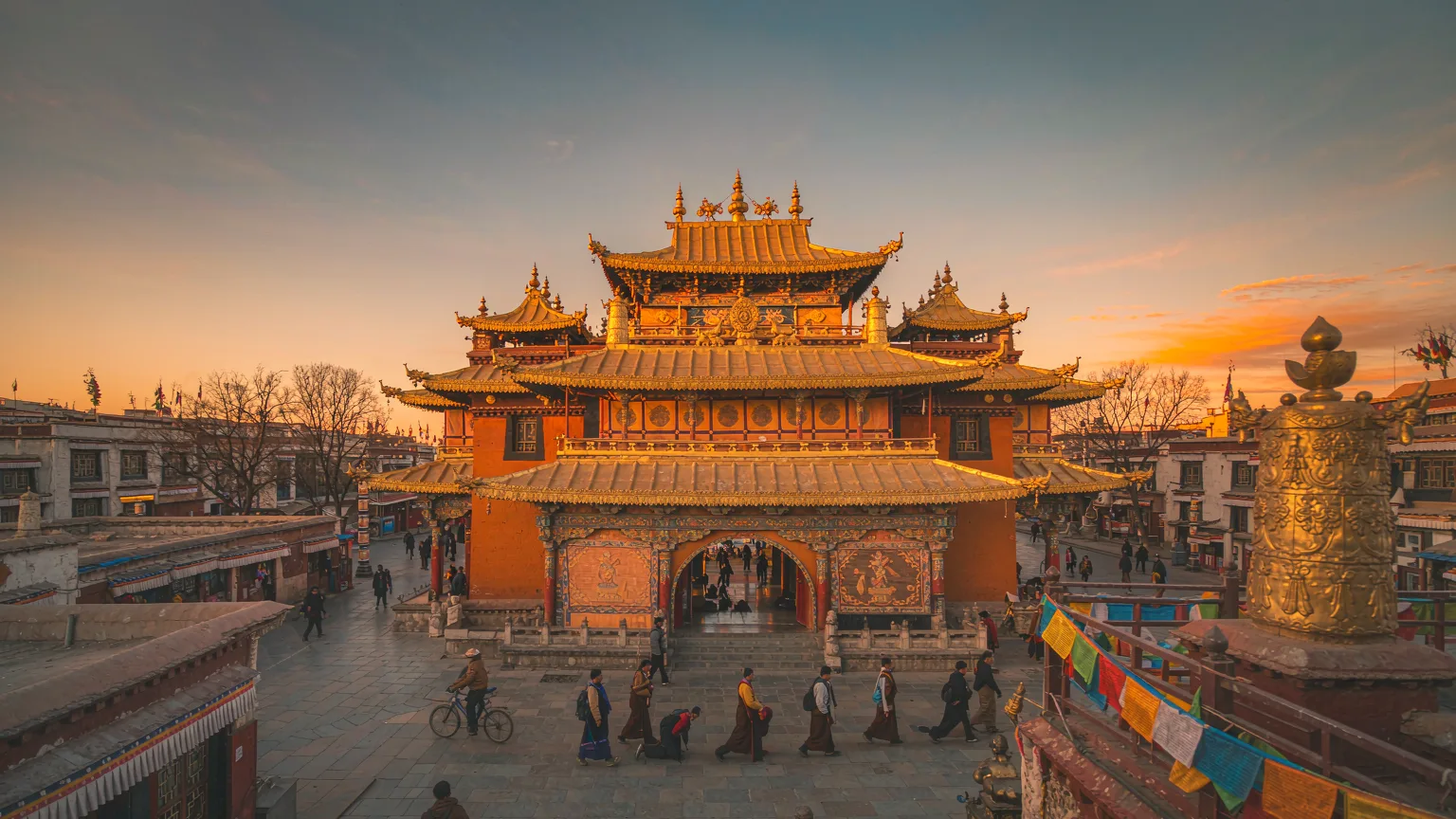
Day one orients at low intensity: the Jokhang at nine-thirty (about RMB 85), clockwise through the halls and golden roof, one slow Barkhor lap, noodles and sweet tea for lunch, then a nap. Four kilometers total, while you log your altitude baseline: breathlessness, sleep quality, headache grade.
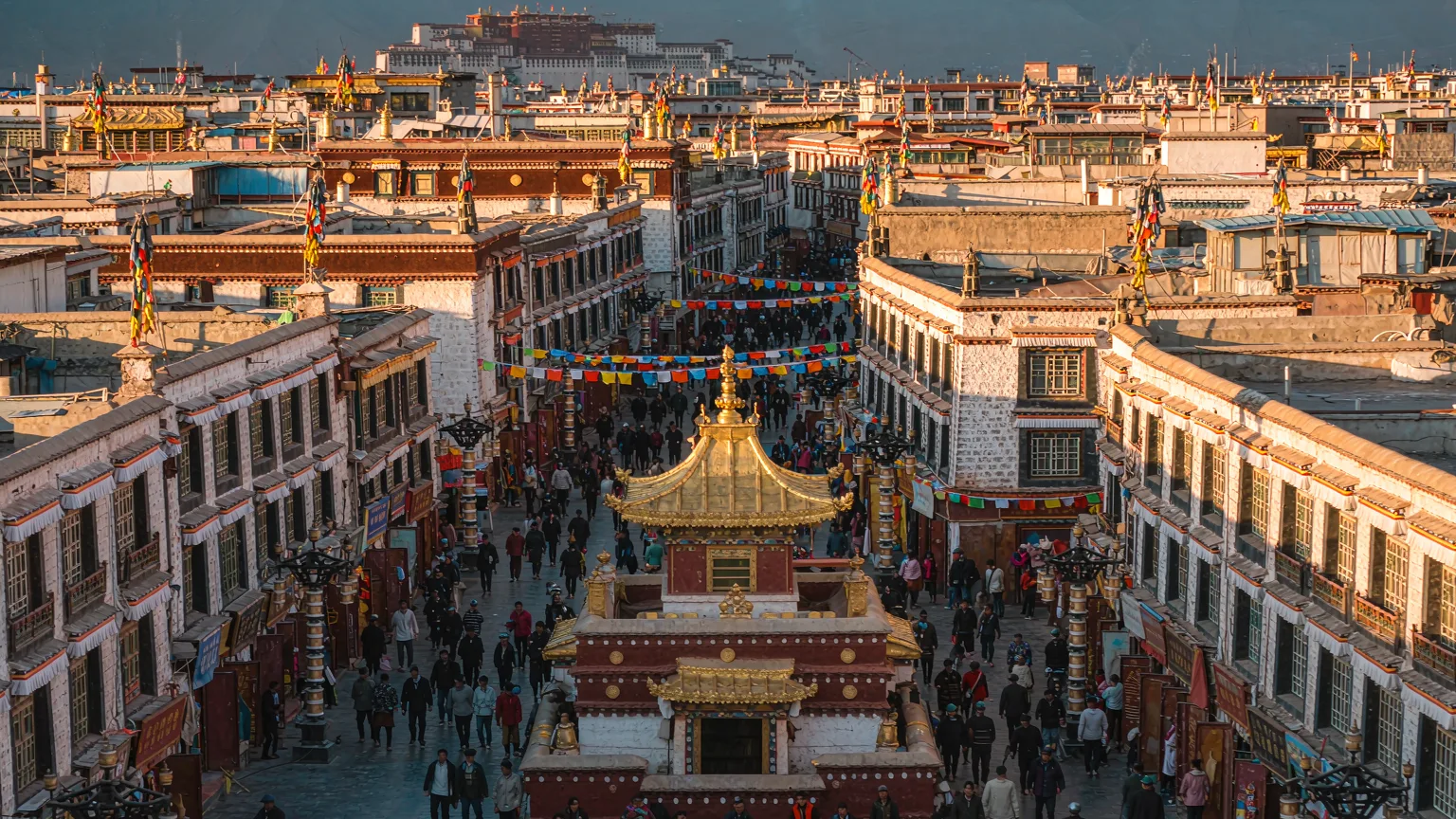
Spend the afternoon sunning at Zongjiao Lukang or idling in a tea house, then circle the Potala's exterior at dusk to build a spatial map for tomorrow's climb. Early to bed, and lock the palace booking for your best-looking day within the next two or three.
Day Two: The Potala Peak, Then Sera's Debates
Morning at the Potala in your booked slot (about RMB 200 in season, 100 off-season): snow city start, switchbacks upward, interiors capped at an hour with no photos, two hours all told, the single biggest physical item of the week. Descend by the north gate through Zongjiao Lukang, then nap.
Feeling strong by late afternoon, add Sera's afternoon debates (about RMB 50, from 3 pm, none Sundays); feeling spent, fold Sera and Norbulingka into day three. The palace drains the body, so a proper dinner and an early night close the day.
Day Three: Norbulingka and the Debates, Closing Lhasa
Morning at Norbulingka (about RMB 60) for the New Palace murals and lake pavilion, gentle terrain ideal after the palace; the three o'clock debates at Sera (about RMB 50) run one to two hours, watched from the edge. By evening, pack and settle the charter, confirming departure time and roadside stops with the driver.
Tonight's homework is the Shigatse brief: pass altitudes en route, your Shigatse room's elevation and heating, documents in hand. The Lhasa chapter closes here, and its three invested days will pay back through the next four in how your body feels.
Day Four: Yamdrok Lake and Onward to Shigatse
Leave at eight and stop ten minutes at Kamba La pass (above 4,800 meters): below lies Yamdrok, its surface near 4,441 meters, the shoreline branching like coral, color sliding between blue and green with the clouds. Entry about RMB 60. Keep every stop brief and slow, the wind cold and strong, so wear the warm layers rather than carrying them.
Run west along the lake, cross the Simila pass, and where time allows pause at Gyantse for the Dzong fortress silhouette and Pelkor Choede, reaching Shigatse (about 3,836 meters) by evening. Tonight is the second acclimatization node: nearly 200 meters above Lhasa, so early bed, no alcohol, light dinner, with a throb and shallow sleep the expected toll, usually gone by morning.
Days Five to Six: Tashilhunpo and the Tsangpo Valley Home
Morning at Tashilhunpo, seat of the Panchen Lamas, its halls terraced up the southern slope of Nima hill with gold roofs lined bright in morning light. The Jampa chapel holds a Maitreya (Future Buddha) statue some 26 meters tall, among the world's largest indoor bronzes; work through the stupa halls and assembly hall at your own gentle pace, tickets at posted rates, about two hours.
Rest in Shigatse through the afternoon and stock up at the local market. Day six runs back to Lhasa along the Yarlung Tsangpo valley, five to six hours of river sands and barley fields, the everyday scroll of the Tsang region, letting the drive itself digest the trip. Day seven stays in reserve: missed sights, a Barkhor souvenir sweep, or plain rest timed to your flight. At RMB 4000-6000 per head, the week reads as one complete geography of faith, from Lhasa's palaces to the Tsang monasteries.
| Getting around |
|
| Budget | Lhasa trio about 335, Yamdrok about 60, Tashilhunpo at posted rates, two-day charter RMB 700-1000 per car: roughly RMB 4000-6000 pp over seven days |
| Best time | May-Oct is prime; the Yamdrok passes climb high, so bank three-plus days of Lhasa acclimatization first, and confirm permit requirements for border zones before travel |
FAQs
Do I need both Yamdrok and Namtso?
They differ in character: Yamdrok is a mountain ribbon that chains naturally to Shigatse, Namtso a vast open lake and a harder single day. For this seven-day line, Yamdrok flows better; doing both costs two more days.
Should I worry about Shigatse's altitude?
At about 3,836 meters, nearly 200 above Lhasa, most people transition smoothly after three days of acclimatization; keep early sober nights, and anyone struggling simply moves the return up a day.
Do I need special permits for Shigatse?
Central Shigatse and Tashilhunpo usually take your ID only; continuing toward Everest and other border zones requires advance border paperwork, so verify current requirements with a tour operator or official channels before travel.
What if my body falters partway through the seven days?
Every node has a downgrade: shift the Potala slot, change the debate session, compress Shigatse to a direct one-day run. The itinerary serves the body, never the reverse; cutting a stop in time is always wiser than enduring.