
One day in Pulan can hold Tibet's three most famous names: Mount Kailash, Lake Manasarovar and Rakshastal. Morning in Tarchen adapts the body while facing the peak, afternoon closes a loop on the road between the sacred lake and the ghost lake, and dusk returns to the town edge as sunset burns Kailash's snow walls gold-red. The triangle never rushes, yet every stop deserves its full measure.
Confirm two things before setting out: the border permit on you, and at least one night already slept at 3,900 m or higher. Pulan county town sits near 3,900 m, Tarchen near 4,700 m, both lakes near 4,600 m; the day's climbing all goes to the wheels, not the legs, and that is the condition for finishing it well.
Itinerary at a glance
| 09:00 | Mount Kailash Viewpoint: First Sight of the Pyramid |
| 11:30 | Lake Manasarovar: The Blue and Stillness of the Sacred Lake |
| 14:30 | Rakshastal: The Ghost Lake One Step from the Sacred One |
| 17:30 | Tarchen: Sunset on the Peak and the Day's Close |
The route, stop by stop
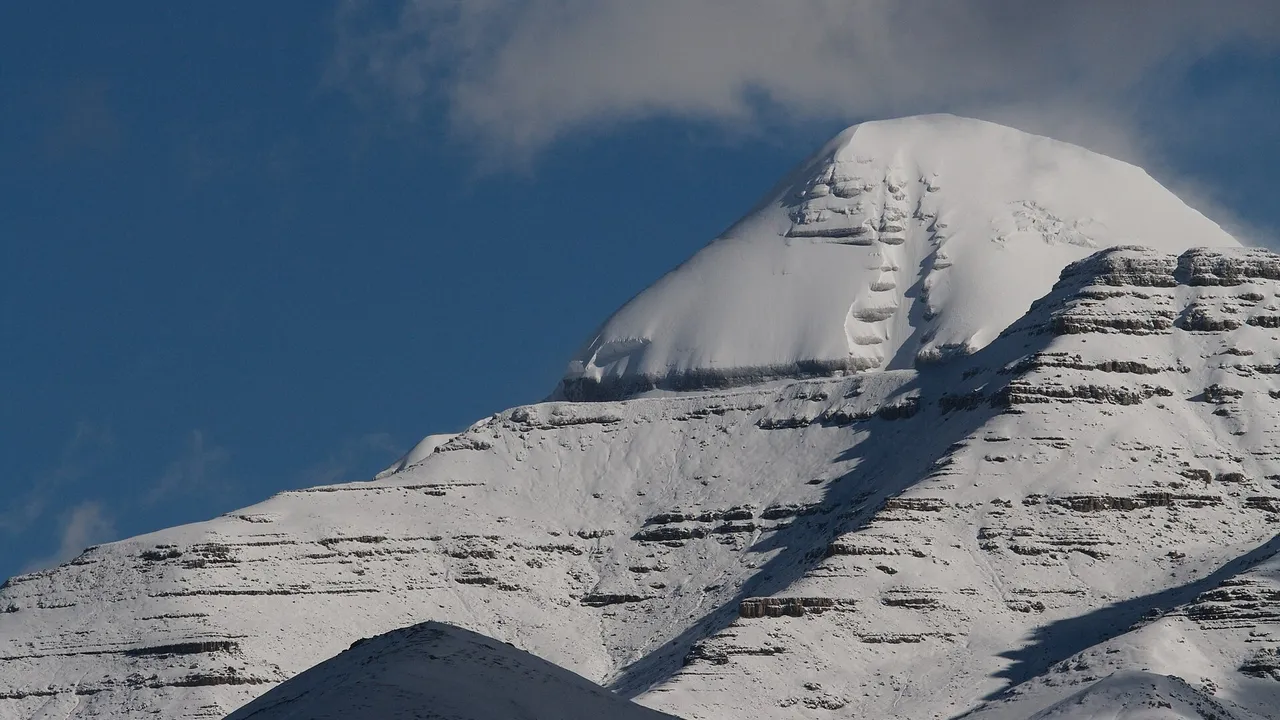
Mount Kailash Viewpoint: First Sight of the Pyramid
A quarter hour from Tarchen, the viewpoint opens on Mount Kailash standing in morning light with near-geometric perfection: a 6,638-meter pyramid, four faces balanced, snow and ice tracing its edges. Tibetan Buddhism, Hinduism, Bon and Jainism all honor it as sacred, and the flags and mani piles below explain the weight of that reverence.
Resist the first rush to shoot; stand still for three minutes instead. What sets this peak apart from every other snow mountain is millennia of being gazed at: pilgrims walk in from India, Nepal, Qinghai and Sichuan just to circle it once.
Lake Manasarovar: The Blue and Stillness of the Sacred Lake
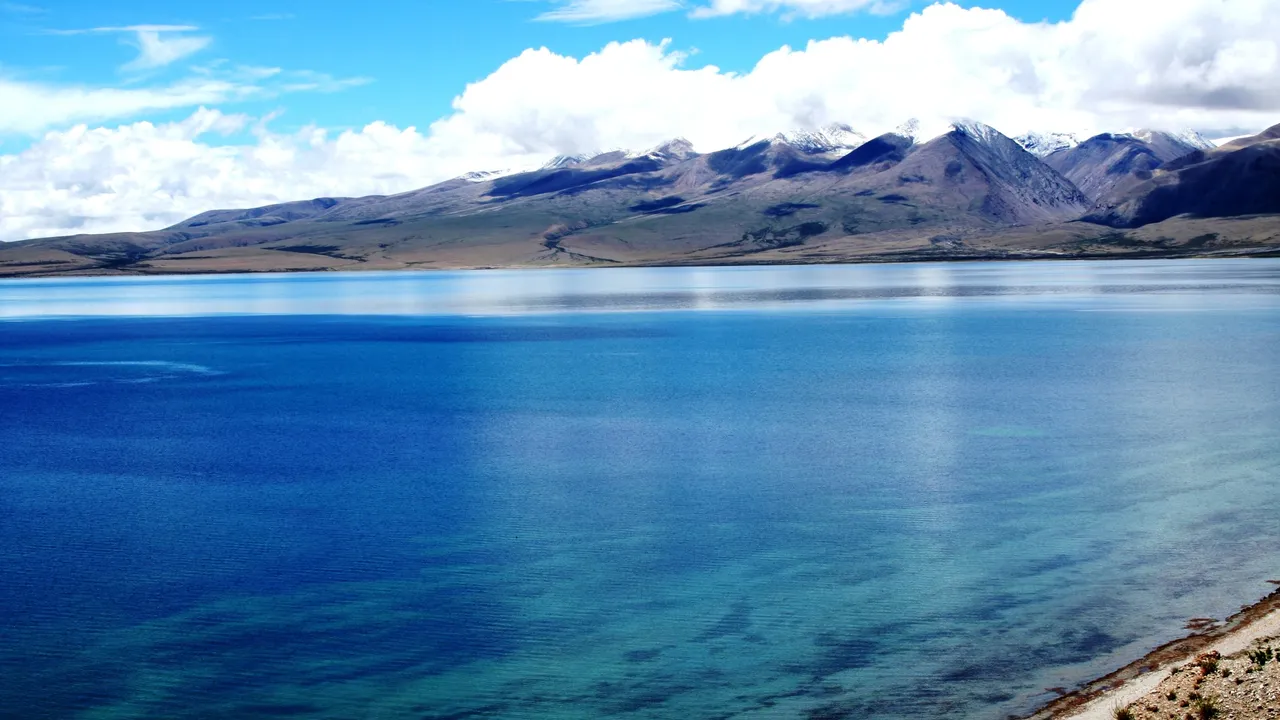
Lake Manasarovar sits at about 4,588 m, among the most revered sacred lakes of the Tibetan world, its water luminous blue and, on calm days, mirroring Mount Naimona'nyi and the clouds. Circumambulating the lake ranks with the kora as pilgrimage practice; mani piles and prayer flags run the shore and sound together in the wind.
Three ways to take the lake: sit at the shoreline and read the water's bands, clear near the edge, blue-green offshore; walk a short clockwise stretch of the circumambulation path to feel the pilgrim atmosphere; or do nothing at all and let the plateau's wind and light enter the body.
Rakshastal: The Ghost Lake One Step from the Sacred One
Across the road from Manasarovar lies Rakshastal, a saltwater lake whose Tibetan name means the poisonous black lake, called the ghost lake. Its water runs deep and dark, its shores stony, and in shifting weather the surface turns leaden, a theatrical contrast to the sacred lake's blue. The two were once joined by a channel; today only an underground link remains in the telling.
Approach the ghost lake without novelty-seeking: in the local cosmology, one pure lake and one turbid, sharing the same plateau, form a complete metaphor in themselves. Standing on the road between the two and looking both ways, ten minutes outvalue many a famous sight.
Tarchen: Sunset on the Peak and the Day's Close
Return to Tarchen by early evening; the open ground at the town's west edge faces Kailash's west wall directly. In the half hour before sunset the mountain turns from white to gold to red, and the town's dogs and returning pilgrims quiet together. It is among Ngari's most famous sunsets, free, and performed daily.
After the show, back in town the teahouse lamps are already lit. The day's altitude and mileage come to account here, and tonight's assignment is hot water, hot food and early sleep.
| Getting around |
|
| Budget | Charter shares, lakeside fees and meals run about RMB 300-600 pp; the kora permit is not part of this day. |
| Best time | Apr-Jun and Sep-Oct are steadiest, with mirror lakes and crisp peaks; July-August turns cloudy in the monsoon, and winter lakeshores are fierce with wind and ice. |
FAQs
Is one day for the peak and both lakes too rushed?
The pace fits, because the wheels do all the climbing: viewpoint in the morning, sacred lake at midday, ghost lake after, sunset back in town, with drives of half an hour to an hour between stops. The only discipline is moving slowly after each stop, since standing time at 4,600 to 4,700 m counts as short-duration by default.
Where do I get the border permit?
Mainland residents apply with an ID card at exit-entry police windows in their home region or in Lhasa, usually free and issued on the spot; foreign passport holders follow different rules arranged through a travel agency in advance. Pulan and the Everest direction fall in different zones, so if the trip covers both, list all destinations on the application.
Between the sacred lake and the ghost lake, which one?
No need to choose; the lakes sit one road apart and forty minutes each covers both. Only if time is crushed does preference decide: for blue water, flags and pilgrim atmosphere take Manasarovar; for desolation, stones and shifting light take Rakshastal. Photographers should drop neither, since one blue and one gray are the day's two base tones.
Should I overnight in Tarchen or return to Pulan county town?
Body and next plan decide: the kora tomorrow requires sleeping in Tarchen, and those comfortable at 4,700 m do fine in town lodging; the altitude-sensitive should sleep in Pulan county town near 3,900 m, since an hour's drive for one good night is a bargain. Never tough it out higher, because sleep quality is the next day's altitude insurance.