
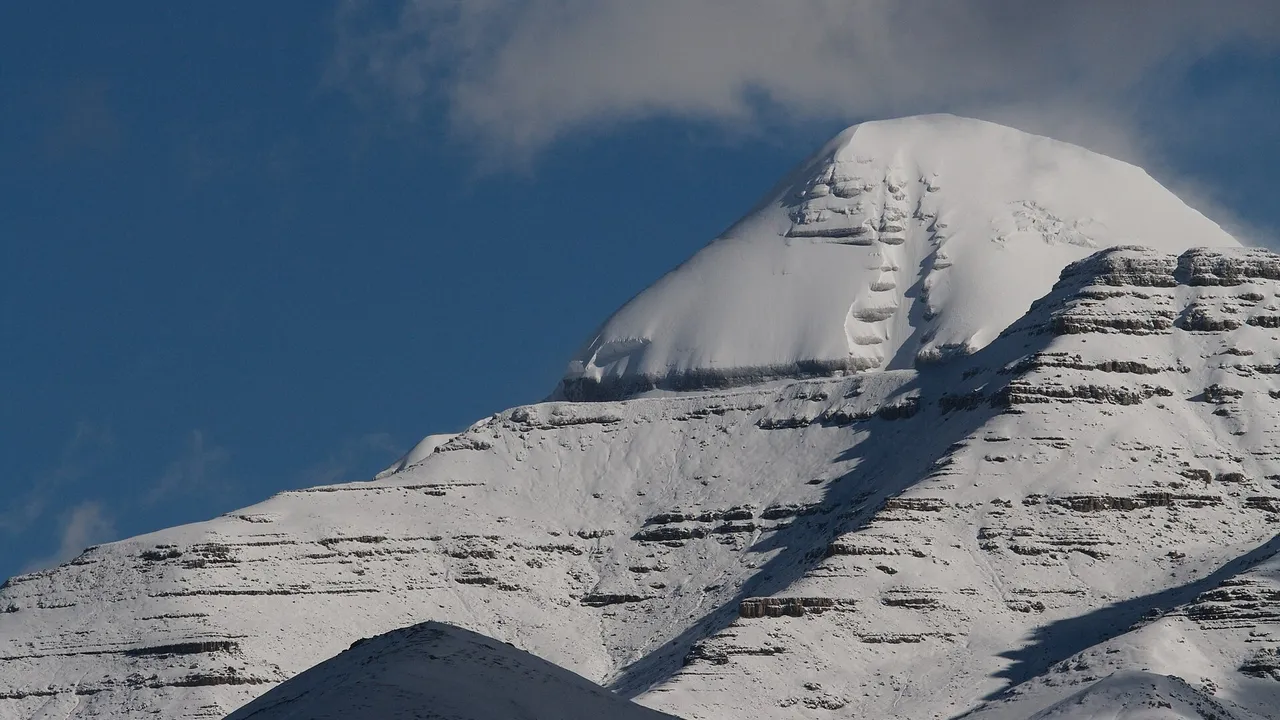
Mount Kailash, 6,638 meters, stands far higher on the world's religious map than any geographic one: Tibetan Buddhism reads it as the blissful axis Meru, Hinduism as Shiva's abode, Bon as the seat where spirit first arose, and Jainism as where its founding teacher found release. One mountain held sacred by four traditions at once, unique on this planet.
The culture line's four stops are four lessons: prayer flags teach the grammar of color and wind, the kora's start teaches devotion of the body, the viewpoint teaches faith layered upon faith, and the sacred lake teaches the rite of water. No ticketed knowledge required, only that you slow down, stay quiet, and look long.
Itinerary at a glance
| 08:30 | Prayer Flags: Each Gust of Wind Reads the Sutra Once |
| 10:30 | Kora Starting Section: Understanding Pilgrimage through the Body |
| 13:30 | Mount Kailash and Its Viewpoint: One Mountain, Four Faiths |
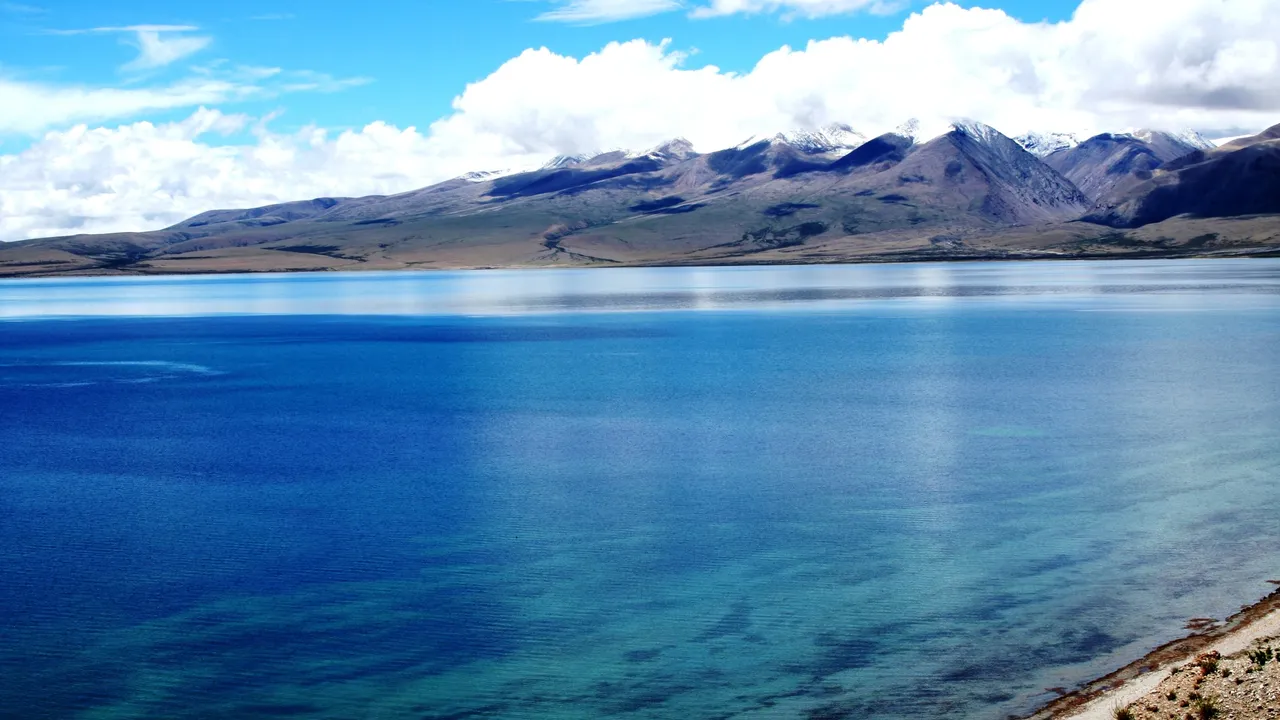
| 16:30 | Lake Manasarovar: Water Keeps Its Own Practice Too |
The route, stop by stop
Prayer Flags: Each Gust of Wind Reads the Sutra Once
The day opens among the flag clusters at the town's edge. Five colors stand for five elements: blue for sky, white for cloud, red for fire, green for water, yellow for earth, each cloth block printed with the windhorse and sutras. Hanging flags is Tibet's most everyday prayer, and every gust of wind recites the text once on behalf of the hanger.
Look closely at how old and new relate: when new flags rise the old stay, layer upon layer like a calendar of time. The flags have no fence, but they are prayer objects, not scenery; bow slightly passing beneath, never tug, never tread.
Kora Starting Section: Understanding Pilgrimage through the Body
The kora runs about fifty-two kilometers clockwise, walked in two to three days to its high point at Dolma La pass near 5,630 m. The start's morning compresses pilgrimage's every expression: laden and empty-handed, whole families together, and most moving of all the full prostrators, palms rising overhead before the body flings onto the earth, measuring the entire circuit in body-lengths.
The culture lesson is a matter of measure: watch from the roadside, never walk beside them, never hurry them, never photograph the prostrators. Pilgrimage is not performance; what you see is the most serious coursework of someone's life.
Mount Kailash and Its Viewpoint: One Mountain, Four Faiths
In the afternoon the viewpoint hands you the whole mountain. Tibetan Buddhists hold one circuit to cleanse a lifetime's faults, with one circuit in the Horse Year worth thirteen ordinary ones; Hindus treat climbing as taboo and only circle; Bon practitioners walk counterclockwise, the逆行者 among the kora's crowds; and in Jain telling, the founding teacher entered meditation here and found release.
So the ways of looking differ: some read the mountain's form, some its meaning. Understanding one thing here suffices: the same rock carries four complete cosmologies, and it stays silent through them all.
Lake Manasarovar: Water Keeps Its Own Practice Too
The culture day closes at the sacred lake. Circumambulating the lake ranks with the kora as practice, a full clockwise circuit taking four to five days, and most pilgrims substitute short shoreline loops. In faith, the water cleanses worldly grime, and the gesture of scooping a palmful to the forehead appears everywhere.
Sit lakeside for half an hour with Mount Naimona'nyi far off and mani piles near in one frame. Tibet pairs mountain with lake: the mountain male and unapproachable, the lake female and approachable. Grasp the pair and you grasp half of Himalayan belief.
| Getting around |
|
| Budget | Mostly walking with short charters, meals total about RMB 200-400 pp; the kora permit is not part of this day. |
| Best time | Apr-Jun and Sep-Oct bring the most pilgrims and the liveliest cultural scenes; in the Tibetan Horse Year, Kailash's own zodiac year, pilgrimage scale multiplies several times over. |
FAQs
Does the culture day require entering monasteries?
The day stands complete without any monastery, all four stops being open-air lessons. To add one, monasteries near Tarchen and the county town accept visitors under universal hall rules: hat off, never on the threshold, clockwise, no photos inside, low voice. Keep the monastery as an optional add-on and leave the day's core to mountain, lake and wind.
How much kora culture is enough to know?
Three facts make an entry: clockwise as the mainstream, Bon walking counterclockwise, and about fifty-two kilometers over two to three days. One layer deeper lies the Horse Year's multiplication and the meaning of Dolma La pass. True understanding lives in watching the start: forty minutes observing departing pilgrims outvalue a day of reading.
May I photograph pilgrims?
It depends: distant views of a walking group, unobtrusive, invite no objection; any close shot of an individual requires asking first, and full prostrators are never photographed, the shared bottom line of photographers and travelers worldwide. If refused, smile and put the camera away; the refusal is the answer.
Does walking the culture line as a non-believer feel intrusive?
Not, given the posture: enter as a learner, speaking no glib piety, performing no devotion, treating no rite as a prop. Tibetan openness to visitors rests on respect; circulate clockwise, keep the voice low, look much and ask little, and travelers of any belief or none are welcome.