
One day in Tianjin, and there is really only one main line: the Hai River. The river splits the city in two, concession-era mansions on the west bank, Tianjin Station and the Century Clock on the east, nine bridges stitching them together. Ancient Culture Street, Jinwan Plaza, the Five Great Avenues and the Tianjin Eye all sit within walking and metro reach of the water.
The trick is not volume but timing. Take Ancient Culture Street before 9:00 am when the shops have just opened and the counter at Clay Figure Zhang is yours alone; ride through the two thousand mansions of the Five Great Avenues in the afternoon when the slanting sun warms the brickwork; save the river for last, when Jinwan Plaza's lit facades pour into the water and the Tianjin Eye begins its thirty-minute turn above Yongle Bridge. This guide sequences the whole day by the clock, just follow it.
Itinerary at a glance
| 08:30 | Ancient Culture Street: The First Hour |
| 10:15 | The Century Clock & Liberation Bridge |
| 12:30 | Lunch: A Proper Tianjin Table at Jincai Diancang |
| 14:30 | The Five Great Avenues: An Afternoon Among Mansions |
| 17:00 | The Porcelain House: Tianjin's Most Audacious Building |
| 19:00 | The River at Night & the Tianjin Eye |
The route, stop by stop
Ancient Culture Street: The First Hour
Tianjin has an old saying: first came the Tianhou Palace, then came Tianjin. The temple to Mazu, goddess of the sea, sits at the heart of Ancient Culture Street, the city's true point of origin. Arrive at 8:30 before the crowds, as the shops of Clay Figure Zhang, Yangliuqing woodblock prints and Kite Wei roll up their shutters, and the old craftsman shapes his clay at the counter where you can watch the whole performance of his hands.
The street itself is free; the palace charges separately. Ninety minutes covers it at an easy pace, and any print that catches your eye is fairly priced here, much better than at the airport or the malls. After 10:00 the tour groups arrive and the atmosphere shifts a notch.
The Century Clock & Liberation Bridge
One metro stop or a short walk from Culture Street brings you to Tianjin Station, where the 40-meter Century Clock stands in the forecourt, a European clock face with mechanical hands, the station's signature. Beside it is Liberation Bridge, an iron bridge of 1927 that once swung open for river traffic; today it is fixed, and from its deck you look straight across at Jinwan Plaza.
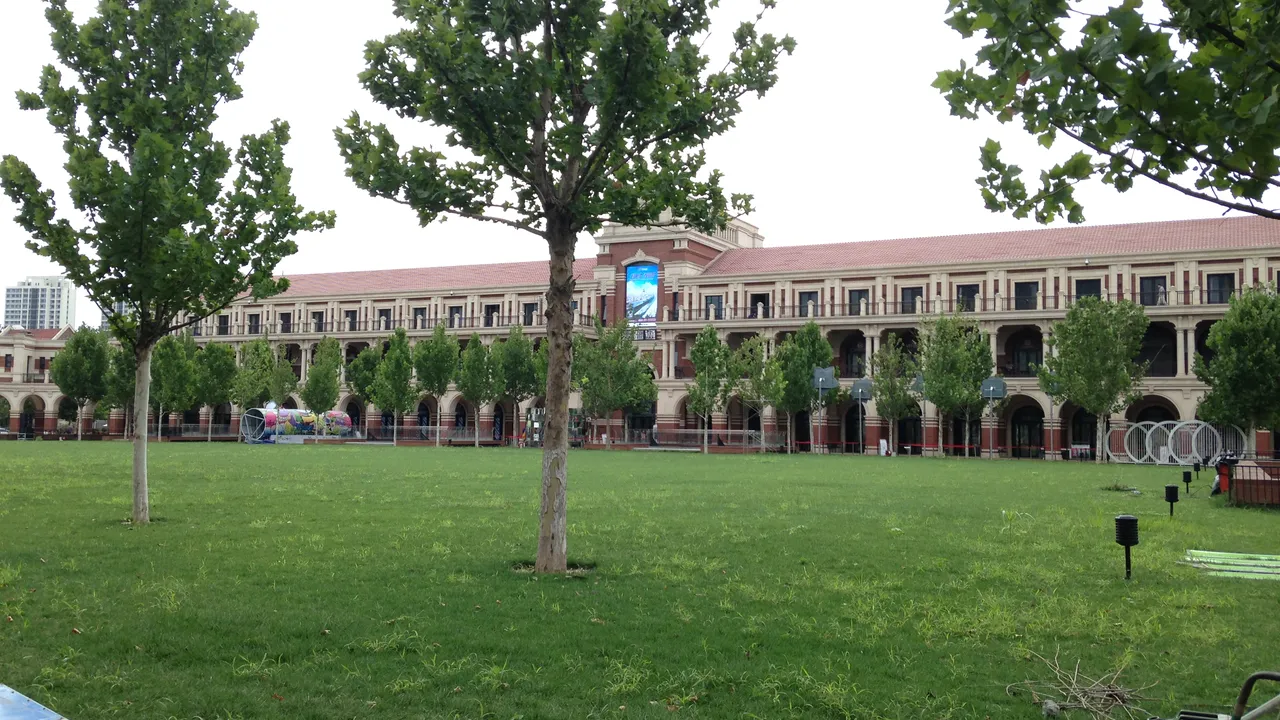
In daylight Jinwan Plaza is about the order of its French-style blocks: red-tiled roofs, arched windows, corner turrets ringing a bend in the river. At night the facades light up, so note your camera angle now, and come back after dark.
Lunch: A Proper Tianjin Table at Jincai Diancang
For a proper Tianjin table, Jincai Diancang sits by People's Park, two stops from the river. Its signature is zengbeng carp: a whole fish fried scale-on, drowned in a searing sweet-and-sour sauce that makes the scales curl and crackle, the dish is named for that sound. Laobao three-stir and shuibaodu tripe are equally orthodox, about RMB 93 per head.
Closer to the river, small kitchens around Guishunzhai or noodle shops behind Tianjin Station work fine. Skip lunch inside the scenic districts, and save the jianbing guozi for tomorrow's breakfast, that is when it belongs.
The Five Great Avenues: An Afternoon Among Mansions
The Five Great Avenues are the residential quarter of the old concessions: British, Italian, French, German and Spanish mansions each claiming a street, more than two thousand houses built in the 1920s-30s, all unfenced. The best way through is a shared bike. Start at Minyuan Square, whose ring road was once a real running track, Eric Liddell, the sprinter of Chariots of Fire, trained here in the 1920s.
The rule is slowness: Machang, Munan, Dali, Changde and Chongqing Avenues take a good two hours by bike, and you will keep stopping. The people behind these brick walls outshine the architecture, and street plaques tell you who lived where. Cafes ring Minyuan Square when you need a seat on the lawn, this kind of ease is standard equipment in Tianjin.
The Porcelain House: Tianjin's Most Audacious Building
A twenty-minute ride east of the avenues, on Chifeng Road, stands a French-style mansion whose walls are covered in 400 million fragments of antique porcelain, set with tens of thousands of ceramic pieces and stone carvings, even the lions at the door are porcelain. Opinion is split between dazzled and overloaded, but passing by without a look is not an option. Entry is about RMB 50; most visitors shoot the exterior and move on.
The same owner did the Ge-da Tower on Hebei Road, also clad in porcelain shards, see both if your route allows. Their logic is the exact opposite of the quiet concession mansions next door, and Tianjin is precisely the city that can hold both tastes at once.
The River at Night & the Tianjin Eye
After dinner, return to the river. Jinwan Plaza is lit now, its reflection fullest from Liberation Bridge; walk north along the water and the lights run all the way to Yongle Bridge, where the Tianjin Eye, a Ferris wheel built into a bridge, the only one of its kind in China, begins its thirty-minute revolution, about RMB 70. Locals will tell you the wheel looks better from the bank than from inside: the neon doubling itself in the water is its best angle.
Riding it is still worth it: from the top cabin the whole lit ribbon of the river and both banks of mansions fold into one view. Peak queue runs 7:00-9:00 pm; after nine the bridge traffic thins and the scene turns quiet in a different way.
| Getting around |
|
| Budget | Tickets (Tianhou Palace, Porcelain House, Tianjin Eye) plus two meals: about RMB 200-350 pp |
| Best time | Apr-May and Sep-Oct for stable weather; in summer shift the whole plan later and lean into the night river |
FAQs
Is one day enough for Tianjin?
For a first visit, yes. The river axis covers the essentials in a day; add one day each for Yangliuqing or Jizhou if you have them.
Culture Street or the Five Great Avenues?
With half a day, take the avenues, bigger scale, worth the time. With a full day, do both: their characters are entirely different.
Is the Tianjin Eye worth riding?
Yes, ride it after dark; on a tight budget or schedule, watching the lights from Liberation Bridge is a fine plan B.
How is the metro in Tianjin?
Very. Lines 1, 2, 3 and 9 cover the main sights, fares RMB 2-5, and it beats taxis at rush hour.