
Most people refuse to believe Tianjin has mountains. Ninety minutes north of downtown, Jizhou lifts the city's terrain ceiling into real hills: the five peaks of Panshan, the Huangyaguan Great Wall, and a Liao-era temple called Dule. This was once Jixian, ancient Yuyang, the war drums of An Lushan's rebellion, in the famous poem, sounded right here.
Three days run temple, mountain, wall. Day one reaches Jizhou and reads the Dule Temple and the county town; day two gives all of it to Panshan, sleeping at the top or descending, either works; day three is the Huangyaguan Wall with an afternoon return. Nothing here is punishing, cable cars trim the climbs, and the line suits families with parents or kids as much as anyone who simply wants two days out of the city.
Itinerary at a glance
| Day 1 · 09:00 | Tianjin to Jizhou: The Slow Rail North |
| Day 1 · 10:30 | Dule Temple: One of China's Oldest Timber Buildings |
| Day 1 · 14:00 | Jizhou Town: Drum Tower, White Dagoba, Evening |
| Day 2 · 07:30 | Panshan, All Day: Five Peaks and an Emperor's Obsession |
| Day 2 · 17:00 | Supper at the Foothill: Farmhouse Kang Night |
| Day 3 · 08:30 | Huangyaguan Great Wall: Qi Jiguang's Northern Line |
| Day 3 · 15:00 | The Return: Bringing the Hills Back to Town |
The route, stop by stop
Tianjin to Jizhou: The Slow Rail North
The Jizhou suburban train leaves Tianjin North Station and pushes north across flat farmland, about 90 minutes to Jizhou North. The ride is a nostalgic piece in itself: green rolling stock, slow stops, wheat fields past the window, a fare of a dozen-odd yuan. Driving the Jinji expressway takes about the same; with sparse rural buses between sights, drivers should rent a car or hire one.
Drop bags first. Jizhou town is compact, lodging clusters around the Drum Tower and along the Zhouhe bend, and two nights in the same room beats checking in twice.
Dule Temple: One of China's Oldest Timber Buildings
Dule Temple's gate and Guanyin Pavilion date to 984 AD, the second year of Liao's Tonghe era, among the oldest surviving timber architecture in China. The pavilion rises about 23 meters over three levels (two visible, one mezzanine), holding a 16-meter eleven-headed Guanyin; looking up at the stacked heads earns a sore neck, and earns it.
Liang Sicheng surveyed the temple in 1932, and his paper explained the pavilion's shoufen geometry to the world: not a single nail, dougong brackets holding the eaves like cupped hands, swaying through every major earthquake since. From the forecourt you can see its place in architectural history, where Tang massiveness hands over to Song refinement. Tickets are a few dozen yuan; an hour for the highlights, two for the craft.
Jizhou Town: Drum Tower, White Dagoba, Evening
Half a day fits the town: the Drum Tower square is the geometric center, with the Luban Temple and the White Dagoba in walking range. The dagoba is a Liao relic, its body mixing Buddha niches with brick carving, the same-era neighbor to Dule Temple. Two to three hours covers all three at an easy pace, banking legs for tomorrow's climb.
Dinner is a town affair: home-style kitchens cook mountain produce, free-range eggs, wild greens, reservoir fish. Fifty yuan a head eats well; sleep early, because Panshan wants a 7:00 am start.
Panshan, All Day: Five Peaks and an Emperor's Obsession
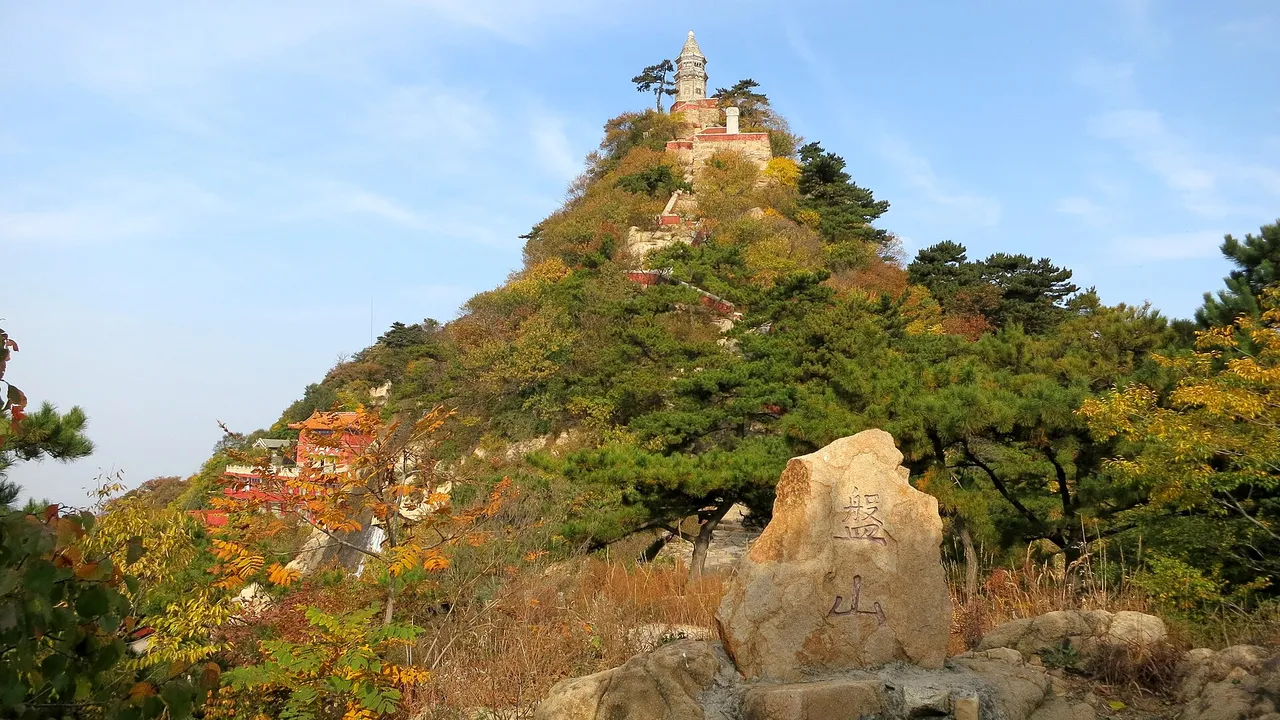
Panshan bills itself the first mountain east of Beijing: five peaks, three registers, pines above, boulders mid-slope, water below. The Qianlong line travels widely: had I known of Panshan, why would I have gone south to the Jiangnan? He came some thirty-odd times. The paths are never dangerous; a full walking ascent to Guayue Peak takes four to five hours, and cable cars can retire the two steepest stretches.
The plan: from the gate follow the water line up past Tiancheng Temple (its thousand-year ginkgo turns full gold in autumn), enter the boulder register, and finish at Yunzhao Temple near the summit. Ordinary knees should take the cable down, save the legs for the wall on day three. Mountain weather turns fast; pack a wind shell.
Supper at the Foothill: Farmhouse Kang Night
Farmhouse inns at Panshan's foot are Jizhou's lodging backbone: heated brick kang, wood-stove fish stew, corn cakes, mountain-mushroom chicken, tens of yuan a head for dinner, one to two hundred for the night. Pick a courtyard on three checks: is the kitchen open-view, is the yard clean, is the host talkative (talkative hosts know the sunrise spots).
The mountains have no light pollution. On clear nights the Milky Way shows, and city dwellers, unaccustomed to this much dark, sleep deeper than they have in months.
Huangyaguan Great Wall: Qi Jiguang's Northern Line
Huangyaguan sits at Jizhou's northern tip, wilder than Badaling and far less visited. Qi Jiguang, garrison commander of the Ming's Jizhou Defense Command, rebuilt this stretch in brick on a grand scale; the wall crosses a river valley here, the main gate complex keeps both land and water gates, and the mid-hill Widow's Tower carries its legend of widows building the wall for fallen husbands.
The plan: two to three hours on foot through the main section, with the Taiping Village stretch offering the wildest wall-walking, and the Eight Diagrams town's maze lanes to finish. The exertion runs lighter than Badaling while the feeling is wild-wall pure.
The Return: Bringing the Hills Back to Town
Leave Huangyaguan by 3:00 pm for Jizhou North station and the rail back, or drive the expressway south. A seasonal stop at the Zhouhe bend orchards (apricots, pears, apples by month) carries a taste of the hills back into the city.
The three-day aftertaste: Jizhou zeroes out Tianjin's cosmopolitan polish and leaves the old things, hills, temple, wall. When the river lights of downtown come back into view that evening, they read like another Tianjin entirely.
| Getting around |
|
| Budget | Entries (Dule, Panshan, Huangyaguan), two farmhouse nights, meals and transport: about RMB 500-800 pp |
| Best time | Apr-May for peach and apricot blossom, Sep-Oct for red leaves and the ginkgo; sites stay open in winter but the wind bites |
FAQs
Is Jizhou worth a dedicated trip?
For mountain and heritage lovers, absolutely, Dule Temple is a landmark of Chinese architectural history.
Can non-hikers manage Panshan?
Yes, cable cars retire the steepest stretches, and a slow pace finishes within four hours.
Does it suit seniors and kids?
Yes. The exertion is low, and cable cars plus a hired car shrink the walking to a minimum.
Do we need a car for three days?
Not strictly, the rail plus a local hired car works; driving is freer, since rural buses are sparse.