
Binhai New Area lies 45 kilometers southeast of downtown, where the Hai River meets the sea. The district is younger than the city it serves and its stories hit harder: this is where modern China was shelled (the Dagu Forts), where the present was manufactured (Tianjin Port, the development zone), and where a national-grade collection found its building (the National Maritime Museum).
Three days run museum, carrier, cannon. Day one goes to the Maritime Museum, a full day barely clears its halls. Day two boards the carrier Kiev, then watches the river meet the sea from Tanggu's Bund. Day three reads the modern era at the Dagu Forts, threads the foreign-goods market, and returns by afternoon. Metro line 9 stitches it all to downtown; transport is the easy part.
Itinerary at a glance
| Day 1 · 09:30 | The National Maritime Museum: A Full Day |
| Day 1 · 16:00 | The Eco-City Shoreline: Evening at Nanwan Park |
| Day 2 · 09:00 | The Carrier Theme Park: Boarding the Kiev |
| Day 2 · 15:00 | The Tanggu Bund: Where the River Meets the Sea |
| Day 3 · 09:00 | The Dagu Forts: Ground Zero of the Modern Era |
| Day 3 · 13:00 | The Foreign-Goods Market & the Return |
The route, stop by stop
The National Maritime Museum: A Full Day
In the Sino-Singapore eco-city stands the National Maritime Museum, people call it the Palace Museum of the ocean. National-grade, free with a real-name WeChat reservation, closed Mondays (holidays excepted). The building leans into the sea, and its fifteen-odd galleries run from ocean natural history (Mesozoic marine reptile fossils of genuine caliber) to seafaring civilization, dugout canoes to Zheng He's treasure ships to steam.
The trick through it: hit the two nature halls first, Ancient Ocean and Ocean Today, pushing the timeline back 400 million years, then take the navigation wing for the civilizational line. Families should budget six hours; the museum cafe covers lunch, no need to leave.
The Eco-City Shoreline: Evening at Nanwan Park
Out of the museum, Nanwan Park nearby is the pleasant stretch of this engineered coastline: paths hugging the water, locals fishing and flying kites toward evening. A slow lap digests the morning's ocean science, and the salt in the wind is calibrated just right.
Dinner back in the eco-city's commercial streets: seafood stalls serve mantis shrimp and swimming crabs by season, RMB 80-150 a head. Lodging is plentiful; chain hotels run a respectable two to three hundred.
The Carrier Theme Park: Boarding the Kiev
At Hangu, the theme park's centerpiece is the Kiev, lead ship of the Soviet Kiev class, bought retired and moored here. Boarding lands the shock of scale: the flight deck's width, the hangar's height, the bridge dense with instruments, missile silo lids at your feet. Tickets run one to two hundred; the onboard audio guide earns its rent.
The deck wind outblows expectations, and plenty come dressed for the photos. Even the military-indifferent get their money's worth: this hull is a chunk of Cold War history, and the berthing spaces and petty-officers' mess tell you how three thousand people lived aboard.
The Tanggu Bund: Where the River Meets the Sea
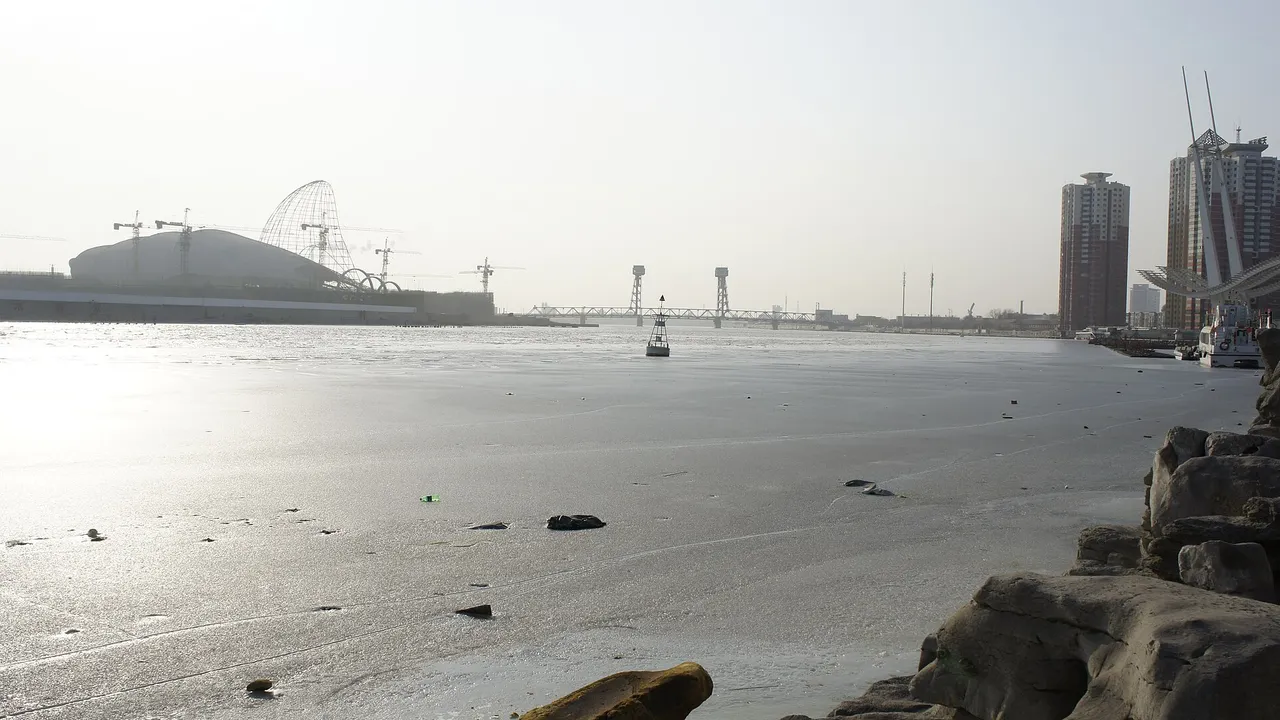
The Tanggu Bund spreads along the Hai River's lower reach, plainer than Shanghai's, with a point of its own: this is the estuary reach, the river widened lake-wide, cargo ships passing beneath the bridges, the evening wind off the water dissolving a day of carrier fatigue.
Around the Bund is old Tanggu, generous and cheap for dinner; the seafood noodle broth is the neighborhood's signature craft, twenty to thirty yuan a bowl.
The Dagu Forts: Ground Zero of the Modern Era
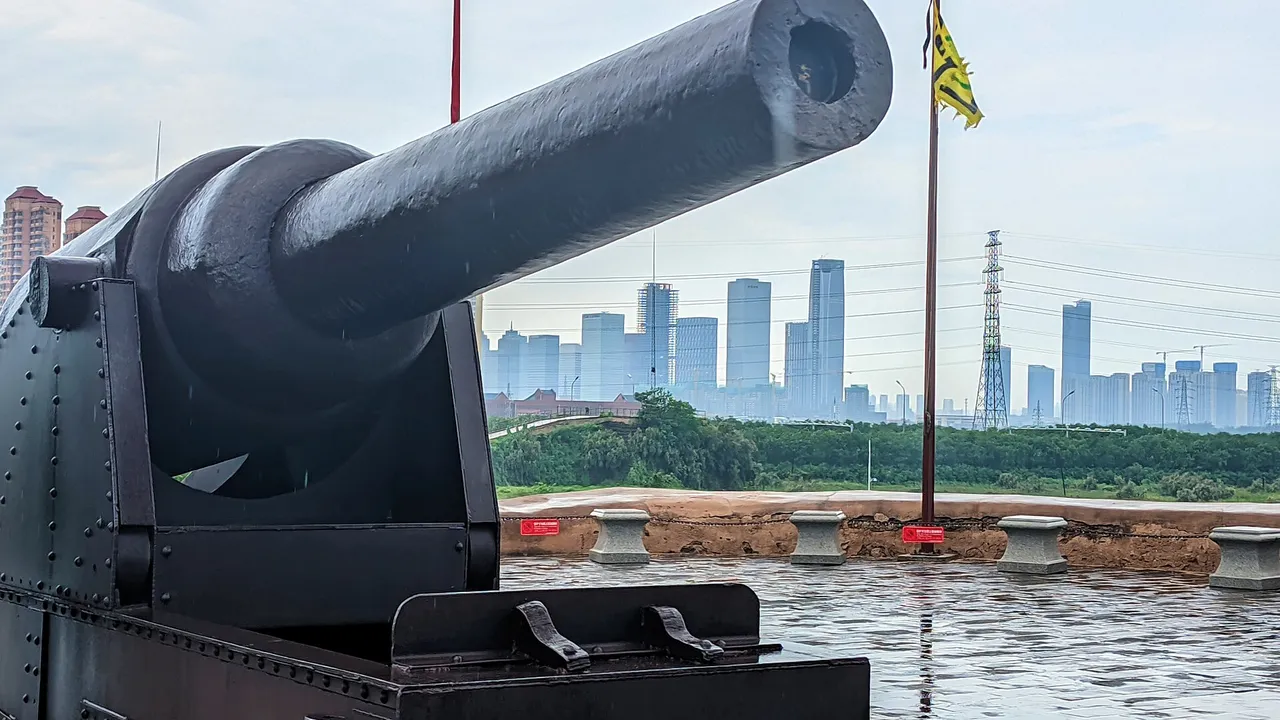
The Dagu Forts stand on the Hai River's south bank, where four major battles were fought between 1858 and 1900, the textbook Battle of the Dagu Forts is this exact mudflat. The site preserves the rammed-earth and brick mass of the Wei battery, and the museum lays out the four campaigns plainly. Entry is a few dozen yuan.
From the battery, the river mouth explains the four characters this place earned, the Gate of Tianjin's Shield: hold this gap and Tianjin holds; Tianjin holds and Beijing's sea gate holds. The defeats and the resistance you memorized in school become concrete terrain and measurable distances.
The Foreign-Goods Market & the Return
The Tanggu foreign-goods market is a leftover legend from the 1990s, born of sailor-brought-goods culture at Tianjin Port. Odds of true vintage finds depend on your eye; as a souvenir market it wears its era charmingly. Haggle from thirty percent, treat it as sport.
From Tanggu station, metro line 9 runs you back downtown in about 45 minutes. Three days of Binhai close out, in time for the river lights.
| Getting around |
|
| Budget | Tickets (the carrier is the big line), two nights, meals and transport: about RMB 400-700 pp |
| Best time | May-Jun and Sep-Oct for stable seaside weather; summer deck sun is brutal, board the carrier in the morning |
FAQs
Does the Maritime Museum need reservations?
Yes, free real-name booking on the WeChat account, closed Mondays.
Is the carrier park worth it?
Boarding a real carrier is a rare experience anywhere in China, a must for military buffs, and worth one visit for anyone.
How to plan with kids?
A full museum day plus the carrier day is the winning pair; judge the forts by the kids' ages.
Where to stay in Binhai?
The eco-city for the museum, Tanggu for the Bund and the metro, and no room-hopping across two nights.