
Tianjin splits eating into fine gradations: breakfast is a formal matter, jianbing guozi has house rules, and the carp should arrive with a sound. The city's real food map lives not in fancy dining rooms but in street-front shops, carts that light up after midnight, and behind counters passed down three generations.
The route runs on a clock: a halal breakfast at 7:30, an orthodox jianbing mid-morning, a proper Tianjin table at lunch, teahouse snacks in the afternoon, a full dinner, and finally the Nanlou night stall. Nine stops is a map, not a mandate, eat by appetite, but know every coordinate.
Itinerary at a glance
| 07:30 | Zhimeizhai: Opening with the Beef Shaobing |
| 09:30 | Jianbing Guozi: The House Rules |
| 11:30 | Goubuli Flagship: Eat It Once, Then Your Own Verdict |
| 13:00 | Guiyuan Restaurant: Two Hours of Proper Tianjin Cooking |
| 15:30 | Teahouse Afternoon: Melon Seeds with Crosstalk |
| 18:00 | Jincai Diancang: The Orthodox Dinner |
| 20:30 | Nanlou Jianbing: The Stall That Opens at 8 pm |
The route, stop by stop
Zhimeizhai: Opening with the Beef Shaobing
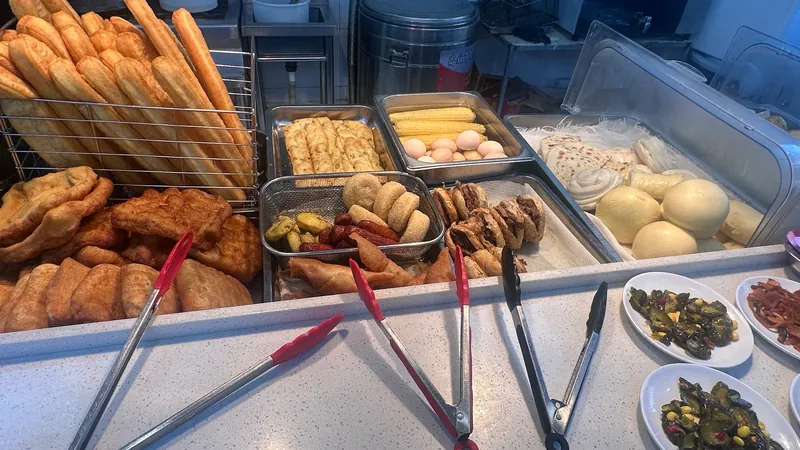
Zhimeizhai is a halal institution, and its beef shaobing is the point: a flaky baked bun packed with braised beef, crisp first, fragrant after. Pair it with a bowl of gabacai, Tianjin's own breakfast, strips of mung-bean pancake in savory gravy with cilantro on top. It exists nowhere else in this form, and copycats elsewhere never quite land it.
Twenty yuan a head and you will struggle to finish. Arrive at 7:30 and the queue is short; by 8:30 the commuter crowd stacks on and the line grows fast. The tofu pudding and lamb-offal soup are also orthodox, order them if your appetite allows.
Jianbing Guozi: The House Rules
Nine thirty, past the breakfast rush, stand at a cart and wait for a fresh-made set. The rules first: the batter must be mung-bean, the eggs cracked to order, and the filling either guozi (fried dough stick) or guobi (crisp sheet), pick one. Lettuce, ham or pork floss disqualifies it in Tianjin eyes; that is some other food.
No need to hunt a famous brand: the cart with the resident queue at any housing block's gate is the right one. Batter on the griddle, the bamboo rake spreading it round, egg cracked, flipped, sauced, scallioned, three minutes a set. Double egg plus guobi is the advanced order; crisp-purists ask for the guobi packed separately to protect the crunch.
Goubuli Flagship: Eat It Once, Then Your Own Verdict
Goubuli occupies an awkward seat in Tianjin: visitors treat it as mandatory, locals counsel caution. The fair move is to eat it once and rule for yourself. At the Shandong Road flagship, one steamer of the three-delights buns: thin skin, juicy filling, eighteen pleats, the pleat count is a process standard, not decoration. About RMB 85 per head.
One steamer, one millet porridge, twenty minutes, done. Whether it earns the price, you will have your own answer, and that judgment call is itself part of the Tianjin food experience: this city never outsources its verdicts on eating.
Guiyuan Restaurant: Two Hours of Proper Tianjin Cooking
Midday belongs to a proper Tianjin table. Guiyuan has cooked inside an old mansion for thirty-plus years; the framework order: black-garlic beef cubes (garlic perfume around caramelized edges), baben tofu (fried tofu in savory sauce), and the crackling zengbeng carp, whole, scale-on, fried through, then sauced. About RMB 120 per head.
The name is worth hearing: hot sauce over the fried fish makes the scales curl and crackle, zengbeng is the sound it makes. The window from table to mouth is a few minutes; photograph fast, then eat while the fire is still in it.
Teahouse Afternoon: Melon Seeds with Crosstalk
By three o'clock the stomach wants halftime. The Tianjin move is a teahouse: a pot of jasmine, a plate of melon seeds, the afternoon crosstalk session, tickets from RMB 40. Seeds occupy the mouth, the stomach does its work, and two hours later you walk out aligned for dinner.
This stop is a rhythm piece, not a mandatory course. It turns the eating day from a sprint into the Tianjin way: a steady drip from morning to midnight, never a dash.
Jincai Diancang: The Orthodox Dinner
Dinner belongs to Jincai Diancang by People's Park, about RMB 93 per head. If you missed the crackling carp at lunch, this is the make-up slot; laobao three-stir (liver, kidney and pork flash-fried together) and shuibaodu (blanched tripe with sesame paste, crispness is the only grading standard) are the house specialties.
You do not need both grand tables, pick one. On a budget: Guiyuan at lunch, then save room for the Nanlou night stall. Tianjin portions run generous; order one dish fewer than instinct says, because waste at the table reads as bad manners here.
Nanlou Jianbing: The Stall That Opens at 8 pm
Nanlou is the coordinate of Tianjin's late shift: open only from 8 pm to 6 am, its hours exactly inverted from every breakfast cart. Soft mung-bean batter, crackling guobi, double egg the standard order, RMB 15 a head. The 11 pm queue holds just-off-shift workers, post-club crowds and dedicated taxi pilgrims, Tianjin's night aligns itself here.
If you can still eat at 20:30, this is the finish line. If not, take one to go: reheated next morning, it becomes breakfast again. In Tianjin's sense of time, jianbing is a loop, and the loop is rather lovely.
| Getting around |
|
| Budget | All nine stops total about RMB 150-260 pp, mix and match by appetite |
| Best time | All year; breakfast lines are short on weekdays and citywide on weekends |
FAQs
What makes Tianjin jianbing different?
Mung-bean batter, eggs cracked to order, and only guozi or guobi inside, lettuce and ham versions are not the Tianjin way.
What is gabacai?
A Tianjin-only breakfast: mung-bean pancake strips in savory gravy, locals say gabacai, paired with shaobing and soy milk.
Is Goubuli still worth eating?
Eat it once and rule for yourself; the eighteen-pleat juicy buns are the craft itself, about RMB 85 a head.
Can one person finish this route?
All nine is a stretch, pick five: breakfast, a jianbing set, the lunch table, dinner and the night stall.